Symbols
Sacred and esoteric symbols across traditions — their origins, hidden meanings, and enduring power.
Symbols are the oldest language of humanity — a way to encode meaning that transcends words. The Eye of Horus, the Ankh, the Ouroboros, the Flower of Life, the Sri Yantra — these forms have appeared across cultures separated by oceans and millennia, carrying layers of esoteric and exoteric meaning. Understanding symbols is understanding how the ancients saw the world and communicated what could not be spoken.
Akhet (Horizon)
The Akhet is the Egyptian horizon as a named sacred threshold — a solar disk between two mountains, Bakhu and Manu, where the sun is reborn each dawn and the dead king becomes an akh.
All-Seeing Eye
The Eye of Providence — a symbol with ancient Egyptian roots, Christian theological meaning, Masonic significance, and enduring conspiracy theories, representing divine omniscience and the awakened inner eye.
Ankh
The key of life — ancient Egypt's supreme symbol of eternal life, divine authority, and the union of opposites that generates existence.
Atef Crown
The Atef is Osiris's crown — the white Hedjet of Upper Egypt flanked by two ostrich plumes, ringed by ram's horns, and topped in elaborated forms by a sun disk.
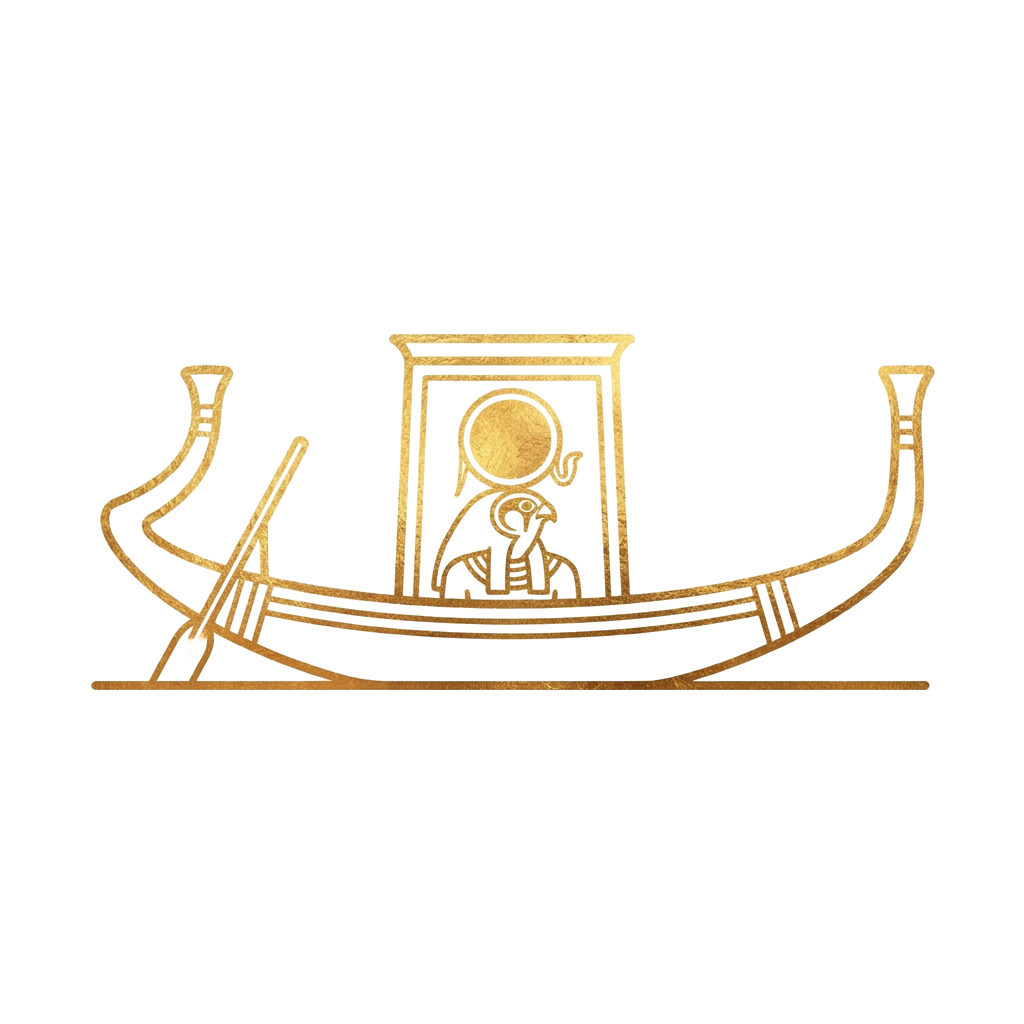
Atet (Solar Barque)
The Atet (Mandjet) is Ra's day-boat, the vessel in which the sun sails across the heavens from sunrise to sunset — paired with the Mesektet night-boat that carries Ra through the twelve underworld hours to his dawn rebirth.
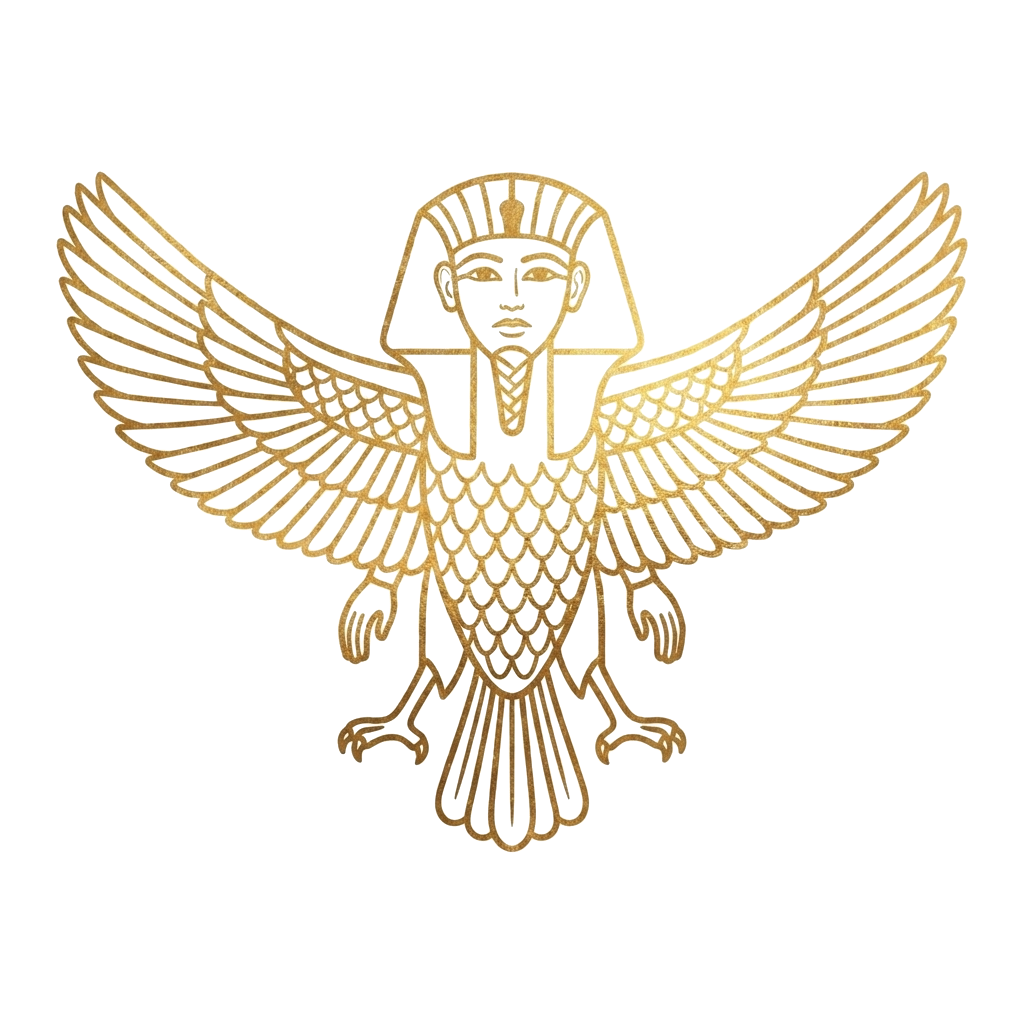
Ba Bird
The human-headed bird that flies free of the corpse at death, returns to the tomb at dusk, and gives ancient Egypt one of the world's first technical languages for personality after death.
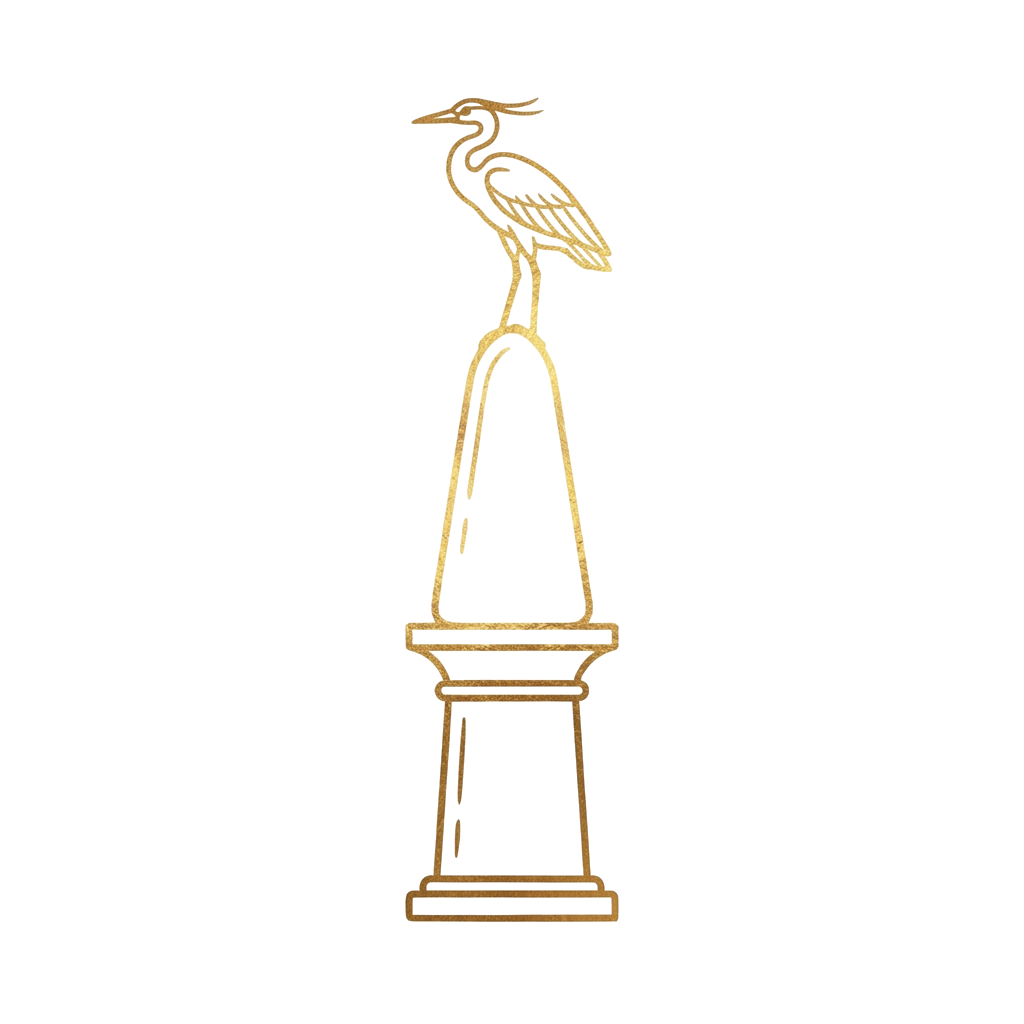
Benben Stone
The primordial mound of Heliopolitan creation. The sacred stone where Atum first stood above the waters of Nun, and the architectural source-form of every pyramidion and obelisk tip in ancient Egypt.
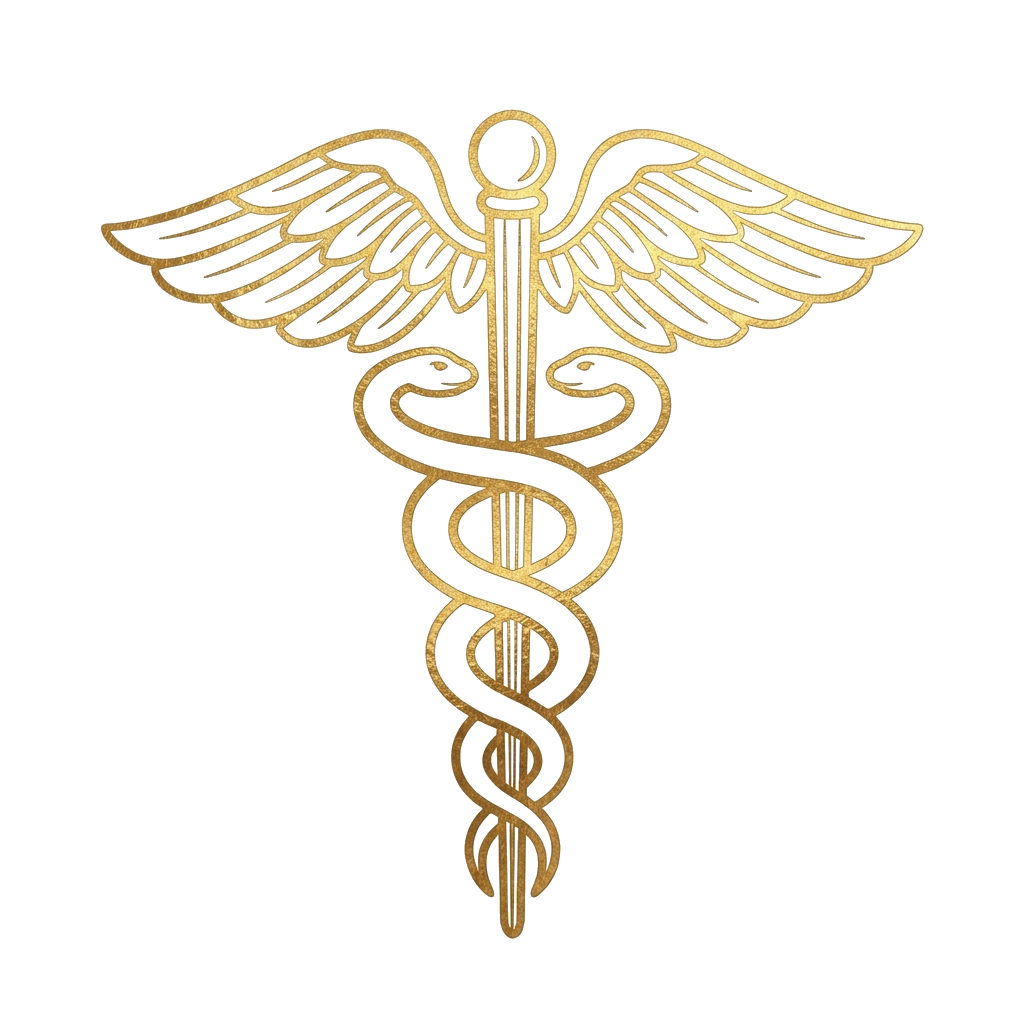
Caduceus
The twin-serpent staff of Hermes — an ancient symbol of mediation between opposites, cosmic balance, and the transformative power of communication, often confused with the Rod of Asclepius.
Cartouche
The shenu rope-loop the Egyptians drew around royal names so that the king's identity, written inside, would be carried by the same eternity the gods themselves wore.
Celtic Cross
A ringed cross merging the Christian cross with the pre-Christian sun wheel — Ireland and Scotland's defining monument, bridging pagan solar worship and Christian salvation in a single form.
Cross
The intersection of the vertical (divine) and horizontal (human) axes -- present in virtually every civilization since the Neolithic period. Christianity made the cross the symbol of redemptive suffering, but the form itself encodes a universal truth about where transformation happens.
Dharma Wheel
The Dharmachakra — the wheel of the Buddha's teaching, with eight spokes representing the Noble Eightfold Path, set in motion at the First Sermon at Sarnath and turning still.
Djed Pillar
The backbone of Osiris — ancient Egypt's symbol of stability, endurance, and resurrection, raised in ritual to ensure the renewal of life and the triumph of order over chaos.
Enso
The Zen circle — a single brushstroke capturing the totality of enlightenment, emptiness, and the universe in one gesture that cannot be corrected or improved.
Evil Eye / Nazar
The malevolent gaze and its counter-charm -- a highly universal human beliefs, found across 40% of world cultures. The nazar (blue glass eye) deflects the destructive force of envy by meeting it with an unblinking counter-gaze.
Eye of Horus
The Wadjet eye — ancient Egypt's most powerful protective symbol, encoding a mathematical system, a medical diagram, and a mythic narrative of loss, healing, and restored wholeness in a single image.
Eye of Ra
The wrathful daughter of the sun god: a feminine solar power who goes out as Sekhmet, Hathor, Tefnut, Bastet or the cobra Wadjet, leaves Egypt in anger, and must be coaxed home through beer, music, and dance to release the flood.
Feather of Ma'at
The Feather of Ma'at is the ostrich plume worn by the goddess Ma'at and weighed against the heart of the deceased in the Egyptian judgement of the dead — a small symmetrical object representing cosmic truth and the balance of creation.
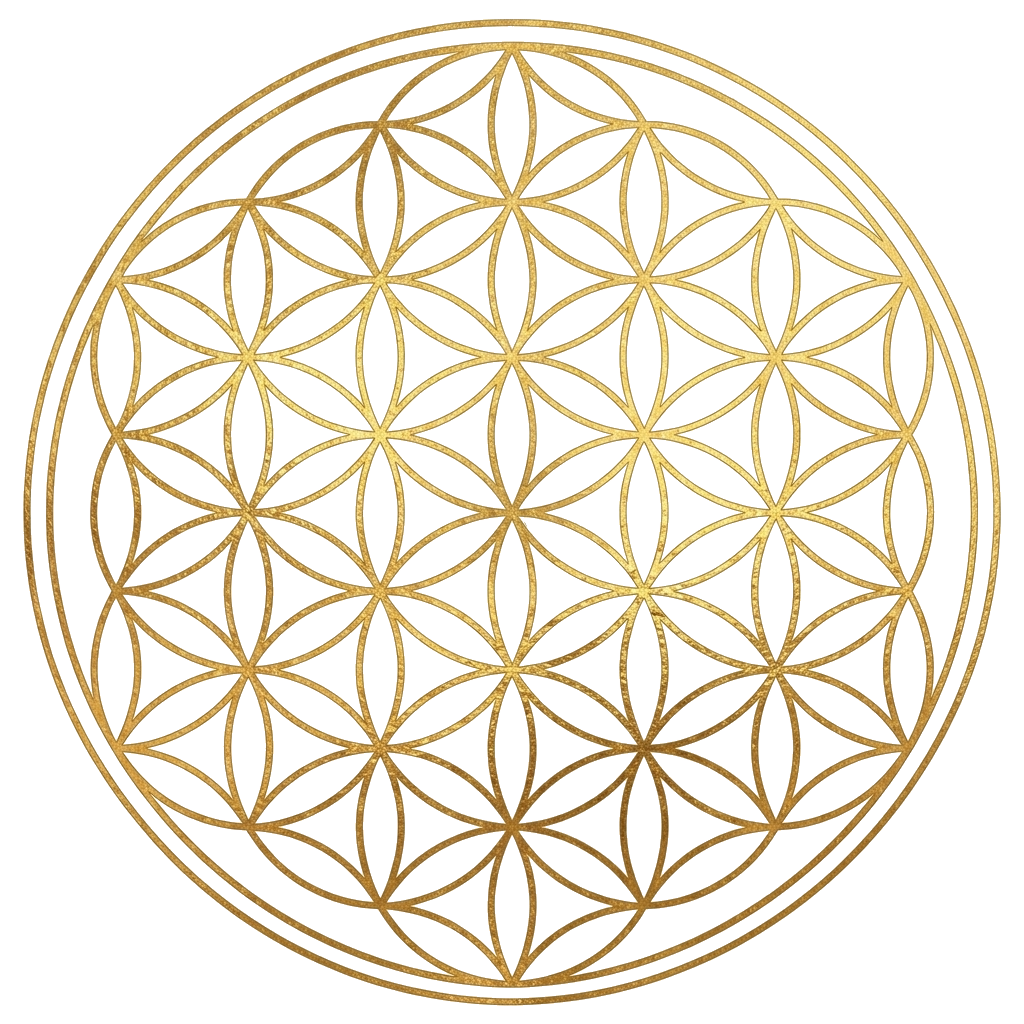
Flower of Life
A geometric pattern of 19 overlapping circles arranged in sixfold symmetry — found in temples from Egypt to China, encoding the mathematical blueprint from which all sacred geometry unfolds.
Hamsa / Hand of Fatima
The protective open hand -- found across Judaism, Islam, and pre-Abrahamic Middle Eastern traditions. The Hamsa deflects the evil eye and channels divine protection through a symbol that predates every religion that claims it.
Hexagram
The six-pointed star formed by two interlocking triangles — known as the Star of David in Judaism and the Seal of Solomon in magical tradition, representing the union of fire and water, heaven and earth, macrocosm and microcosm.
Labyrinth
The unicursal path to the center — not a maze with dead ends but a single winding route that draws the walker inward, found across civilizations as a symbol of pilgrimage, initiation, and the journey to the self.
Lotus
The flower that grows from mud — humanity's most universal symbol of spiritual awakening, purity emerging from impurity, and the unfolding of consciousness from darkness into light.
Manji (Buddhist Auspiciousness)
The left-facing Buddhist swastika -- symbol of the Dharma, auspiciousness, and the compassion of the Buddha's heart. Used across East Asian Buddhism for over 2,000 years as a major marks of the Buddhist tradition.
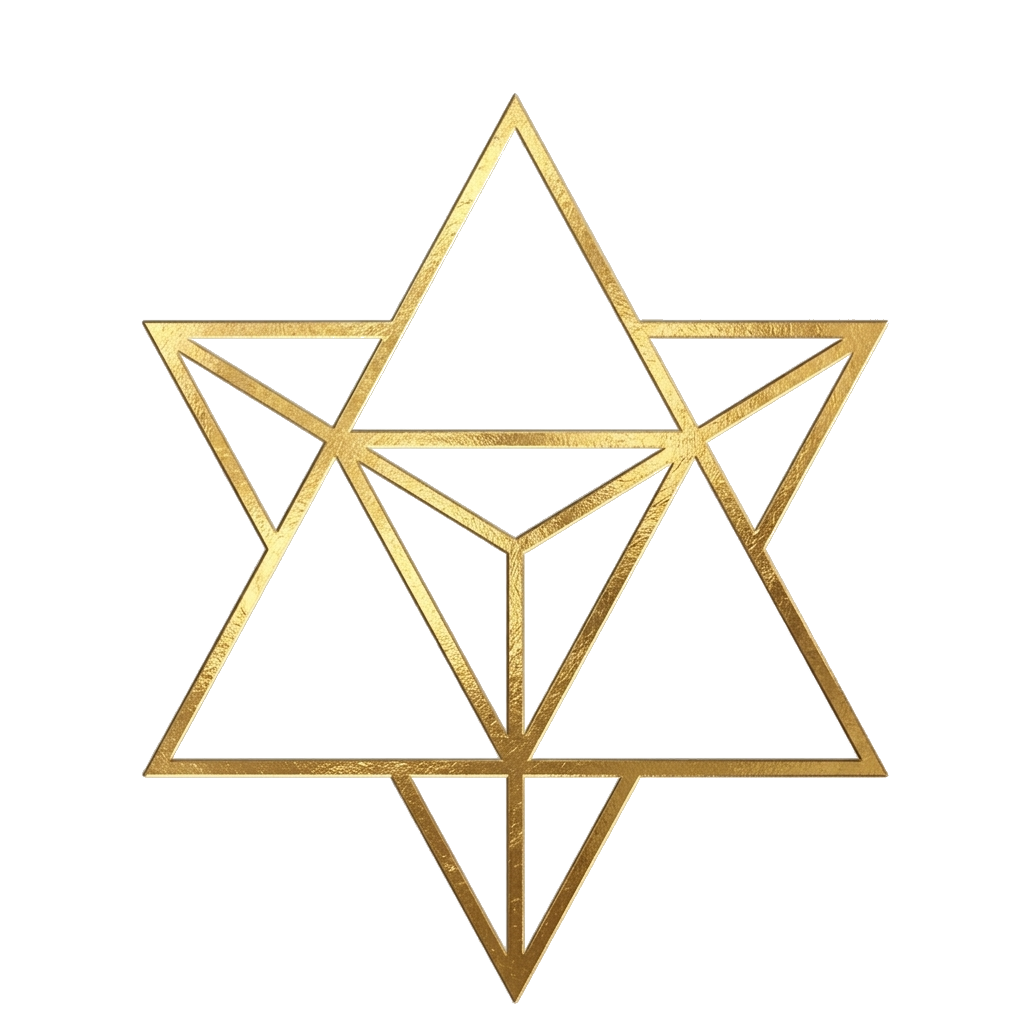
Merkaba
The chariot of light — two interlocking tetrahedra forming a three-dimensional Star of David, representing the divine light vehicle of ascension in Kabbalistic mysticism and modern sacred geometry.
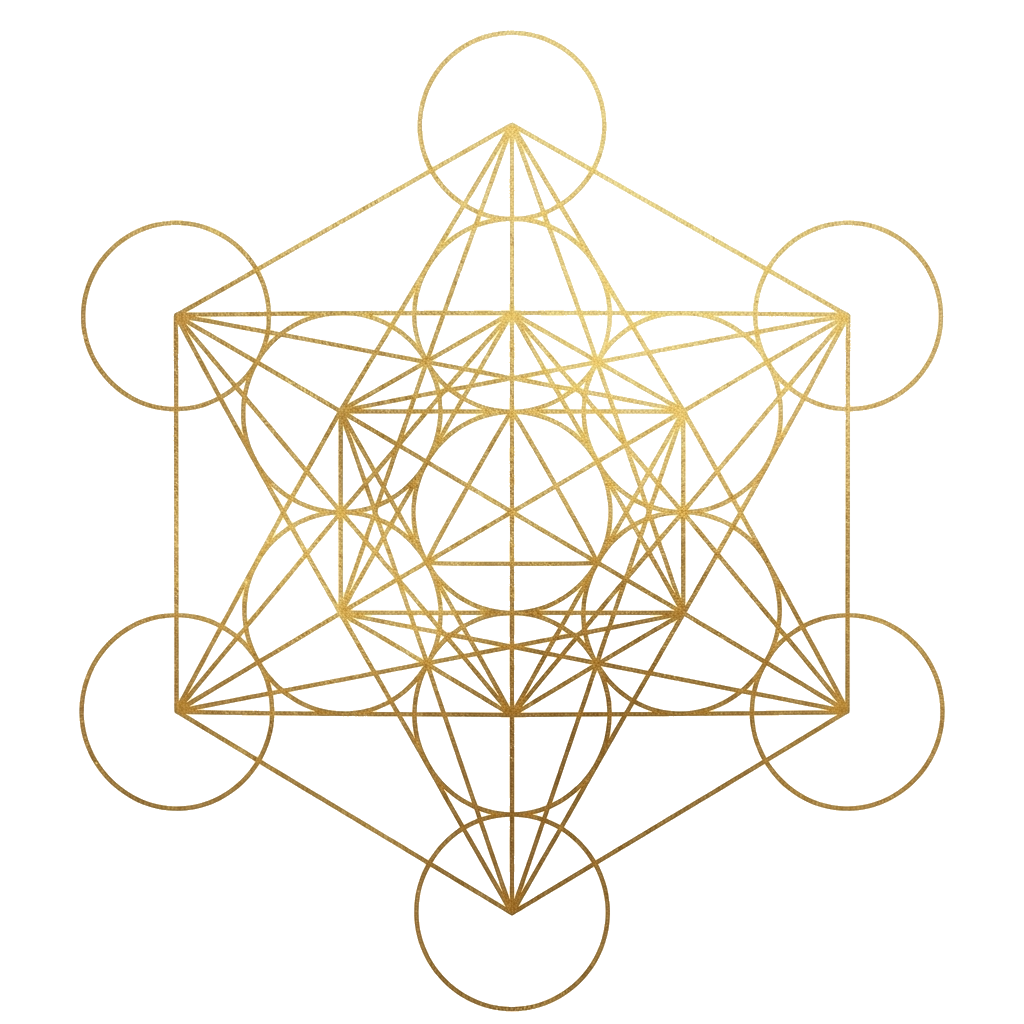
Metatron's Cube
A sacred geometric figure derived from the Fruit of Life — 13 circles connected by straight lines that contain all five Platonic solids, mapping the geometric blueprint underlying physical reality.
Om
The primordial sound of creation — the most sacred syllable in Hinduism, Buddhism, and Jainism, encoding the entire structure of consciousness and reality in a single vibration.
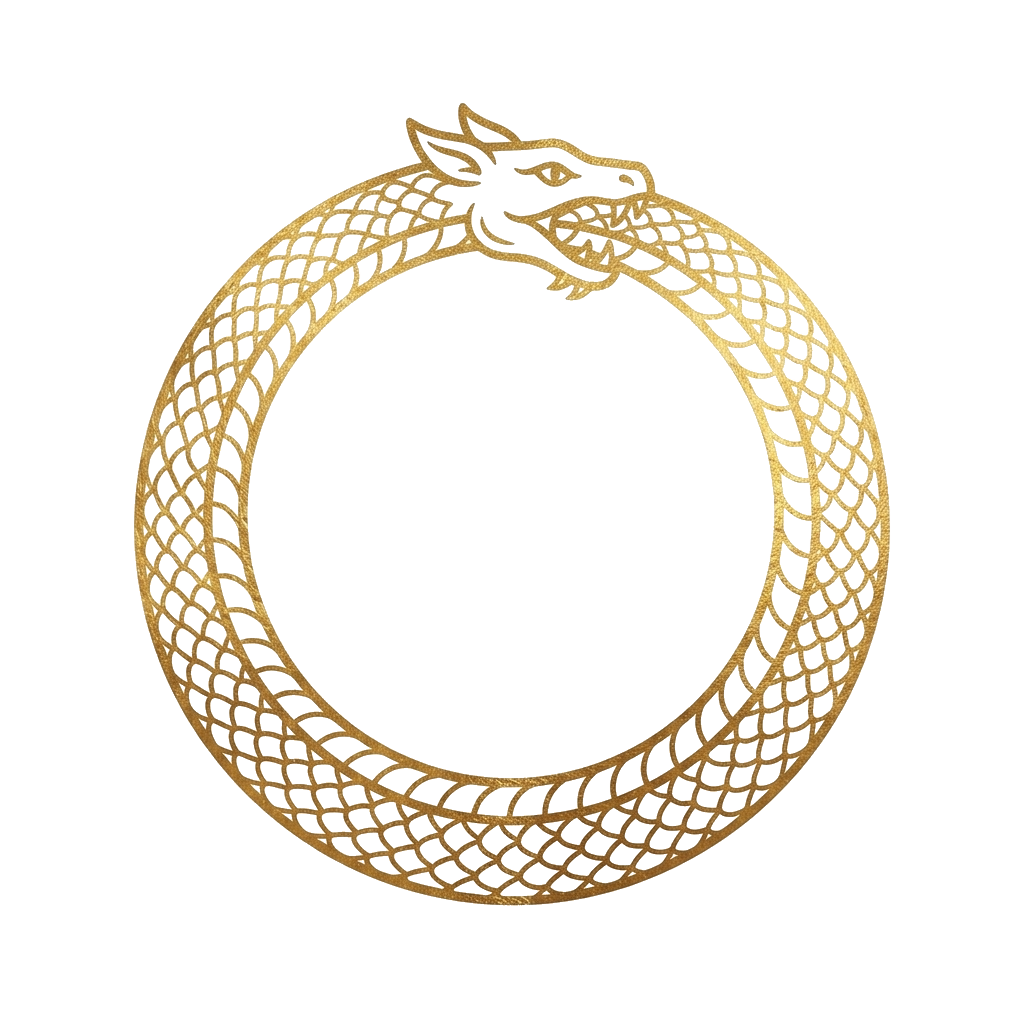
Ouroboros
The self-devouring serpent — humanity's oldest symbol of eternal return, self-renewal, and the unity of all opposites.
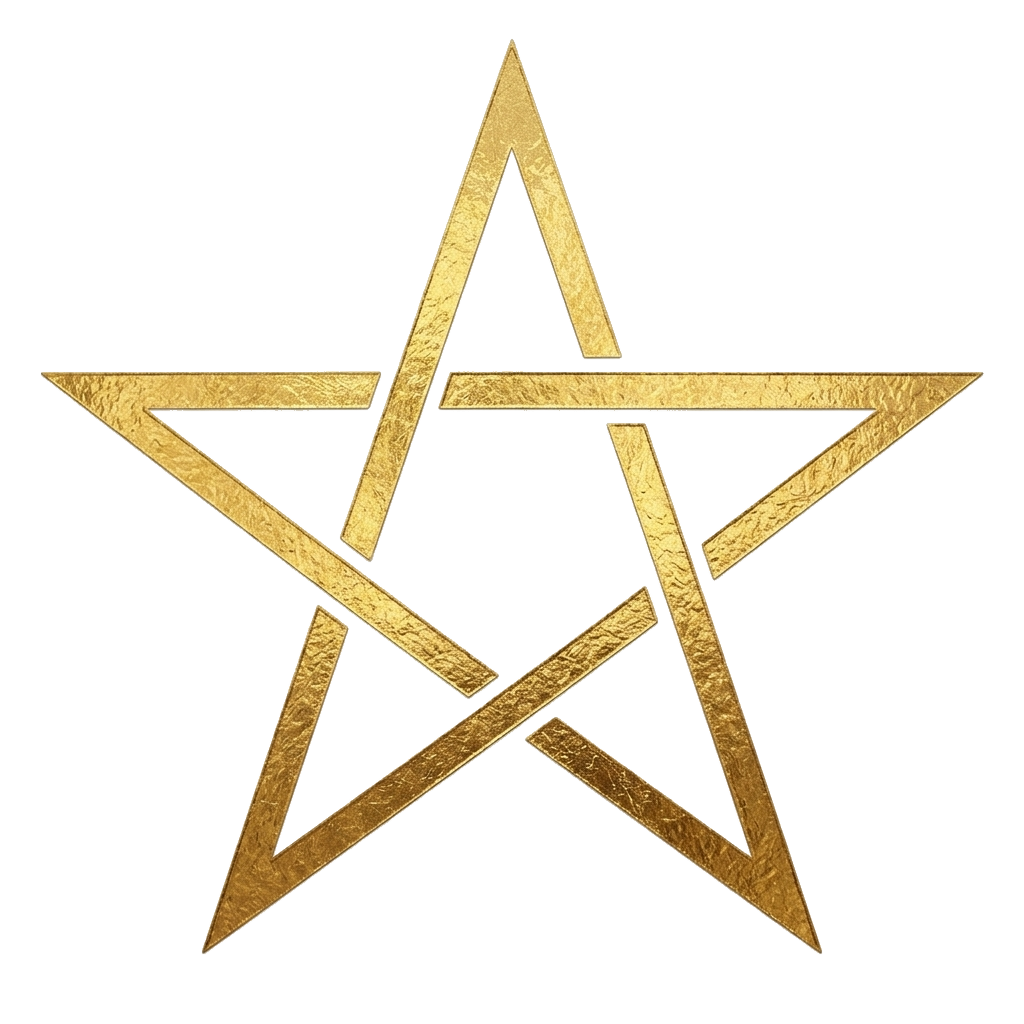
Pentagram
The five-pointed star — one of the most ancient and misunderstood symbols in human history, signifying the golden ratio, the five elements, the human microcosm, and the triumph of spirit over matter.
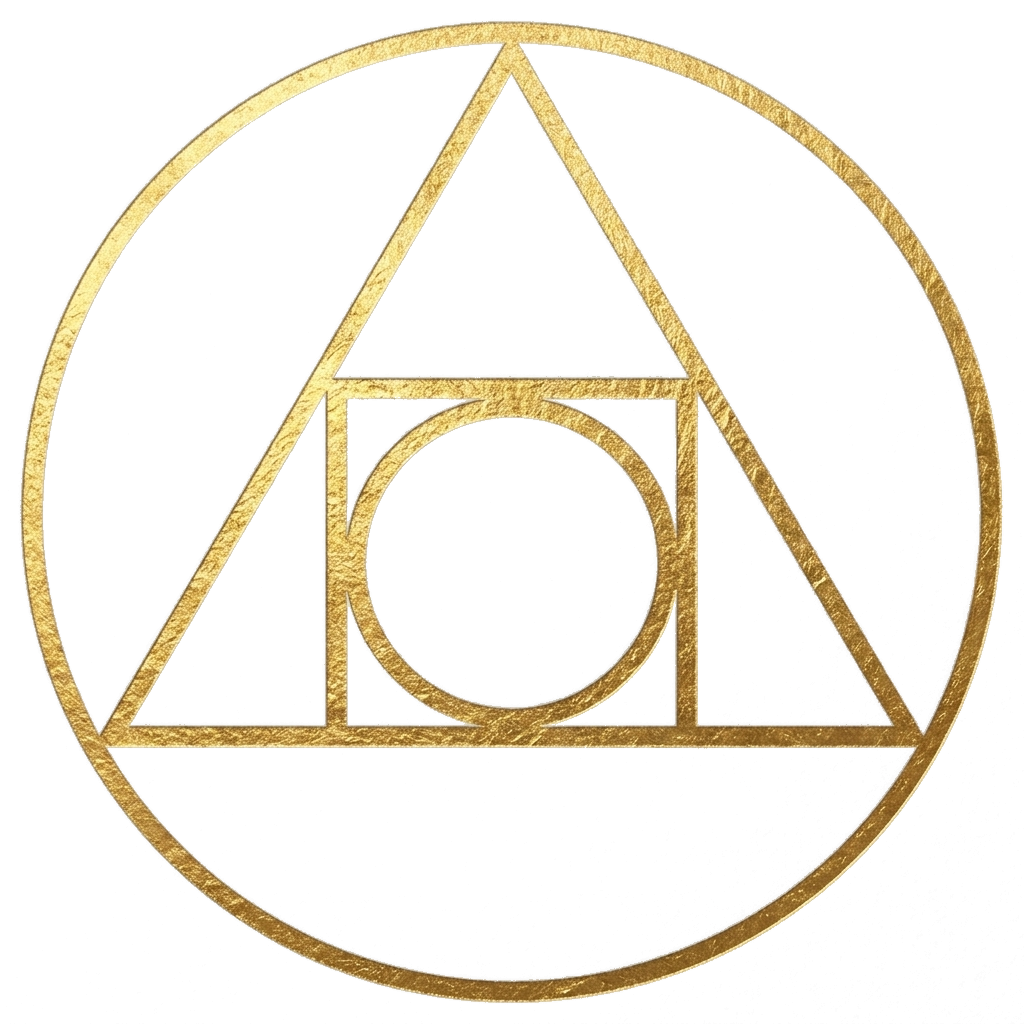
Philosopher's Stone
The lapis philosophorum — alchemy's supreme goal, the agent of universal transmutation that transforms base metal into gold, cures all disease, and confers spiritual perfection, representing the completion of the Great Work.
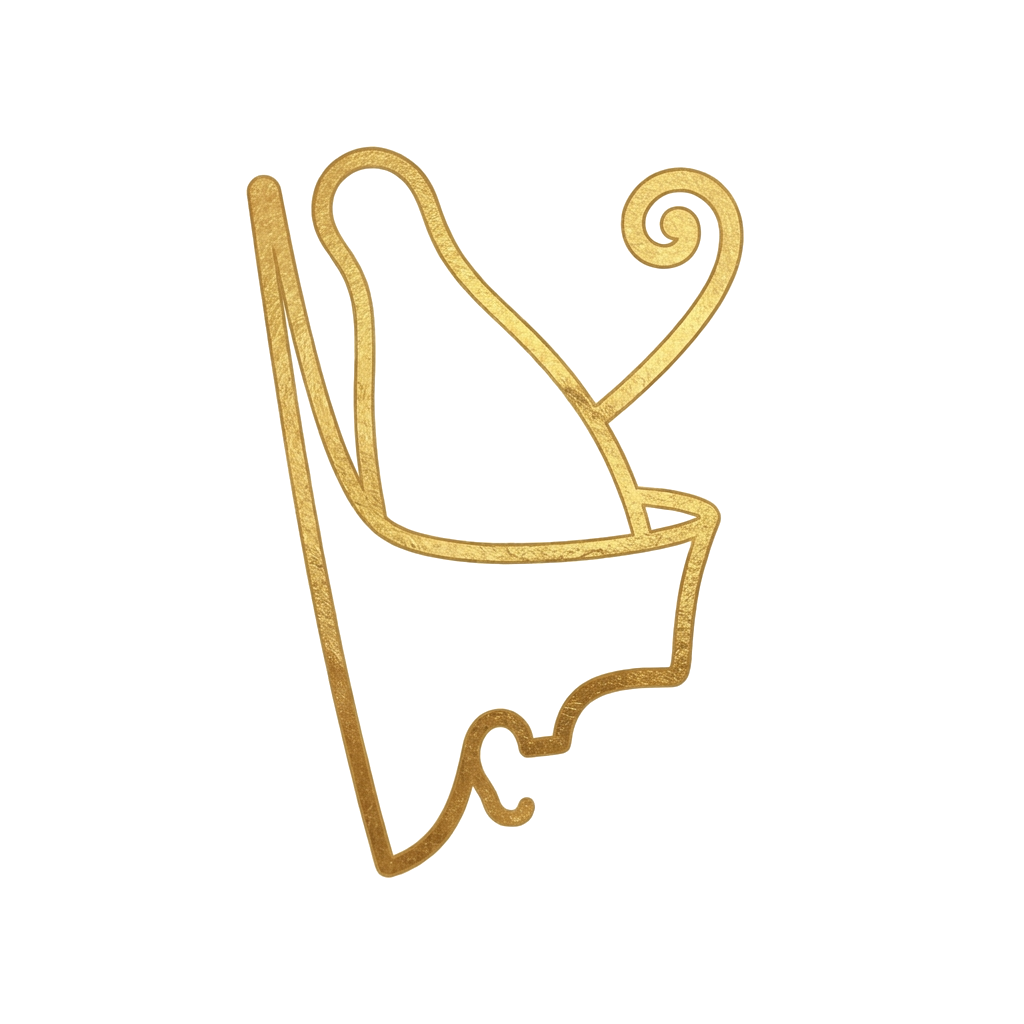
Pschent
The double crown of unified Egypt: white Hedjet of the south fitted into red Deshret of the north, declaring two lands one head, worn from the First Dynasty to the Ptolemies and never once recovered as an object.
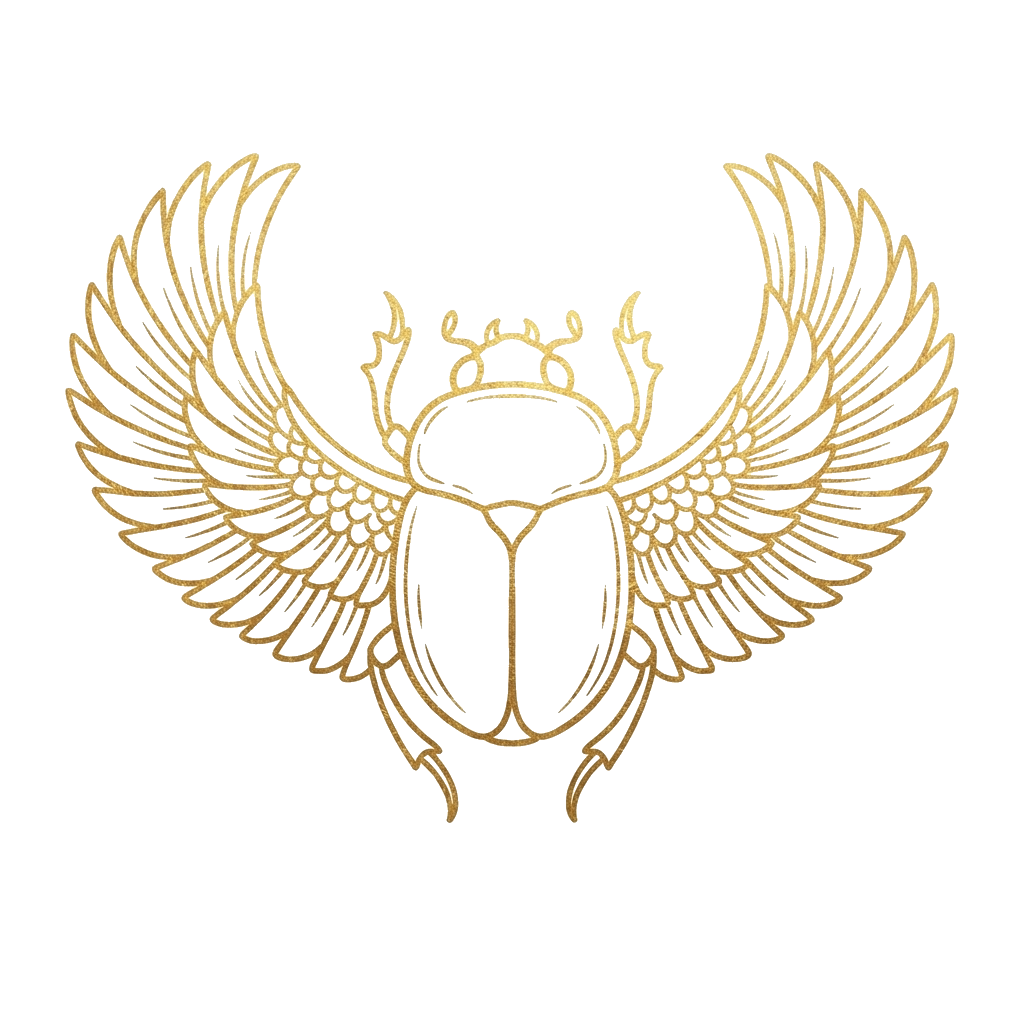
Scarab
The sacred dung beetle of ancient Egypt — embodiment of the sun god Khepri, symbol of spontaneous creation, transformation, and the daily renewal of existence.
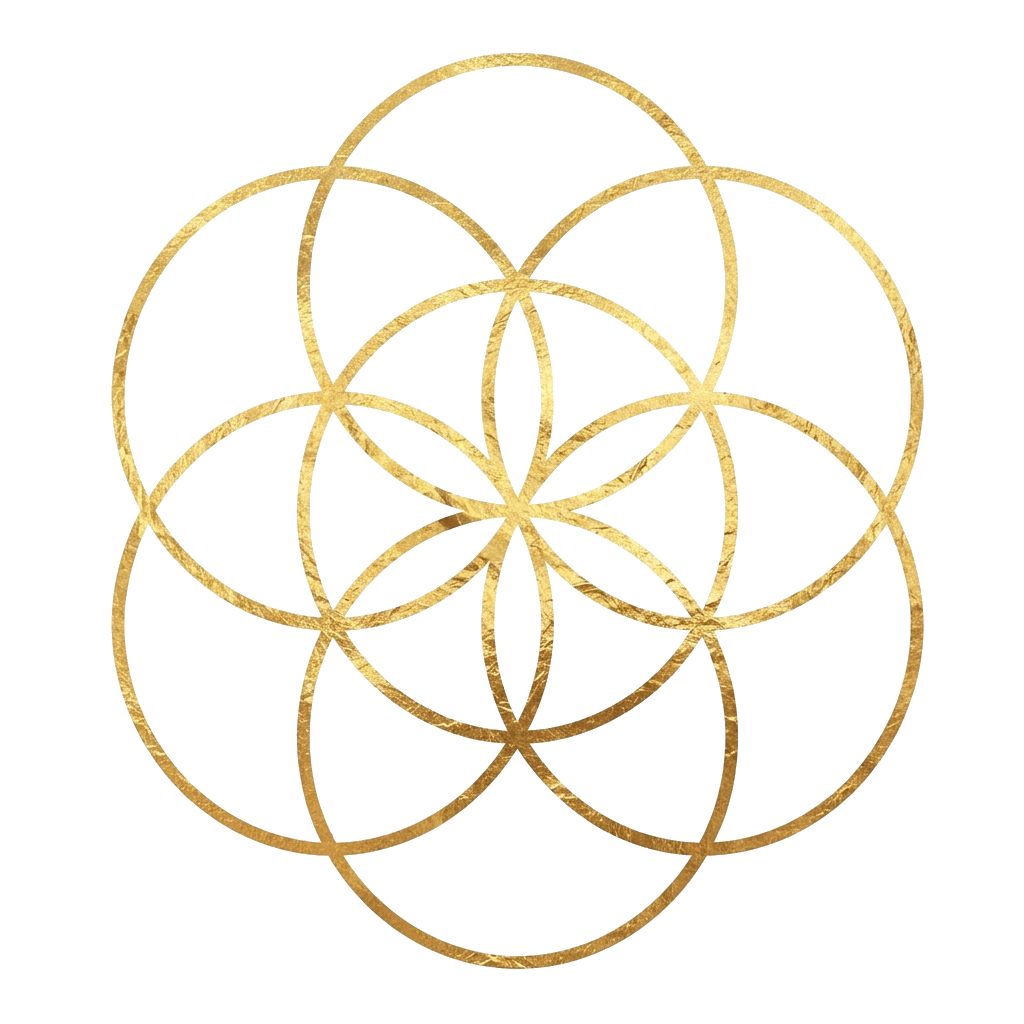
Seed of Life
Seven overlapping circles in sixfold symmetry — the genesis pattern from which the Flower of Life, Egg of Life, and all sacred geometric forms unfold, encoding the seven days of creation.
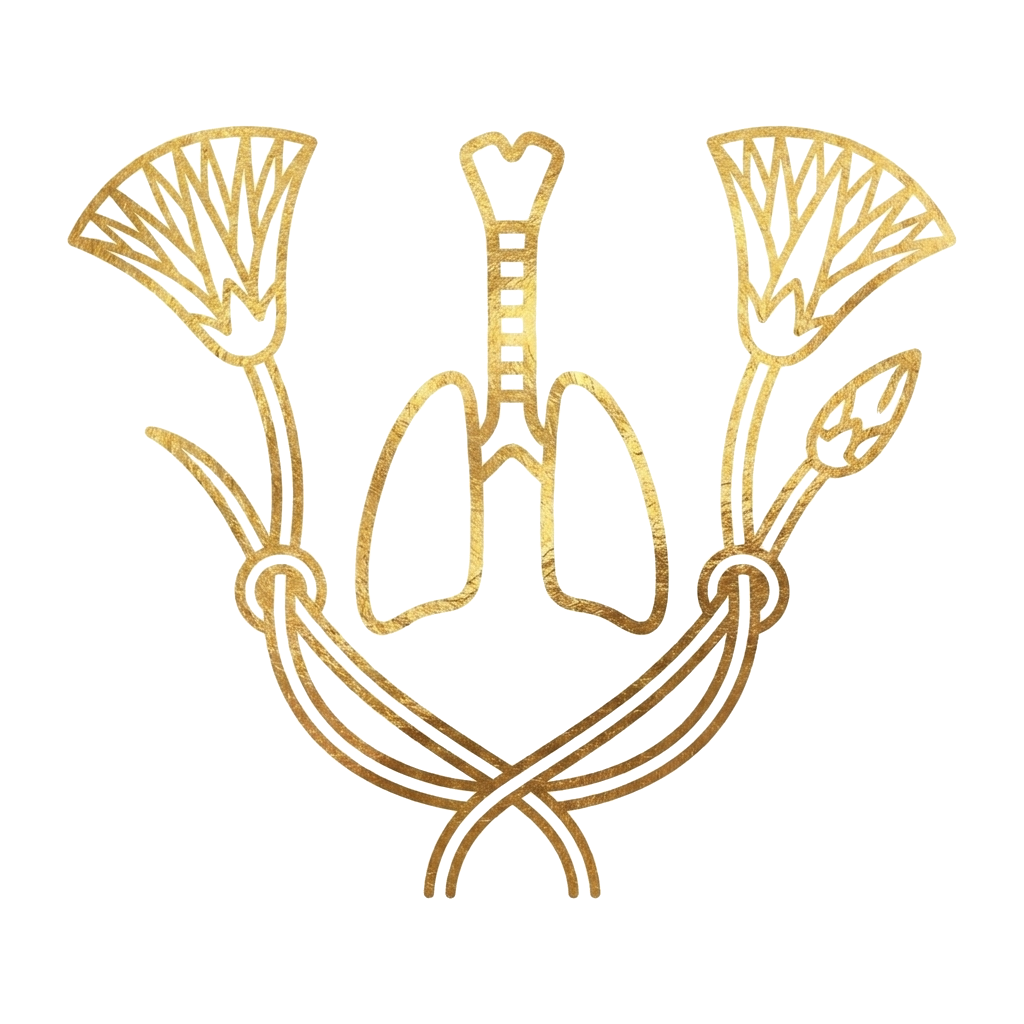
Sema-Tawy
Sema-tawy is the Egyptian 'Uniter of the Two Lands' — a windpipe-and-lungs hieroglyph (Gardiner F36) with papyrus and lotus stems knotted around it, rendering the union of Lower and Upper Egypt as one breath through one throat.
Shen Ring
A closed rope-loop with a tangent base, gripped in the talons of Horus and Nekhbet to wrap the pharaoh in eternal encircled protection.
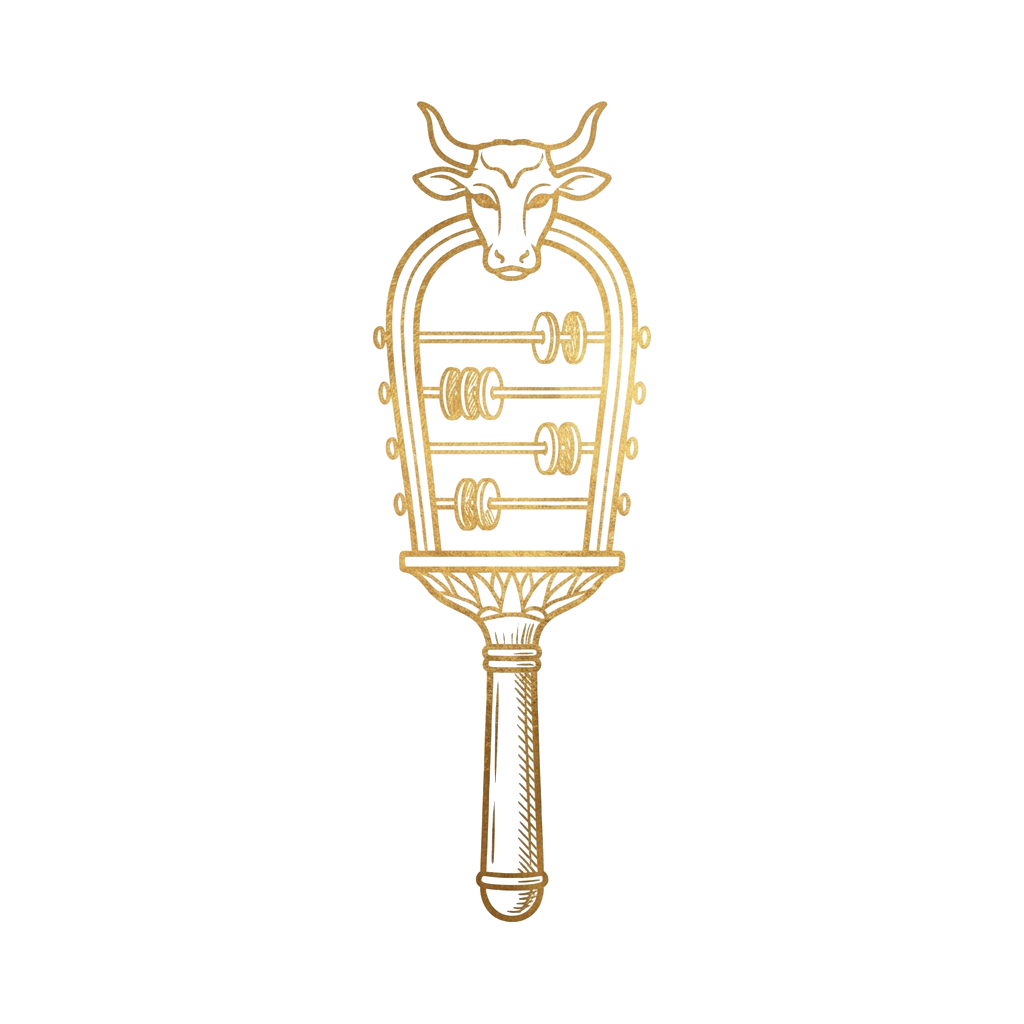
Sistrum
The sistrum is the sacred Egyptian rattle of Hathor and Isis whose metallic jingle was offered to the goddess as audible theology and used to disperse the chaotic energies of Set.
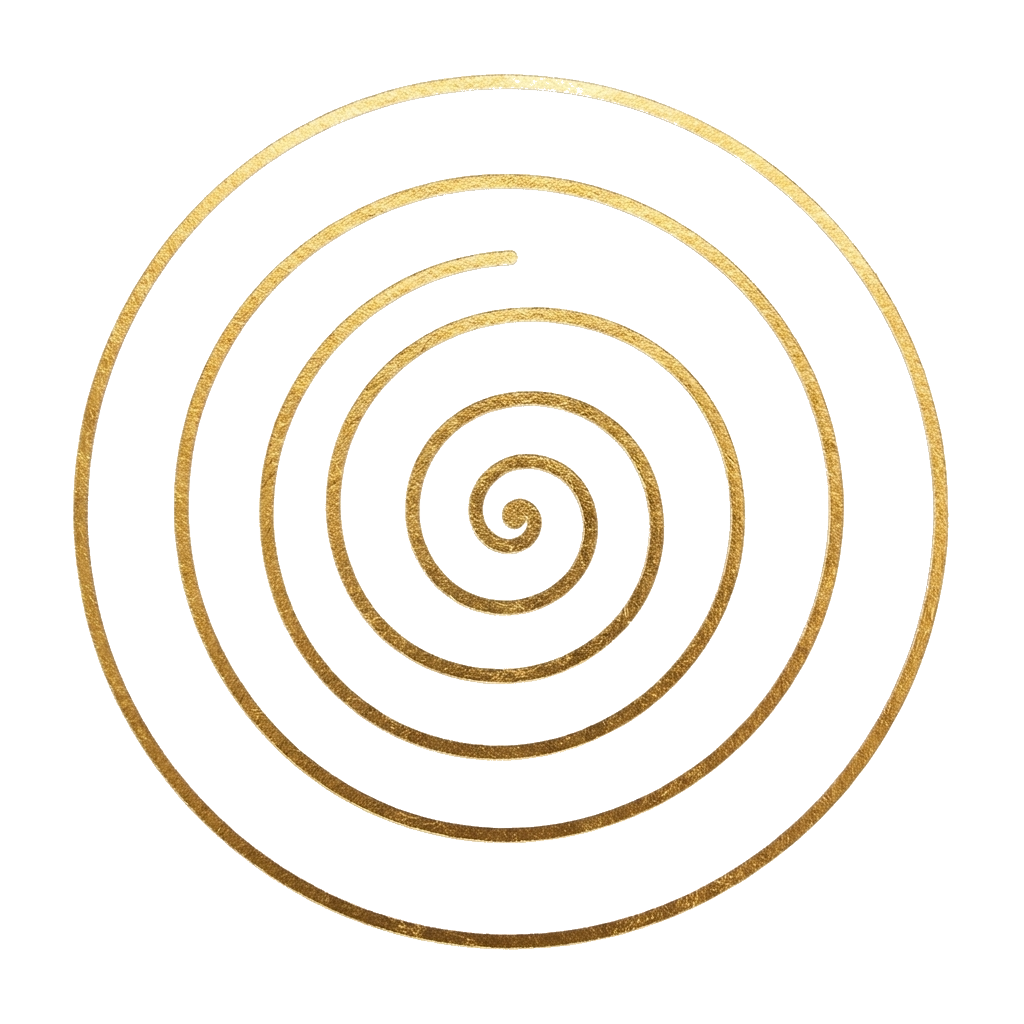
Spiral
The oldest and most universal decorative motif in human art — carved into Neolithic stones, encoded in galaxies and DNA, representing the fundamental pattern of growth, evolution, and return.
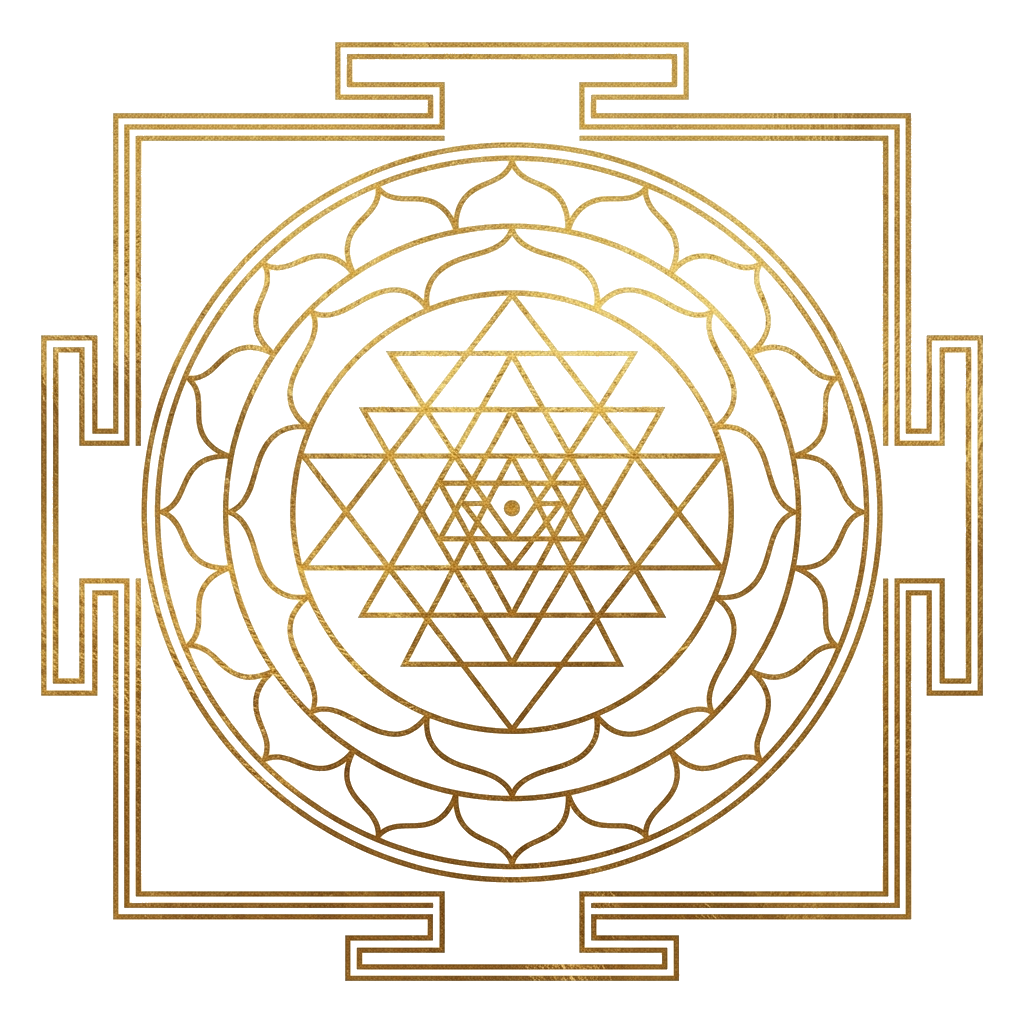
Sri Yantra
The queen of yantras — nine interlocking triangles forming 43 smaller triangles around a central bindu, mapping the entire process of cosmic creation and dissolution in sacred geometry.
Star of David
Six-pointed star formed by two interlocked equilateral triangles. Known in Hebrew as <em>Magen David</em>, 'Shield of David.' The geometric figure is ancient and pre-Jewish; its specific identification with Jewish identity is medieval, consolidating only between the 14th and 17th centuries before becoming the central emblem of Zionism in 1897 and the state of Israel in 1948. The same figure appears in Hindu tantra as the <em>Shatkona</em>, in Hermetic alchemy as the union of opposites, and in 17th-century Christian magical use, each tradition reading it differently.
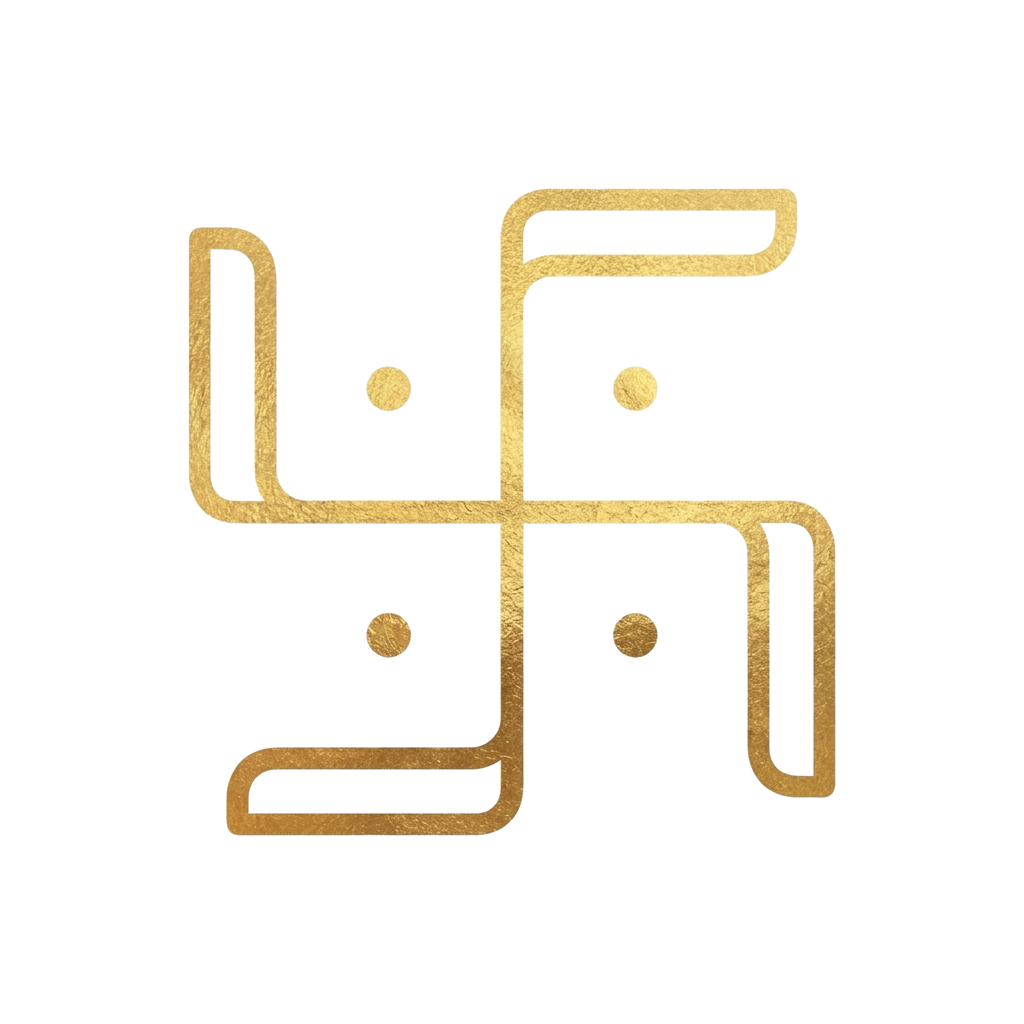
Swastika (Sacred Solar Symbol)
A 5,000-year-old sacred symbol of auspiciousness, solar energy, and cosmic rotation -- Sanskrit for 'well-being.' Sacred to over 1.5 billion Hindus, Buddhists, and Jains. Its 20th-century appropriation by the Nazi regime does not define its original or continuing meaning.
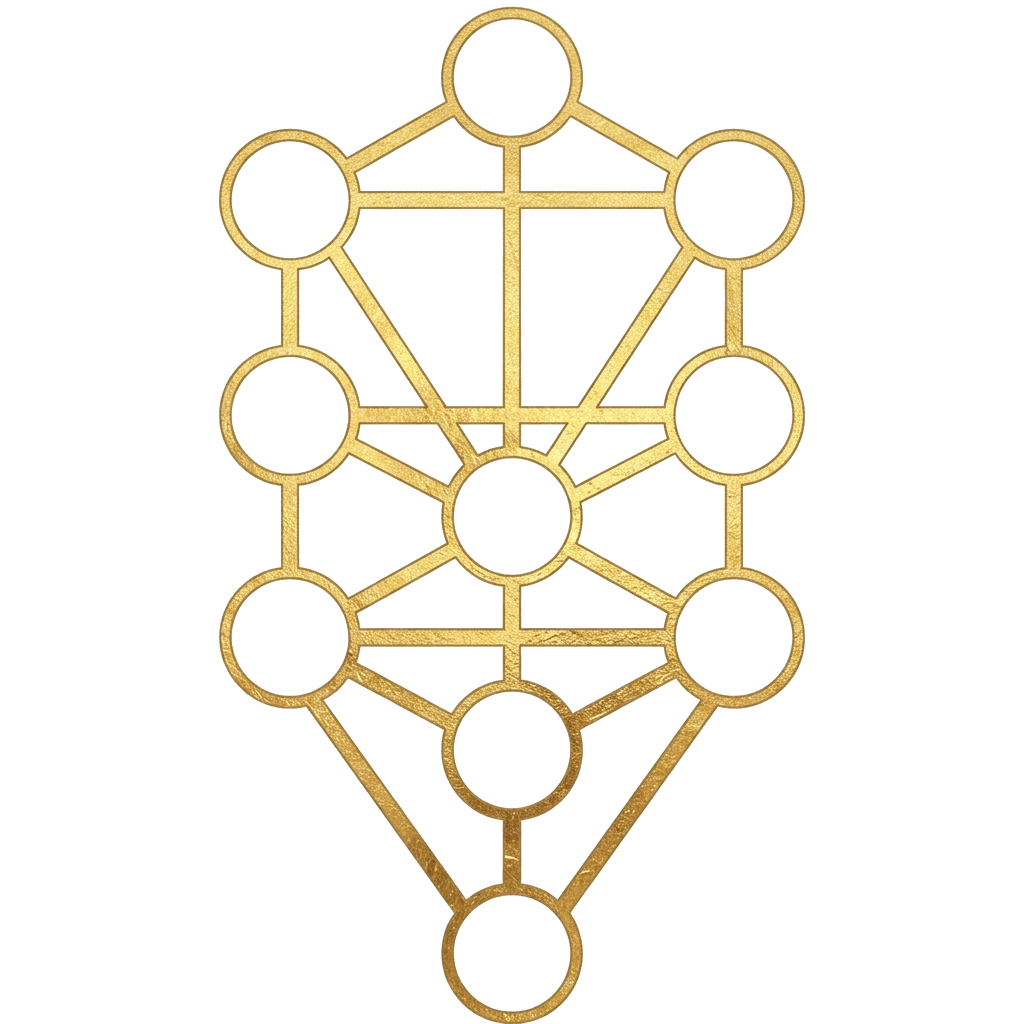
Tree of Life
The most universal sacred symbol in human civilization — appearing in every major culture as the axis connecting heaven, earth, and underworld, mapping the structure of reality and the path of the soul.
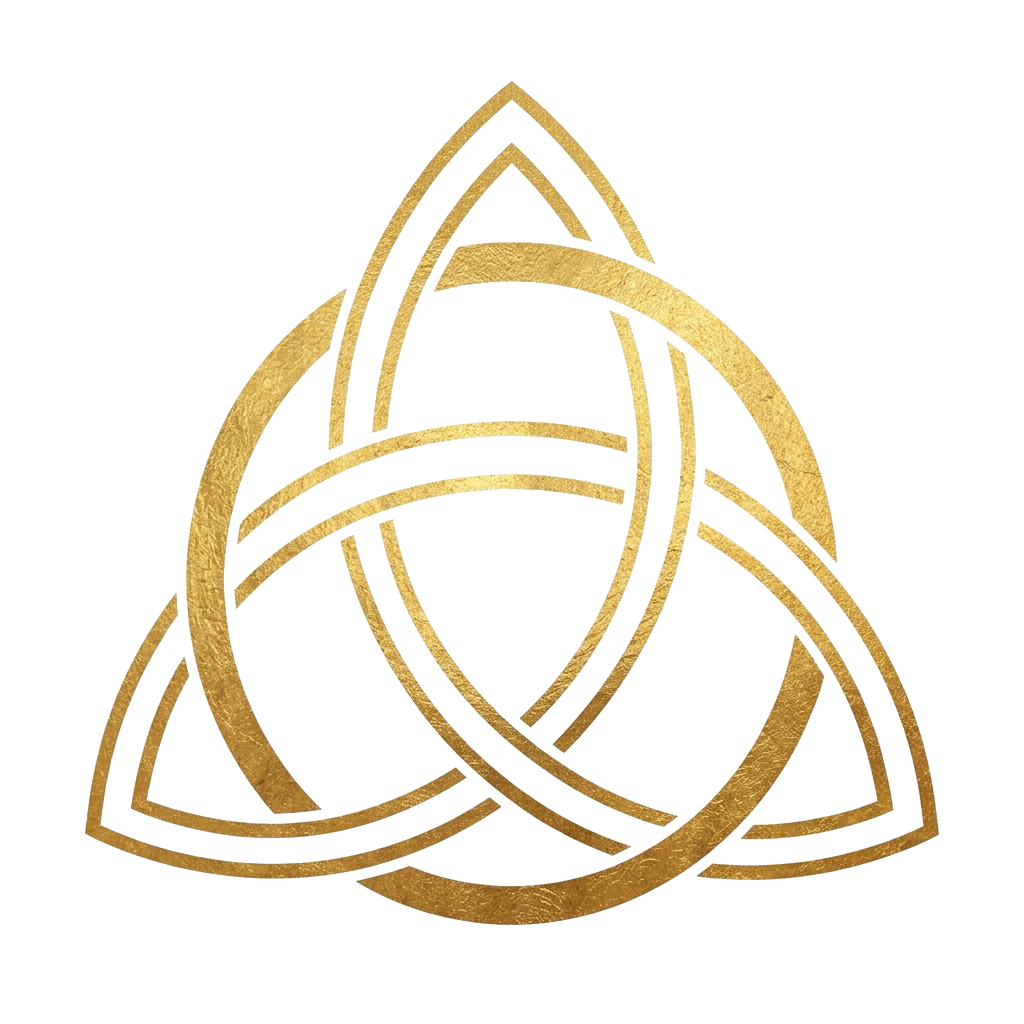
Triquetra
Three interlaced arcs forming a continuous knot — a Celtic and Christian symbol of threefold unity, from the triple goddess to the Holy Trinity, with no beginning and no end.
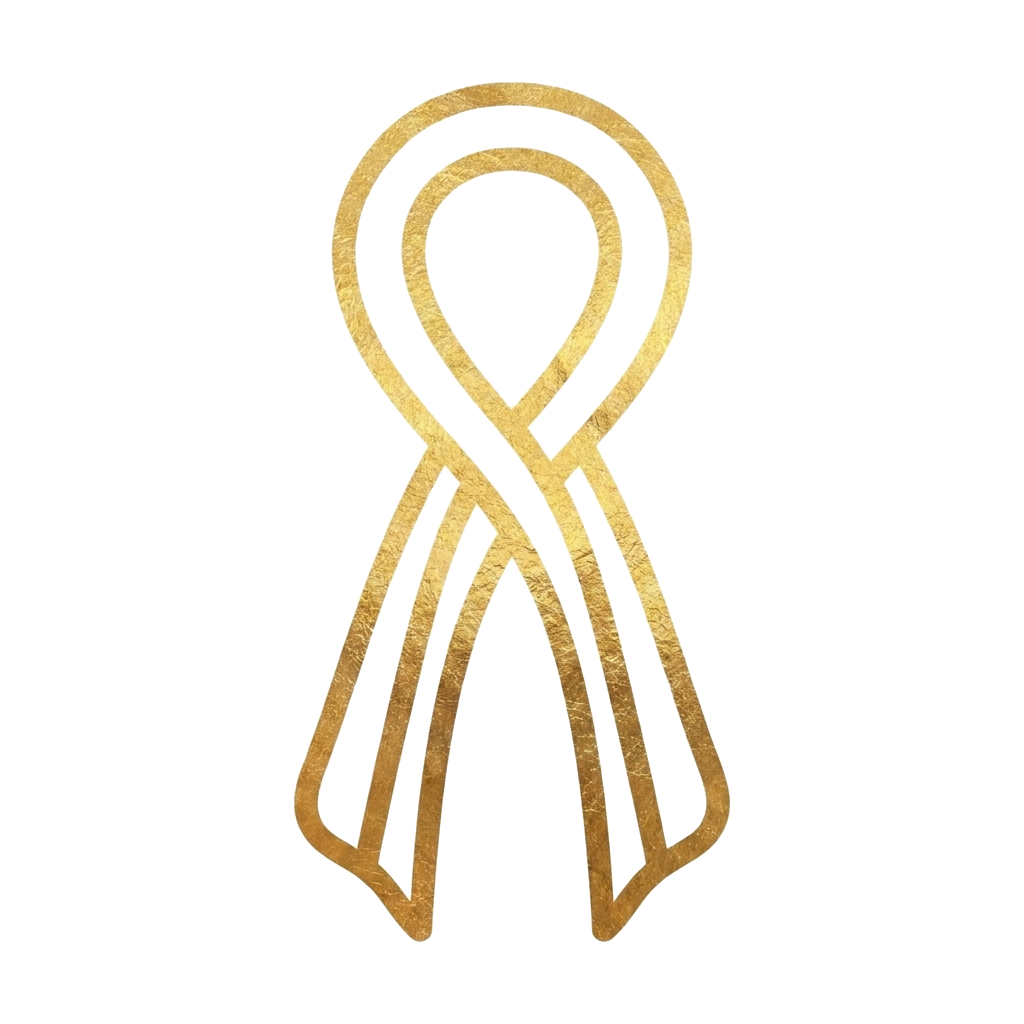
Tyet (Knot of Isis)
The Tyet, or Knot of Isis, is an ancient Egyptian looped-knot amulet placed at the throat of the mummy in red jasper to channel the protective blood of Isis.
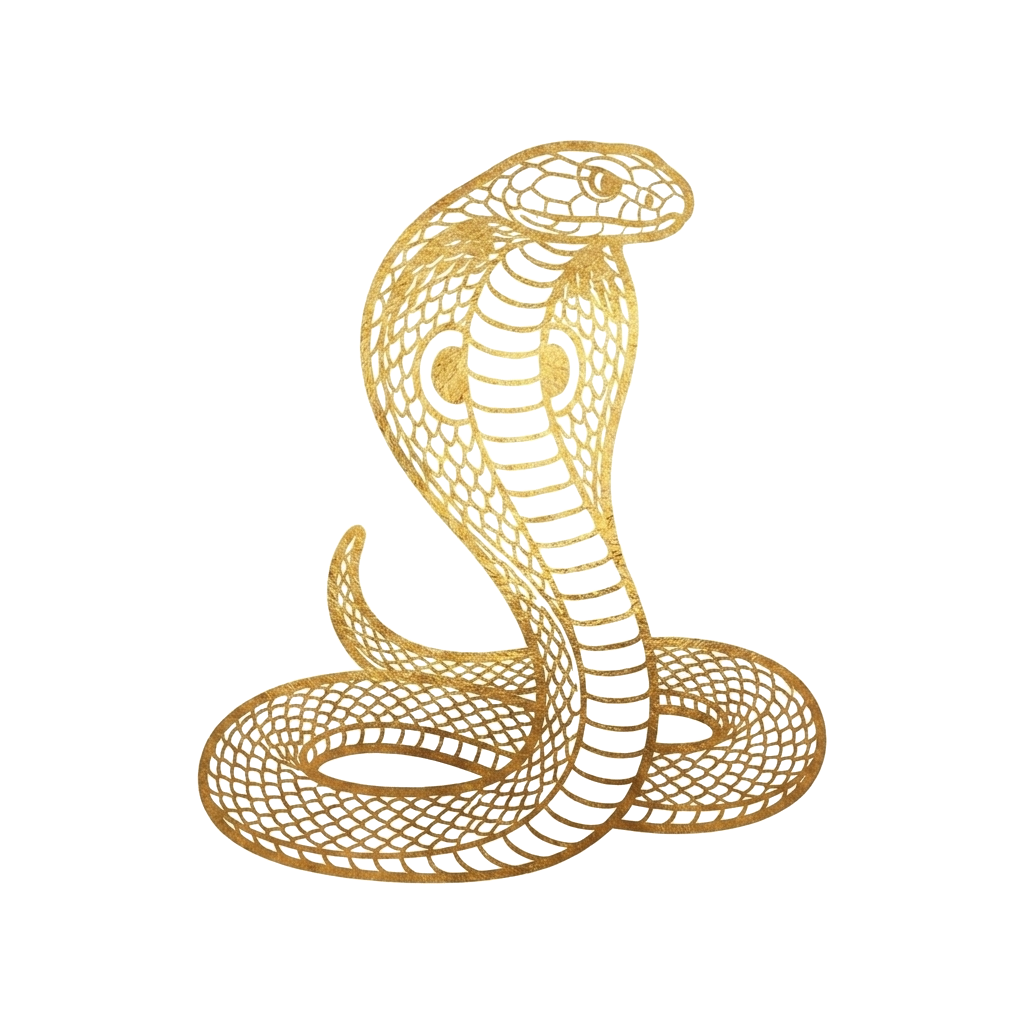
Uraeus
The rearing cobra on the pharaoh's brow: the goddess Wadjet manifest as a fire-spitting guardian, worn as the king's most active piece of divine armor.
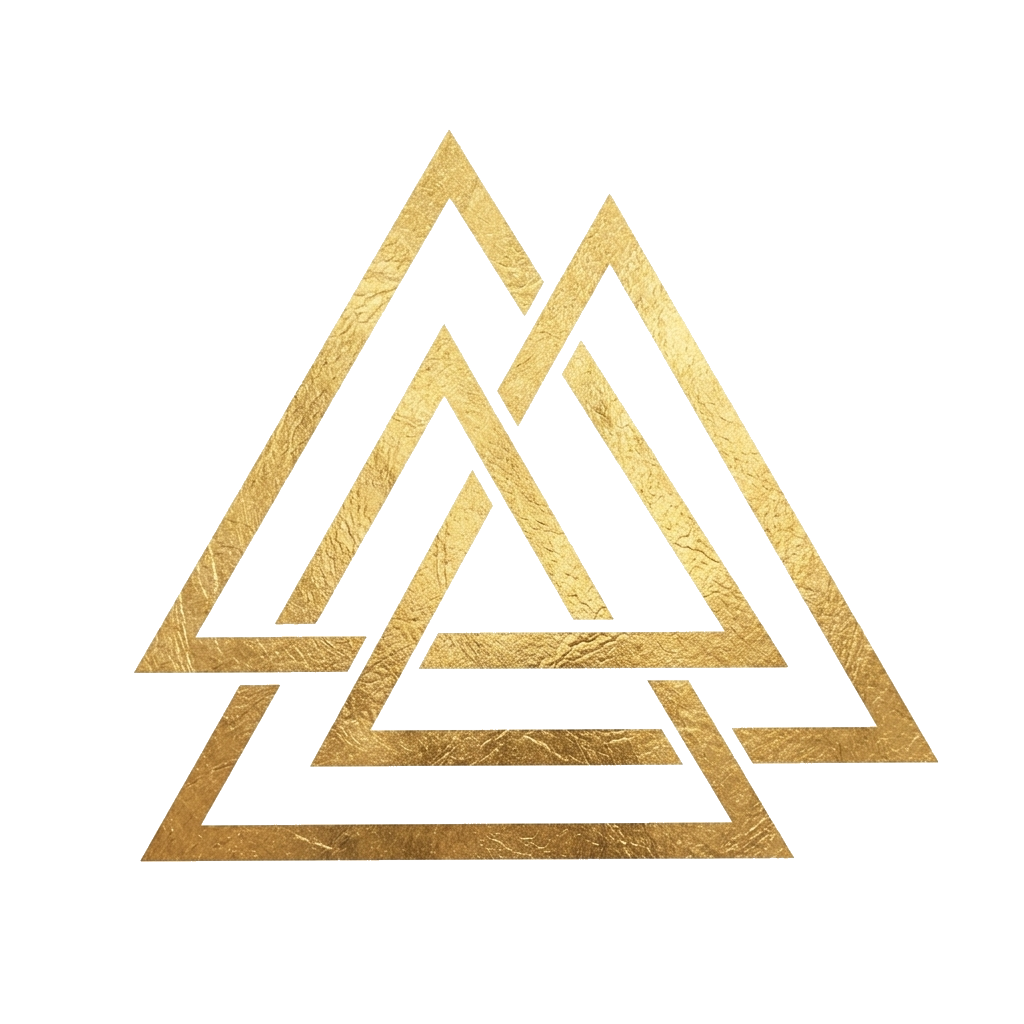
Valknut
Three interlocking triangles associated with the Norse god Odin — a symbol of the slain warriors, the transition between life and death, and the binding power of the Allfather.
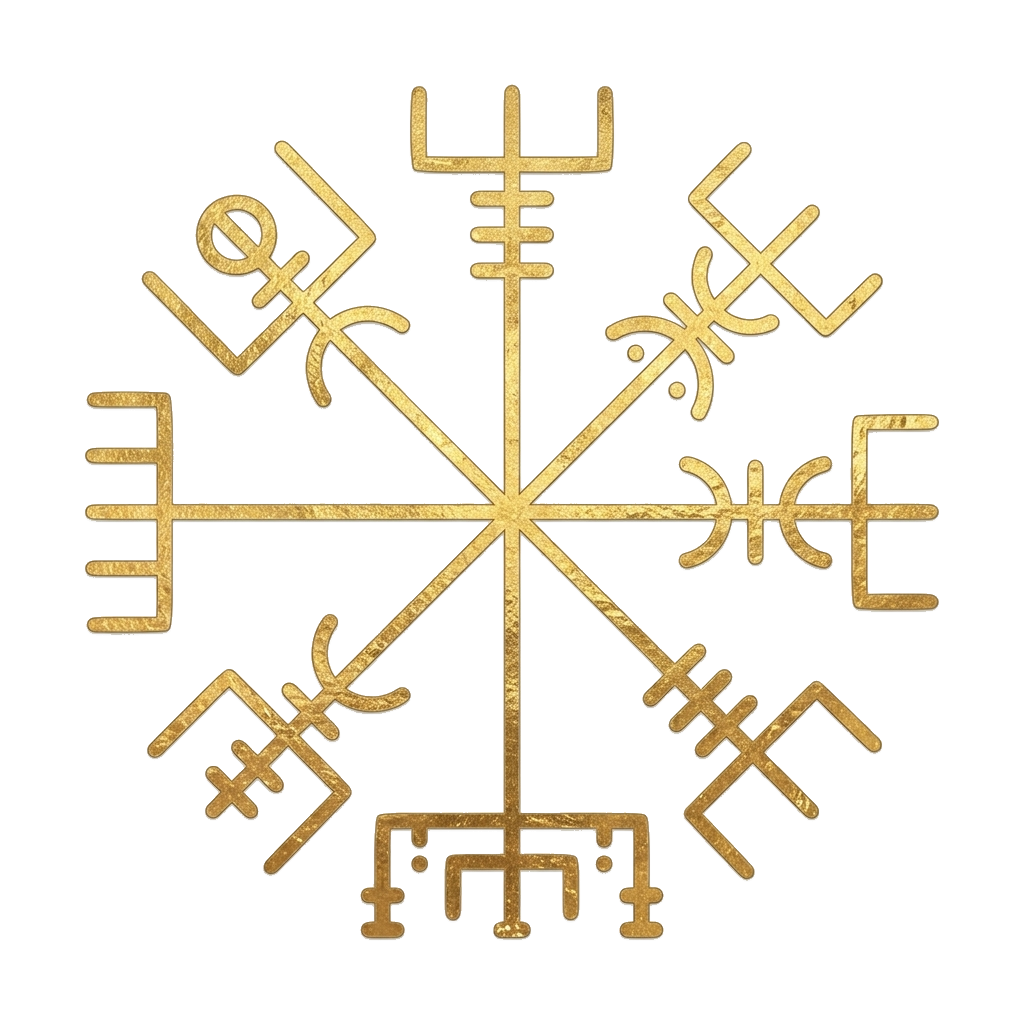
Vegvisir
The Norse 'wayfinder' or 'signpost' — an Icelandic magical stave believed to help the bearer find their way through rough weather and unknown paths, even when the way is lost.
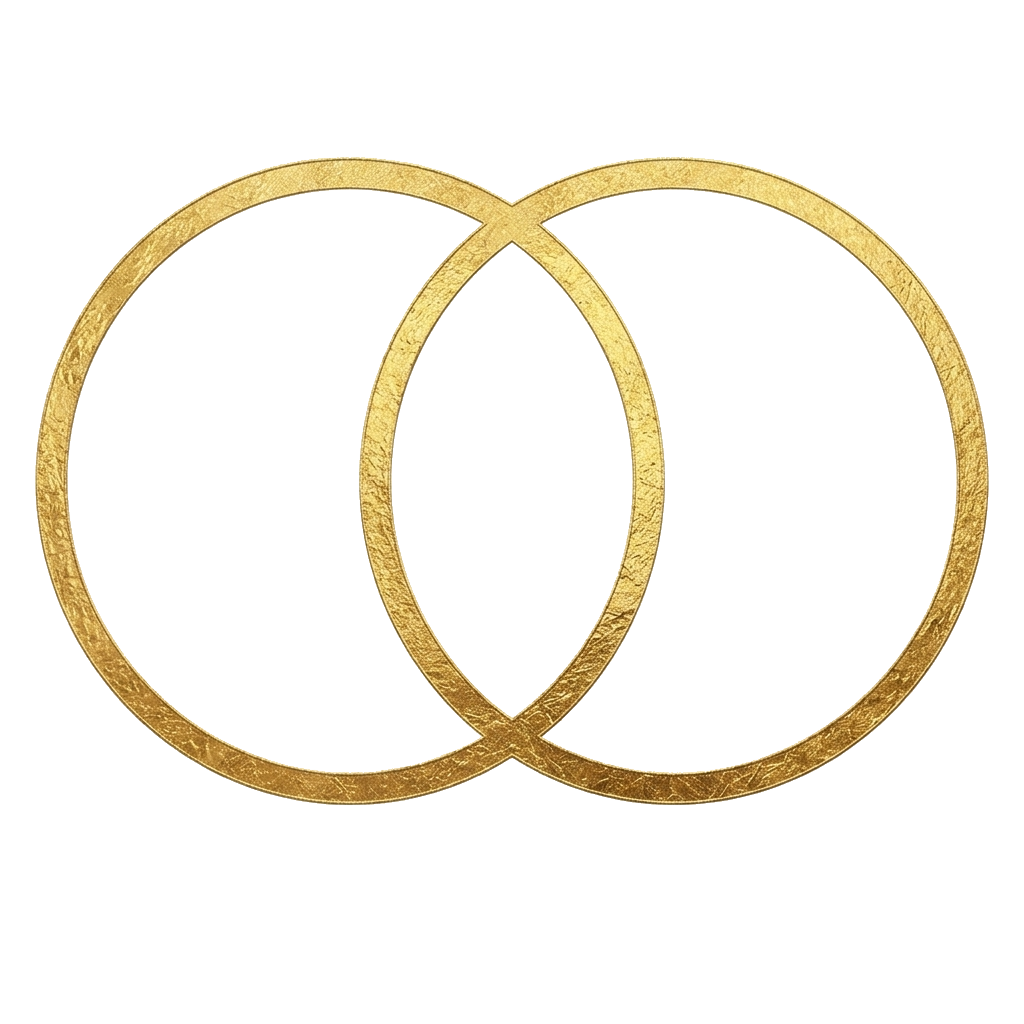
Vesica Piscis
The almond-shaped intersection of two equal circles — the geometric womb from which all sacred proportions emerge, encoding the square roots of 2, 3, and 5, and the mathematical foundation of Gothic cathedral design.
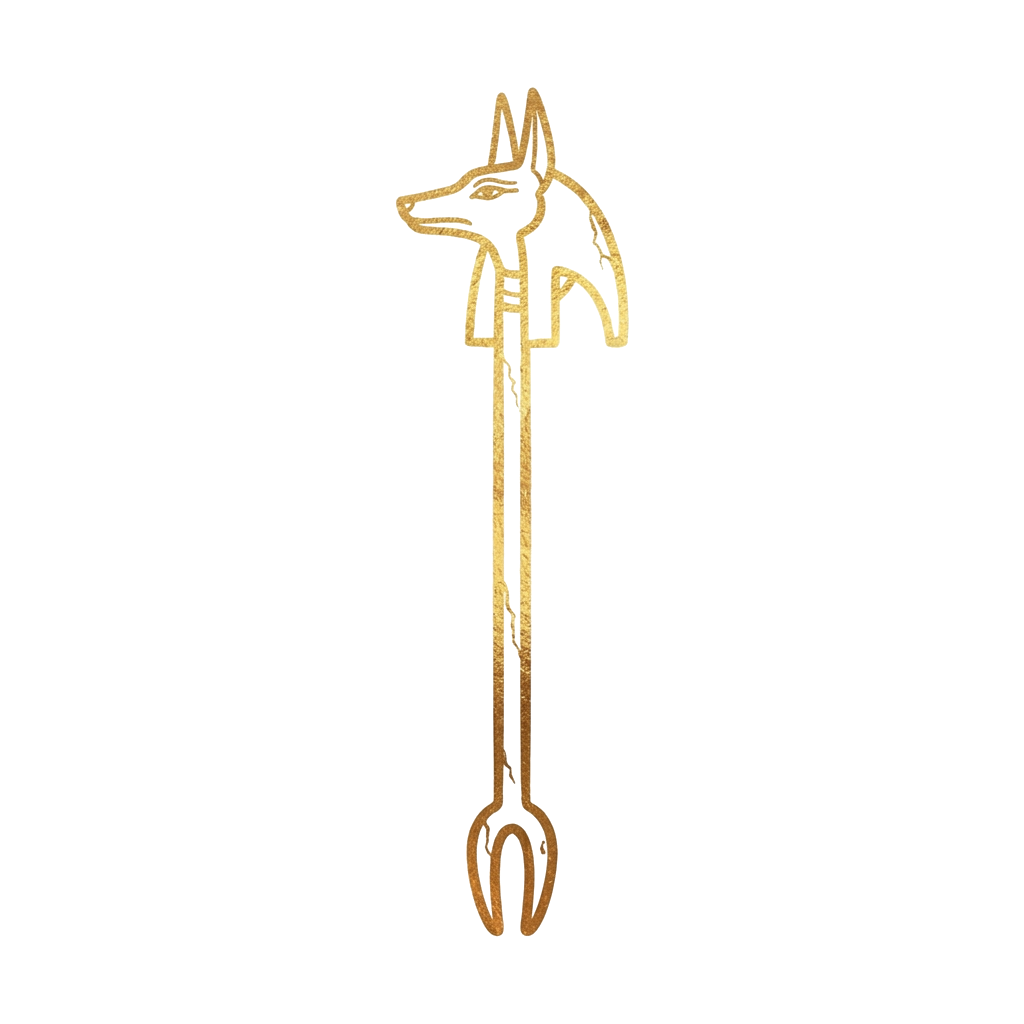
Was Scepter
The Was scepter is the long forked-base, jackal-headed staff carried by Egyptian gods and pharaohs as the visual sign of power and dominion — a portable axis mundi connecting earth to sky in the bearer's hand.
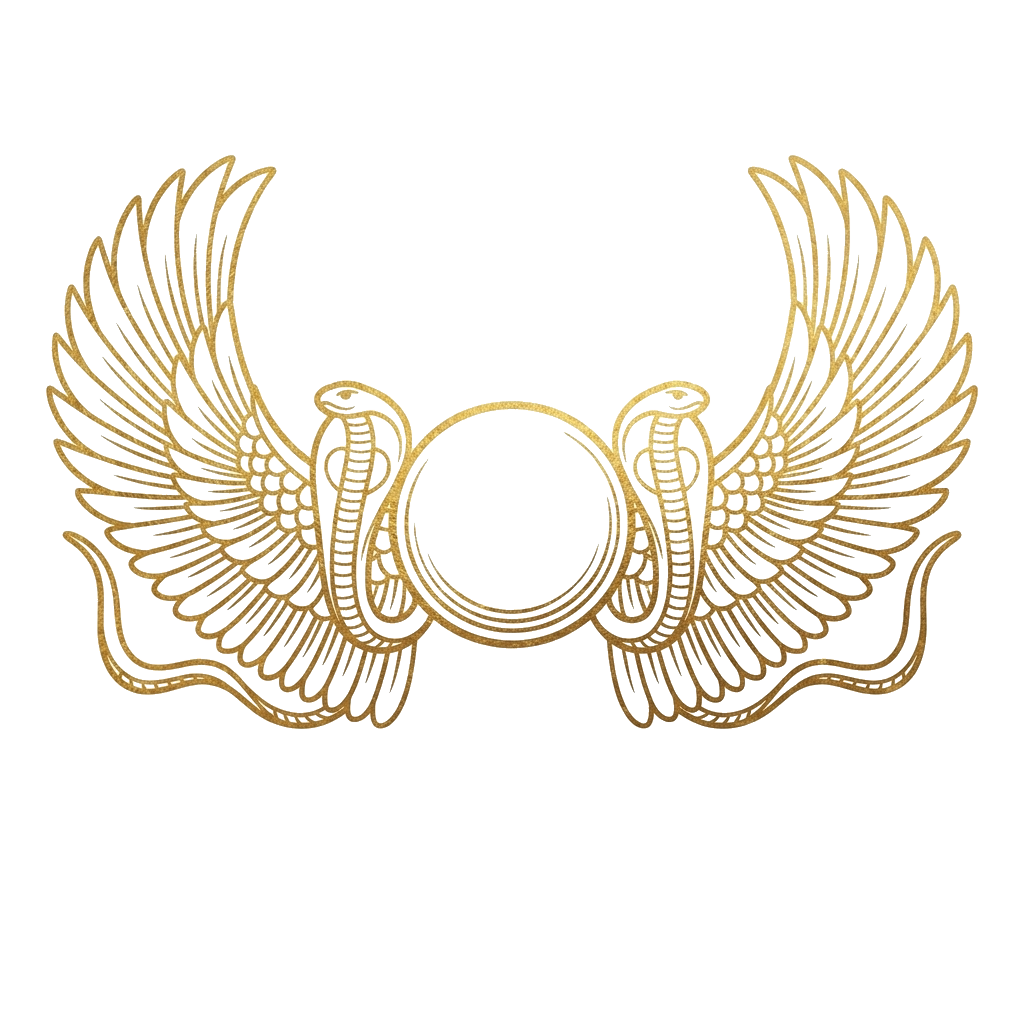
Winged Sun Disk
The supreme solar emblem of ancient Egypt, Mesopotamia, and Persia — wings of protection flanking the divine sun, marking the threshold between human and sacred space.
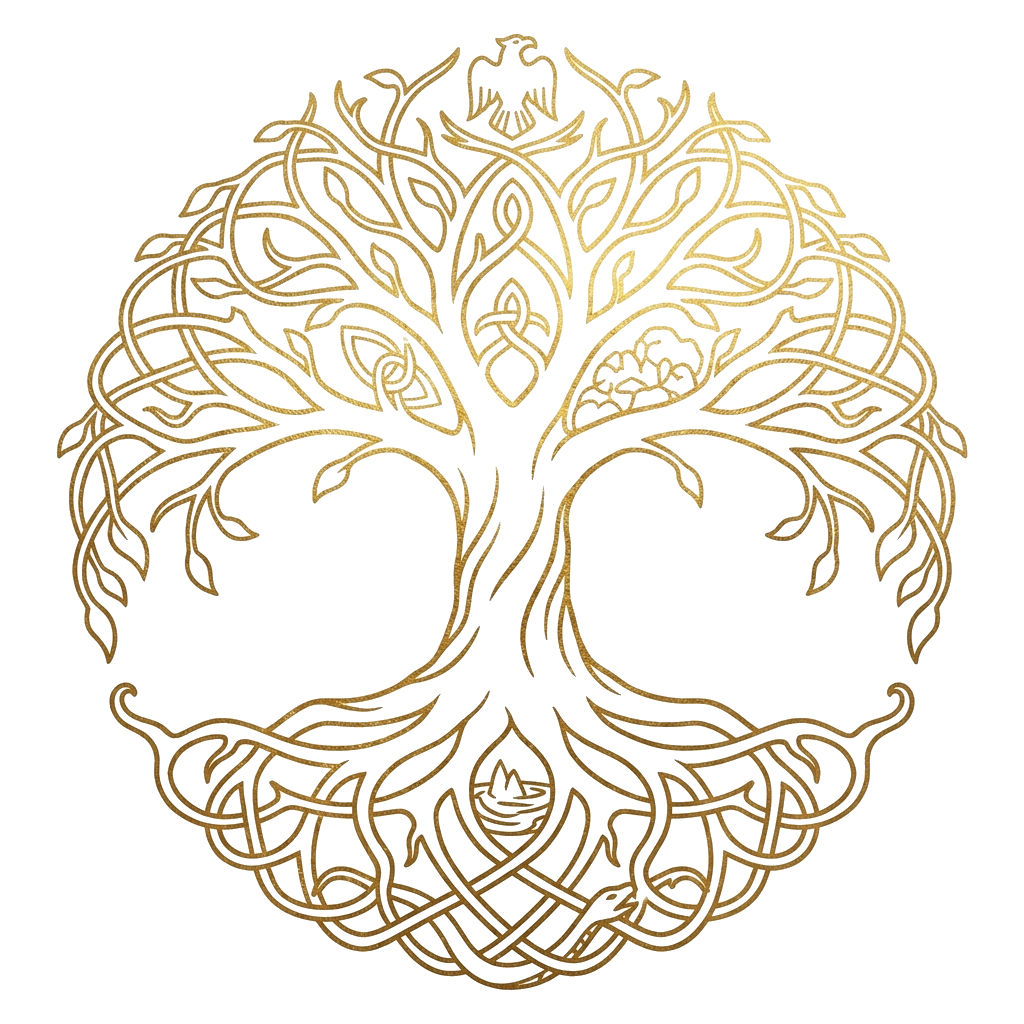
Yggdrasil
The World Tree of Norse cosmology — an immense ash tree connecting the nine worlds, sustained by three roots and three wells, housing an eagle, a serpent, and a squirrel who carries messages between them.
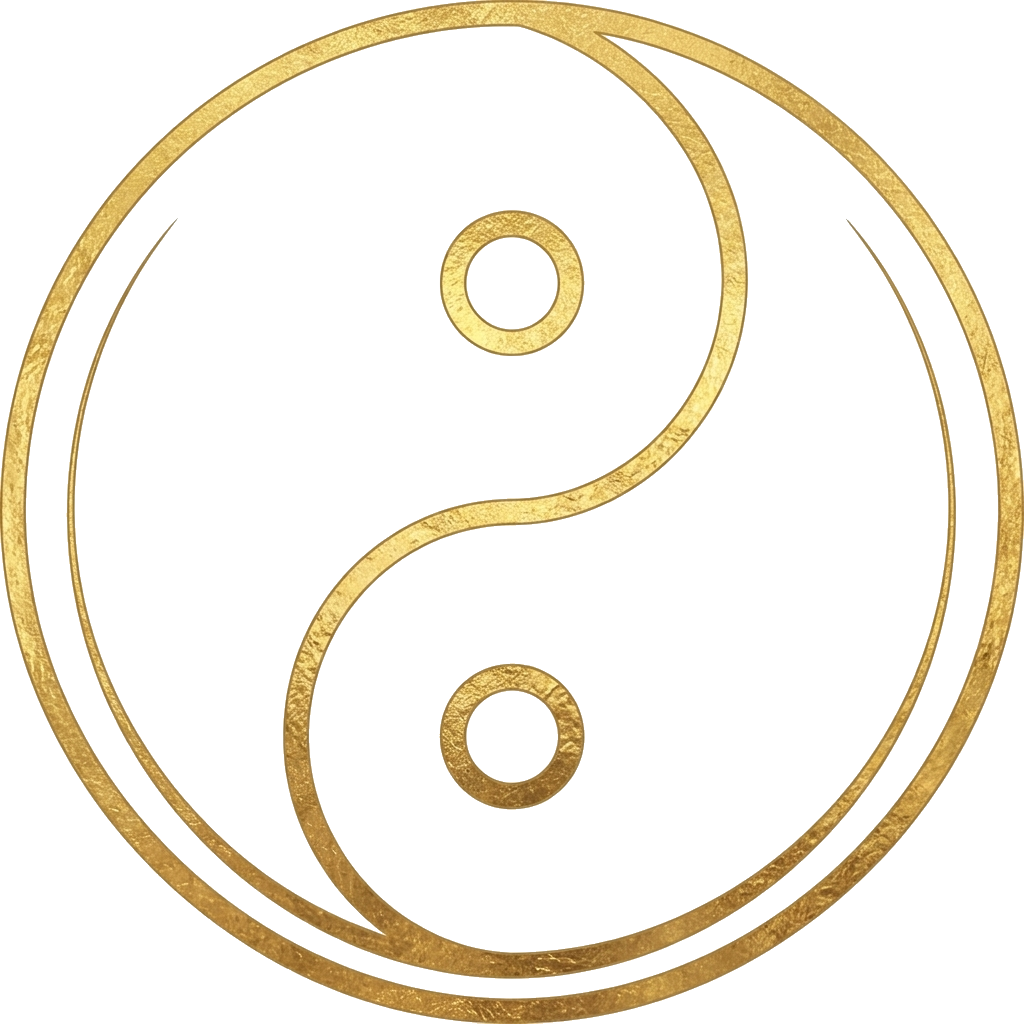
Yin-Yang
The Taijitu — the supreme symbol of Chinese philosophy, depicting the dynamic interplay of complementary opposites that generates and sustains all phenomena.