Ribollita
Italian Recipe
Overview
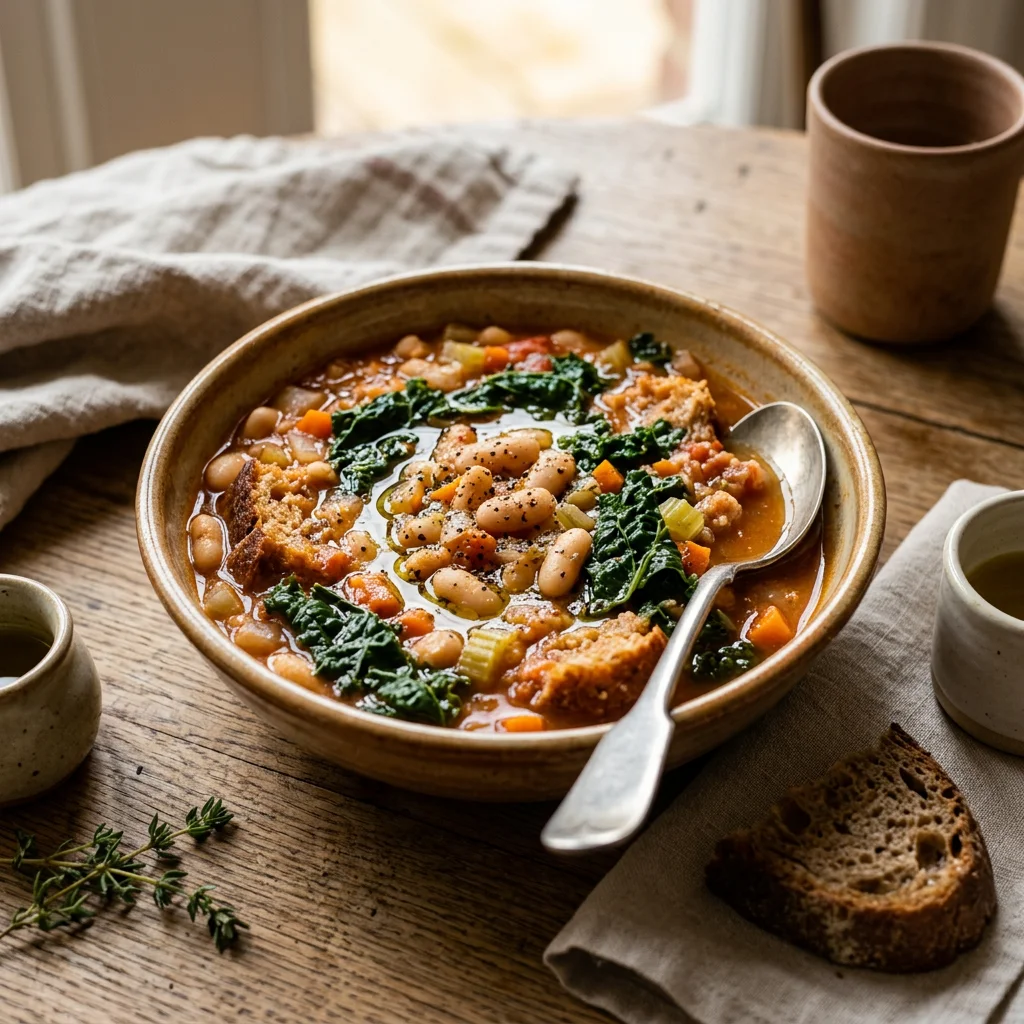
Ribollita is Tuscany's most iconic peasant soup — a thick, bread-thickened stew of cannellini beans, lacinato kale (cavolo nero), and root vegetables that improves with each reheating. The name literally means "reboiled," because this was historically a dish made from leftover minestrone, stretched with stale bread and simmered again the next day. In the agrarian kitchens of Tuscany, nothing was wasted, and ribollita is the highest expression of that principle — a dish that transforms humble scraps into something more satisfying than the original meal. The soul of ribollita is the interplay between the creamy, starch-thickened broth (half the beans are pureed into the liquid), the dark, mineral-rich cavolo nero, and the soft, almost custard-like texture of the bread as it absorbs the soup. It is traditionally made with pane toscano — the unsalted Tuscan bread that becomes a structural ingredient rather than a side. The soup is often finished with a generous pour of new-harvest olive oil, raw, so its peppery bite cuts through the richness. From an Ayurvedic perspective, ribollita is deeply grounding and nourishing — heavy, warm, and oily from the olive oil and bean starch. It builds tissue, calms the nervous system, and provides sustained energy. The bitterness of cavolo nero and the pungency of garlic prevent the dish from becoming too tamasic despite its density.
Strongly pacifies Vata. Mildly increases Kapha due to heaviness. Neutral to mildly aggravating for Pitta depending on tomato quantity.
Ingredients
- 2 cups Cannellini beans (cooked, or two 15-oz cans drained)
- 1 large bunch Lacinato kale (cavolo nero) (stems removed, leaves torn)
- 300 g Stale crusty bread (torn into rough chunks)
- 1/3 cup Extra-virgin olive oil (plus more for finishing)
- 1 large Onion (diced)
- 2 medium Carrot (diced)
- 2 stalks Celery (diced)
- 4 cloves Garlic (minced)
- 1 14-oz can Canned whole tomatoes (crushed by hand)
- 4 cups Vegetable broth
- 2 sprigs Fresh rosemary
- 1 piece Parmigiano-Reggiano rind (optional, for umami depth)
- 1 tsp Salt (or to taste)
- 1/2 tsp Black pepper (freshly ground)
Instructions
- Heat the olive oil in a large heavy pot or Dutch oven over medium heat. Add the onion, carrot, and celery — the soffritto — and cook slowly for 10-12 minutes until soft and beginning to caramelize. Add the garlic and cook 1 minute more.
- Take half the cannellini beans and mash them to a rough paste with a fork or the back of a spoon. Stir this paste into the soffritto along with the whole beans, crushed tomatoes, and rosemary sprigs. If using a Parmigiano rind, add it now.
- Pour in the vegetable broth and bring to a simmer. Add the torn kale leaves, pressing them down as they wilt. Season with salt and pepper.
- Simmer uncovered for 30 minutes, stirring occasionally, until the kale is completely tender and the broth has thickened from the bean starch.
- Add the torn bread chunks, pushing them into the liquid so they absorb the broth. Continue simmering for another 15-20 minutes, stirring occasionally, until the bread has broken down and the soup is very thick — almost stew-like.
- Remove the rosemary sprigs and Parmigiano rind. Taste and adjust salt. The soup should be thick enough to hold a spoon upright.
- Ladle into bowls and finish each serving with a generous pour of raw extra-virgin olive oil and a crack of black pepper. Ribollita is even better the next day — refrigerate and reheat with a splash of broth.
Nutrition
These values are estimates calculated from the ingredient list and may vary based on brands, cooking methods, and serving size. Not a substitute for medical or dietary advice.
How This Recipe Affects Each Dosha
Vata
Ribollita is one of the most Vata-pacifying dishes in Western cuisine. The warm, heavy, oily qualities ground Vata thoroughly. The bread adds substance and the olive oil provides lubrication. The long cooking breaks down fibers that might otherwise cause gas, and the mashed beans create a smooth, easy-to-digest base that nourishes without taxing digestion.
Pitta
The tomato and garlic add moderate heat, which Pitta types should be aware of during summer months or periods of inflammation. However, the sweet beans, bread, and bitter kale provide some balancing, and the quantity of tomato is modest relative to the whole dish. Pitta types can enjoy this in cooler weather without concern.
Kapha
This is a heavy, dense, starchy dish that can increase Kapha significantly. The bread, beans, and generous olive oil create exactly the kind of damp heaviness that Kapha constitutions accumulate. Kapha types should eat this sparingly, in smaller portions, and during cold weather when digestive fire is naturally stronger.
The garlic and rosemary stimulate agni, but the heavy bread and bean content can dampen it in large quantities. Best eaten at midday when digestive fire peaks, and in moderate portions.
Nourishes: Rasa (plasma), Mamsa (muscle), Meda (fat), Asthi (bone)
Adjustments by Constitution
For Vata Types
Add extra olive oil both in cooking and finishing. Include a few sage leaves in the soffritto for additional warmth. A pinch of red pepper flakes warms the dish further. Ensure the soup is very hot when served.
For Pitta Types
Reduce the tomato to half a can or omit entirely, replacing with additional broth. Skip the garlic or reduce to one clove. Increase the kale for its cooling bitterness. Finish with a milder olive oil and add fresh basil rather than rosemary.
For Kapha Types
Reduce the bread by half or omit it entirely. Use only one tablespoon of olive oil for cooking and skip the finishing oil. Add fennel and extra black pepper. Include peppery greens like arugula along with the kale. Serve a smaller portion as a side rather than a main.
Seasonal Guidance
Ribollita is a quintessential cold-weather dish — inappropriate for summer eating. In Tuscany, it is made from October through March, when cavolo nero is in season and the body craves dense, warming nourishment. In autumn, it counters rising Vata with its grounding heaviness. In winter, the warmth and substance sustain energy during the coldest months. Avoid during hot weather when agni is naturally lower and heavy foods create ama.
Best time of day: Lunch, when digestive fire is strongest and can handle the heaviness of bread and beans
Cultural Context
Ribollita embodies the Tuscan philosophy of cucina povera — poor cooking — where ingenuity transforms the simplest ingredients into deeply satisfying food. It originated with the contadini (farm laborers) who would make a large pot of bean and vegetable soup on Monday, then stretch it through the week by adding stale bread and reboiling each day. The aristocratic Florentines eventually adopted the dish, as they did with many peasant foods, and now it appears on restaurant menus alongside more refined Tuscan fare. In homes throughout the Chianti and Val d'Orcia regions, ribollita remains a winter ritual — inseparable from the first cold nights, the fireplace, and the year's new-harvest olive oil.
Deeper Context
Origins
Ribollita descends from Tuscan cucina povera (poverty cookery) traditions of transforming leftovers into distinct dishes through additional preparation. The name 'reboiled' (from Italian 'ribollire') marks the second cookery as definitional rather than incidental. Pre-tomato versions existed for centuries; tomato integration occurred in the 18th-19th century. Cavolo nero (Tuscan black kale) is specifically Tuscan agricultural heritage — the long-leafed dinosaur-kale variety has been cultivated in Tuscany for at least 600 years.
Food as Medicine
Cavolo nero is among the most nutrient-dense cruciferous vegetables — exceptionally high in vitamin K, vitamin A, vitamin C, and glucosinolates. Bean-and-bread amino acid complementation provides complete protein. Rosemary's cognitive and circulatory phytochemistry. The dish is accidentally one of the most therapeutically-dense preparations in Italian regional cookery — a peasant waste-prevention technique that produces unusually high phytonutrient concentration.
Ritual & Seasonal Role
Autumn and winter Tuscan peasant food — cavolo nero peaks after the first frosts (November-February). Classical Tuscan Sunday family lunch. Not religiously ceremonial but deeply tied to Tuscan regional identity and to cucina povera cultural heritage. Featured at Tuscan agriturismo restaurants and Italian-restaurant menus globally as quintessential Tuscan.
Classical Pairings & Cautions
Crusty bread, extra-virgin Tuscan olive oil drizzle at serving, Parmigiano-Reggiano shavings. A glass of Chianti Classico or Brunello di Montalcino. Cautions: gluten intolerance precludes traditional bread; FODMAP issues from beans; cruciferous goitrogens affect thyroid at high doses (cooking substantially reduces); oxalate content in kale contraindicates frequent consumption for kidney-stone patients; rosemary at culinary doses is safe.
Cross-Tradition View
How other medical and food-wisdom traditions read this dish. Each tradition names the same physiological reality in its own language — the agreements across them are where universal principles live.
Traditional Chinese Medicine
Cannellini beans build Kidney essence and tonify Spleen Qi; cavolo nero (Tuscan kale) is cool-bitter and clears Heat from the Liver; bread is Spleen-Qi-tonifying; olive oil is cool-moistening; rosemary is warm-dispersing with cognitive-supporting action. A comprehensive Kidney-Liver-Spleen tonic — TCM physicians would recognize ribollita as classical therapeutic peasant cookery with unusually balanced organ support.
Greek Humoral
Hot-wet with cold-wet kale balance. Sanguine-building with Liver-clearing accent. Galenic Mediterranean peasant fare — the legume-and-bread-and-greens architecture matches classical Hippocratic prescriptions for working-class nourishment across seasons.
Ayurveda
Heating virya, sweet vipaka. Tridoshic with proper preparation — the bean-and-bread unctuousness balances the bitter-green lightness. Pacifies Vata through protein density. Mildly balances Kapha through the bitter cavolo nero. Pitta-neutral.
Tuscan Cucina Povera
Ribollita (literally 'reboiled') is Tuscan peasant soup par excellence — vegetables and beans are cooked day 1, stale Tuscan bread added day 2, the whole reboiled and served. Classic cucina povera waste-prevention technique that transforms leftovers into a distinct dish through the second cookery. Cavolo nero (Tuscan black kale) is the regional brassica that defines the dish's character — its dark leaves and assertive bitter flavor contrast with the beans and bread. One of the most culturally-weighted Tuscan dishes, alongside panzanella and acquacotta.
Chef's Notes
The quality of your olive oil matters enormously here, because it is used raw as a finishing element. Use the best you can find — ideally a Tuscan oil with that characteristic peppery bite. Cavolo nero (lacinato or dinosaur kale) is traditional and preferred for its silky texture when cooked; curly kale works but changes the character. If you have time, make the soup a day ahead and let it sit overnight in the refrigerator before reheating — this is the traditional method and produces the best texture. The Parmigiano rind is not strictly traditional but adds remarkable depth; remove it before serving.
Frequently Asked Questions
Is Ribollita good for my dosha?
Strongly pacifies Vata. Mildly increases Kapha due to heaviness. Neutral to mildly aggravating for Pitta depending on tomato quantity. Ribollita is one of the most Vata-pacifying dishes in Western cuisine. The tomato and garlic add moderate heat, which Pitta types should be aware of during summer months or periods of inflammation. This is a heavy, dense, starchy dish that can increase Kapha significantly.
When is the best time to eat Ribollita?
Lunch, when digestive fire is strongest and can handle the heaviness of bread and beans Ribollita is a quintessential cold-weather dish — inappropriate for summer eating. In Tuscany, it is made from October through March, when cavolo nero is in season and the body craves dense, warming n
How can I adjust Ribollita for my constitution?
For Vata types: Add extra olive oil both in cooking and finishing. Include a few sage leaves in the soffritto for additional warmth. A pinch of red pepper flakes warm For Pitta types: Reduce the tomato to half a can or omit entirely, replacing with additional broth. Skip the garlic or reduce to one clove. Increase the kale for its c
What are the Ayurvedic properties of Ribollita?
Ribollita has Sweet, Bitter, Astringent taste (rasa), Heating energy (virya), and Sweet post-digestive effect (vipaka). Its qualities (gunas) are Heavy, Warm, Oily, Dense. It nourishes Rasa (plasma), Mamsa (muscle), Meda (fat), Asthi (bone). The garlic and rosemary stimulate agni, but the heavy bread and bean content can dampen it in large quantities. Best eaten at midday when digestive fire peaks, and in moderate portions.