Minestrone
Italian Recipe
Overview
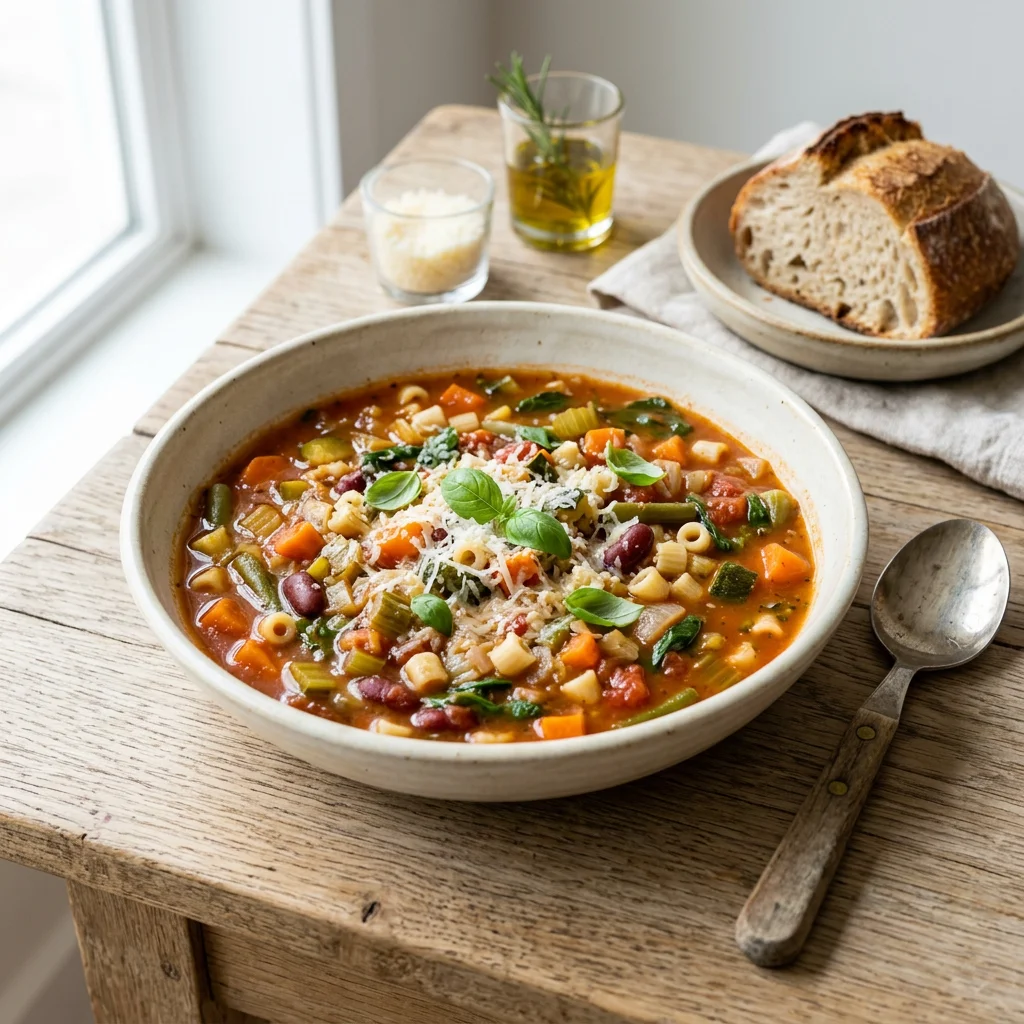
Minestrone is the great democratic soup of Italy — there is no single recipe, no canonical version, no authority to say what belongs and what does not. The word comes from minestra (soup) with the augmentative -one, meaning simply "big soup," and that is exactly what it is: a generous, seasonal collection of whatever vegetables, beans, and starches are available, simmered in broth until everything melds into a thick, nourishing whole. Every region, every household, every season produces a different minestrone. What distinguishes minestrone from a random vegetable soup is technique and intention. The soffritto base of onion, carrot, and celery cooked slowly in olive oil provides the aromatic foundation. Beans add body and protein. A starch — pasta, rice, or bread depending on the region — gives substance. And a Parmigiano rind, if available, melts slowly into the broth adding savory depth that no amount of seasoning can replicate. The soup is never rushed; it simmers gently, allowing the flavors to build over time. Ayurvedically, minestrone is one of the more balanced Western soups — the variety of vegetables provides a range of rasas (tastes), the beans add grounding protein, and the olive oil carries the fat-soluble nutrients. The warm, liquid nature supports digestion, and the fiber content supports healthy elimination.
Generally tridoshic with seasonal adjustments. Mildly pacifies Vata in its warm, soupy form. Appropriate for Pitta when tomato is moderate. Good for Kapha when made light.
Ingredients
- 3 tbsp Extra-virgin olive oil
- 1 large Onion (diced)
- 2 medium Carrot (diced)
- 2 stalks Celery (diced)
- 3 cloves Garlic (minced)
- 1 medium Zucchini (diced)
- 1 cup Green beans (cut into 1-inch pieces)
- 1 14-oz can Canned whole tomatoes (crushed by hand)
- 1.5 cups Cannellini beans (cooked or one 15-oz can, drained)
- 6 cups Vegetable broth
- 3/4 cup Small pasta (ditalini or elbow)
- 2 cups Fresh spinach (roughly chopped)
- 1 piece Parmigiano-Reggiano rind (optional)
- 6 leaves Fresh basil (torn)
- 1 tsp Salt (or to taste)
- 1/2 tsp Black pepper
Instructions
- Warm the olive oil in a large pot over medium heat. Add the onion, carrot, and celery — the soffritto — and cook slowly for 8-10 minutes, stirring occasionally, until soft and fragrant but not browned.
- Add the garlic and cook for 1 minute. Add the zucchini and green beans and stir for 2-3 minutes until they begin to soften at the edges.
- Pour in the crushed tomatoes and stir to combine. Cook for 3-4 minutes until the tomato begins to concentrate and deepen in color.
- Add the cannellini beans, vegetable broth, and Parmigiano rind if using. Bring to a gentle boil, then reduce heat and simmer uncovered for 25 minutes, allowing the flavors to meld and the broth to reduce slightly.
- Add the pasta and cook for the time indicated on the package, usually 8-10 minutes. The pasta will absorb broth as it cooks, thickening the soup.
- In the final 2 minutes, stir in the fresh spinach and let it wilt into the soup. Remove the Parmigiano rind.
- Season with salt and pepper. Ladle into bowls and tear fresh basil over each serving. Finish with a thread of good olive oil and grated Parmigiano at the table.
Nutrition
These values are estimates calculated from the ingredient list and may vary based on brands, cooking methods, and serving size. Not a substitute for medical or dietary advice.
How This Recipe Affects Each Dosha
Vata
The warm, soupy base with olive oil is soothing to Vata, and the beans provide grounding substance. However, the variety of raw and lightly cooked vegetables, plus the potential for gas from beans, means Vata types should ensure the soup is well-cooked and the vegetables are thoroughly soft. The pasta adds comforting substance.
Pitta
Minestrone is reasonably Pitta-friendly due to the sweet root vegetables, cooling spinach, and moderate spice level. The tomato adds some heat, but in proportion to the whole soup it is manageable. The variety of bitter and astringent vegetables (spinach, green beans, celery) helps balance the sweet and sour elements.
Kapha
This is one of the better soups for Kapha because of the variety of bitter and astringent vegetables and the brothy (rather than creamy) base. The beans add some heaviness but also protein. Kapha types should go light on pasta and cheese and emphasize the vegetable content.
The brothy, warm base gently supports agni. The garlic and olive oil provide mild stimulation. The variety of fibers supports healthy digestion and elimination without overtaxing the system.
Nourishes: Rasa (plasma), Rakta (blood), Mamsa (muscle)
Adjustments by Constitution
For Vata Types
Cook the vegetables longer until very soft. Add extra olive oil. Include root vegetables like potato and sweet carrot for grounding sweetness. Use rice instead of pasta. Add a pinch of fennel seed to the soffritto to reduce gas from the beans.
For Pitta Types
Reduce or omit tomato, replacing the acidity with a squeeze of lemon at the end. Increase cooling vegetables like zucchini, spinach, and fennel. Use fresh basil generously. Skip garlic or use only one clove.
For Kapha Types
Skip the pasta entirely — the beans provide enough substance. Use minimal olive oil (1 tablespoon). Add peppery greens like arugula at the end. Include plenty of celery, green beans, and leafy greens. Season aggressively with black pepper and a pinch of red pepper flakes.
Seasonal Guidance
Minestrone adapts to every season, which is its genius. In winter, make it thick with potatoes, cabbage, and root vegetables. In spring, lighten it with asparagus, peas, and fresh herbs. Summer minestrone uses zucchini, tomatoes, and fresh beans, and can even be served at room temperature in Liguria. In autumn, add squash and hearty greens. The recipe given here is a transitional version suitable for spring and autumn; adjust your vegetable selection with the calendar.
Best time of day: Lunch as a substantial meal, or dinner as a lighter option — minestrone is flexible
Cultural Context
Every Italian nonna will tell you her minestrone is the correct one, and every one of them is right. The soup predates written recipes and has no fixed form — it is defined by method and spirit rather than ingredient list. Ligurian minestrone includes pesto stirred in at the end. Milanese versions add rice instead of pasta. Neapolitan minestrone is enriched with pork rind. The Tuscan version leans on beans and bread. What they share is the soffritto base, a slow simmer, seasonal vegetables, and the philosophy that a great soup is an act of generosity — there is always enough for one more bowl, one more guest at the table.
Deeper Context
Origins
Minestrone descends from Latin ministrare (to serve) and predates Italian national unification by a millennium. Every Italian region contributed a regional minestrone, reflecting the cucina povera (poverty cookery) tradition of using whatever vegetables, legumes, grains, and aromatics were seasonally available. Post-Columbian additions include tomato (17th century), peppers (later), and some bean varieties; pre-Columbian minestroni used broad beans, chickpeas, black-eyed peas, and local vegetables.
Food as Medicine
Beans provide complete protein when paired with grain or bread. The vegetable-and-legume-and-olive-oil architecture aligns precisely with Mediterranean-diet clinical research showing cardiovascular and metabolic benefits. Fiber content is substantial; phytonutrient diversity across seasonal vegetables provides broad micronutrient coverage. One of the most clearly therapeutic everyday Italian dishes.
Ritual & Seasonal Role
Year-round with strong seasonal variation — summer minestroni feature zucchini, tomato, basil; winter minestroni feature cavolo nero, cabbage, potato, dried herbs. Daily Italian home-cooking staple. Not religiously ceremonial but functions as the everyday vegetable-forward soup across Italian domestic tradition.
Classical Pairings & Cautions
Crusty bread, Parmigiano-Reggiano shavings, olive oil drizzle. A glass of Chianti or Sangiovese. Cautions: FODMAP sensitivity from beans and garlic; gluten intolerance affects pasta-based regional versions (rice and barley variants accommodate); legume-gas in weak agni; commercial canned versions often carry high sodium.
Cross-Tradition View
How other medical and food-wisdom traditions read this dish. Each tradition names the same physiological reality in its own language — the agreements across them are where universal principles live.
Traditional Chinese Medicine
Cannellini beans build Kidney essence and tonify Spleen Qi; zucchini is cool-sweet and Spleen-Qi-supporting; tomato is cool-sour and moves Liver Qi; olive oil is cool-moistening; basil is warm-aromatic. A Kidney-essence-and-Spleen-Qi tonic with Liver-Qi-moving accent — TCM physicians would class this as ideal across-the-board vegetable soup for general health maintenance.
Greek Humoral
Neutral to mildly heating. Galenic-balanced preparation. The Hippocratic ideal of legume-and-vegetable-and-aromatic-herb soup for sustained working nutrition is precisely the minestrone architecture.
Ayurveda
Neutral-to-warming virya, sweet vipaka. Tridoshic with proper preparation — the balance of beans, vegetables, and olive oil covers all three doshas without strong aggravation of any single one. A classical everyday vegetable-and-legume soup.
Pan-Italian Regional
Minestrone is not a single dish but a tradition — every Italian region has its own version, with core variations across Ligurian (minestrone alla genovese with pistou), Tuscan (with cavolo nero), Roman (lardo-based), Lombard (with rice), and Emilian (with various pasta shapes). The name derives from Latin 'ministrare' (to serve). Ancient Roman working-class food; every iteration of Italian cuisine has contributed a minestrone to the overall tradition.
Chef's Notes
Minestrone thickens considerably as it sits, especially once the pasta absorbs liquid. If making ahead, cook the pasta separately and add it to individual bowls when serving — this keeps the soup from becoming stodgy. In summer, replace the spinach and green beans with fresh peas, corn, and chard. In winter, add potatoes, cabbage, and root vegetables. The Parmigiano rind is one of Italian cooking's great secrets — save rinds in the freezer for soups. If the soup tastes flat, a splash of red wine vinegar stirred in at the end brightens everything.
Frequently Asked Questions
Is Minestrone good for my dosha?
Generally tridoshic with seasonal adjustments. Mildly pacifies Vata in its warm, soupy form. Appropriate for Pitta when tomato is moderate. Good for Kapha when made light. The warm, soupy base with olive oil is soothing to Vata, and the beans provide grounding substance. Minestrone is reasonably Pitta-friendly due to the sweet root vegetables, cooling spinach, and moderate spice level. This is one of the better soups for Kapha because of the variety of bitter and astringent vegetables and the brothy (rather than creamy) base.
When is the best time to eat Minestrone?
Lunch as a substantial meal, or dinner as a lighter option — minestrone is flexible Minestrone adapts to every season, which is its genius. In winter, make it thick with potatoes, cabbage, and root vegetables. In spring, lighten it with asparagus, peas, and fresh herbs. Summer minest
How can I adjust Minestrone for my constitution?
For Vata types: Cook the vegetables longer until very soft. Add extra olive oil. Include root vegetables like potato and sweet carrot for grounding sweetness. Use ric For Pitta types: Reduce or omit tomato, replacing the acidity with a squeeze of lemon at the end. Increase cooling vegetables like zucchini, spinach, and fennel. Use f
What are the Ayurvedic properties of Minestrone?
Minestrone has Sweet, Sour, Bitter, Astringent taste (rasa), Neutral to mildly Heating energy (virya), and Sweet post-digestive effect (vipaka). Its qualities (gunas) are Light to Medium, Warm, Slightly Oily. It nourishes Rasa (plasma), Rakta (blood), Mamsa (muscle). The brothy, warm base gently supports agni. The garlic and olive oil provide mild stimulation. The variety of fibers supports healthy digestion and elimination without overtaxing the system.