Mercimek Corbasi
Turkish Recipe
Overview
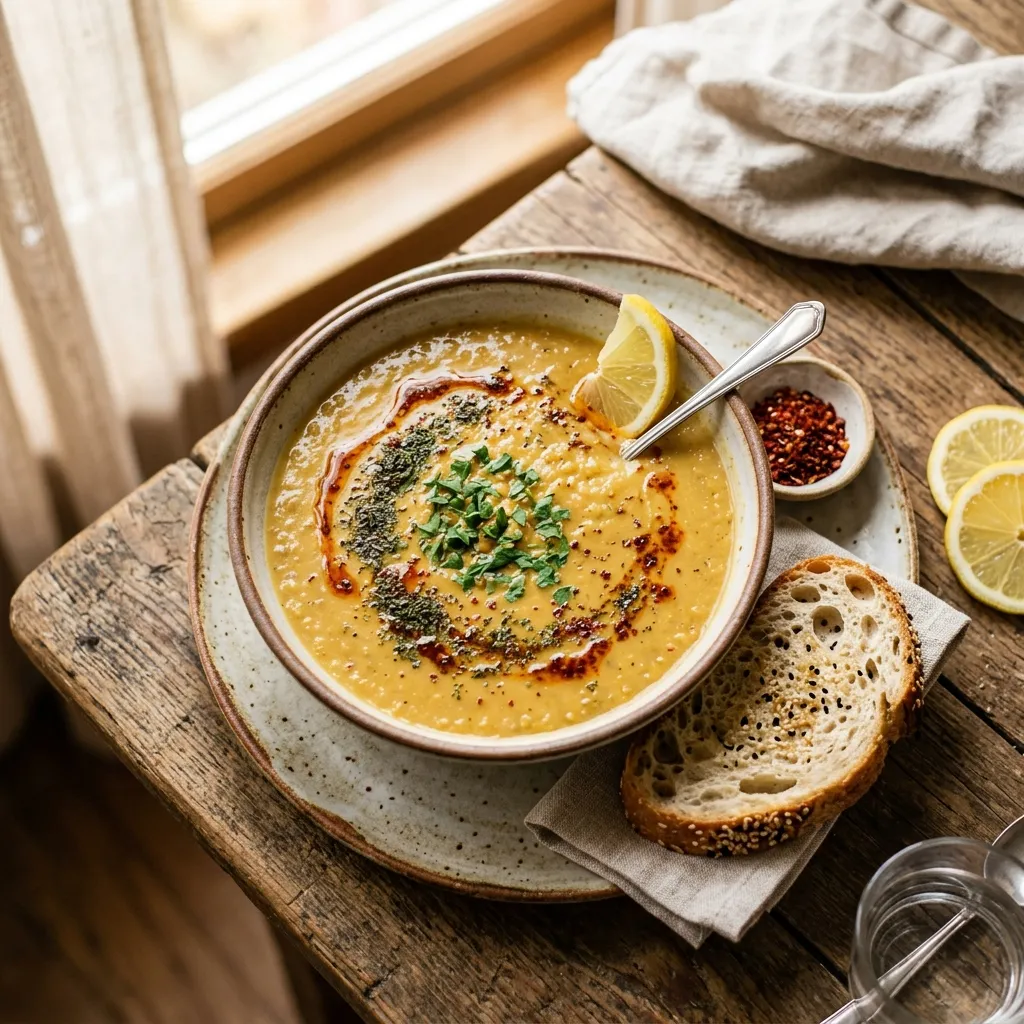
Mercimek corbasi is Turkey's national soup — a silky, bright-orange puree of red lentils, onion, carrot, and potato, finished with a squeeze of lemon and a drizzle of paprika-infused butter. It appears on virtually every Turkish restaurant menu as the default starter and is the first dish most Turkish children learn to make. Street vendors ladle it into plastic cups for commuters in Istanbul, and home cooks simmer it on cold Anatolian evenings as the centerpiece of a simple supper with bread. The technique is straightforward: red lentils cook quickly with aromatic vegetables, then the entire pot is blended smooth. What elevates the soup is the finishing — a small pan of butter sizzled with Aleppo pepper flakes (pul biber) and sometimes dried mint, poured over each bowl at serving. This final flourish transforms a humble legume soup into something fragrant and layered. Most households serve it with a wedge of lemon on the side, and the acidity is essential — it brightens the earthy lentils and aids iron absorption. Ayurvedically, red lentils are among the lightest and most digestible legumes, and this preparation enhances that quality by pureeing them smooth and seasoning with warming spices. The combination of lentils and vegetables provides balanced nourishment without taxing agni, making this an ideal food for convalescence, seasonal transitions, or when digestion feels sluggish.
Balances Vata through warmth and smooth texture. Supports Kapha with light, warming qualities. May mildly increase Pitta if the Aleppo pepper is used generously.
Used as a restorative food during illness recovery and cold weather. The high protein content and easy digestibility make it suitable for rebuilding strength without burdening weakened digestion.
Ingredients
- 1.5 cups Red lentils (rinsed)
- 1 large Onion (roughly chopped)
- 1 large Carrot (peeled and chopped)
- 1 medium Potato (peeled and cubed)
- 1 tbsp Tomato paste
- 6 cups Water or vegetable broth
- 2 tbsp Butter
- 1 tbsp Olive oil
- 1 tsp Cumin powder
- 1 tsp Aleppo pepper flakes (pul biber)
- 1/2 tsp Dried mint
- 1.5 tsp Salt
- 1 whole Lemon (cut into wedges)
Instructions
- Heat olive oil in a large pot over medium heat. Add the chopped onion and cook until softened, about 4 minutes. Add the carrot and potato, stirring for another 2 minutes.
- Stir in the tomato paste and cumin powder, cooking until the paste darkens slightly and becomes fragrant, about 1 minute.
- Add the rinsed red lentils and water or broth. Bring to a boil, then reduce heat to medium-low. Cover and simmer for 20-25 minutes, until the lentils and vegetables are completely soft and falling apart.
- Remove from heat and blend the soup until completely smooth using an immersion blender or in batches in a stand blender. Return to the pot and adjust consistency — add hot water if too thick. Season with salt.
- Prepare the finishing butter: melt butter in a small pan over medium heat. When it foams, add the Aleppo pepper flakes and dried mint. Swirl for 15 seconds until fragrant and the butter turns brick-red. Remove from heat immediately.
- Ladle the soup into bowls. Drizzle each serving with the paprika butter. Serve with lemon wedges on the side — the lemon is not optional, it completes the dish.
- Accompany with crusty Turkish bread or pide for dipping.
Nutrition
These values are estimates calculated from the ingredient list and may vary based on brands, cooking methods, and serving size. Not a substitute for medical or dietary advice.
How This Recipe Affects Each Dosha
Vata
The pureed texture eliminates roughness that aggravates Vata, and the butter finishing adds necessary oleation. Warm, soft, and soupy — this is comfort food for Vata in its ideal form. The cumin and mild pepper kindle digestive fire without overstimulating the nervous system.
Pitta
Red lentils carry slightly more heat than mung dal, and the Aleppo pepper adds warmth. Pitta types can enjoy this soup in cooler months or by reducing the pepper finishing. The lemon juice adds a cooling counterpoint that helps balance the overall heating tendency.
Kapha
The light quality of red lentils and the warming spices make this suitable for Kapha, particularly in spring when Kapha accumulation is highest. The soup's thin, soupy consistency moves through the system without creating heaviness. Kapha types benefit from generous pepper and minimal butter.
Gently stimulates agni through cumin and Aleppo pepper while the pureed consistency requires minimal digestive effort. The tomato paste adds a light sour note that primes gastric secretion.
Nourishes: Rasa (plasma), Rakta (blood), Mamsa (muscle)
Adjustments by Constitution
For Vata Types
Increase butter to 3 tablespoons in the finishing and add a pinch of black pepper. Stir in a tablespoon of ghee directly into the soup before serving. Serve with warm, buttered bread rather than crusty bread to avoid dry, rough textures.
For Pitta Types
Replace Aleppo pepper with sweet paprika, which provides color without heat. Add a handful of fresh cilantro at blending time for cooling properties. Use coconut oil instead of butter in the finishing during summer months. Squeeze extra lemon over each bowl.
For Kapha Types
Omit the potato entirely — use an extra half cup of lentils for body instead. Reduce butter to 1 teaspoon and add a generous pinch of black pepper and dry ginger powder to the finishing. Serve without bread, or with thin, toasted flatbread rather than soft pide.
Seasonal Guidance
Most nourishing during cool and cold months when the body craves warm, soupy foods. In spring, lighten by reducing butter and increasing lemon. Not a summer staple — switch to cold yogurt soups like cacik when temperatures rise.
Best time of day: Lunch as a starter or light main course, or early dinner with bread and a simple salad
Cultural Context
Mercimek corbasi is the unofficial national soup of Turkey, served in every lokanta (casual restaurant) and home kitchen from the Black Sea coast to the Mediterranean. Red lentils arrived in Anatolia thousands of years ago via trade routes from the Fertile Crescent, where lentils were among the earliest domesticated crops. The soup's simplicity reflects the practical cooking traditions of central Anatolian villages, where a filling, protein-rich meal needed to come together quickly from pantry staples. In Turkish hospitality culture, offering a bowl of hot soup to a guest is a fundamental gesture of warmth and welcome.
Deeper Context
Origins
Mercimek çorbası is classical Anatolian Turkish peasant soup, with continuous use likely extending several centuries. Red lentil cultivation in Anatolia is ancient — the region is one of the original centers of lentil domestication (10,000+ years ago). The dish's modern canonical form with the lemon-and-butter-tempering finish stabilized in Ottoman-period Turkish cuisine. One of the most consistently-prepared Turkish foods across all regions and class lines.
Food as Medicine
Red lentils provide easily-digestible protein, iron, folate, and B-vitamins. Classical Ayurvedic and Turkish convalescent use reflects the lightness and digestibility of red lentil preparations. Cumin supports digestion; Aleppo pepper provides capsaicinoids. A therapeutically-gentle daily soup.
Ritual & Seasonal Role
Daily Turkish home food. Ramadan iftar universal. Restaurant first-course staple. Winter peak for warming consumption. Classical convalescent soup — served to the sick, postpartum, elderly.
Classical Pairings & Cautions
Turkish bread for dipping, lemon wedge, additional Aleppo pepper at table. Cautions: FODMAP issues from legumes; gluten-free by default; lactose sensitivity from butter tempering (oil-based versions work); typically well-tolerated across most dietary restrictions.
Cross-Tradition View
How other medical and food-wisdom traditions read this dish. Each tradition names the same physiological reality in its own language — the agreements across them are where universal principles live.
Traditional Chinese Medicine
Red lentils are Spleen-Qi-tonifying and mild; butter is warm-moistening; cumin warms the middle; Aleppo pepper is warm-pungent; lemon is cool-sour and moves Liver Qi. A gentle Qi-building preparation with warming-dispersing accents — TCM physicians would class mercimek çorbası as ideal convalescent-and-everyday soup.
Greek Humoral
Hot-wet sanguine-building gently. Galenic-suitable daily soup.
Ayurveda
Heating virya, sweet vipaka. Pacifies Vata substantially. Red lentil (masoor) is classical Ayurvedic convalescent food. Pitta and Kapha neutral.
Turkish Convalescent & Home Soup
Mercimek çorbası (red lentil soup) is the most-consumed Turkish soup — appears at virtually every Turkish home meal and restaurant menu. Classical convalescent and everyday food, served as first course before main dishes. Simple peasant origins with cross-class appeal. Ramadan iftar tables feature mercimek çorbası universally. The dish is one of the most consistently-prepared Turkish foods globally across diaspora.
Chef's Notes
The potato is the secret to the soup's velvety body — skip it and the texture becomes thin and watery. For an even silkier result, pass the blended soup through a fine mesh strainer. The finishing butter should sizzle when it hits the soup — if it doesn't, the butter wasn't hot enough. Leftover soup thickens considerably in the refrigerator; thin with hot water when reheating. This soup freezes well for up to 3 months without the finishing butter.
Frequently Asked Questions
Is Mercimek Corbasi good for my dosha?
Balances Vata through warmth and smooth texture. Supports Kapha with light, warming qualities. May mildly increase Pitta if the Aleppo pepper is used generously. The pureed texture eliminates roughness that aggravates Vata, and the butter finishing adds necessary oleation. Red lentils carry slightly more heat than mung dal, and the Aleppo pepper adds warmth. The light quality of red lentils and the warming spices make this suitable for Kapha, particularly in spring when Kapha accumulation is highest.
When is the best time to eat Mercimek Corbasi?
Lunch as a starter or light main course, or early dinner with bread and a simple salad Most nourishing during cool and cold months when the body craves warm, soupy foods. In spring, lighten by reducing butter and increasing lemon. Not a summer staple — switch to cold yogurt soups like c
How can I adjust Mercimek Corbasi for my constitution?
For Vata types: Increase butter to 3 tablespoons in the finishing and add a pinch of black pepper. Stir in a tablespoon of ghee directly into the soup before serving. For Pitta types: Replace Aleppo pepper with sweet paprika, which provides color without heat. Add a handful of fresh cilantro at blending time for cooling properties.
What are the Ayurvedic properties of Mercimek Corbasi?
Mercimek Corbasi has Sweet, Astringent, Pungent taste (rasa), Heating energy (virya), and Sweet post-digestive effect (vipaka). Its qualities (gunas) are Light, Warm, Soft, Slightly Oily. It nourishes Rasa (plasma), Rakta (blood), Mamsa (muscle). Gently stimulates agni through cumin and Aleppo pepper while the pureed consistency requires minimal digestive effort. The tomato paste adds a light sour note that primes gastric secretion.