Menemen
Turkish Recipe
Overview
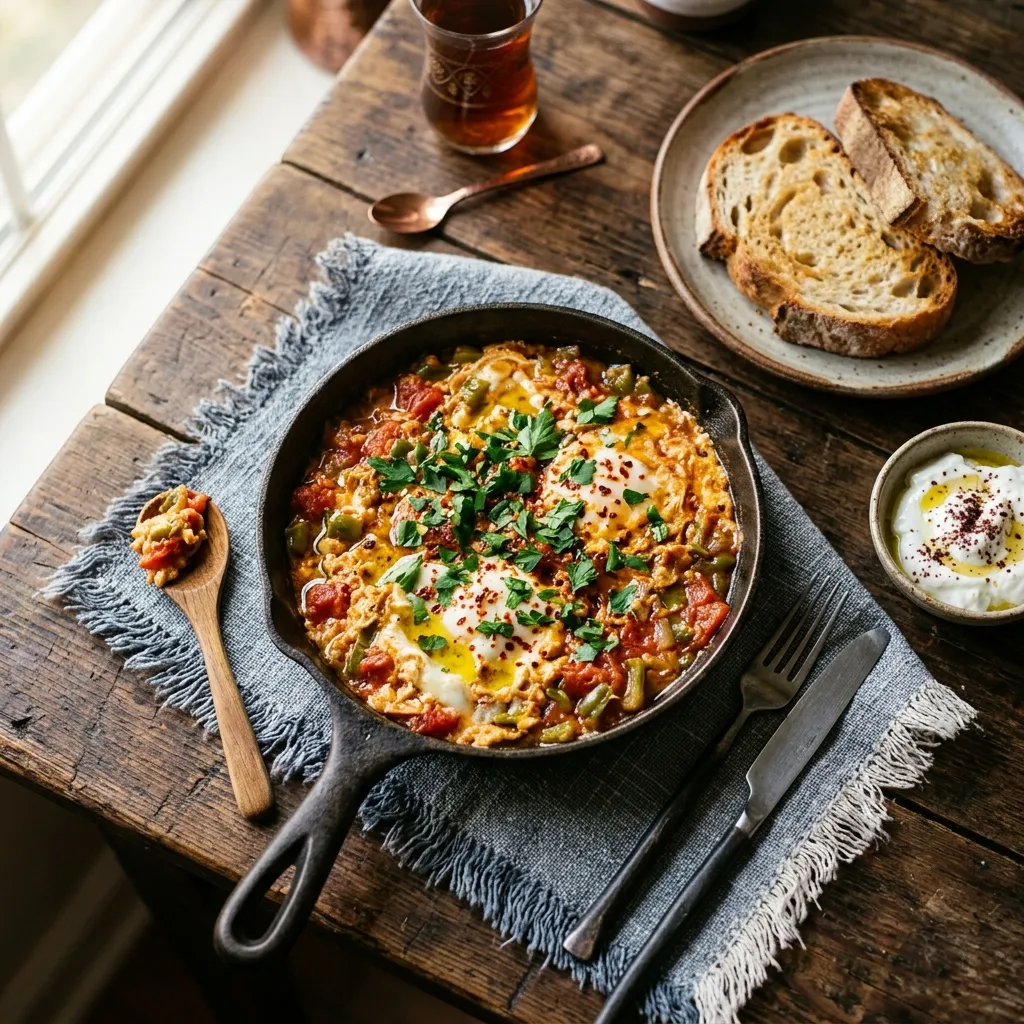
Menemen is Turkey's scrambled egg and tomato dish — a one-pan breakfast of ripe tomatoes, green peppers, and eggs cooked together in olive oil or butter until the eggs are just set and the vegetables form a saucy, fragrant base. Named after the town of Menemen in Izmir province, it is the most common hot breakfast in Turkish homes and a subject of passionate debate: purists insist that onions have no place in menemen, while others consider them essential. The dish comes together in under 15 minutes. Peppers and tomatoes are softened in a hot pan, then eggs are cracked directly into the vegetables and gently stirred to create curds that intermingle with the tomato sauce. The key is restraint — the eggs should be soft, creamy, and barely set, not dry or rubbery. Turkish cooks serve it directly in the pan with a basket of fresh bread for scooping. From an Ayurvedic perspective, menemen combines the heating qualities of eggs, tomatoes, and peppers — making it a distinctly Pitta-provoking dish that is best suited for Vata and Kapha constitutions. The protein from the eggs and the vitamin C from the fresh vegetables create a nutritionally complete breakfast that sustains energy through the morning without heaviness.
Increases Pitta due to eggs, tomatoes, peppers, and heating spices. Balances Vata with warmth and oleation. Acceptable for Kapha in moderation due to light, stimulating qualities.
Ingredients
- 4 large Eggs
- 3 medium Ripe tomatoes (peeled and roughly chopped)
- 1 medium Green bell pepper (diced)
- 1.5 tbsp Butter
- 1 tsp Aleppo pepper flakes (pul biber)
- 3/4 tsp Salt
- 1/4 tsp Black pepper
- 4 slices Fresh crusty bread (for serving)
Instructions
- Melt butter in a wide, heavy skillet over medium heat until it foams. Add the diced green pepper and cook for 2-3 minutes until slightly softened.
- Add the chopped tomatoes, Aleppo pepper, salt, and black pepper. Cook for 4-5 minutes, stirring occasionally, until the tomatoes break down into a chunky sauce and most of their liquid has evaporated.
- Reduce heat to medium-low. Crack the eggs directly into the tomato-pepper mixture, spacing them apart.
- Using a wooden spoon or spatula, gently stir the eggs into the vegetables — not scrambling them completely, but creating large, soft curds that hold pockets of tomato sauce. This should take 2-3 minutes.
- Remove from heat when the eggs are still slightly underdone — they will continue cooking from residual heat. The final texture should be creamy and moist, not dry.
- Serve immediately in the pan with thick slices of crusty bread for scooping. Menemen does not wait — it is eaten the moment it leaves the stove.
Nutrition
These values are estimates calculated from the ingredient list and may vary based on brands, cooking methods, and serving size. Not a substitute for medical or dietary advice.
How This Recipe Affects Each Dosha
Vata
The warm, oily, and protein-rich combination is grounding for Vata. Eggs are nourishing and building, while the butter provides essential oleation. The quick cooking preserves prana in the vegetables, and the overall warmth counters Vata's cold, dry tendencies.
Pitta
This is a strongly Pitta-provoking dish. Eggs are heating, tomatoes are sour and heating, peppers add pungency, and the Aleppo pepper adds more fire. Pitta types should approach this with caution, particularly in summer or when Pitta is already elevated.
Kapha
The light, warm, stimulating qualities of menemen work well for Kapha in moderate portions. The pungent and sour tastes cut through Kapha's heaviness, and the dish is light enough not to create morning sluggishness. Eggs provide protein without excessive heaviness when prepared this way.
Stimulates agni through sour and pungent tastes. The combination of tomato acid and pepper heat primes digestive secretions, making this an effective morning appetite-starter.
Nourishes: Rasa (plasma), Rakta (blood), Mamsa (muscle), Shukra (reproductive)
Adjustments by Constitution
For Vata Types
Add a tablespoon of ghee alongside the butter for extra oleation. Include a pinch of cumin seeds when cooking the peppers for digestive support. Serve with warm, soft bread rather than crusty bread to avoid dry, rough textures that aggravate Vata.
For Pitta Types
Replace the green pepper with zucchini and omit the Aleppo pepper flakes entirely. Use sweet paprika instead for color. Add a generous handful of fresh cilantro at the end, and consider stirring in a tablespoon of fresh cream to cool the dish. Use ghee instead of butter.
For Kapha Types
Use only 2 eggs and increase the vegetables — add mushrooms, spinach, or kale. Replace butter with a teaspoon of olive oil. Add extra black pepper and a pinch of dried ginger powder. Skip the bread or use a thin, toasted flatbread instead.
Seasonal Guidance
Best in cooler months when the heating qualities are welcome and digestive fire is naturally stronger. In summer, the combination of eggs, tomatoes, and peppers can be too heating for most constitutions. Spring is appropriate if Kapha accumulation needs clearing.
Best time of day: Breakfast, when digestive fire is kindling and the body benefits from warm, protein-rich food to start the day
Cultural Context
Menemen takes its name from the town in Izmir province and reflects the Aegean approach to cooking — fresh, fast, and built around ripe produce. It is one of the great breakfast dishes of the Mediterranean-Middle Eastern corridor, related to North African shakshuka and Middle Eastern shakshouka but distinct in its technique (the eggs are scrambled into the sauce rather than poached). In Turkish breakfast culture (kahvalti), menemen often shares the table with olives, cheese, honey, clotted cream, and bread — a spread that can stretch over hours on weekend mornings.
Deeper Context
Origins
Menemen takes its name from the Menemen town in Manisa province of Aegean Turkey. The dish has continuous use in Aegean Turkish breakfast cuisine for at least 200 years. Distinguished from North African shakshuka through the soft-scrambled technique (where shakshuka retains intact eggs), the absence of cumin, and the characteristic use of Turkish green peppers (sivri biber). Classical component of Turkish kahvaltı (breakfast) spread across Turkey from its Aegean origins.
Food as Medicine
Eggs provide complete protein; tomato contributes lycopene; green pepper offers vitamin C; Aleppo pepper's capsaicinoids support metabolic function. A nutritionally-balanced breakfast preparation.
Ritual & Seasonal Role
Classical Turkish breakfast (kahvaltı) across Turkish households. Year-round but summer peak when tomatoes are at best quality. Not religiously ceremonial but deeply tied to Turkish breakfast-table identity.
Classical Pairings & Cautions
Turkish bread, feta (beyaz peynir), olives, simit, Turkish tea. Cautions: egg allergies; nightshade sensitivity from tomato and pepper; Pitta aggravation; lactose sensitivity affects butter-cooked versions.
Cross-Tradition View
How other medical and food-wisdom traditions read this dish. Each tradition names the same physiological reality in its own language — the agreements across them are where universal principles live.
Traditional Chinese Medicine
Eggs build Yin and Blood; tomato is cool-sour and moves Liver Qi; green pepper is cool-bitter; butter is warm-moistening; Aleppo pepper is warm-pungent. A Yin-and-Blood-building preparation with Liver-Qi-moving accent — TCM physicians would class menemen as appropriate breakfast across constitutional types.
Greek Humoral
Hot-wet sanguine-building. Galenic-suitable breakfast preparation.
Ayurveda
Heating virya, pungent vipaka. Pacifies Vata through warmth and unctuousness. Pitta aggravated through tomato-pepper-spice combination. Kapha-neutral.
Aegean Turkish
Menemen is Aegean Turkish — particularly associated with İzmir region. The name 'menemen' refers to a town in Manisa province. The specific soft-scrambled-egg-in-tomato-pepper preparation distinguishes it from shakshuka (which has more intact eggs and Maghrebi heritage). Classical Turkish breakfast kahvaltı dish.
Chef's Notes
The single most important variable is not overcooking the eggs — remove the pan from heat 30 seconds before you think they are done. Use the ripest tomatoes you can find; in winter, canned San Marzano tomatoes blended briefly are a better option than pale, mealy fresh ones. The debate about onions is real — if you add them, cook them until translucent before adding the peppers. Some regions add a crumble of beyaz peynir (white cheese) on top, which adds a salty, tangy counterpoint.
Frequently Asked Questions
Is Menemen good for my dosha?
Increases Pitta due to eggs, tomatoes, peppers, and heating spices. Balances Vata with warmth and oleation. Acceptable for Kapha in moderation due to light, stimulating qualities. The warm, oily, and protein-rich combination is grounding for Vata. This is a strongly Pitta-provoking dish. The light, warm, stimulating qualities of menemen work well for Kapha in moderate portions.
When is the best time to eat Menemen?
Breakfast, when digestive fire is kindling and the body benefits from warm, protein-rich food to start the day Best in cooler months when the heating qualities are welcome and digestive fire is naturally stronger. In summer, the combination of eggs, tomatoes, and peppers can be too heating for most constitutio
How can I adjust Menemen for my constitution?
For Vata types: Add a tablespoon of ghee alongside the butter for extra oleation. Include a pinch of cumin seeds when cooking the peppers for digestive support. Serve For Pitta types: Replace the green pepper with zucchini and omit the Aleppo pepper flakes entirely. Use sweet paprika instead for color. Add a generous handful of fres
What are the Ayurvedic properties of Menemen?
Menemen has Sweet, Sour, Pungent taste (rasa), Heating energy (virya), and Pungent post-digestive effect (vipaka). Its qualities (gunas) are Warm, Oily, Light. It nourishes Rasa (plasma), Rakta (blood), Mamsa (muscle), Shukra (reproductive). Stimulates agni through sour and pungent tastes. The combination of tomato acid and pepper heat primes digestive secretions, making this an effective morning appetite-starter.