Meatloaf
American Recipe
Overview
Meatloaf traces its American lineage to the late 19th century, when German immigrants adapted their Hackbraten (chopped meat loaf) using locally available ground beef. The first printed American meatloaf recipe appeared in the 1870s, and by the 1950s it had become the most frequently served dinner in American households, according to USDA dietary surveys of the era. The standard formula combines ground beef with breadcrumbs, eggs, onions, and seasonings, shaped into a loaf and baked with a sweet-tangy ketchup or tomato glaze. From an Ayurvedic standpoint, meatloaf is a concentrated source of sweet and salty rasas with a heating virya — a dense, heavy preparation that powerfully nourishes the mamsa (muscle), meda (fat), and rakta (blood) dhatus. The binding ingredients (egg, breadcrumbs, milk) create a softer texture than whole muscle cuts, making the protein somewhat easier to digest. The onion and garlic provide pungent rasa that stimulates agni, partially counteracting the heaviness of the ground beef. The ketchup glaze introduces a sour-sweet element that further supports digestion. Overall, meatloaf is a grounding, stabilizing food that builds tissue and calms Vata, though its density requires adequate digestive fire.
Pacifies Vata effectively through its heavy, warm, moist, and sweet qualities. The density and heating nature can aggravate Pitta in excess, particularly due to the tomato-based glaze. Kapha types should limit portion size and frequency, as the heavy, dense qualities directly increase Kapha accumulation.
The combination of high-quality protein with easily digestible binders makes meatloaf a practical recovery food for rebuilding mamsa dhatu after prolonged bed rest or muscle wasting. The iron content of beef supports rakta dhatu production, relevant for individuals recovering from blood loss or chronic anemia.
Ingredients
- 2 pounds ground beef (80/20 blend — leaner meat produces a dry, crumbly loaf)
- 1 medium yellow onion (finely diced)
- 3 cloves garlic (minced)
- 0.75 cup breadcrumbs (plain, not Italian seasoned)
- 0.33 cup whole milk
- 2 large eggs (beaten)
- 2 tablespoons Worcestershire sauce
- 1 tablespoon Dijon mustard
- 1.5 teaspoons salt
- 0.5 teaspoon black pepper
- 3 tablespoons fresh parsley (finely chopped)
- 0.5 cup ketchup (for the glaze)
- 2 tablespoons brown sugar (for the glaze)
- 1 tablespoon apple cider vinegar (for the glaze)
Instructions
- Preheat the oven to 375°F (190°C). Line a rimmed baking sheet with parchment paper or foil. Mixing and shaping the meatloaf is done on a sheet pan rather than in a loaf pan — this allows fat to render away from the meat and produces a better crust on all sides.
- Combine the breadcrumbs and milk in a small bowl and let sit for 5 minutes until the bread absorbs the liquid. This panade prevents the meatloaf from becoming dense and dry by keeping the crumbs from absorbing moisture from the meat during baking.
- Heat 1 tablespoon of olive oil in a small skillet over medium heat. Sauté the diced onion for 4-5 minutes until soft and translucent. Add the garlic and cook for 30 seconds. Remove from heat and let cool for 5 minutes — mixing hot onions into raw meat starts cooking it unevenly.
- In a large bowl, combine the ground beef, soaked breadcrumb mixture, cooled onion and garlic, beaten eggs, Worcestershire sauce, Dijon mustard, salt, pepper, and parsley. Mix with your hands until just combined — overworking the meat develops the myosin protein and produces a tough, springy texture rather than a tender one. Stop as soon as no dry spots remain.
- Transfer the mixture to the prepared baking sheet and shape into a rounded loaf approximately 9 inches long, 5 inches wide, and 3 inches tall at the center. Smooth the surface with wet hands to prevent cracking.
- In a small bowl, whisk together the ketchup, brown sugar, and apple cider vinegar. Brush half of this glaze evenly over the top and sides of the meatloaf.
- Bake for 45 minutes, then remove and brush the remaining glaze over the top. Return to the oven and bake for an additional 15-20 minutes until an instant-read thermometer inserted into the center reads 160°F (71°C). The glaze should be caramelized and slightly sticky.
- Remove the meatloaf from the oven and let it rest on the baking sheet for 15 minutes before slicing. This rest period is essential — cutting immediately releases the juices that need time to redistribute through the loaf.
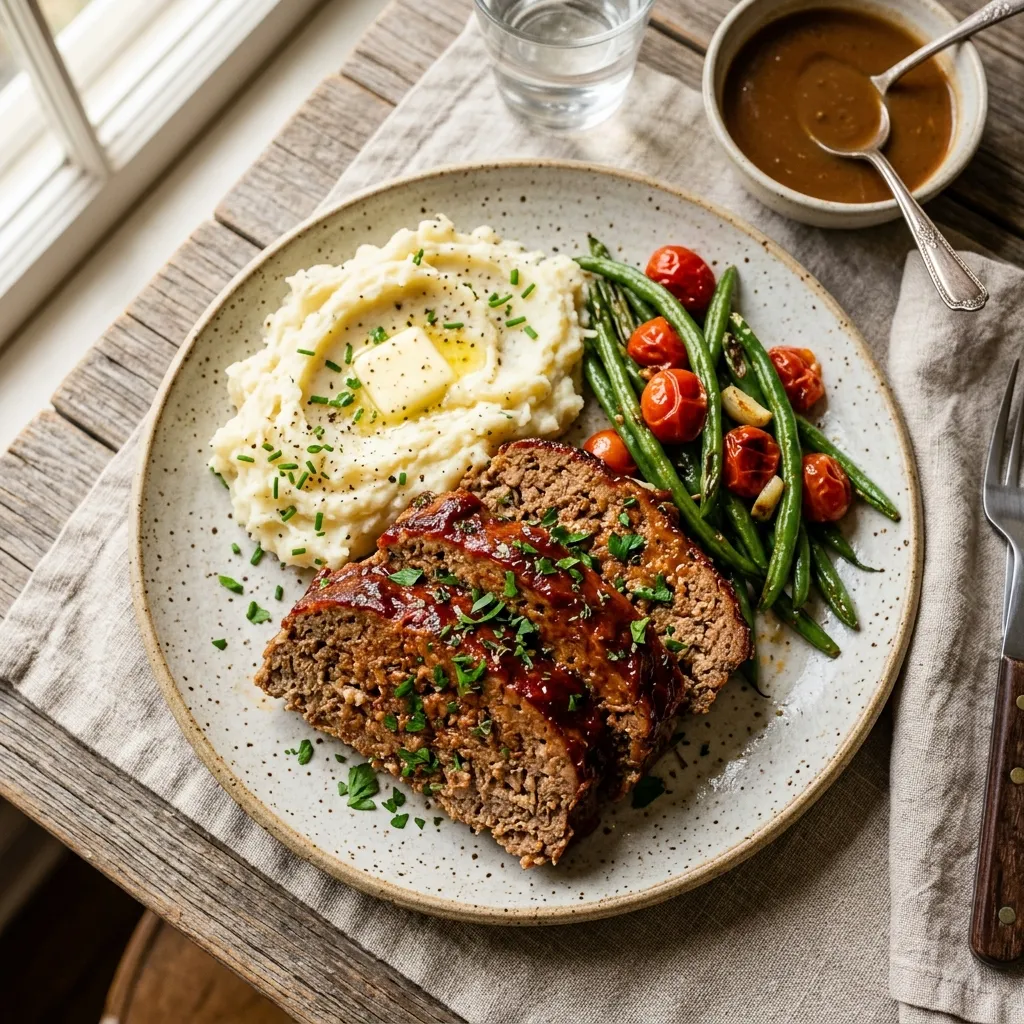
- Slice into 1-inch-thick pieces using a sharp knife. Serve with the pan drippings spooned over the top. Classic accompaniments include mashed potatoes and green beans.
Nutrition
These values are estimates calculated from the ingredient list and may vary based on brands, cooking methods, and serving size. Not a substitute for medical or dietary advice.
How This Recipe Affects Each Dosha
Vata
Meatloaf addresses Vata imbalance through its dense, grounding, and moist qualities. The sweet rasa of beef, breadcrumbs, and milk combined with the salty rasa from Worcestershire sauce and seasoning provide the two tastes most pacifying to Vata. The soft texture makes it gentler on the digestive system than tougher meat preparations. The warm serving temperature and heating virya counter Vata's cold quality. This is a reliable, satisfying meal for Vata types, especially during cold weather or periods of anxiety and restlessness.
Pitta
The heating virya of ground beef, combined with garlic, black pepper, Worcestershire sauce, and the acidic ketchup glaze, creates a preparation that moderately aggravates Pitta. The tomato and vinegar in the glaze introduce sour rasa, which directly increases Pitta. However, the sweet vipaka and the binding qualities of egg and breadcrumbs temper the overall effect. Pitta types can enjoy meatloaf occasionally in moderate portions, particularly during cooler weather, but should be attentive to signs of increased heat or acidity.
Kapha
Meatloaf is substantially Kapha-increasing due to its heavy, dense, moist qualities. The combination of beef, breadcrumbs, milk, and egg creates a concentrated, tissue-building preparation that Kapha types typically do not need. The sweet rasa and sweet vipaka further promote Kapha accumulation. The sugar in the glaze adds additional sweetness. Regular consumption contributes to weight gain, sluggishness, and congestion in Kapha-dominant individuals. The heating virya provides minimal counterbalance to the overwhelming heaviness.
The onion, garlic, and black pepper stimulate digestive fire, helping to offset the heaviness of the ground beef and binders. The overall dish still requires moderate to strong agni for complete digestion. The soft, moist texture is easier to break down than tougher meat cuts, and the panade technique keeps the protein matrix open, allowing digestive enzymes better access. Those with weak agni should eat smaller portions.
Nourishes: Mamsa (muscle), Meda (fat), Rakta (blood), Rasa (plasma)
Adjustments by Constitution
For Vata Types
This recipe works well for Vata as written. To further support Vata digestion, add a pinch of ground ginger and cumin to the meat mixture. Replace the milk with warm whole milk infused with a pinch of nutmeg. Serve with a generous portion of ghee-enriched mashed potatoes and a warm side vegetable. These additions enhance the sweet, warm, and oily qualities without changing the essential character of the dish.
For Pitta Types
Replace the ketchup glaze with a mixture of mango chutney and a pinch of cardamom — this preserves the sweet-tangy topping while eliminating the heating acidity of tomato and vinegar. Reduce garlic to 1 clove and omit the black pepper. Add ground coriander (1 teaspoon) and ground fennel (0.5 teaspoon) to the meat mixture. Use sweet onion instead of yellow onion. These changes significantly reduce the heating quality while maintaining the satisfying density and flavor of the dish.
For Kapha Types
Use 93% lean ground turkey instead of 80/20 beef to dramatically reduce the heavy and oily qualities. Replace breadcrumbs with finely grated zucchini or cauliflower rice as the binder, reducing density and adding lightness. Add 1 teaspoon each of ground cumin, ground turmeric, and smoked paprika, plus 0.5 teaspoon cayenne to increase the pungent rasa and stimulate agni. Reduce the glaze sugar to 1 teaspoon or replace with a thin coating of mustard only. Serve with steamed greens rather than mashed potatoes.
Seasonal Guidance
Best during cold-weather months from October through March when the body benefits from dense, warming foods. The heavy, building qualities are particularly appropriate during Vata season (late fall and early winter). Reduce frequency in spring when lighter foods help clear accumulated winter Kapha. Not recommended as a regular summer meal.
Best time of day: Serve at lunch or dinner when agni is strong enough to process the dense protein and starch combination. The midday meal between 11:00 AM and 1:00 PM offers the strongest digestive fire for this type of heavy food. If serving at dinner, eat by 6:00 PM to allow adequate digestion before sleep.
Cultural Context
Meatloaf first appeared in American cookbooks in the 1870s, likely adapted from German Hackbraten and Scrapple traditions. During the Great Depression, the recipe gained enormous popularity because breadcrumbs and eggs stretched expensive ground beef to feed large families affordably. By the 1950s, it was the most commonly served weeknight dinner in American homes. The dish experienced a cultural dip in the 1980s and 1990s as Americans sought more "sophisticated" fare, but it returned to prominence in the 2000s comfort food revival. Regional variations exist across the country — Southern versions often include bell pepper, Midwestern versions use oatmeal as a binder, and some New England recipes incorporate pork and veal alongside beef.
Deeper Context
Origins
Meatloaf's lineage runs through Apicius (4th-5th century CE) and medieval European forcemeat traditions. The American form stabilized during the 1920s through 1930s as a Depression-era stretch-the-meat dish using breadcrumb filler to extend expensive ground beef. The ketchup-glazed version is specifically American mid-century (1940s through 1960s), and became a school cafeteria, diner, and home-kitchen standard during the post-WWII suburban era.
Food as Medicine
Stretched-meat preparations have a long cross-cultural record as feeding-the-many strategies — used in peasant cultures to provide convalescents and children with digestible meat in small quantities. The egg binder adds classical Yin-building quality; onion contains quercetin and sulfur compounds with a validated folk medicinal record for cold and heart conditions. Meatloaf is accidentally well-constructed as a modest-meat nourishment food.
Ritual & Seasonal Role
Sunday dinner, weekday family supper. Depression-era and WWII home-economics dish that retained its cultural position through the post-war period. Mid-century American diner staple. Year-round comfort food with autumn and winter peak. Not ceremonial, but strongly associated with American family memory and with mother-and-grandmother lineage cooking.
Classical Pairings & Cautions
Mashed potatoes, green beans, brown gravy, peas. Cautions: high sodium, particularly in the ketchup glaze; glycemic load from breadcrumb filler plus sweet glaze; beef allergies or religious restrictions (Hindu, some Buddhist) preclude the standard form — turkey meatloaf is a common accommodation; gluten intolerance precludes breadcrumb preparations; egg allergy excludes the bound form entirely.
Cross-Tradition View
How other medical and food-wisdom traditions read this dish. Each tradition names the same physiological reality in its own language — the agreements across them are where universal principles live.
Traditional Chinese Medicine
Beef builds Blood and middle-warmer Qi; breadcrumbs are Spleen-tonifying; egg builds Yin; onion is warm-pungent and disperses cold; ketchup is cool-sour-sweet and moves Liver Qi. A Blood-and-Qi tonic with mild Heat-dispersing quality — classical TCM physicians would recognize meatloaf as a well-tempered restoration dish despite its humble American context.
Greek Humoral
Hot-wet, sanguine-building. A restoration dish for labor workers and convalescents. Galenic physicians used forcemeat preparations (the ancestor category of meatloaf) for dental patients who could not chew, for the elderly, and for those recovering from long illness. The bound-and-baked format made tough meats accessible.
Ayurveda
Heating virya, sweet vipaka. Pacifies Vata through warmth and protein; aggravates Pitta and Kapha through beef heaviness. A Vata restoration dish by Ayurvedic classification — appropriate for thin, cold-extremity types doing physical labor, inappropriate for daily household consumption.
European Forcemeat Tradition
Meatloaf descends from European forcemeats — minced meats bound with bread and egg, seasoned, baked or poached. German Fleischlaibchen, French pain de viande, Italian polpettone, and Scandinavian köttbullar are all cousins of American meatloaf. The Roman Apicius cookbook (4th century CE) contains the earliest recognizable version. The American sweet-ketchup glaze is a 20th-century Depression-era innovation layered onto the ancient European forcemeat base.
Chef's Notes
The 80/20 fat ratio is non-negotiable — leaner beef produces a dry, crumbly meatloaf that falls apart. The panade technique (milk-soaked breadcrumbs) is borrowed from Italian polpette and is the difference between tender and cardboard. For a more complex flavor, substitute half the ground beef with ground pork and/or veal. Cold meatloaf sandwiches on white bread with mustard and pickles are a hallowed American tradition — it arguably tastes better this way. Store refrigerated up to 4 days. Freezes well for up to 3 months, either whole or sliced.
Frequently Asked Questions
Is Meatloaf good for my dosha?
Pacifies Vata effectively through its heavy, warm, moist, and sweet qualities. The density and heating nature can aggravate Pitta in excess, particularly due to the tomato-based glaze. Kapha types should limit portion size and frequency, as the heavy, dense qualities directly increase Kapha accumulation. Meatloaf addresses Vata imbalance through its dense, grounding, and moist qualities. The heating virya of ground beef, combined with garlic, black pepper, Worcestershire sauce, and the acidic ketchup glaze, creates a preparation that moderately aggravates Pitta. Meatloaf is substantially Kapha-increasing due to its heavy, dense, moist qualities.
When is the best time to eat Meatloaf?
Serve at lunch or dinner when agni is strong enough to process the dense protein and starch combination. The midday meal between 11:00 AM and 1:00 PM offers the strongest digestive fire for this type of heavy food. If serving at dinner, eat by 6:00 PM to allow adequate digestion before sleep. Best during cold-weather months from October through March when the body benefits from dense, warming foods. The heavy, building qualities are particularly appropriate during Vata season (late fall an
How can I adjust Meatloaf for my constitution?
For Vata types: This recipe works well for Vata as written. To further support Vata digestion, add a pinch of ground ginger and cumin to the meat mixture. Replace the For Pitta types: Replace the ketchup glaze with a mixture of mango chutney and a pinch of cardamom — this preserves the sweet-tangy topping while eliminating the heati
What are the Ayurvedic properties of Meatloaf?
Meatloaf has Sweet, Salty, Sour taste (rasa), Heating energy (virya), and Sweet post-digestive effect (vipaka). Its qualities (gunas) are Heavy, Moist, Dense, Warm. It nourishes Mamsa (muscle), Meda (fat), Rakta (blood), Rasa (plasma). The onion, garlic, and black pepper stimulate digestive fire, helping to offset the heaviness of the ground beef and binders. The overall dish still requires moderate to strong agni for complete digestion. The soft, moist texture is easier to break down than tougher meat cuts, and the panade technique keeps the protein matrix open, allowing digestive enzymes better access. Those with weak agni should eat smaller portions.