Massaman Curry
Thai Recipe
Overview
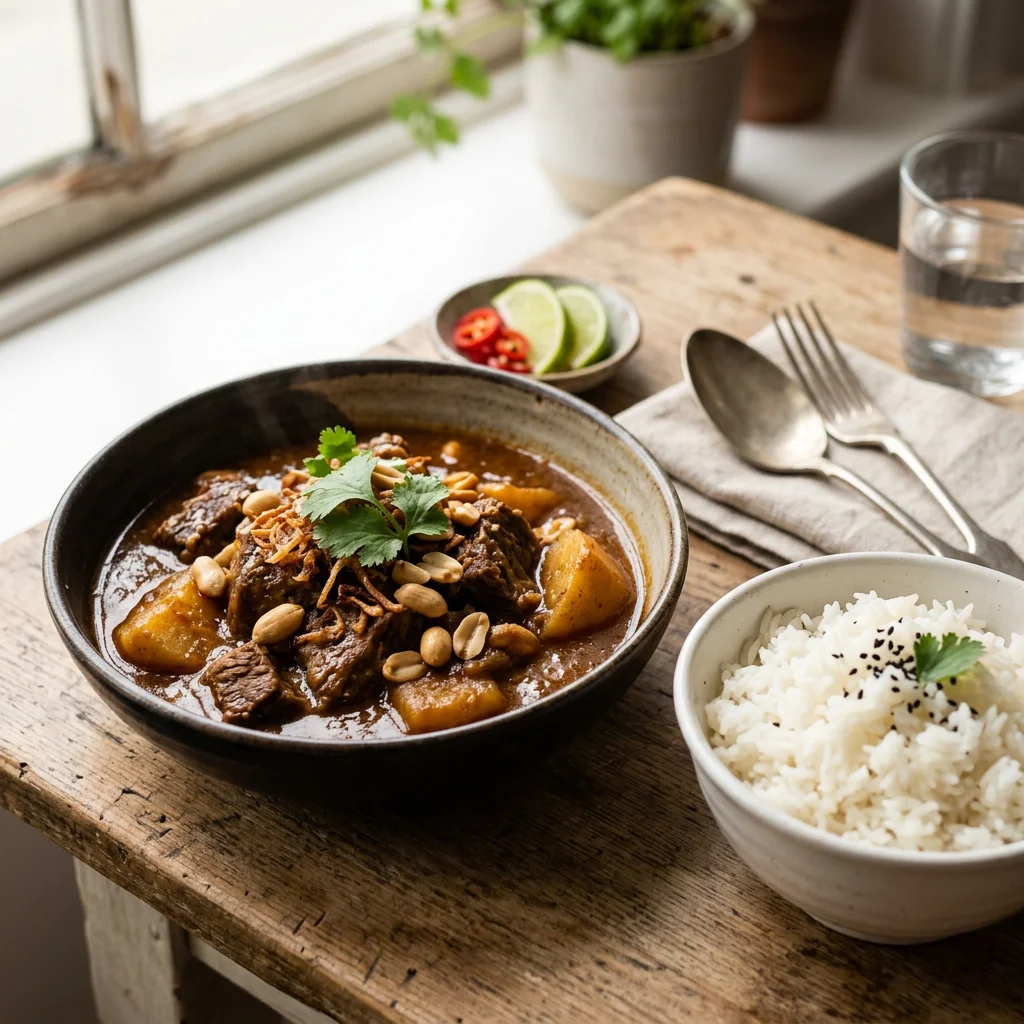
Massaman Curry is Thailand's richest, most warming curry — a slow-braised dish of tender meat, potatoes, and peanuts in a coconut milk sauce perfumed with an unusual (for Thai cooking) constellation of dry spices: cinnamon, cardamom, cloves, star anise, and nutmeg. These are not typical Thai ingredients; they are the fingerprints of Persian and Indian traders who brought their spice traditions to the southern Thai port cities centuries ago. The name "Massaman" is widely believed to derive from "Musulman" (Muslim), reflecting the dish's origins in the Thai-Muslim communities of the south. The curry paste itself is a hybrid: traditional Thai aromatics (lemongrass, galangal, shallots, garlic, dried chilies) are pounded together with the Indian-influenced dry spices, creating a paste unlike any other in the Thai repertoire. The result is a curry that tastes simultaneously Thai and foreign — the coconut milk and fish sauce are unmistakably Southeast Asian, but the warm, rounded spice profile could belong to a Persian stew. Ayurvedically, Massaman Curry is one of the most grounding and nourishing dishes in Thai cuisine. The dry spices — cinnamon, cardamom, star anise — are all classified as warming and sweet in their post-digestive effect, which means they build and sustain rather than deplete. Combined with the heavy, oily coconut milk and the substantial protein and starch, this is a deeply Vata-pacifying meal that provides lasting warmth and satisfaction during cold months.
Strongly pacifies Vata. Mildly increases Pitta and Kapha due to the rich, heavy, oily qualities and warming spice blend.
Ingredients
- 500 g Beef chuck or chicken thighs (cut into 2-inch cubes)
- 2 cans (400ml each) Coconut milk (full-fat)
- 3 tbsp Massaman curry paste (store-bought or homemade)
- 2 medium Potatoes (peeled and quartered)
- 1 large Onion (cut into wedges)
- 1/3 cup Roasted peanuts
- 2 tbsp Tamarind paste (dissolved in 2 tbsp warm water)
- 2 tbsp Palm sugar (shaved)
- 2 tbsp Fish sauce
- 1 small Cinnamon stick
- 3 whole Cardamom pods (lightly cracked)
- 2 whole Star anise
- 2 whole Bay leaves
Instructions
- Scoop the thick cream from the top of one can of coconut milk into a heavy pot or Dutch oven. Heat over medium-high until it begins to separate and sizzle — this is called "cracking" the coconut cream and allows the curry paste to fry properly.
- Add the Massaman curry paste to the cracked coconut cream. Fry for 2-3 minutes, stirring constantly, until the paste darkens and becomes very fragrant. You should see oil separating at the edges.
- Add the meat and stir to coat in the fried paste. Sear for 2-3 minutes until the outside of the meat is browned.
- Pour in the remaining coconut milk. Add the cinnamon stick, cardamom pods, star anise, and bay leaves. Bring to a gentle simmer.
- Add the potatoes and onion wedges. Reduce heat to low, cover, and simmer for 35-40 minutes until the meat is very tender and the potatoes are cooked through. Stir occasionally to prevent sticking.
- Add the tamarind paste, palm sugar, fish sauce, and roasted peanuts. Stir gently and simmer uncovered for 5 more minutes. Taste and adjust — the curry should be rich, mildly sweet, gently sour, and deeply aromatic.
- Remove the whole spices (cinnamon stick, star anise, cardamom pods, bay leaves) if desired. Serve over steamed jasmine rice.
Nutrition
These values are estimates calculated from the ingredient list and may vary based on brands, cooking methods, and serving size. Not a substitute for medical or dietary advice.
How This Recipe Affects Each Dosha
Vata
Massaman Curry is one of the most Vata-pacifying dishes in any cuisine. The heavy, oily coconut milk, warming dry spices (cinnamon, cardamom), substantial protein, and grounding potatoes address every quality that aggravates Vata: cold, light, dry, and mobile. The sweet vipaka of the whole spice blend nourishes Vata deeply. This is winter comfort food at its best.
Pitta
The warming spice blend and rich coconut milk generate heat that can accumulate in Pitta constitutions. The tamarind adds sour taste, and the chili in the curry paste adds pungent heat. However, the sweet qualities of coconut, palm sugar, and cardamom provide some balancing effect. Pitta types can enjoy this in cooler weather in moderate portions.
Kapha
The heaviness of this dish — coconut milk, potatoes, peanuts, slow-braised meat — is quintessentially Kapha-aggravating. The warming spices help somewhat, but the overall density and oiliness can increase congestion, lethargy, and weight gain when consumed regularly. Kapha types should reserve this for occasional indulgence.
The warming dry spices (cinnamon, cardamom, star anise) support agni steadily without the aggressive spike of chili-heavy dishes. The coconut oil in the milk carries these spices into the digestive tract effectively. However, the overall heaviness of the dish demands robust agni to process — those with weak digestion may find it sits heavily.
Nourishes: Rasa (plasma), Mamsa (muscle), Meda (fat), Asthi (bone), Majja (marrow)
Adjustments by Constitution
For Vata Types
This curry already favors Vata strongly. For maximum benefit, use bone-in beef for marrow nourishment. Add a cinnamon stick and extra cardamom. Include sweet potato instead of white potato for added sweetness. Serve over aromatic jasmine rice with a squeeze of lime.
For Pitta Types
Use a milder curry paste with fewer dried chilies. Replace beef with chicken breast, which is less heating. Add chunks of sweet pumpkin or butternut squash for cooling sweetness. Increase the coconut milk and reduce the tamarind. Garnish with fresh cilantro and serve with cucumber slices on the side.
For Kapha Types
Reduce coconut milk by half and replace with chicken broth. Omit the potatoes and peanuts. Use lean chicken breast instead of beef. Increase the warming dry spices (extra cinnamon, clove, black pepper). Add green beans or cauliflower for lighter vegetables. Serve with a smaller portion of rice or skip rice entirely.
Seasonal Guidance
Best during autumn and winter when the body craves dense, warming, oily nourishment. The dry spice profile — cinnamon, cardamom, star anise — resonates perfectly with cold-weather medicine. Not ideal during spring or summer when the heavy, oily qualities can promote congestion or overheating. During warm months, opt for lighter Thai curries like green or jungle curry.
Best time of day: Lunch when digestive fire is strongest — the heavy, rich quality requires peak agni to process well
Cultural Context
Massaman Curry is a living artifact of Thailand's cosmopolitan past. Southern Thai port cities like Nakhon Si Thammarat and Pattani were major stops on the maritime spice route connecting India, Persia, and China. Muslim traders settled in these communities and brought their spice traditions with them — the cardamom, cinnamon, and cloves that distinguish Massaman from all other Thai curries. The dish has been documented in Thai royal cookbooks since the early 19th century, and a famous Thai poem from the 1800s praises it as one of the finest curries in the kingdom. In 2011, CNN Travel readers voted Massaman Curry the number one most delicious food in the world — a moment of international recognition for a dish that had been treasured in Thailand for centuries.
Deeper Context
Origins
Massaman curry's name derives from 'Mussulman' (Muslim, from Persian-Arabic) — reflecting direct Persian and Indian-Muslim influence on 17th-century Thai royal cuisine. Persian traders and Indian-Muslim communities established substantial presence at the Ayutthaya court (1351-1767), bringing cinnamon-cardamom-clove spice traditions that integrated with Thai coconut-milk-and-fish-sauce architecture. CNN Travel rated massaman curry the world's #1 best food in 2011 and again in 2017, driving substantial global attention to the dish.
Food as Medicine
Cinnamon provides blood-sugar modulation; cardamom supports digestion; cloves offer eugenol with antimicrobial activity; cumin aids digestion; peanuts contribute monounsaturated fat and magnesium; tamarind offers prebiotic fiber and mild laxative effect. A therapeutically-dense traditional curry.
Ritual & Seasonal Role
Year-round Thai restaurant and home cooking. Particularly associated with Thai-Muslim communities and with Eid al-Fitr celebrations ending Ramadan in Thai-Muslim households. Winter peak for warming-curry consumption.
Classical Pairings & Cautions
Jasmine rice, roti, cucumber salad. Thai iced tea. Cautions: peanut allergies (major contraindication); coconut allergies; shellfish-derived fish sauce; capsaicin aggravation (milder than green curry); Kapha aggravation substantial; substantial sugar content in traditional preparation.
Cross-Tradition View
How other medical and food-wisdom traditions read this dish. Each tradition names the same physiological reality in its own language — the agreements across them are where universal principles live.
Traditional Chinese Medicine
Coconut milk is Yin-building; massaman paste combines warming spices (cinnamon, cardamom, cloves, cumin) for aggressive dispersing-warming action; cinnamon warms Kidney Yang; cardamom tonifies Spleen; peanuts build Kidney essence; tamarind is sour-cool and moves Liver Qi. A comprehensive Yin-and-Kidney-essence tonic with warming-dispersing accent — TCM physicians would class massaman as winter restoration food.
Greek Humoral
Hot-wet sanguine-building. Galenic-suitable rich curry preparation — the Persian-influenced spice profile (cinnamon, cardamom, cloves) matches classical Indo-Persian hakim warming-tonic preparations.
Ayurveda
Warming virya, sweet vipaka. Pacifies Vata substantially through warmth, unctuousness, and protein density. Aggravates Kapha through the sweet-unctuous combination. Pitta neutral to mildly-aggravating through warming spice blend.
Persian-Thai Muslim (Ayutthaya)
Massaman curry is classical Thai-Muslim cuisine with direct Persian influence — the name derives from 'Mussulman' (Muslim). The dish traces to the 17th-century Ayutthaya period when Persian and Indian Muslim traders established substantial presence at the Thai royal court. The cinnamon-cardamom-clove spice profile is Persian-Indian rather than Thai; coconut milk and fish sauce are Thai. One of the cleanest examples of Persian-Thai fusion in Southeast Asian cookery.
Chef's Notes
Cracking the coconut cream is the single most important technique — if you skip this step and dump everything in at once, the curry paste never fries properly and the final dish will taste flat and one-dimensional. The thick cream from the top of a chilled, unshaken can separates more easily. Massaman improves dramatically overnight; make it a day ahead if possible. For a more authentic version, use bone-in beef shank and braise for 2 hours until fall-apart tender. Toasting the whole spices in a dry pan for 30 seconds before adding to the curry intensifies their fragrance.
Frequently Asked Questions
Is Massaman Curry good for my dosha?
Strongly pacifies Vata. Mildly increases Pitta and Kapha due to the rich, heavy, oily qualities and warming spice blend. Massaman Curry is one of the most Vata-pacifying dishes in any cuisine. The warming spice blend and rich coconut milk generate heat that can accumulate in Pitta constitutions. The heaviness of this dish — coconut milk, potatoes, peanuts, slow-braised meat — is quintessentially Kapha-aggravating.
When is the best time to eat Massaman Curry?
Lunch when digestive fire is strongest — the heavy, rich quality requires peak agni to process well Best during autumn and winter when the body craves dense, warming, oily nourishment. The dry spice profile — cinnamon, cardamom, star anise — resonates perfectly with cold-weather medicine. Not ideal
How can I adjust Massaman Curry for my constitution?
For Vata types: This curry already favors Vata strongly. For maximum benefit, use bone-in beef for marrow nourishment. Add a cinnamon stick and extra cardamom. Includ For Pitta types: Use a milder curry paste with fewer dried chilies. Replace beef with chicken breast, which is less heating. Add chunks of sweet pumpkin or butternut s
What are the Ayurvedic properties of Massaman Curry?
Massaman Curry has Sweet, Salty, Sour, Pungent taste (rasa), Warming energy (virya), and Sweet post-digestive effect (vipaka). Its qualities (gunas) are Heavy, Oily, Warm, Smooth. It nourishes Rasa (plasma), Mamsa (muscle), Meda (fat), Asthi (bone), Majja (marrow). The warming dry spices (cinnamon, cardamom, star anise) support agni steadily without the aggressive spike of chili-heavy dishes. The coconut oil in the milk carries these spices into the digestive tract effectively. However, the overall heaviness of the dish demands robust agni to process — those with weak digestion may find it sits heavily.