Misir Wot
Ethiopian Recipe
Overview
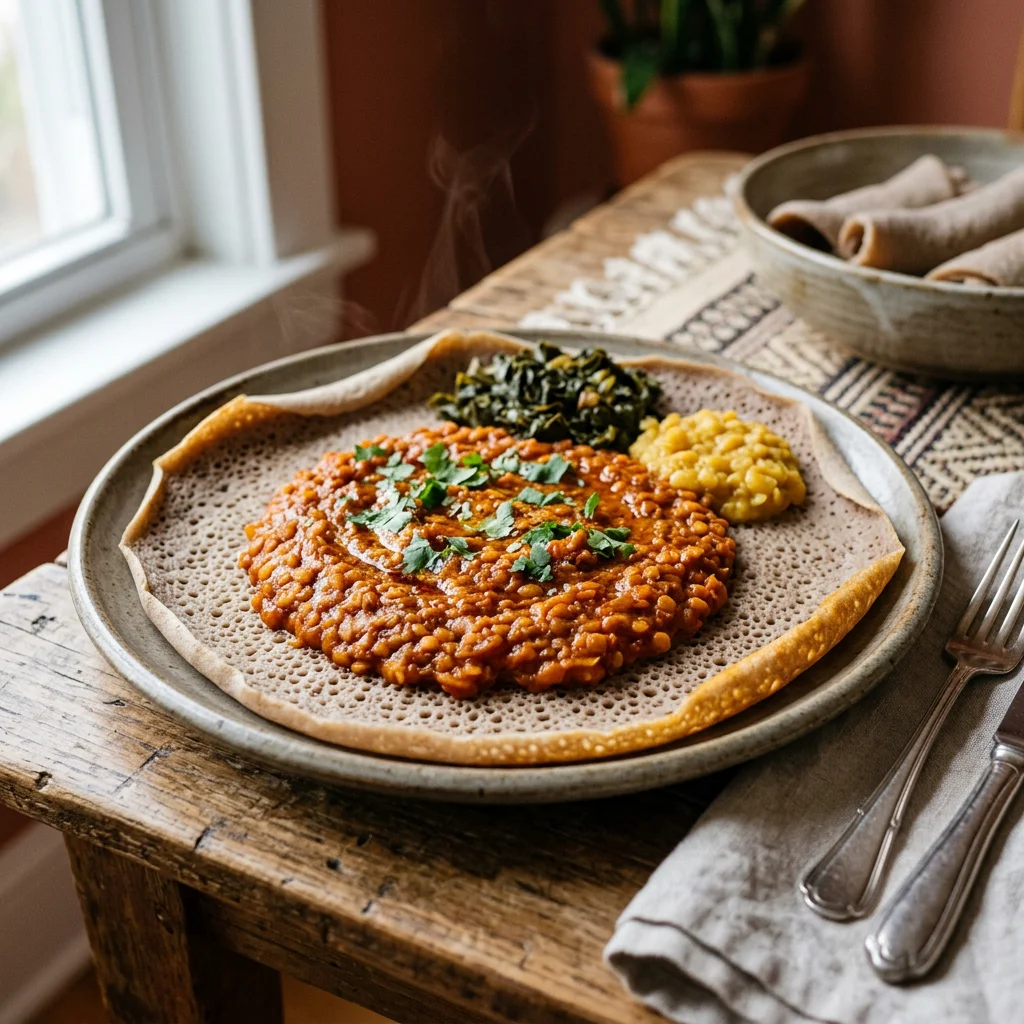
Misir wot is the red lentil stew at the heart of Ethiopian cooking — a thick, richly spiced braise of red lentils simmered in a base of slow-cooked onions and berbere spice blend until the lentils dissolve into a deeply flavored, rust-colored stew. It is the dish most likely to appear on any Ethiopian table, served during the twice-weekly Orthodox fasting days (Wednesday and Friday) when the majority of the population eats vegan, and equally present at everyday family meals. The stew is always eaten communally, scooped with torn pieces of injera (the spongy, sourdough flatbread that serves as both plate and utensil), a practice that transforms every meal into an act of intimacy and connection. The soul of misir wot is patience. The onions must be cooked down slowly — without any oil at first — until they caramelize and nearly dissolve, a process that can take twenty minutes or more. This dry-cooked onion base, combined with generous amounts of berbere, creates a depth of flavor that rivals the most complex Indian curries. Berbere itself is Ethiopia's signature spice blend, a carefully balanced mixture of dried chilies, fenugreek, korarima (Ethiopian cardamom), bishop's weed (ajwain), nigella seed, ginger, and sometimes dozens of other aromatics — it is to Ethiopian cuisine what garam masala is to Indian cooking. From an Ayurvedic perspective, misir wot is a powerfully heating, agni-kindling preparation. The slow-cooked onion base creates a sweet, grounding foundation, while the berbere spice blend contains many of the same digestive botanicals used in Ayurvedic medicine — fenugreek, ginger, black pepper, and cardamom all appear in both traditions. The red lentils, being the lightest of the legume family, break down readily and nourish rasa and rakta dhatus without overburdening digestion.
Strongly pacifies Vata and Kapha. May increase Pitta due to the heating nature of berbere and the volume of onion and garlic.
Ingredients
- 1.5 cups Red lentils (rinsed until water runs clear)
- 3 large Red onions (very finely diced)
- 3 tbsp Berbere spice blend (see chef notes for components)
- 2 tbsp Tomato paste
- 4 cloves Garlic (minced)
- 1 tbsp Fresh ginger (grated)
- 2 tbsp Niter kibbeh (Ethiopian spiced butter) (or vegetable oil for fasting version)
- 3 cups Water
- 1 tsp Salt (or to taste)
- 1/2 tsp Turmeric powder
- 1/4 tsp Fenugreek powder
Instructions
- Place the finely diced onions in a large, heavy-bottomed pot over medium heat with no oil or butter. Stir frequently and cook dry for 8-10 minutes until the onions soften, release their moisture, and begin to caramelize. This dry-cooking step is essential to misir wot and cannot be skipped — it creates the deep, sweet foundation of the stew.
- Add the niter kibbeh (or oil for fasting) and stir to coat the onions. Continue cooking for another 3-4 minutes until the onions are deeply golden.
- Reduce heat to medium-low. Add the berbere spice blend and stir constantly for 2 minutes, allowing the spices to bloom in the fat. The mixture will become a thick, fragrant, rust-colored paste.
- Add the garlic, ginger, turmeric, and fenugreek. Stir for 1 minute until fragrant.
- Stir in the tomato paste and cook for another minute, then add the rinsed lentils and water. Stir well to combine.
- Bring to a gentle boil, then reduce heat to low. Cover and simmer for 25-30 minutes, stirring every 5-7 minutes to prevent sticking. The lentils should dissolve completely into a thick, stew-like consistency.
- Adjust salt and add splashes of hot water if the wot becomes too thick. It should be the consistency of a thick, scoopable stew — not soupy, but not stiff.
- Serve on a large platter of injera, with other wots and salads arranged alongside for communal eating.
Nutrition
These values are estimates calculated from the ingredient list and may vary based on brands, cooking methods, and serving size. Not a substitute for medical or dietary advice.
How This Recipe Affects Each Dosha
Vata
Deeply grounding and warming for Vata. The slow-cooked onion base provides sweet, heavy, stabilizing qualities, while the oily richness of niter kibbeh lubricates dry Vata tissues. Red lentils are among the lightest legumes and produce less gas than heavier beans, and the generous spicing — particularly fenugreek and ginger — actively reduces Vata in the digestive tract.
Pitta
The volume of berbere makes this a heating dish that can aggravate Pitta if eaten in excess. The dried chilies, garlic, and onion compound the heat. Pitta types can enjoy small portions, especially during cooler months, but should not make this a staple during summer or periods of inflammation.
Kapha
Excellent for Kapha. The pungent, light, and warming qualities of berbere cut through Kapha heaviness and stagnation. Red lentils are drying and astringent, and the absence of heavy fats in the fasting version makes this an ideal Kapha-balancing meal. The strong spicing kindles sluggish Kapha digestion.
Powerfully kindles agni. The combination of berbere spices — chili, ginger, fenugreek, black pepper, and bishop's weed — creates a concentrated digestive fire stimulant. The dry-cooked onion base enhances absorption. One of the strongest agni-kindling preparations in African cuisine.
Nourishes: Rasa (plasma), Rakta (blood), Mamsa (muscle)
Adjustments by Constitution
For Vata Types
Use a generous 3 tablespoons of niter kibbeh and reduce berbere to 2 tablespoons to moderate the pungency. Add a pinch of korarima (Ethiopian cardamom) at the end for its sweet, warming, carminative properties. Serve with extra injera for grounding.
For Pitta Types
Reduce berbere to 1 tablespoon and omit garlic. Substitute niter kibbeh with plain ghee to avoid the additional heating spices infused in the butter. Add a side of ayib (fresh Ethiopian cheese) to cool the dish, and stir in a squeeze of lemon at the end.
For Kapha Types
Use the fasting version with oil instead of niter kibbeh, and increase berbere to 4 tablespoons. Add a generous pinch of mitmita (Ethiopian chili powder with bishop's weed and cardamom) at serving for extra pungency. Add chopped greens during the last 5 minutes of cooking for additional lightness.
Seasonal Guidance
Best during cooler months when the body craves deep warmth and strong spicing. In autumn and winter, use full berbere quantities and generous niter kibbeh. In spring, lighten with the fasting oil-based version and add leafy greens. Not ideal as a summer staple for Pitta types, though Vata and Kapha constitutions can enjoy it year-round in moderate portions.
Best time of day: Lunch or early dinner, served warm on injera
Cultural Context
Misir wot is the democratic heart of Ethiopian cuisine — it appears at the humblest family table and the most elaborate holiday feast alike. Ethiopia's Orthodox Christian tradition mandates over 200 fasting days per year during which all animal products are forbidden, giving rise to one of the world's most sophisticated vegan culinary traditions. Misir wot is the cornerstone of these fasting meals. The communal eating style — everyone gathered around a single large platter of injera topped with various wots, eating with their right hand — reflects the Ethiopian concept of "gursha," where loved ones feed each other by hand as an expression of affection and respect.
Deeper Context
Origins
Red lentil cultivation reached East Africa via ancient Mesopotamian trade routes — masoor appears in Horn-of-Africa cookery for at least 2,000 years. The berbere spice base evolved over centuries, with Ethiopian chili adoption in the 16th century transforming the older long-pepper-based preparation. The fasting/non-fasting versioning reflects the Orthodox calendar's structural influence on every major Ethiopian dish architecture.
Food as Medicine
Fenugreek is a classical galactagogue, blood-sugar modulator, and digestive stimulant across Indian, Middle Eastern, and Ethiopian traditional medicine. Red lentil (masoor) appears in classical Ayurvedic texts as a light, quickly-digested convalescent food. The berbere spice content contributes substantial phytonutrient density alongside the protein-and-carbohydrate base. Modern research supports fenugreek for insulin sensitivity and turmeric (in berbere) for inflammation.
Ritual & Seasonal Role
Year-round with fasting-day adaptations (oil-based) during weekly and extended fasting periods. One of the three or four most-prepared Ethiopian home dishes, appearing on injera plates across nearly every meal. Not ceremonial in the feast-day sense, but culturally essential in the daily-bread sense.
Classical Pairings & Cautions
Injera, ayib (non-fasting), gomen, shiro, fosolia. Cautions: Pitta substantial aggravation; capsaicin for GERD and peptic ulcer patients; FODMAP sensitivity from the onion and lentil combination; fenugreek can affect diabetic medication dosing; niter kibbeh contains dairy — strict lactose-intolerance requires the fasting-oil version.
Cross-Tradition View
How other medical and food-wisdom traditions read this dish. Each tradition names the same physiological reality in its own language — the agreements across them are where universal principles live.
Traditional Chinese Medicine
Red lentils are Spleen-Qi-tonifying and Blood-supporting; berbere is aggressively heating-dispersing; onion is warm-pungent and disperses cold; niter kibbeh is warm-wet; fenugreek is warming with bitter-sweet Liver-moving action. A Qi-and-Blood tonic with intense heat — similar in structure to Indian masoor dal tadka but with Horn-of-Africa berbere heat instead of Indian tadka-oil blooming.
Greek Humoral
Hot-dry dominant. Choleric. Galenic physicians would flag this for habitual Pitta-heat patients but endorse it for cold-damp melancholic-phlegmatic types. The red lentil base provides sanguine sustenance that prevents the choleric spice profile from burning out the constitution.
Ayurveda
Heating virya, pungent vipaka. Pacifies Vata substantially through protein and warmth; aggravates Pitta through the berbere heat; Kapha-reducing strongly. Red lentil (masoor) is a classical Ayurvedic light-legume with its own materia medica — the Ethiopian preparation shares the basic logic with North Indian masoor dal tadka despite the entirely different spice register.
Habesha Orthodox Fasting
A paradox dish — traditional misir wot contains niter kibbeh (spiced butter), but fasting-day versions (tsom misir) substitute oil for strict observance. The dairy-free fasting variant is permitted during the 55-day Lenten fast and the 40-day Advent fast when other misir wot preparations would be prohibited. One of the most-prepared dishes in Ethiopian Orthodox households, precisely because it can be adapted to both fasting and non-fasting days.
Chef's Notes
The key to authentic misir wot is the dry-cooked onion base and a generous hand with berbere. If you cannot find pre-made berbere, make your own by toasting and grinding dried guajillo or ancho chilies with fenugreek seed, coriander, black pepper, cardamom, nigella seed, clove, allspice, and a little cinnamon. Niter kibbeh — clarified butter infused with fenugreek, korarima, bishop's weed, ginger, and turmeric — is the Ethiopian equivalent of ghee and adds an irreplaceable depth. For the fasting (tsom) version, simply omit the niter kibbeh and use a neutral oil. The stew thickens considerably as it cools, so serve it slightly looser than your target consistency.
Frequently Asked Questions
Is Misir Wot good for my dosha?
Strongly pacifies Vata and Kapha. May increase Pitta due to the heating nature of berbere and the volume of onion and garlic. Deeply grounding and warming for Vata. The volume of berbere makes this a heating dish that can aggravate Pitta if eaten in excess. Excellent for Kapha.
When is the best time to eat Misir Wot?
Lunch or early dinner, served warm on injera Best during cooler months when the body craves deep warmth and strong spicing. In autumn and winter, use full berbere quantities and generous niter kibbeh. In spring, lighten with the fasting oil-base
How can I adjust Misir Wot for my constitution?
For Vata types: Use a generous 3 tablespoons of niter kibbeh and reduce berbere to 2 tablespoons to moderate the pungency. Add a pinch of korarima (Ethiopian cardamom For Pitta types: Reduce berbere to 1 tablespoon and omit garlic. Substitute niter kibbeh with plain ghee to avoid the additional heating spices infused in the butter.
What are the Ayurvedic properties of Misir Wot?
Misir Wot has Pungent, Sweet, Bitter taste (rasa), Heating energy (virya), and Pungent post-digestive effect (vipaka). Its qualities (gunas) are Light, Warm, Slightly Oily. It nourishes Rasa (plasma), Rakta (blood), Mamsa (muscle). Powerfully kindles agni. The combination of berbere spices — chili, ginger, fenugreek, black pepper, and bishop's weed — creates a concentrated digestive fire stimulant. The dry-cooked onion base enhances absorption. One of the strongest agni-kindling preparations in African cuisine.