Miso Soup (Tofu + Wakame)
Japanese Recipe
Overview
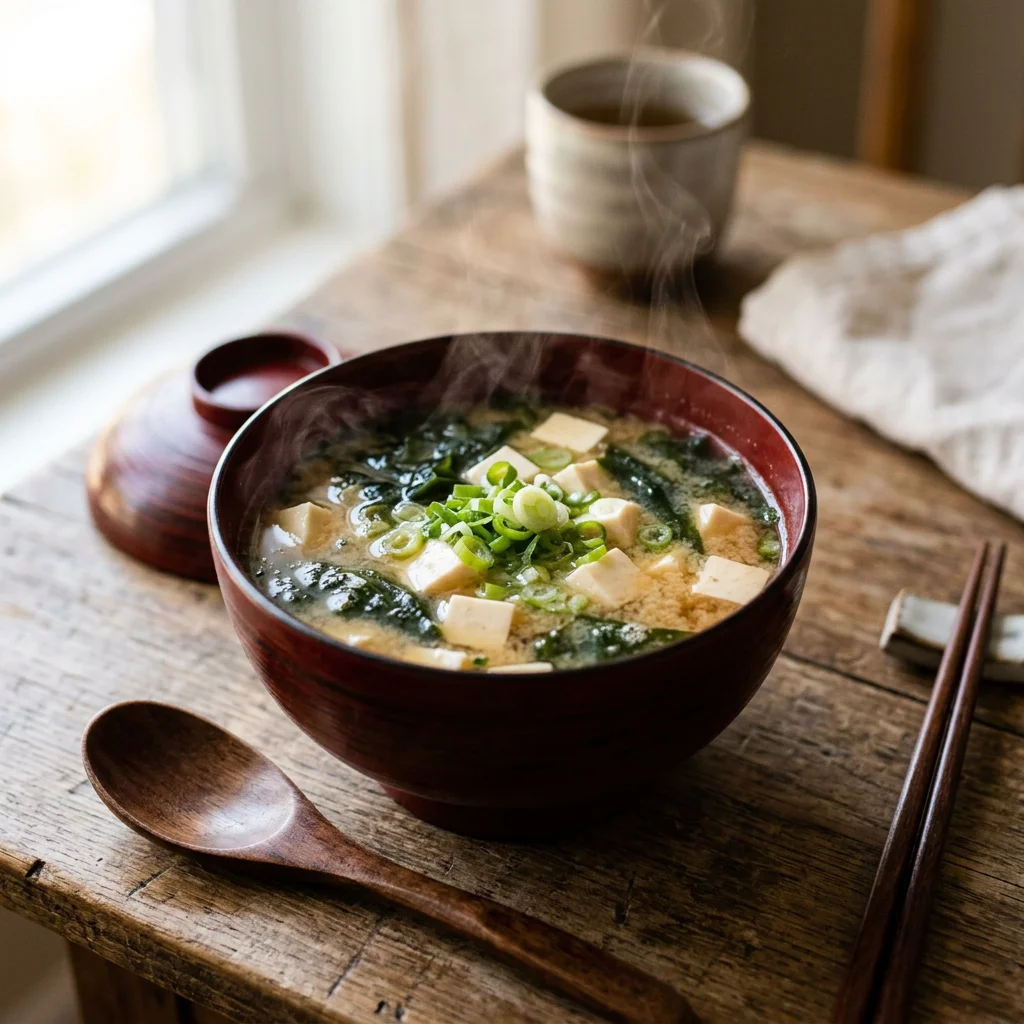
Miso soup is the heartbeat of the Japanese table — a simple, warming broth served at nearly every meal, from breakfast through dinner. At its core, it is dashi (a stock made from kombu seaweed and bonito flakes) enriched with dissolved miso paste, with silken tofu cubes and rehydrated wakame seaweed floating within. The preparation takes less than ten minutes, yet the depth of umami it delivers is remarkable. The dish embodies the Japanese aesthetic of restraint — few ingredients, each chosen for what it contributes to the whole. Dashi provides the oceanic umami backbone. Miso brings fermented depth, salt, and probiotic richness. Tofu adds gentle protein without competing for attention. Wakame contributes minerals and a silky texture. Together, they create something far greater than the sum of their parts. From an Ayurvedic perspective, miso soup is a fascinating study in fermented food as medicine. Miso is a living food — rich in beneficial bacteria, enzymes, and bioavailable nutrients created through months or years of fermentation. Its salty, pungent qualities kindle digestive fire, while the warm broth base soothes Vata and supports hydration. It is one of the few fermented foods that Ayurveda would consider predominantly sattvic when consumed fresh and warm.
Balances Vata due to warmth, oiliness, and grounding salt. May mildly aggravate Pitta due to salt and fermentation. Good for Kapha in moderation due to lightness and warming quality.
Ingredients
- 4 cups Dashi stock (from kombu and bonito, or instant dashi powder)
- 3 tbsp Miso paste (white (shiro) or red (aka), or a blend)
- 200 g Silken tofu (cut into small cubes)
- 1 tbsp Dried wakame seaweed (rehydrated in water for 5 minutes)
- 2 stalks Scallion (thinly sliced, for garnish)
Instructions
- If making dashi from scratch: soak a 4-inch piece of kombu in 4 cups of water for 30 minutes. Bring to a gentle simmer (do not boil), remove the kombu, add a handful of bonito flakes, steep for 3 minutes, then strain.
- Bring the dashi to a gentle simmer over medium heat. Do not let it reach a rolling boil.
- Rehydrate the dried wakame in a small bowl of water for 5 minutes, then drain and squeeze out excess moisture.
- Add the tofu cubes and wakame to the simmering dashi. Cook for 2 minutes to warm through.
- Remove the pot from heat. Place the miso paste in a small strainer or ladle and lower it into the broth, stirring with chopsticks to dissolve the miso completely. This prevents lumps and keeps the living cultures intact.
- Serve immediately in individual bowls, garnished with sliced scallion. Never reboil miso soup — heat kills the beneficial bacteria and turns the flavor harsh.
Nutrition
These values are estimates calculated from the ingredient list and may vary based on brands, cooking methods, and serving size. Not a substitute for medical or dietary advice.
How This Recipe Affects Each Dosha
Vata
Miso soup is deeply comforting for Vata — warm, liquid, slightly oily, and grounding. The salty taste and warm temperature directly pacify Vata's cold, dry, light qualities. The umami richness provides satisfaction without heaviness. This is an ideal daily food for Vata constitutions, especially in cooler months.
Pitta
The fermented quality and salt content of miso can aggravate Pitta, particularly the stronger red varieties. However, the light, liquid base and the cooling nature of tofu provide some balance. Pitta types should use mild white miso and keep portions moderate, especially during summer.
Kapha
The light, warm, liquid quality of miso soup is generally supportive for Kapha. It does not create heaviness or congestion. The salt content should be monitored, as excess salt causes water retention in Kapha types. The warming quality helps stimulate sluggish Kapha digestion.
Gently kindles agni through the warming broth, salt, and fermented quality of miso. The enzymes in unpasteurized miso support the breakdown of food when served alongside a meal. This is why miso soup traditionally begins the Japanese meal — it primes digestion.
Nourishes: Rasa (plasma), Rakta (blood)
Adjustments by Constitution
For Vata Types
Use a richer dashi with extra kombu. Add a few drops of sesame oil to each bowl before serving. Include warming garnishes like grated ginger or shichimi togarashi (seven-spice powder). Use red miso or a red-white blend for deeper, more grounding flavor.
For Pitta Types
Use only mild white miso and reduce the amount to 2 tablespoons. Add extra silken tofu for its cooling protein. Garnish with shiso (perilla) leaves instead of scallion. Avoid red miso, which is more heating and fermented.
For Kapha Types
Use red miso for its stronger, more stimulating quality. Add grated daikon radish and a generous pinch of grated fresh ginger to each bowl. Include shiitake mushrooms for their drying, Kapha-clearing properties. Reduce tofu or omit it entirely.
Seasonal Guidance
Appropriate year-round with seasonal adjustments. In autumn and winter, use deeper red miso and add root vegetables like daikon, burdock, or sweet potato for grounding warmth. In spring, lighten with white miso and garnish with fresh greens like mitsuba or watercress. In summer, use the mildest white miso, serve in smaller portions, and add cooling ingredients like silken tofu and cucumber. The Japanese tradition of adjusting miso soup seasonally mirrors Ayurvedic principles precisely.
Best time of day: Breakfast or as the opening course of lunch and dinner. In Japan, miso soup is served at every meal, including a traditional breakfast alongside rice and pickles.
Cultural Context
Miso soup is so central to Japanese food culture that its absence from a meal feels incomplete — like bread missing from a French table. The practice of fermenting soybeans into miso arrived from China over a thousand years ago and became uniquely Japanese through the development of regional miso varieties. Every prefecture has its own miso tradition: Kyoto's delicate white saikyo miso, Nagoya's intense hatcho miso, Sendai's robust red miso. The morning bowl of miso soup is considered essential to health in Japanese folk medicine, and the phrase "miso soup every day" appears in traditional longevity advice.
Deeper Context
Origins
Miso (fermented soybean paste) arrived in Japan from China in the 7th-8th century through Buddhist temple exchange. Japanese miso varieties developed over the following millennium, with regional specialties emerging: white miso (shiro, Kyoto), red miso (aka, Aichi), yellow-brown miso (Shinshu). The breakfast miso soup-plus-rice-plus-pickles format stabilized during the Heian period (794-1185) and became Japan's national breakfast architecture. Dogen Zenji formalized Shojin Ryori at Eiheiji monastery in the 13th century, and miso soup became its foundational dish.
Food as Medicine
Miso fermentation produces substantial probiotic content, concentrated B-vitamins, and bioavailable peptides with documented antihypertensive activity (the angiotensin-converting-enzyme-inhibitory peptides from aspergillus-fermented soybeans). Wakame seaweed contributes iodine, fucoxanthin (with metabolic research support), and trace minerals. Dashi umami provides complete amino acid profile and minerals. Modern research has characterized miso soup's daily-consumption benefits for cardiovascular health and microbiome support.
Ritual & Seasonal Role
Daily Japanese breakfast staple year-round. Foundational Zen monastic meal component. Featured in traditional Japanese ryokan (inn) breakfast service and in home cookery across every Japanese household. Not religiously ceremonial but deeply woven into Japanese daily-life food tradition.
Classical Pairings & Cautions
Rice, grilled fish, pickles, natto — the classic Japanese breakfast. Green tea. Cautions: soy allergies; gluten intolerance affects some miso brands (barley-containing varieties); sodium load substantial — hypertensive patients should moderate; seaweed iodine content affects thyroid function in very high consumption; fermentation-related histamine sensitivity for some patients.
Cross-Tradition View
How other medical and food-wisdom traditions read this dish. Each tradition names the same physiological reality in its own language — the agreements across them are where universal principles live.
Traditional Chinese Medicine
Miso is warm and tonifies Spleen Qi while providing substantial fermentation-related probiotic content; tofu is cool-sweet and builds Yin; wakame is salty-cool and softens hardness while supporting Kidney; dashi (kelp-and-bonito stock) provides Kidney-and-Yin-supporting foundation; scallion is warm-pungent and disperses cold. A comprehensive Qi-Yin-and-Kidney tonic — TCM physicians would recognize miso soup as a genuinely therapeutic daily preparation.
Greek Humoral
Hot-wet sanguine-phlegmatic balance. The fermented soybean (miso) has no classical Galenic equivalent, but the warming-salty-umami profile corresponds to the Hippocratic endorsement of light warming broths for daily sustenance.
Ayurveda
Heating virya, pungent vipaka. Pacifies Vata through warmth and mild unctuousness. Pitta-mildly-aggravating through fermentation and salt. Kapha-reducing through the warming and dispersing qualities. Fermented foods are not traditionally Ayurvedic but are tolerated in moderation.
Zen Shojin Ryori
Miso soup is central to Shojin Ryori — the Zen Buddhist vegetarian monastic cuisine developed at Eiheiji monastery (Dogen Zenji, 13th century) and continued through Soto and Rinzai Zen monastic tradition. Shojin Ryori emphasizes five flavors (go-mi), five colors (go-shoku), and five cooking methods (go-ho) — miso soup satisfies the salty taste requirement and provides foundation for the monastic meal architecture. Breakfast miso soup is near-universal in Japanese Zen temples.
Chef's Notes
The most critical rule of miso soup is never boil the miso. Dissolve it off the heat or at the barest simmer. Boiling destroys the living enzymes and probiotics that make miso a functional food, and it turns the flavor flat and bitter. White miso (shiro) is milder and sweeter, best for spring and summer. Red miso (aka) is stronger and more pungent, suited to autumn and winter. Mixing the two (awase) gives the best of both. For richer dashi, combine kombu with dried shiitake mushrooms instead of (or alongside) bonito flakes for a vegetarian version with deep umami.
Frequently Asked Questions
Is Miso Soup (Tofu + Wakame) good for my dosha?
Balances Vata due to warmth, oiliness, and grounding salt. May mildly aggravate Pitta due to salt and fermentation. Good for Kapha in moderation due to lightness and warming quality. Miso soup is deeply comforting for Vata — warm, liquid, slightly oily, and grounding. The fermented quality and salt content of miso can aggravate Pitta, particularly the stronger red varieties. The light, warm, liquid quality of miso soup is generally supportive for Kapha.
When is the best time to eat Miso Soup (Tofu + Wakame)?
Breakfast or as the opening course of lunch and dinner. In Japan, miso soup is served at every meal, including a traditional breakfast alongside rice and pickles. Appropriate year-round with seasonal adjustments. In autumn and winter, use deeper red miso and add root vegetables like daikon, burdock, or sweet potato for grounding warmth. In spring, lighten with
How can I adjust Miso Soup (Tofu + Wakame) for my constitution?
For Vata types: Use a richer dashi with extra kombu. Add a few drops of sesame oil to each bowl before serving. Include warming garnishes like grated ginger or shichi For Pitta types: Use only mild white miso and reduce the amount to 2 tablespoons. Add extra silken tofu for its cooling protein. Garnish with shiso (perilla) leaves in
What are the Ayurvedic properties of Miso Soup (Tofu + Wakame)?
Miso Soup (Tofu + Wakame) has Salty, Sweet, Pungent taste (rasa), Heating energy (virya), and Pungent post-digestive effect (vipaka). Its qualities (gunas) are Light, Warm, Oily, Liquid. It nourishes Rasa (plasma), Rakta (blood). Gently kindles agni through the warming broth, salt, and fermented quality of miso. The enzymes in unpasteurized miso support the breakdown of food when served alongside a meal. This is why miso soup traditionally begins the Japanese meal — it primes digestion.