Lasagna
Italian Recipe
Overview
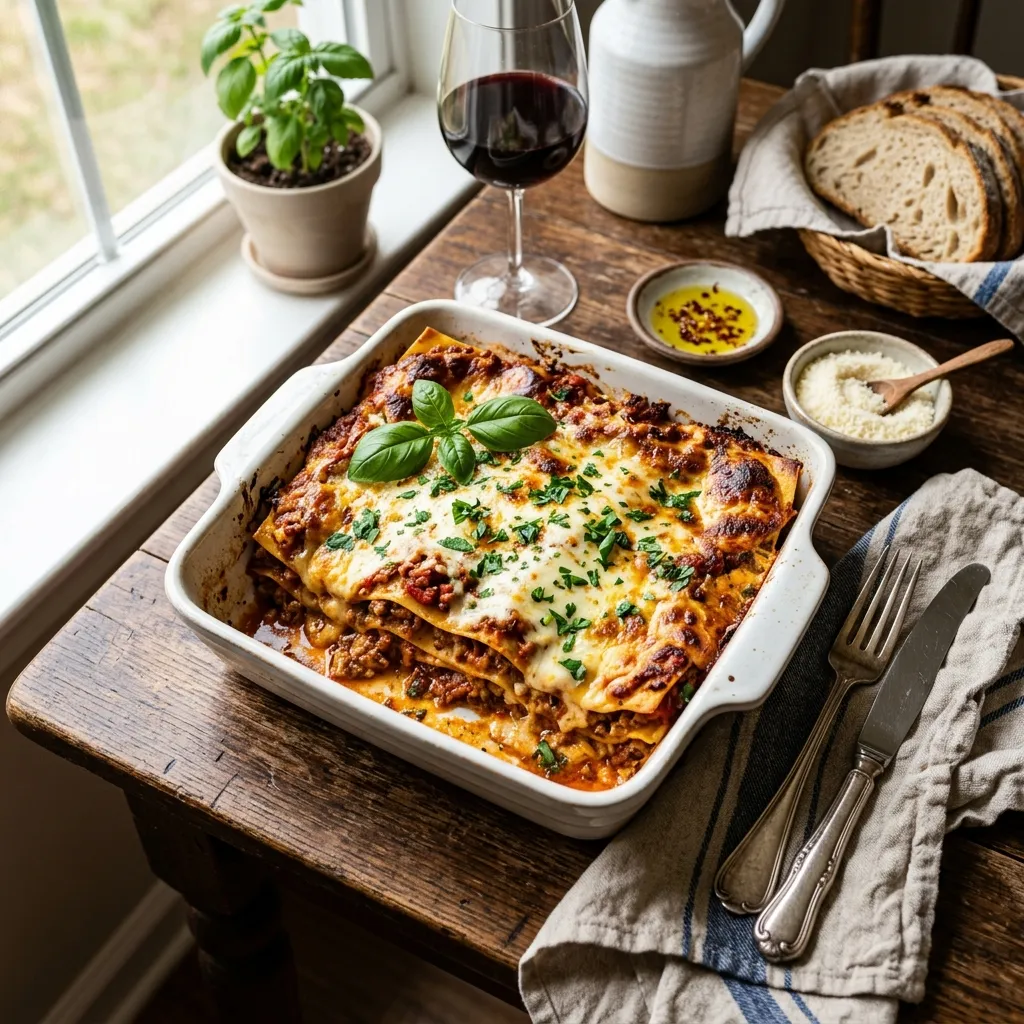
Lasagna alla Bolognese traces its origins to the Emilia-Romagna region, where fresh egg pasta sheets are layered with a slow-cooked ragu of beef and pork, bechamel sauce, and Parmigiano-Reggiano. The dish appears in a 14th-century manuscript, the Liber de Coquina, making it one of the oldest documented pasta preparations in Europe. Unlike the ricotta-heavy American adaptation, the Emilian original relies on the interplay between a patient, deeply flavored meat sauce and a silky besciamella. Building lasagna is an act of layered construction. The ragu cooks for 2-3 hours, allowing the aromatics, wine, and milk to meld with the meat into something greater than its parts. The bechamel is made separately — butter, flour, and milk whisked until smooth and nutmeg-scented. Fresh pasta sheets, rolled thin enough to read a newspaper through, cook directly in the assembled dish, absorbing moisture from the sauces. Ayurvedically, lasagna is a dense, heavy, nourishing preparation that delivers powerful building energy. The combination of wheat, dairy, and slow-cooked meat creates substantial Kapha-increasing qualities — sweet, heavy, oily, and warming. This makes it excellent for Vata constitutions seeking grounding and problematic for Kapha types already dealing with congestion or sluggishness.
Strongly grounds and pacifies Vata with its dense, warm, oily nature. Significantly increases Kapha. May aggravate Pitta if consumed in large portions due to tomato and meat heat.
Useful for building body mass in underweight individuals and recovering from wasting conditions, provided agni is strong enough to handle the density.
Ingredients
- 400 g Lasagna sheets (fresh egg pasta preferred, or dried no-boil sheets)
- 500 g Ground beef
- 250 g Ground pork
- 1 large Onion (finely diced)
- 1 medium Carrot (finely diced)
- 1 stalk Celery (finely diced)
- 400 ml Tomato passata
- 2 tbsp Tomato paste
- 150 ml Dry red wine
- 100 ml Whole milk (for the ragu)
- 60 g Butter (for bechamel)
- 60 g All-purpose flour (for bechamel)
- 750 ml Whole milk (for bechamel)
- 1/4 tsp Nutmeg (freshly grated)
- 150 g Parmigiano-Reggiano (finely grated)
- 3 tbsp Extra virgin olive oil
- to taste Salt and black pepper
Instructions
- Prepare the ragu: heat olive oil in a heavy-bottomed pot over medium heat. Add the finely diced onion, carrot, and celery (soffritto) and cook gently for 8-10 minutes until softened and translucent but not browned.
- Increase heat to medium-high and add the ground beef and pork. Break the meat apart with a wooden spoon and cook until browned, about 8 minutes. Season with salt and pepper.
- Pour in the red wine and stir, scraping up any browned bits from the bottom. Cook until the wine has almost fully evaporated, about 5 minutes. Add the tomato passata and tomato paste, stir to combine.
- Add the 100 ml of milk — this is the Bolognese secret, as milk tenderizes the meat and rounds out acidity. Bring to a gentle simmer, reduce heat to low, cover partially, and cook for 2 hours, stirring occasionally. The ragu should reduce to a thick, rich sauce. Add water if it dries out.
- Prepare the bechamel: melt butter in a saucepan over medium heat. Add flour and whisk constantly for 2 minutes until a smooth paste forms. Gradually pour in the 750 ml of milk while whisking, adding it in stages to prevent lumps. Cook for 8-10 minutes until the sauce is thick enough to coat the back of a spoon. Season with salt, pepper, and freshly grated nutmeg.
- Preheat the oven to 375F / 190C. If using fresh pasta sheets, have them ready. If using dried no-boil sheets, no precooking is needed — the moisture from the sauces will cook them.
- Assemble: spread a thin layer of ragu on the bottom of a 9x13 inch baking dish. Layer pasta sheets over it, trimming to fit. Spread a generous layer of ragu, then bechamel, then a scattering of Parmigiano. Repeat for 4-5 layers, finishing with bechamel and a generous blanket of Parmigiano on top.
- Cover with foil and bake for 25 minutes. Remove the foil and bake for an additional 15-20 minutes until the top is golden brown and bubbling. Let rest for 15 minutes before cutting — this is essential for the layers to set.
Nutrition
These values are estimates calculated from the ingredient list and may vary based on brands, cooking methods, and serving size. Not a substitute for medical or dietary advice.
How This Recipe Affects Each Dosha
Vata
This is a deeply grounding meal for Vata. The heavy, oily, warm qualities directly counter Vata's cold, dry, light nature. The slow-cooked meat provides sustained nourishment, the dairy components lubricate dry tissues, and the wheat pasta offers stable earth energy. Portions should still be moderate — Vata's delicate agni can be overwhelmed by excessive density.
Pitta
The tomato-based sauce is heating and sour, which can aggravate Pitta. Red meat generates more internal heat than poultry or fish. However, the bechamel and cheese provide some cooling balance. Pitta types should eat smaller portions and pair with a cooling salad or bitter greens.
Kapha
Lasagna hits every Kapha-aggravating quality: heavy, dense, oily, sweet. Wheat, dairy, and meat together create maximum building energy, which Kapha constitutions already have in excess. This is a dish for Kapha types to enjoy rarely and in small portions, ideally on cold winter days when agni is at its seasonal peak.
Demands strong agni due to the combination of wheat, dairy, and meat in a dense, layered preparation. Those with weak digestive fire may experience heaviness, bloating, or ama production. Best eaten when agni has been kindled with exercise or warming spices beforehand.
Nourishes: Rasa (plasma), Rakta (blood), Mamsa (muscle), Meda (fat), Asthi (bone), Shukra (reproductive)
Adjustments by Constitution
For Vata Types
The classic preparation is well-suited to Vata as-is. Add a pinch of black pepper and extra nutmeg to the bechamel to further support digestion. Serve with a small side of bitter greens dressed in lemon and olive oil to provide lightness.
For Pitta Types
Replace the tomato passata with roasted butternut squash puree for a sweeter, less acidic sauce. Substitute the red meat with ground turkey. Reduce the amount of Parmigiano and increase bechamel for its cooling quality. Omit the wine.
For Kapha Types
Use zucchini slices instead of pasta sheets. Replace bechamel with a lighter cashew cream or eliminate it entirely. Use only lean ground turkey. Add black pepper, dried oregano, and chili flakes to the ragu for extra pungency. Reduce cheese by half.
Seasonal Guidance
Strictly a cold-weather dish. The density and heating quality make it ideal for autumn and winter when agni is naturally strong and the body needs building energy to counter cold. Avoid in summer — the heavy combination of wheat, dairy, and meat creates excess heat and sluggishness when ambient temperatures are high.
Best time of day: Lunch or early dinner, allowing at least 3-4 hours for digestion before sleep
Cultural Context
The Bolognese ragu that fills this lasagna is protected by the Accademia Italiana della Cucina, which registered an official recipe with the Bologna Chamber of Commerce in 1982. The traditional version contains no garlic, no herbs, and no bell peppers — ingredients commonly added in American adaptations. In Emilia-Romagna, lasagna is a Sunday and holiday dish, prepared for large family gatherings. The layered construction mirrors the region's approach to cooking: patience, quality ingredients, and respect for each component's contribution to the whole.
Deeper Context
Origins
Lasagna traces to Apicius's 4th-century Roman cookbook, where 'laganum' references flat pasta sheets. The modern layered form stabilized in Bologna during the 14th and 15th centuries through Emilia-Romagna noble kitchens. The Accademia Italiana della Cucina formally registered lasagne alla bolognese in 1982, and the Bologna Chamber of Commerce deposited the traditional recipe with legal protections against international-style tomato-heavy versions. The Italian lasagna-lasagne lineage is among the longest continuously-documented pasta dishes.
Food as Medicine
Not therapeutically designed. Parmigiano-Reggiano provides concentrated calcium, vitamin K2, and fermentation-related probiotic content. Ground beef adds iron, zinc, B12, and complete protein. Tomato passata contributes lycopene (bioavailability increased by the cooking and fat pairing). The dish is nutritionally dense despite its feast-food positioning, making it appropriate occasional restoration food for substantial working populations.
Ritual & Seasonal Role
Sunday family lunch in Emilia-Romagna tradition. Christmas and Easter feast dishes in many Italian households. Festival food across Italian diaspora Sunday-dinner traditions. Not religiously ceremonial but deeply tied to Italian family-meal identity — the preparation time (2-4 hours) positions it as occasion cookery rather than weeknight food.
Classical Pairings & Cautions
A light side salad with vinaigrette, crusty bread, a glass of Sangiovese or Lambrusco. Cautions: gluten intolerance precludes traditional pasta; lactose sensitivity; religious beef restrictions (Hindu, some Buddhist); substantial saturated fat and sodium load; gout patients should moderate the meat-cheese combination; Kapha substantial aggravation.
Cross-Tradition View
How other medical and food-wisdom traditions read this dish. Each tradition names the same physiological reality in its own language — the agreements across them are where universal principles live.
Traditional Chinese Medicine
Pasta sheets are Spleen-Qi-tonifying; ground beef builds Blood and Qi; Parmigiano-Reggiano is Yin-building and Kidney-essence-supporting; béchamel is Yin-building; tomato passata is cool-sour and moves Liver Qi. A comprehensive Qi-Blood-and-Yin tonic — TCM physicians would recognize lasagna's structure as classical restoration food, though excessive for habitual consumption due to damp-heat generation.
Greek Humoral
Hot-wet sanguine-building aggressively. A Galenic feast food — the layered construction of starch, meat, cheese, and tomato generates substantial sanguine humor. Appropriate for melancholic types needing moisture and substance; choleric types should moderate portion size.
Ayurveda
Heating virya, sweet vipaka. Pacifies Vata substantially through unctuousness, warmth, and protein density. Aggravates Kapha very substantially through the pasta-cheese-meat-tomato combination. Mildly aggravates Pitta through the tomato-cheese-heat combination. Festival food by Ayurvedic classification.
Emilia-Romagna (Bologna)
Traditional Bolognese lasagna (lasagne alla bolognese) uses green spinach pasta (lasagne verdi) and slow-cooked ragù bolognese, not the tomato-heavy international version. The Accademia Italiana della Cucina registered the official Bolognese recipe in 1982, with the Bologna Chamber of Commerce formally depositing the recipe. Ancient precedent exists in Apicius (4th century CE), where 'laganum' referenced a flat pasta sheet. The modern lasagna form stabilized in 14th-15th century Bologna through Emilia-Romagna noble kitchens.
Chef's Notes
The ragu benefits enormously from being made a day ahead — the flavors deepen and meld overnight in the refrigerator. Fresh egg pasta makes a noticeable difference in texture, but high-quality dried sheets are a reasonable substitute. The bechamel should be thick but still pourable — too thick and it will not spread; too thin and the lasagna will be soupy. The 15-minute rest after baking is non-negotiable — cutting too early produces a collapsed, saucy mess rather than clean layers.
Frequently Asked Questions
Is Lasagna good for my dosha?
Strongly grounds and pacifies Vata with its dense, warm, oily nature. Significantly increases Kapha. May aggravate Pitta if consumed in large portions due to tomato and meat heat. This is a deeply grounding meal for Vata. The tomato-based sauce is heating and sour, which can aggravate Pitta. Lasagna hits every Kapha-aggravating quality: heavy, dense, oily, sweet.
When is the best time to eat Lasagna?
Lunch or early dinner, allowing at least 3-4 hours for digestion before sleep Strictly a cold-weather dish. The density and heating quality make it ideal for autumn and winter when agni is naturally strong and the body needs building energy to counter cold. Avoid in summer — th
How can I adjust Lasagna for my constitution?
For Vata types: The classic preparation is well-suited to Vata as-is. Add a pinch of black pepper and extra nutmeg to the bechamel to further support digestion. Serve For Pitta types: Replace the tomato passata with roasted butternut squash puree for a sweeter, less acidic sauce. Substitute the red meat with ground turkey. Reduce th
What are the Ayurvedic properties of Lasagna?
Lasagna has Sweet, Sour, Salty taste (rasa), Heating energy (virya), and Sweet post-digestive effect (vipaka). Its qualities (gunas) are Heavy, Oily, Dense, Warm. It nourishes Rasa (plasma), Rakta (blood), Mamsa (muscle), Meda (fat), Asthi (bone), Shukra (reproductive). Demands strong agni due to the combination of wheat, dairy, and meat in a dense, layered preparation. Those with weak digestive fire may experience heaviness, bloating, or ama production. Best eaten when agni has been kindled with exercise or warming spices beforehand.