Leek and Potato Soup
British Recipe
Overview
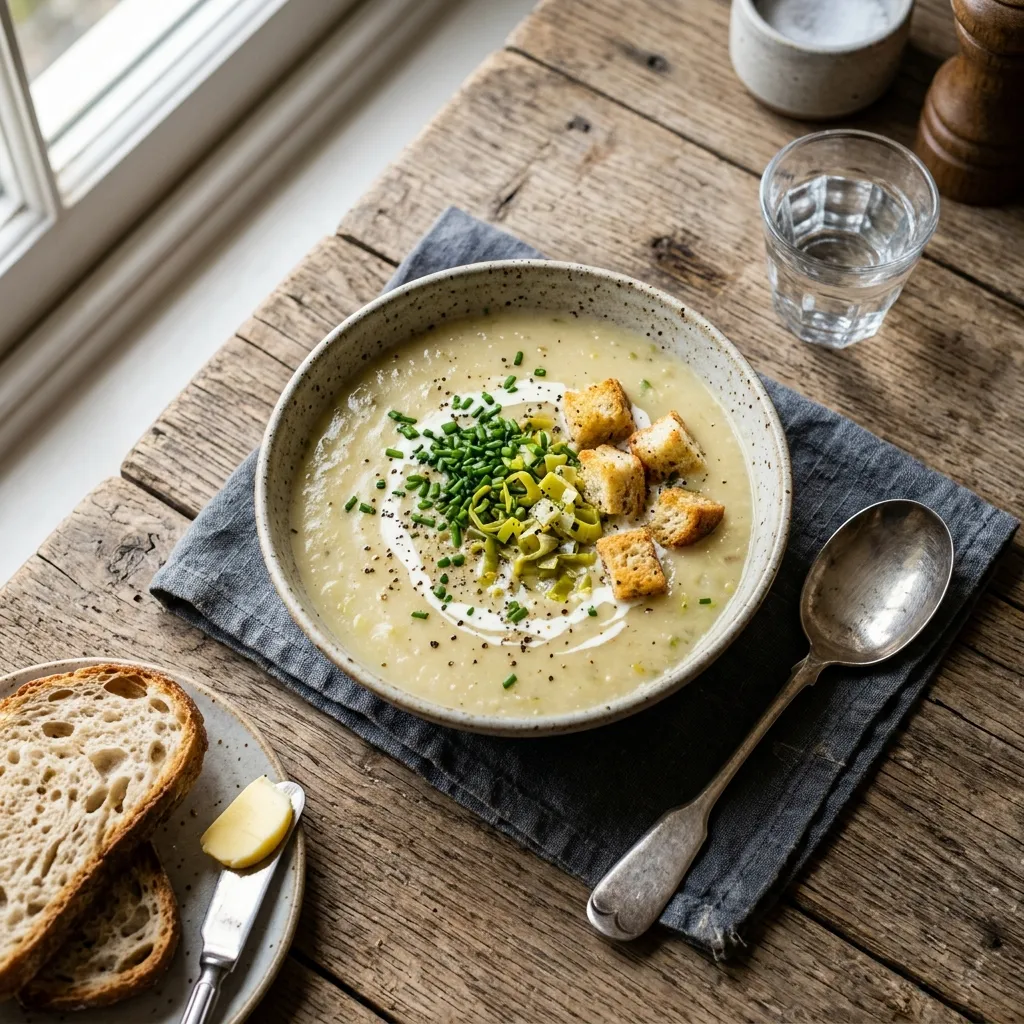
Leek and potato soup has been a British and Welsh kitchen staple for centuries — a simple, inexpensive dish that turns two of the most reliable British garden crops into something deeply comforting. Wales claims the deepest historical connection: the leek is the national emblem of Wales, and the combination of leeks and potatoes appears in Welsh cooking records dating to the medieval period. The dish is distinct from the French vichyssoise (served cold with cream) in that it is always served hot, often chunky rather than smooth, and relies on butter rather than cream for richness. The technique is straightforward: leeks and potatoes are sweated slowly in butter until soft, covered with stock, and simmered until the potatoes begin to break apart. The soup can be left chunky, partially blended for texture, or pureed smooth — each village and household has its preference. The leeks provide a mild, sweet allium flavour that is gentler than onion, while the potato thickens the broth naturally without flour. Ayurvedically, this is a warming, grounding soup with a surprisingly balanced profile. Leeks are lighter and less pungent than onions or garlic, carrying sweet and mildly pungent tastes. Potatoes contribute sweet taste and heavy quality. The butter adds unctuousness. The overall effect is soothing and easy to digest — one of the gentler soups in the British repertoire and an excellent food during convalescence or seasonal transitions.
Pacifies Vata effectively with its warm, moist, smooth, and gently sweet qualities. Neutral for Pitta when cream is omitted. Mildly increases Kapha due to potato starch and dairy, though the leek provides lightening balance.
A gentle convalescence food suitable for recovering from illness or digestive upset. The warm, smooth texture requires minimal digestive effort, the leeks support respiratory health, and the potato provides easy-to-absorb energy without taxing weak agni.
Ingredients
- 4 large Leeks (white and light green parts, sliced)
- 500 g Potatoes (peeled and cubed)
- 40 g Butter
- 1 medium Onion (diced)
- 2 cloves Garlic (minced)
- 1 liter Chicken or vegetable stock
- 1 leaf Bay leaf
- 2 sprigs Fresh thyme
- 1/4 tsp Nutmeg (freshly grated)
- 3 tbsp Double cream (optional, for serving)
- 1 tsp Salt
- 1/4 tsp White pepper
- 2 tbsp Chives (finely snipped, for garnish)
Instructions
- Prepare the leeks by trimming the dark green tops and root ends. Slice the white and light green parts into 1cm half-moons. Wash thoroughly in a bowl of cold water, swirling to release trapped grit. Lift out and drain.
- Melt the butter in a large pot over medium-low heat. Add the leeks and onion with a pinch of salt. Cook very gently for 10 minutes, stirring occasionally, until completely soft and translucent but not browned. This slow sweating is essential — it draws out the leeks' natural sweetness.
- Add the garlic and cook for 30 seconds. Add the cubed potatoes, stock, bay leaf, and thyme sprigs. Bring to a gentle simmer.
- Cook for 18-20 minutes until the potatoes are very tender and beginning to fall apart at the edges.
- Remove the bay leaf and thyme sprigs. For a smooth soup, blend with a stick blender until completely smooth. For a chunkier texture, blend half the soup and stir it back in.
- Season with salt, white pepper, and freshly grated nutmeg. Stir in the cream if using.
- Ladle into warm bowls and garnish with snipped chives. Serve with crusty bread and butter.
Nutrition
These values are estimates calculated from the ingredient list and may vary based on brands, cooking methods, and serving size. Not a substitute for medical or dietary advice.
How This Recipe Affects Each Dosha
Vata
Warm, smooth, and moist soups are among the best foods for Vata, and this one delivers those qualities without excess heaviness. The leeks provide gentle pungent stimulation that supports Vata digestion without the harsh heat of onion or garlic. The butter adds necessary oleation, and the starchy potato provides grounding sweetness. A deeply comforting Vata meal.
Pitta
Leeks are milder than onions and carry less Pitta-aggravating heat. The butter and optional cream add cooling sweetness. Without excessive garlic or spice, this soup is well-tolerated by Pitta constitutions. The nutmeg adds mild warmth that is within Pitta's range. Omit cream and reduce garlic for sensitive Pitta digestion.
Kapha
The potato starch and butter add heaviness that Kapha digestion processes slowly. However, as soups go, this is lighter than most British options. The leek provides some Kapha-cutting pungent quality, and the warm, liquid format is easier for Kapha to digest than dense, solid meals. Manageable with adjustments.
Gentle on the digestive fire. The warm, liquid format is easy for agni to process, and the mild pungency of leeks provides light digestive stimulation without overstimulating. The nutmeg adds carminative support. This is an appropriate food when agni is variable or recovering from illness.
Nourishes: Rasa (plasma), Mamsa (muscle)
Adjustments by Constitution
For Vata Types
Add a generous pinch of black pepper and a slice of fresh ginger while simmering for extra warmth. Stir in a tablespoon of ghee at the end. Serve with warm, buttered sourdough toast. A pinch of cumin provides additional digestive support.
For Pitta Types
Omit the garlic. Replace butter with a tablespoon of olive oil or coconut oil. Skip the cream and garnish with fresh dill or parsley instead of chives. Add a squeeze of lime juice before serving.
For Kapha Types
Replace half the potato with cauliflower or turnip to reduce starchiness. Use olive oil instead of butter, just 1 tablespoon. Omit cream entirely. Add extra black pepper, a half-inch of fresh ginger, and a pinch of turmeric. Serve in a smaller bowl with a side of steamed greens.
Seasonal Guidance
Ideal during the cooler months when warm soups soothe Vata and provide comfort without excessive heaviness. In spring, lighten by reducing potato and increasing leek proportion. The soup can work in summer if served at room temperature with herbs, but it is not naturally a summer dish.
Best time of day: Lunch — a perfect midday meal served with bread. Also works as a light starter before dinner or as a gentle evening meal when digestion is quieter.
Cultural Context
Leek and potato soup connects to the deepest roots of British Isles cooking. The leek has been the national symbol of Wales since at least the 7th century — legend holds that Welsh soldiers wore leeks in their helmets to distinguish themselves from Saxon enemies at the Battle of Heathfield in 633 CE. St. David's Day (March 1) is traditionally marked by wearing a leek, and leek soup appears at celebratory Welsh dinners. Beyond Wales, the soup is a universal British comfort food — the first thing many people cook from their garden harvest, and the go-to when someone is under the weather.
Deeper Context
Origins
Leek-based soups predate the potato integration (17th-18th century) by many centuries — medieval Welsh, Scottish, and Irish cottage cookery used leeks with oats, barley, or turnips as the starch base. Julia Child's Mastering the Art of French Cooking (1961) popularized the French chilled version (vichyssoise, actually invented in New York in 1917 by French chef Louis Diat) to American home cooks. The hot leek-and-potato form is older and broader across British Isles cookery.
Food as Medicine
Leek carries classical respiratory and cardiovascular folk-medicine record across Galenic, Welsh, and Allium-family traditions globally. The allium sulfur compounds have modern research support for blood-pressure modulation and cholesterol reduction. Galenic physicians specifically credited leeks for respiratory conditions, voice complaints, and for heart-strengthening — uses that align with modern research on allium cardiovascular benefit.
Ritual & Seasonal Role
Saint David's Day (Welsh national day, March 1) — the most ritualized leek occasion. Welsh winter food throughout the cold months. Year-round in Welsh and Welsh-diaspora kitchens. The dish carries specific Welsh national-identity weight that most regional British soups lack.
Classical Pairings & Cautions
Crusty bread, sharp cheddar, a glass of cider. Chives or chopped leek greens as garnish. Cautions: Kapha aggravation in winter from the potato-butter combination; allium allergies (garlic, onion, leek family) are rare but severe; FODMAP issues for IBS patients who react to fructans in leek; dairy sensitivity precludes the butter finish.
Cross-Tradition View
How other medical and food-wisdom traditions read this dish. Each tradition names the same physiological reality in its own language — the agreements across them are where universal principles live.
Traditional Chinese Medicine
Leek is warm-pungent and disperses cold Qi; potato is Spleen-Qi-tonifying; butter is warm-wet; thyme is warm and dispersing; nutmeg is warm-aromatic and calms the Shen. A warming-dispersing Spleen-Qi tonic — classical winter cold-clearing preparation. TCM physicians would prescribe this for damp-cold lung conditions and for sluggish winter digestion.
Greek Humoral
Hot-wet sanguine-building. Galenic physicians specifically credited leek with respiratory Qi-moving action — the Hippocratic corpus recommends leeks for coughs and for voice complaints. The potato is post-Columbian; the original Galenic version would have used turnip or parsnip in its place.
Ayurveda
Warming virya, sweet vipaka. Pacifies Vata substantially through warmth and unctuousness. Kapha-aggravating in excess through potato starchiness. Leek is mildly Pitta-aggravating — Pitta types should reduce quantity or pair with cooling accompaniments.
Welsh & Celtic Hearth
The leek is the Welsh national vegetable — traditionally traced to the 640 CE Battle of Heathfield, where Welsh soldiers wore leeks in their helmets to identify themselves against Saxons. Cawl cennin a tatws (leek-and-potato soup) is a Welsh cottage staple older than most of the Anglo-British food canon. Saint David's Day (March 1) features leek-based dishes as national symbols; wearing a leek on the day remains a continuing Welsh tradition.
Chef's Notes
The single most important step is sweating the leeks slowly without color. Browning introduces bitter, caramelized flavours that overpower the leek's delicate sweetness. If the leeks start to colour, add a splash of water and reduce the heat. Floury potatoes (like King Edward or Maris Piper) break down more and create a naturally thicker soup; waxy potatoes hold their shape for a chunkier result. The grating of nutmeg at the end is traditional and surprisingly important — it rounds the flavour and adds warmth without being identifiable. This soup freezes well for up to 3 months; add cream after thawing and reheating.
Frequently Asked Questions
Is Leek and Potato Soup good for my dosha?
Pacifies Vata effectively with its warm, moist, smooth, and gently sweet qualities. Neutral for Pitta when cream is omitted. Mildly increases Kapha due to potato starch and dairy, though the leek provides lightening balance. Warm, smooth, and moist soups are among the best foods for Vata, and this one delivers those qualities without excess heaviness. Leeks are milder than onions and carry less Pitta-aggravating heat. The potato starch and butter add heaviness that Kapha digestion processes slowly.
When is the best time to eat Leek and Potato Soup?
Lunch — a perfect midday meal served with bread. Also works as a light starter before dinner or as a gentle evening meal when digestion is quieter. Ideal during the cooler months when warm soups soothe Vata and provide comfort without excessive heaviness. In spring, lighten by reducing potato and increasing leek proportion. The soup can work in s
How can I adjust Leek and Potato Soup for my constitution?
For Vata types: Add a generous pinch of black pepper and a slice of fresh ginger while simmering for extra warmth. Stir in a tablespoon of ghee at the end. Serve with For Pitta types: Omit the garlic. Replace butter with a tablespoon of olive oil or coconut oil. Skip the cream and garnish with fresh dill or parsley instead of chives
What are the Ayurvedic properties of Leek and Potato Soup?
Leek and Potato Soup has Sweet, Mildly Pungent taste (rasa), Warming energy (virya), and Sweet post-digestive effect (vipaka). Its qualities (gunas) are Warm, Moist, Light-to-Moderate, Smooth. It nourishes Rasa (plasma), Mamsa (muscle). Gentle on the digestive fire. The warm, liquid format is easy for agni to process, and the mild pungency of leeks provides light digestive stimulation without overstimulating. The nutmeg adds carminative support. This is an appropriate food when agni is variable or recovering from illness.