Lomo Saltado
Peruvian Recipe
Overview
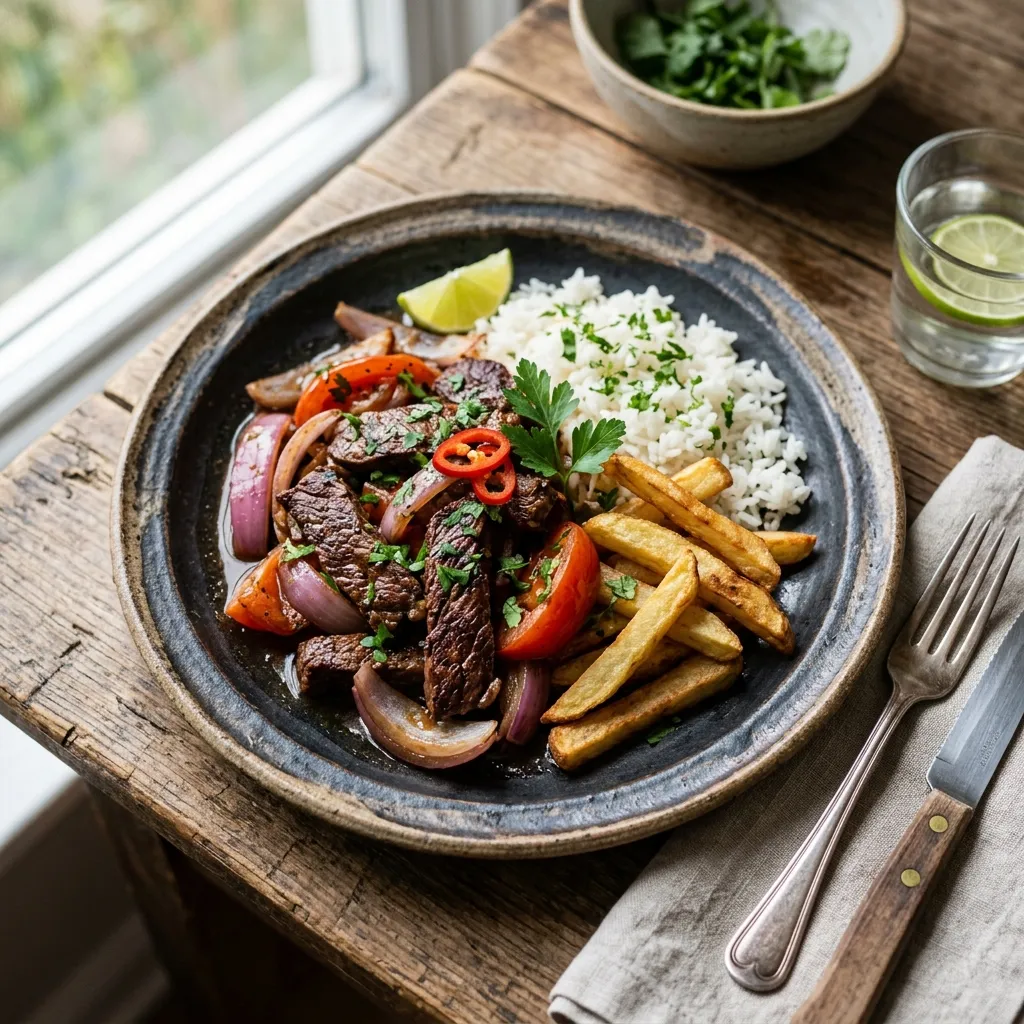
Lomo saltado is Peru's signature stir-fry — strips of beef tenderloin seared at high heat with red onion, tomato, and aji amarillo pepper, deglazed with soy sauce and vinegar, and served simultaneously over white rice and alongside crispy french fries. The dish is the most famous product of chifa cuisine, the Chinese-Peruvian fusion born in Lima's Chinatown in the late 19th century when Cantonese immigrants adapted wok techniques to local Peruvian ingredients. The technique is unmistakably Chinese: a screaming-hot wok or heavy skillet, ingredients added in rapid sequence, and everything cooked in minutes to preserve texture and vibrant color. The Peruvian twist comes from the aji amarillo (the country's signature chile), the vinegar (replacing Chinese rice wine), and the audacious combination of rice AND fries on the same plate — a carbohydrate abundance that makes no apology. The beef should be rare to medium-rare in the center, the onions still crisp, and the tomatoes barely wilted. Ayurvedically, lomo saltado is intensely heating and stimulating — red meat, soy sauce, vinegar, and chili create a powerful rajasic combination. The high-heat cooking method (wok hei) adds fire element. The combination of rice and fried potatoes is heavy on the carbohydrate side but the pungent spicing ensures agni stays engaged. This is a high-energy, cold-weather, high-activity food.
Strongly heating and building. Pacifies Vata through warmth, oleation, and substantial protein-carbohydrate combination. Significantly aggravates Pitta through red meat, soy, vinegar, chili, and high-heat cooking. Increases Kapha through the double carbohydrate base.
Ingredients
- 500 g Beef tenderloin or sirloin (cut into thick strips)
- 1 large Red onion (cut into thick wedges)
- 2 medium Tomatoes (cut into wedges)
- 1 tbsp Aji amarillo paste
- 3 tbsp Soy sauce
- 2 tbsp Red wine vinegar
- 3 cloves Garlic (minced)
- 1/2 tsp Cumin
- 3 tbsp Vegetable oil
- 2 large Russet potatoes (cut into thick fries)
- 3 cups Cooked white rice
- 3 tbsp Fresh cilantro (chopped)
- 1 tsp Salt
- 1/2 tsp Black pepper
Instructions
- Fry the potato strips in oil at 180C (350F) until golden and crispy, about 6-8 minutes. Drain on paper towels and season with salt. Alternatively, bake at 220C (425F) for 25 minutes, tossing halfway.
- Season the beef strips with salt, pepper, and cumin. Heat a wok or large heavy skillet over the highest heat possible until smoking.
- Add 1 tablespoon of oil and sear the beef strips in a single layer without moving them for 1 minute. Flip and sear another 30 seconds. The beef should be browned outside and rare inside. Remove and set aside.
- Without cleaning the pan, add another tablespoon of oil. Add the red onion wedges and stir-fry for 1 minute until charred on the edges but still crisp.
- Add the garlic and aji amarillo paste, stirring for 15 seconds. Add the tomato wedges and toss for 30 seconds — the tomatoes should barely wilt, not collapse.
- Return the beef to the pan. Add soy sauce and red wine vinegar. Toss everything together vigorously for 30 seconds, allowing the sauce to coat all ingredients and reduce slightly.
- Add the french fries to the wok and toss once to incorporate. Remove from heat immediately.
- Serve on plates with the stir-fry on one side and a mound of white rice on the other. Garnish with fresh cilantro.
Nutrition
These values are estimates calculated from the ingredient list and may vary based on brands, cooking methods, and serving size. Not a substitute for medical or dietary advice.
How This Recipe Affects Each Dosha
Vata
The warming, heavy, oily qualities ground Vata effectively. The combination of animal protein, cooked starches, and oily preparation addresses Vata's need for substance and warmth. The cumin and black pepper aid digestion. This is a robust, satisfying meal for Vata constitutions.
Pitta
Red meat, soy sauce, vinegar, aji amarillo, garlic, and high-heat searing create a cascade of Pitta-aggravating qualities. The sour and salty tastes dominate, both of which increase Pitta. This is a dish for Pitta types to approach with significant caution and only in cool weather.
Kapha
The combination of rice and fried potatoes on one plate creates considerable heaviness. However, the pungent spicing, sour vinegar, and stimulating cooking method partially counterbalance. Kapha types should choose one carbohydrate (rice or fries, not both) and keep portions moderate.
The combination of soy sauce (salty), vinegar (sour), aji amarillo (pungent), and high-heat cooking creates strong agni stimulation. However, the heavy double-carbohydrate base demands robust digestive fire. The dish both stokes and challenges agni simultaneously.
Nourishes: Rakta (blood), Mamsa (muscle), Medas (fat), Asthi (bone)
Adjustments by Constitution
For Vata Types
The standard recipe suits Vata well. Add a side of avocado for extra oleation. Use ghee instead of vegetable oil for the stir-fry for added nourishing quality. Ensure the rice is warm and freshly cooked.
For Pitta Types
Replace beef with chicken breast. Omit aji amarillo and use mild sweet pepper. Reduce soy sauce to 1 tablespoon and omit vinegar — add a squeeze of lime at the end instead. Replace fries with roasted sweet potato rounds.
For Kapha Types
Skip the fries entirely and halve the rice portion. Use a lean cut of beef and increase the vegetable proportion — add bell peppers and snap peas to the stir-fry. Add extra black pepper and cumin. Use minimal oil and cook in a non-stick pan.
Seasonal Guidance
Best in cold months when digestive fire is strongest and the body benefits from dense, warming, protein-rich meals. Too heavy and heating for summer. The fried potatoes are more appropriate in winter when the body needs concentrated energy.
Best time of day: Lunch or dinner, with lunch preferred for optimal digestion of the heavy carbohydrate-protein combination
Cultural Context
Lomo saltado is the flagship dish of chifa cuisine — the Chinese-Peruvian culinary tradition born when Cantonese laborers arrived in Peru in the 1850s-1870s to work on railroads and guano extraction. They brought wok technique and soy sauce; Peru contributed aji peppers, potatoes, and beef. The dish crystallized in Lima's Chinatown (Barrio Chino) restaurants and spread to become Peru's most ordered dish. The rice-and-fries combination reflects a deeper cultural truth: Peru straddles two carbohydrate civilizations — the Asian rice tradition and the Andean potato tradition — and lomo saltado refuses to choose between them.
Deeper Context
Origins
Lomo saltado is the canonical example of Chifa cuisine — the Chinese-Peruvian fusion that developed after Cantonese Chinese coolie laborers immigrated to Peru in the 1840s-80s to work on sugar plantations and railway construction. The stir-fry wok technique is classical Cantonese; the beef tenderloin and French fries reflect Spanish-European ingredients; the aji amarillo chile is Andean. The dish crystallized in late-19th-century Lima as a perfect synthesis of three culinary traditions. Chifa restaurants remain the dominant format of Chinese cuisine in Peru, with more Chifa restaurants in Lima than any other ethnic cuisine.
Food as Medicine
Beef contributes iron, zinc, B12, and complete protein. The rapid-high-heat stir-fry technique preserves vegetable phytonutrients while developing flavor. Aji amarillo capsaicin supports metabolic function. A balanced meat-and-vegetable-and-starch preparation with substantial protein density.
Ritual & Seasonal Role
Year-round Peruvian home cooking and restaurant staple. Not religiously ceremonial but deeply tied to Peruvian Chifa culinary identity. Featured globally at Peruvian restaurants as signature Criollo-Chifa dish.
Classical Pairings & Cautions
White rice (the classical Chifa serving — rice AND fries together), salsa criolla, chicha morada. Cautions: religious beef restrictions; soy allergies; gluten content in soy sauce (tamari is gluten-free alternative); capsaicin aggravation from aji amarillo; sodium load substantial; deep-fried potato adds oxidized-fat concerns.
Cross-Tradition View
How other medical and food-wisdom traditions read this dish. Each tradition names the same physiological reality in its own language — the agreements across them are where universal principles live.
Traditional Chinese Medicine
Beef tenderloin is Blood-and-Qi building substantially; soy sauce is salty-warm and supports Kidney; aji amarillo is hot-pungent and disperses cold; red onion is warm-pungent; French fries are Spleen-Qi-tonifying. A comprehensive Qi-and-Blood tonic with stir-fry dispersing technique — TCM physicians would recognize this as classical Qi-Blood-moving restoration food.
Greek Humoral
Hot-wet sanguine-building. A Galenic-suitable stir-fry preparation — the rapid-high-heat cookery matches Hippocratic valuation of preserving ingredient essence through minimal cookery.
Ayurveda
Heating virya, pungent vipaka. Pacifies Vata substantially through warmth and protein. Pitta aggravated through chile-onion-soy combination. Kapha mild aggravation through the fried-potato component.
Chifa Chinese-Peruvian
Lomo saltado is classical Chifa cuisine — the Chinese-Peruvian fusion that developed after 100,000+ Cantonese Chinese laborers immigrated to Peru in the 19th century. The stir-fry wok technique is Cantonese; the beef tenderloin and French fries are Spanish-European; the aji amarillo chile is Andean. Peruvian Chifa restaurants are the dominant format of Chinese restaurants in Peru. Lomo saltado crystallized in late-19th-century Lima as perfect synthesis — Cantonese technique, Andean flavors, European ingredients.
Chef's Notes
The wok must be smoking hot before the beef goes in — this is not negotiable. Crowding the pan causes the meat to steam rather than sear, and you lose the charred, smoky flavor (wok hei) that defines the dish. Cook the beef in two batches if needed. The vegetables should retain their bite — overcooked onions and collapsed tomatoes mean the heat was too low or the timing too long. True lomo saltado in Lima uses Peruvian-grown sillao (soy sauce), which is less salty than Japanese shoyu — adjust to taste. The french fries go in at the end and serve as sauce-soakers, not a separate side.
Frequently Asked Questions
Is Lomo Saltado good for my dosha?
Strongly heating and building. Pacifies Vata through warmth, oleation, and substantial protein-carbohydrate combination. Significantly aggravates Pitta through red meat, soy, vinegar, chili, and high-heat cooking. Increases Kapha through the double carbohydrate base. The warming, heavy, oily qualities ground Vata effectively. Red meat, soy sauce, vinegar, aji amarillo, garlic, and high-heat searing create a cascade of Pitta-aggravating qualities. The combination of rice and fried potatoes on one plate creates considerable heaviness.
When is the best time to eat Lomo Saltado?
Lunch or dinner, with lunch preferred for optimal digestion of the heavy carbohydrate-protein combination Best in cold months when digestive fire is strongest and the body benefits from dense, warming, protein-rich meals. Too heavy and heating for summer. The fried potatoes are more appropriate in winter
How can I adjust Lomo Saltado for my constitution?
For Vata types: The standard recipe suits Vata well. Add a side of avocado for extra oleation. Use ghee instead of vegetable oil for the stir-fry for added nourishing For Pitta types: Replace beef with chicken breast. Omit aji amarillo and use mild sweet pepper. Reduce soy sauce to 1 tablespoon and omit vinegar — add a squeeze of li
What are the Ayurvedic properties of Lomo Saltado?
Lomo Saltado has Salty, Pungent, Sour taste (rasa), Heating energy (virya), and Pungent post-digestive effect (vipaka). Its qualities (gunas) are Heavy, Oily, Warm, Dense. It nourishes Rakta (blood), Mamsa (muscle), Medas (fat), Asthi (bone). The combination of soy sauce (salty), vinegar (sour), aji amarillo (pungent), and high-heat cooking creates strong agni stimulation. However, the heavy double-carbohydrate base demands robust digestive fire. The dish both stokes and challenges agni simultaneously.