Lucuma Smoothie
Peruvian Recipe
Overview
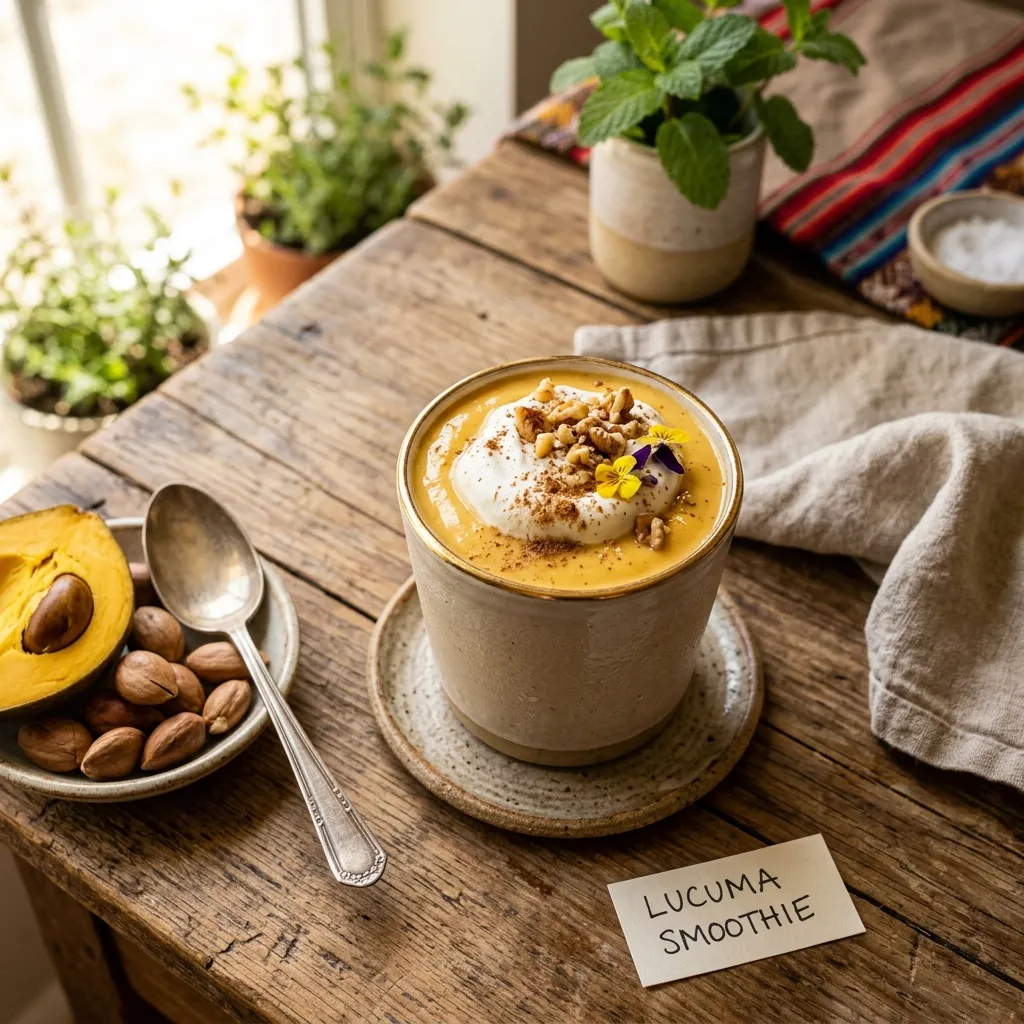
Lucuma smoothie is a creamy, golden-orange Peruvian drink blended from lucuma fruit pulp, milk, and a touch of sweetener. Lucuma (Pouteria lucuma) is a subtropical fruit native to the Andean valleys of Peru, Chile, and Ecuador, prized for its dry, starchy flesh that tastes like a cross between maple syrup, sweet potato, and caramel. The fruit has been cultivated for over 2,000 years and appears in pre-Columbian pottery and textiles. The preparation is simple: fresh or frozen lucuma pulp is blended with milk (dairy or plant-based), a small amount of honey or sugar, and sometimes vanilla or cinnamon until smooth and thick. The resulting smoothie has a natural golden-orange hue and a flavor that is sweet, complex, and distinctly earthy — nothing else tastes like lucuma. In Peru, lucuma is the most popular ice cream flavor, outselling chocolate and vanilla, and the smoothie version is a daily breakfast or snack in Lima juice bars. Ayurvedically, lucuma is sweet, grounding, and nourishing — a fruit that builds tissues without the blood sugar spike of tropical fruits like mango or banana. Its dry, starchy quality is unusual among fruits and gives it a more stabilizing effect on digestion. Combined with warm milk and warming spices, this becomes a deeply Vata-pacifying, nurturing drink suitable for convalescence, pregnancy, or anyone needing gentle caloric nourishment.
Pacifies Vata through sweet, heavy, smooth, grounding qualities. May increase Kapha in excess due to sweet, heavy nature. Neutral to mildly cooling for Pitta, depending on whether served warm or cold.
Lucuma is rich in beta-carotene, niacin (B3), and iron, making it valuable for supporting skin health, energy production, and blood formation. The smoothie serves as a gentle, calorie-dense nourishing drink for recovery, pregnancy, or periods of depletion.
Ingredients
Instructions
- If using frozen lucuma pulp, let it thaw slightly for 5 minutes at room temperature. If using lucuma powder, no preparation is needed — it dissolves directly into the liquid.
- Combine lucuma pulp (or powder), milk, honey, vanilla extract, and cinnamon in a blender.
- Blend on high for 45-60 seconds until completely smooth and creamy. The texture should be thick but pourable — like a milkshake.
- Taste and adjust sweetness. Fresh lucuma varies in ripeness and sugar content. Add more honey if needed.
- For a cold smoothie, add ice and blend again. For an Ayurvedic-friendly warm version, heat the milk before blending and omit the ice — this is preferable for Vata and Kapha constitutions.
- Pour into glasses and serve immediately. A light dusting of cinnamon on top is optional but traditional.
Nutrition
These values are estimates calculated from the ingredient list and may vary based on brands, cooking methods, and serving size. Not a substitute for medical or dietary advice.
How This Recipe Affects Each Dosha
Vata
The sweet, heavy, smooth qualities of lucuma combined with warm milk and warming cinnamon make this an ideal Vata-pacifying drink. The starchy, dry nature of the fruit prevents the excessive mucus-forming quality that some sweet fruits create. The cinnamon and vanilla add gentle warmth.
Pitta
Lucuma's sweet, neutral quality is gentle on Pitta. The milk adds cooling sweet quality, and the absence of sour or pungent elements keeps the drink from provoking. Pitta types can enjoy this freely, particularly when made with cooled milk and minimal cinnamon.
Kapha
The sweet, heavy, oily qualities of the smoothie — lucuma, milk, and honey combined — increase Kapha when consumed regularly or in large portions. The cinnamon provides a mild counterbalance. Kapha types should enjoy this occasionally and in small servings.
The warm version with cinnamon gently supports agni. The cold version may suppress agni slightly through the ice and cold milk. Lucuma's starchy quality is easier for agni to process than the watery sweetness of most tropical fruits.
Nourishes: Rasa (plasma), Mamsa (muscle), Medas (fat), Shukra (reproductive)
Adjustments by Constitution
For Vata Types
Use warm whole milk and increase cinnamon to 1/2 teaspoon. Add a pinch of nutmeg and cardamom for extra warming quality. Omit ice entirely. A tablespoon of ghee blended in provides deep oleation for severely depleted Vata.
For Pitta Types
Use coconut milk for extra cooling. Omit cinnamon and add cardamom instead — cardamom is cooling and Pitta-balancing. Serve at room temperature or cool, not ice-cold. Replace honey with maple syrup, which is less heating.
For Kapha Types
Use almond milk or diluted oat milk. Skip the honey or use a very small amount. Add 1/2 teaspoon dry ginger powder and extra cinnamon. Serve warm. Keep the portion to one small glass rather than a full serving.
Seasonal Guidance
Most appropriate in autumn and winter when warm, sweet, nourishing drinks sustain the body. The warm version is suitable year-round. The cold version is acceptable in summer but should be avoided in winter when cold drinks suppress agni and aggravate Vata.
Best time of day: Mid-morning snack or afternoon pick-me-up. Too heavy as a late-night drink. The warm version makes a gentle breakfast beverage.
Cultural Context
Lucuma has been cultivated in the Andean valleys of Peru for over 2,000 years. The fruit appears on ceramics from the Moche civilization (100-800 CE) and was considered a symbol of fertility and creation. In Quechua, it is called "rucma." Despite being one of Peru's most beloved flavors — lucuma ice cream dominates the market — the fruit remains largely unknown outside South America. The Peruvian government declared lucuma a "national patrimony" and promotes it as a superfood, noting its high beta-carotene, niacin, and iron content. Fresh lucuma is harvested from January to April, but the frozen and powdered forms have made it a year-round staple.
Deeper Context
Origins
Lucuma (Pouteria lucuma) has been continuously cultivated in Peruvian coastal valleys for at least 2,000 years — appearing in Moche ceramic iconography (100-700 CE) with ritual significance. Known as 'Gold of the Incas,' it was a pre-Columbian sacred fruit. The characteristic maple-syrup-sweet-potato flavor profile is unique to lucuma. Modern wellness-market interest since 2010s has expanded commercial cultivation; lucuma powder appears in global superfood marketing.
Food as Medicine
Lucuma provides substantial beta-carotene, B-vitamins, iron, calcium, and unique polyphenols with preliminary research for blood-sugar modulation. Traditional Peruvian use includes skin support and digestive tonic applications. Lower glycemic index than refined sugar makes lucuma powder a traditional diabetic-friendly sweetener.
Ritual & Seasonal Role
Year-round Peruvian drink, smoothie, and ice cream flavor. National Peruvian fruit with substantial cultural identity. Featured at Peruvian ice-cream shops (Peruvian lucuma ice cream is the national favorite flavor).
Classical Pairings & Cautions
Alone as smoothie or drink. Cautions: dairy sensitivity precludes milk base (plant-milk substitutions work); honey not for infants under 12 months; substantial sugar content when prepared with honey and added sugar; lucuma allergies are rare; diabetic monitoring even with lucuma's lower glycemic index.
Cross-Tradition View
How other medical and food-wisdom traditions read this dish. Each tradition names the same physiological reality in its own language — the agreements across them are where universal principles live.
Traditional Chinese Medicine
Lucuma is sweet-neutral and Spleen-Qi-tonifying with unique Yin-building qualities; milk is cool-Yin-building; honey tonifies Spleen Qi and warms the middle; cinnamon warms Kidney Yang; vanilla calms Shen. A Spleen-Qi-and-Yin tonic with warming and Shen-calming accents — TCM physicians would class this as appropriate children's food or convalescent drink.
Greek Humoral
Neutral to mildly warming. Galenic-suitable restoration beverage.
Ayurveda
Neutral virya, sweet vipaka. Tridoshic with proper preparation — the balanced ingredients suit all three doshas with mild Kapha aggravation.
Ancient Incan Sacred Fruit
Lucuma (Pouteria lucuma) is an ancient Incan sacred fruit — archaeological evidence from Moche (100-700 CE) and Chimu (900-1470) pre-Incan cultures shows lucuma continuously cultivated in Peruvian coastal valleys for at least 2,000 years. Lucuma appears in Moche ceramic iconography, suggesting sacred-ritual significance. Known in Peru as 'Gold of the Incas.' Modern commercial lucuma powder exports position the fruit as wellness-market superfood.
Chef's Notes
Fresh lucuma is difficult to find outside South America, but frozen lucuma pulp and lucuma powder are widely available in specialty and health food stores. Lucuma powder produces a thinner, less creamy result — use 3 tablespoons per serving and increase the banana or add 1/4 avocado for body. The fruit is naturally low in sugar compared to other tropical fruits, so the smoothie does not need excessive sweetening. For a protein-rich version, add 2 tablespoons of hemp seeds or a scoop of vanilla protein powder. The warm version (heated milk, no ice) is the most Ayurvedically sound preparation — cold beverages suppress agni.
Frequently Asked Questions
Is Lucuma Smoothie good for my dosha?
Pacifies Vata through sweet, heavy, smooth, grounding qualities. May increase Kapha in excess due to sweet, heavy nature. Neutral to mildly cooling for Pitta, depending on whether served warm or cold. The sweet, heavy, smooth qualities of lucuma combined with warm milk and warming cinnamon make this an ideal Vata-pacifying drink. Lucuma's sweet, neutral quality is gentle on Pitta. The sweet, heavy, oily qualities of the smoothie — lucuma, milk, and honey combined — increase Kapha when consumed regularly or in large portions.
When is the best time to eat Lucuma Smoothie?
Mid-morning snack or afternoon pick-me-up. Too heavy as a late-night drink. The warm version makes a gentle breakfast beverage. Most appropriate in autumn and winter when warm, sweet, nourishing drinks sustain the body. The warm version is suitable year-round. The cold version is acceptable in summer but should be avoided in w
How can I adjust Lucuma Smoothie for my constitution?
For Vata types: Use warm whole milk and increase cinnamon to 1/2 teaspoon. Add a pinch of nutmeg and cardamom for extra warming quality. Omit ice entirely. A tablespo For Pitta types: Use coconut milk for extra cooling. Omit cinnamon and add cardamom instead — cardamom is cooling and Pitta-balancing. Serve at room temperature or coo
What are the Ayurvedic properties of Lucuma Smoothie?
Lucuma Smoothie has Sweet taste (rasa), Neutral energy (virya), and Sweet post-digestive effect (vipaka). Its qualities (gunas) are Heavy, Oily, Smooth, Grounding. It nourishes Rasa (plasma), Mamsa (muscle), Medas (fat), Shukra (reproductive). The warm version with cinnamon gently supports agni. The cold version may suppress agni slightly through the ice and cold milk. Lucuma's starchy quality is easier for agni to process than the watery sweetness of most tropical fruits.