Larb Gai
Thai Recipe
Overview
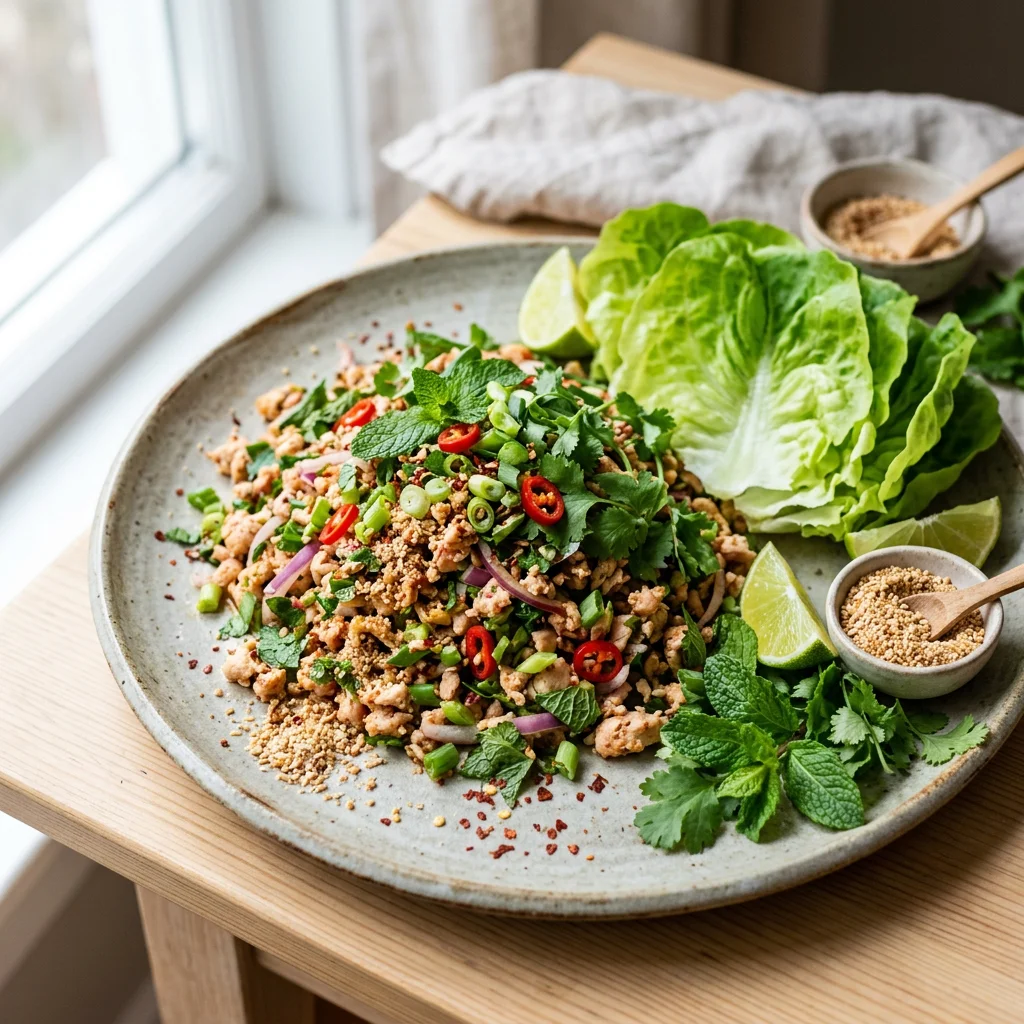
Larb Gai is the minced chicken salad of northeastern Thailand and Laos — a dish of stir-fried chicken mince dressed while still warm with lime juice, fish sauce, toasted rice powder, dried chili flakes, and an avalanche of fresh herbs: mint, cilantro, shallots, and scallions. It is Isaan food at its most elemental — no coconut, no curry paste, no sugar. Just protein, acid, salt, heat, and herbs in electric balance. The dish is technically a salad — the Thai word "larb" shares its root with "luck" or "fortune" in Lao, and the dish is traditionally served at celebrations and auspicious occasions. But the preparation is closer to a warm hash: the chicken is cooked quickly in a dry wok with no oil, then dressed immediately so the hot meat absorbs the sharp lime and fish sauce dressing. Toasted rice powder (khao khua) — made by dry-roasting sticky rice until golden and then grinding it — adds a distinctive nutty, sandy texture that is the signature of authentic larb. Ayurvedically, Larb Gai is a study in lightness. There is no oil, no coconut, no starch. The protein is lean, the herbs are fresh and volatile, and the dressing is sharp and pungent. The dish generates movement and clarity rather than heaviness and sedation. The cooling mint and cilantro counterbalance the heating chili and lime, creating a dish that stimulates without overheating — a balance that makes it feel simultaneously energizing and refreshing.
Balances Kapha well. Can mildly aggravate Vata due to dryness and lightness. Mildly aggravates Pitta due to sour and pungent tastes.
Ingredients
- 500 g Ground chicken (thigh meat preferred for flavor)
- 4 small Shallots (thinly sliced)
- 3 whole Scallions (thinly sliced)
- 1/2 cup Fresh mint leaves (roughly torn)
- 1/4 cup Fresh cilantro (leaves and tender stems)
- 3 tbsp Fresh lime juice
- 3 tbsp Fish sauce
- 2 tbsp Toasted rice powder (khao khua) (see chef notes for preparation)
- 1 tbsp Dried Thai chili flakes (adjust to preference)
- 2 tbsp Chicken broth (or water, to prevent sticking)
Instructions
- To make toasted rice powder: dry-roast 3 tablespoons of sticky (glutinous) rice in a pan over medium heat, shaking frequently, until the grains turn deep golden and smell nutty — about 5 minutes. Grind in a mortar or spice grinder to a coarse powder. Set aside.
- Heat a wok or skillet over high heat. Add the ground chicken with 2 tablespoons of broth — no oil. Break the meat apart with a spatula and cook, stirring frequently, until the chicken is just cooked through and crumbly, about 5-6 minutes.
- Remove the wok from heat immediately. While the chicken is still hot, add the lime juice and fish sauce. Toss vigorously — the hot meat will absorb the dressing.
- Add the toasted rice powder and dried chili flakes. Toss to distribute evenly throughout the meat.
- Add the sliced shallots, scallions, mint, and cilantro. Toss gently — the residual heat will barely wilt the herbs, which is the desired effect.
- Taste and adjust the seasoning. The flavor should be assertively sour, salty, and spicy with a nutty undertone from the rice powder. Transfer to a plate and serve immediately with sticky rice, raw cabbage wedges, long beans, and fresh Thai basil on the side.
Nutrition
These values are estimates calculated from the ingredient list and may vary based on brands, cooking methods, and serving size. Not a substitute for medical or dietary advice.
How This Recipe Affects Each Dosha
Vata
The dry, light, rough qualities of Larb Gai can increase Vata, particularly in those with dry constitutions or weak digestion. There is no oil, no heaviness, and no grounding starch in the dish itself (though it is traditionally served with sticky rice, which helps). The cooling mint and raw herbs add cold quality that can further aggravate Vata in cold weather.
Pitta
The sour lime, pungent chili, and sharp fish sauce are mildly Pitta-provoking. However, the abundant cooling mint and cilantro, the absence of oil, and the overall lightness prevent the dish from being aggressively heating. Pitta types can enjoy this in moderate weather with adjusted chili levels.
Kapha
Larb Gai is excellent for Kapha. The dish is light, dry, sharp, and free of heavy oils or starches. The chili and lime stimulate metabolism, the lean protein provides sustenance without weight, and the fresh herbs add movement and clarity. Kapha types thrive on this kind of food.
The sour-pungent dressing and dry cooking method stimulate agni without burdening it. The absence of oil means there is no heavy fat requiring extended digestion. The toasted rice powder adds a light, dry quality that promotes digestive movement. Good for those with moderate to strong agni.
Nourishes: Rasa (plasma), Mamsa (muscle)
Adjustments by Constitution
For Vata Types
Drizzle toasted sesame oil over the finished dish for grounding oiliness. Reduce the lime juice slightly and add a pinch of palm sugar to soften the sour edge. Use warm chicken broth instead of water when cooking the meat. Serve over a generous mound of sticky rice and eat with soft lettuce cups instead of raw cabbage.
For Pitta Types
Reduce the chili flakes by half or use a milder dried chili. Increase the mint to a full cup and add fresh Thai basil leaves. Reduce the lime juice and add a small amount of palm sugar to balance. Use chicken breast instead of thigh for a leaner, cooler protein.
For Kapha Types
Double the chili flakes and add a generous pinch of white pepper. Increase the shallots and add raw garlic slices for extra pungency. Serve with raw vegetables (cabbage, long beans, cucumber) instead of sticky rice. Add extra toasted rice powder for drying quality.
Seasonal Guidance
Best during spring and summer when the light, dry, stimulating qualities align with seasonal needs. In spring, the pungent and astringent qualities help clear Kapha accumulation. In summer, the cooling mint and cilantro offset the heat, though chili should be reduced. Less ideal in autumn and winter when Vata needs warm, oily, heavy foods — during cold months, opt for a warm curry instead.
Best time of day: Lunch as a light, energizing midday meal
Cultural Context
Larb is the national dish of Laos and the most iconic food of Thailand's Isaan region — a culturally Lao area that became part of Thailand through historical border shifts. The word "larb" is cognate with the Lao word for luck, and the dish is traditionally served at celebrations, weddings, and New Year festivities. In Isaan villages, making larb is often a communal activity: fresh meat from a morning market, herbs from the garden, sticky rice steamed in bamboo baskets, everyone sitting on the floor eating with their hands. The dish embodies the Isaan philosophy of simplicity, freshness, and bold seasoning. There are many variations — larb moo (pork), larb ped (duck), larb pla (fish) — and the Lao version often includes bile and offal for a more complex, bitter flavor profile that Thai versions typically omit.
Deeper Context
Origins
Larb is the national dish of Laos and the signature dish of Northeastern Thailand (Isan). The finely-chopped meat with fresh herbs and toasted rice powder (khao khua) is ancient Lao-Isan preparation. Raw larb (larb dib) was traditional in some Lao regions but modern food-safety concerns have largely shifted preparation to cooked versions. Cambodian parallel is nhoam sach, reflecting broader mainland-Southeast-Asian shared culinary heritage.
Food as Medicine
Mint contains menthol with documented digestive-and-respiratory support. Toasted rice powder (khao khua) adds a unique nutty-aromatic umami quality with traditional Isan use for digestive strengthening. Lime-and-herb combination supports vitamin C and phytonutrient diversity. A surprisingly therapeutic traditional preparation.
Ritual & Seasonal Role
Year-round Lao-Isan dish. Lao New Year (Pi Mai, April 13-15) features larb prominently. Wedding and festival meals. Cultural identity food for Lao and Northern-Thai populations.
Classical Pairings & Cautions
Sticky rice (khao niao), fresh vegetables (cabbage, cucumber, long beans), lettuce for wrapping. Thai iced coffee or Lao Beer. Cautions: shellfish-derived fish sauce; Pitta aggravation from Thai chilies (traditional larb is spicy); raw-meat food safety concerns (if larb dib is prepared); rice powder allergies are rare but present; gluten-free by default.
Cross-Tradition View
How other medical and food-wisdom traditions read this dish. Each tradition names the same physiological reality in its own language — the agreements across them are where universal principles live.
Traditional Chinese Medicine
Ground chicken is Qi-building; mint is cool and disperses Wind-Heat; lime is cool-sour and moves Liver Qi; fish sauce is salty-warm; toasted rice powder adds nutty Spleen-Qi support. A cooling Qi-moving preparation with Heat-dispersing mint — TCM physicians would class larb as summer food with Wind-Heat or Liver-Qi-stagnation indications.
Greek Humoral
Cool with warm-dry chile correction. Galenic-suitable summer preparation.
Ayurveda
Cooling overall virya, pungent vipaka. Mild Pitta from chili, but overall Pitta-balancing through mint and lime. Kapha-reducing. Vata mildly aggravated through cold-preparation.
Isan (Northeastern Thai) & Lao
Larb (also spelled laap or laab) is the national dish of Laos and the signature dish of Northeastern Thai (Isan) cuisine. The finely-chopped meat with fresh herbs and toasted rice powder is an ancient Lao-Isan preparation with continuous use for many centuries. Modern variants include larb gai (chicken), larb moo (pork), larb nuea (beef), larb pla duk (catfish). Each Isan village has its own larb tradition; the dish is considered essential to Lao-Isan cultural identity.
Chef's Notes
The toasted rice powder is non-negotiable — it provides the sandy, nutty texture that defines larb and absorbs excess moisture from the dressing. Make extra and store in an airtight jar for weeks. Do not use oil to cook the chicken; the dry-wok technique gives the meat a clean, lean quality that lets the dressing shine. Thigh meat has more flavor than breast, but either works. The herbs must be added off-heat and at the last second — they should be barely wilted, not cooked. Larb does not hold well; eat it immediately while the contrast between warm meat and cool herbs is at its peak.
Frequently Asked Questions
Is Larb Gai good for my dosha?
Balances Kapha well. Can mildly aggravate Vata due to dryness and lightness. Mildly aggravates Pitta due to sour and pungent tastes. The dry, light, rough qualities of Larb Gai can increase Vata, particularly in those with dry constitutions or weak digestion. The sour lime, pungent chili, and sharp fish sauce are mildly Pitta-provoking. Larb Gai is excellent for Kapha.
When is the best time to eat Larb Gai?
Lunch as a light, energizing midday meal Best during spring and summer when the light, dry, stimulating qualities align with seasonal needs. In spring, the pungent and astringent qualities help clear Kapha accumulation. In summer, the coolin
How can I adjust Larb Gai for my constitution?
For Vata types: Drizzle toasted sesame oil over the finished dish for grounding oiliness. Reduce the lime juice slightly and add a pinch of palm sugar to soften the s For Pitta types: Reduce the chili flakes by half or use a milder dried chili. Increase the mint to a full cup and add fresh Thai basil leaves. Reduce the lime juice an
What are the Ayurvedic properties of Larb Gai?
Larb Gai has Sour, Salty, Pungent, Bitter taste (rasa), Cooling overall energy (virya), and Pungent post-digestive effect (vipaka). Its qualities (gunas) are Light, Dry, Sharp, Clear. It nourishes Rasa (plasma), Mamsa (muscle). The sour-pungent dressing and dry cooking method stimulate agni without burdening it. The absence of oil means there is no heavy fat requiring extended digestion. The toasted rice powder adds a light, dry quality that promotes digestive movement. Good for those with moderate to strong agni.