Lahmacun
Turkish Recipe
Overview
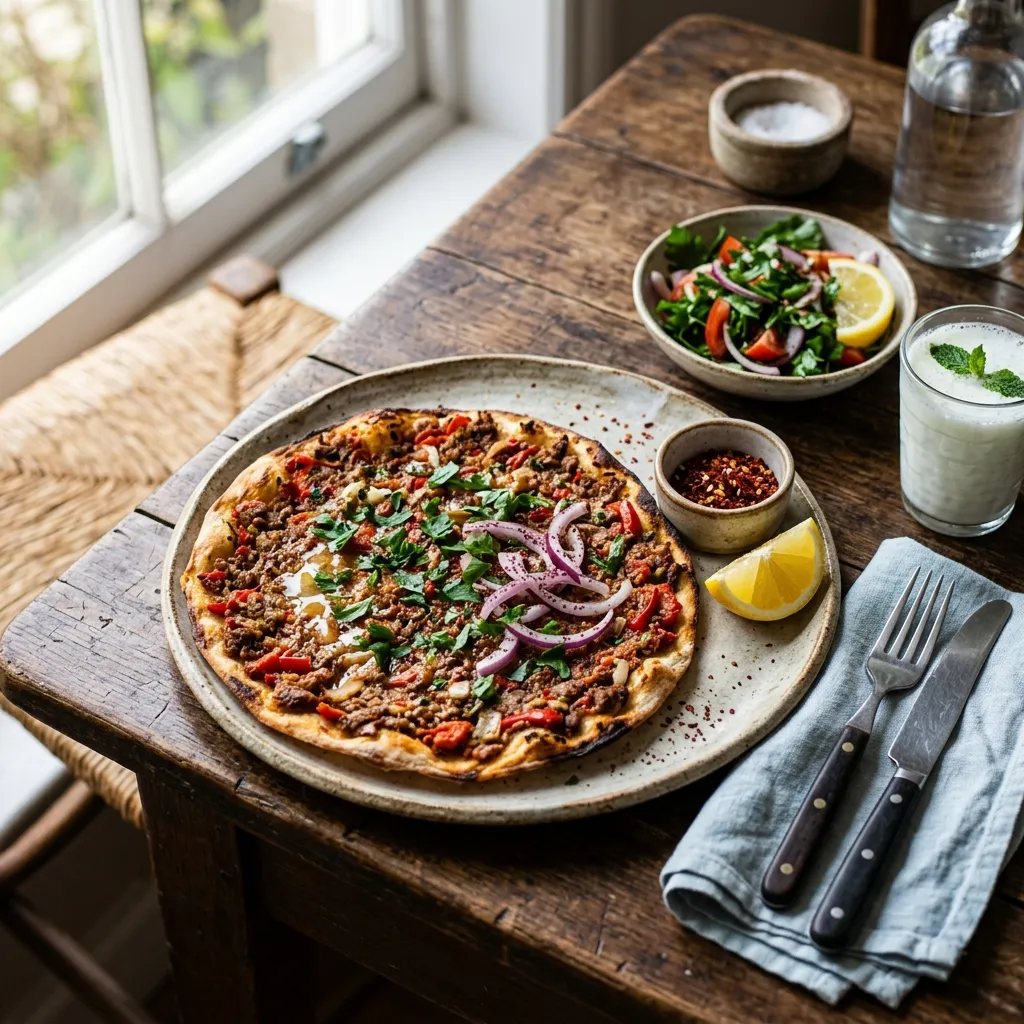
Lahmacun is a paper-thin flatbread topped with a spiced mixture of minced lamb or beef, tomatoes, peppers, onions, and herbs, baked at high heat until the edges crisp and the meat cooks through in minutes. Often called "Turkish pizza," the comparison does it a disservice — lahmacun is thinner, lighter, and meant to be rolled around fresh parsley, lemon juice, and pickled vegetables rather than eaten in slices. The dough is stretched or rolled to near-translucent thinness, and the meat topping is spread so thin that it almost becomes a seasoning paste rather than a substantial layer. The result after a brief, fierce bake is a cracker-crisp bread with an intensely flavored, barely-there meat coating. The traditional way to eat lahmacun is to squeeze lemon juice across the surface, pile on fresh flat-leaf parsley and thinly sliced onions, then roll the whole thing into a cylinder and eat by hand. Ayurvedically, lahmacun is a rajasic food — stimulating, pungent, and energizing. The combination of red meat, heating spices, onion, and garlic makes this a strongly warming preparation that stokes agni powerfully. It is best suited for cold seasons, active lifestyles, and constitutions that benefit from grounding, heating nourishment.
Strongly increases Pitta due to red meat, heating spices, garlic, and onion. Balances Vata and Kapha through warming, stimulating, and light qualities.
Ingredients
- 2.5 cups All-purpose flour
- 3/4 cup Warm water
- 2 tbsp Olive oil
- 1 tsp Salt
- 1 tsp Instant yeast
- 250 g Ground lamb (or beef, finely minced)
- 1 medium Onion (very finely minced)
- 2 medium Tomato (grated or very finely chopped)
- 1 small Green pepper (very finely minced)
- 1 tbsp Tomato paste
- 1 tbsp Red pepper paste (biber salcasi)
- 2 cloves Garlic (minced)
- 1 tsp Cumin
- 1 tsp Aleppo pepper flakes
- 1/2 tsp Black pepper
- 1 bunch Fresh flat-leaf parsley (for serving)
- 6 pieces Lemon wedges
Instructions
- Combine flour, yeast, and salt in a bowl. Add warm water and olive oil, mixing until a soft dough forms. Knead for 5-7 minutes until smooth and elastic. Cover and let rest for 20 minutes.
- Meanwhile, combine the minced meat, onion, tomato, green pepper, tomato paste, red pepper paste, garlic, cumin, Aleppo pepper, black pepper, and a generous pinch of salt. Mix thoroughly until the topping has a spreadable, paste-like consistency. If too thick, add a tablespoon of water.
- Preheat oven to its maximum temperature — ideally 250C (480F) or higher. Place a baking sheet or pizza stone on the middle rack to preheat.
- Divide the dough into 6 equal balls. On a lightly floured surface, roll each ball into a very thin oval or round, about 25cm (10 inches) across. The dough should be nearly translucent.
- Spread a thin, even layer of the meat mixture across each round of dough, going right to the edges. The layer should be thin enough to see the dough through it in places.
- Transfer to the preheated baking sheet or stone and bake for 4-6 minutes, until the edges are crisp and golden and the meat is cooked through. The base should be dry and slightly charred in spots.
- Remove from oven and immediately squeeze lemon juice across the surface. Pile fresh parsley and thinly sliced raw onion down the center.
- Roll into a cylinder and eat by hand, or serve flat and tear off pieces.
Nutrition
These values are estimates calculated from the ingredient list and may vary based on brands, cooking methods, and serving size. Not a substitute for medical or dietary advice.
How This Recipe Affects Each Dosha
Vata
The warming spices and grounding animal protein provide qualities that Vata needs. However, the thin, dry bread can aggravate Vata's dryness. The fresh lemon and raw parsley add lightness and prana that benefit all constitutions. Best when followed with a warm beverage.
Pitta
The combination of red meat, garlic, onion, cumin, and pepper flakes is heavily Pitta-provoking. Tomato and red pepper paste add additional sour-heating qualities. This is one of the more Pitta-aggravating dishes in Turkish cuisine and should be avoided during Pitta imbalance.
Kapha
The thin, light bread and modest meat portion make this manageable for Kapha. The strong pungent quality cuts through Kapha stagnation, and the dry, crisp texture avoids the heaviness that thick doughs create. The fresh herbs and lemon add lightness.
Strongly kindles agni through the concentrated pungent spices and the sour quality of tomato. The thin, crisp format means less carbohydrate load, keeping agni sharp rather than smothering it with dense dough.
Nourishes: Rakta (blood), Mamsa (muscle), Asthi (bone)
Adjustments by Constitution
For Vata Types
Brush the finished lahmacun with melted ghee before adding toppings. Add a dollop of plain yogurt when rolling to provide cooling oleation. Use soft, slightly thicker dough rather than paper-thin to reduce dryness. Serve with warm ayran (salted yogurt drink).
For Pitta Types
Replace lamb with ground turkey or chicken for less heating meat. Omit garlic and reduce Aleppo pepper. Add fresh mint and cilantro instead of parsley. Use sweet paprika for color. Serve with a cooling cucumber-yogurt side.
For Kapha Types
The standard recipe works well for Kapha. Add extra black pepper and a pinch of dried ginger to the meat mixture for stronger digestive stimulation. Omit any yogurt accompaniment. Eat in moderate portions — one or two pieces rather than three.
Seasonal Guidance
Best in cold months when the body's digestive fire is naturally strong and can handle the heating combination of red meat and pungent spices. Too stimulating for summer eating. In spring, enjoy occasionally to clear residual Kapha.
Best time of day: Lunch, when agni peaks, or early dinner. Too stimulating for late-night eating.
Cultural Context
Lahmacun traces its roots to the Arab-influenced cuisines of southeastern Turkey — the cities of Gaziantep, Sanliurfa, and Hatay claim the finest versions. The word comes from Arabic lahm bi-ajin, "meat with dough." In these cities, dedicated lahmacun shops bake hundreds per day in wood-fired ovens, and the quality of a lahmacun is judged by the thinness of its crust and the vibrancy of its meat mixture. It migrated west through Turkey and became a ubiquitous street food in Istanbul and beyond, where it is sold wrapped in paper for eating on the go.
Deeper Context
Origins
Lahmacun originates in Anatolia with shared Turkish-Armenian-Syrian cultural heritage. The name derives from Arabic 'lahm bi'ajin' (meat with dough). Gaziantep and Urfa (Şanlıurfa) are the Turkish gastronomic epicenters for the dish; Armenian diaspora communities preserve lahmajun as cultural identity food. The thin-crust-and-meat-topping architecture predates pizza by several centuries, and some food historians trace pizza's Neapolitan development to Anatolian flatbread influence via Byzantine transmission.
Food as Medicine
Lamb provides iron, zinc, B12, and complete protein. Cumin supports digestion; Aleppo pepper offers capsaicinoids; parsley contributes vitamin K and iron. A nutritionally-balanced street-food preparation.
Ritual & Seasonal Role
Year-round Turkish and Armenian street food. Not religiously ceremonial but deeply tied to Anatolian regional identity. Featured globally at Turkish and Armenian restaurants.
Classical Pairings & Cautions
Rolled with fresh parsley, tomato, and lemon squeeze. Ayran (Turkish yogurt drink) alongside. Cautions: religious lamb restrictions rare; gluten intolerance precludes the wheat dough; FODMAP issues from onion and garlic; Pitta substantial aggravation from Aleppo pepper.
Cross-Tradition View
How other medical and food-wisdom traditions read this dish. Each tradition names the same physiological reality in its own language — the agreements across them are where universal principles live.
Traditional Chinese Medicine
Lamb is strongly warming and builds Blood and Yang; tomato is cool-sour and moves Liver Qi; cumin warms the middle; Aleppo pepper is warm-pungent and disperses; parsley is cool and supports Liver. A comprehensive Yang-and-Blood tonic with dispersing-warming correction — TCM physicians would class lahmacun as winter restoration food.
Greek Humoral
Hot-dry sanguine-building. A Galenic-suitable flatbread preparation — the thin-crust-with-aromatic-meat architecture reflects classical Anatolian-Levantine flatbread traditions.
Ayurveda
Heating virya, pungent vipaka. Pacifies Vata substantially through warmth, protein, and unctuousness. Mild Pitta aggravation through lamb-spice combination. Kapha-reducing through the hot thin-crust preparation.
Anatolian & Armenian
Lahmacun (Armenian lahmajun, Turkish lahmacun) originates in Anatolia — the shared Turkish-Armenian-Syrian culinary region where the dish has been prepared for at least 500 years. The name derives from Arabic 'lahm bi'ajin' (meat with dough). Gaziantep and Urfa are the Turkish epicenters; Armenian communities preserve lahmajun as cultural heritage food. Classical Anatolian street food that spread across the Ottoman Empire and diasporas.
Chef's Notes
The oven must be screaming hot — 250C minimum. If you have a pizza stone, use it; the direct heat on the bottom creates the characteristic crisp base. Roll the dough as thin as humanly possible — if you can read a newspaper through it, you are close. The meat mixture should be very finely textured, almost like a paste — if using pre-ground meat, run it through a food processor briefly. Fresh lemon juice on top is not a garnish; it is structurally essential to cutting through the richness of the meat.
Frequently Asked Questions
Is Lahmacun good for my dosha?
Strongly increases Pitta due to red meat, heating spices, garlic, and onion. Balances Vata and Kapha through warming, stimulating, and light qualities. The warming spices and grounding animal protein provide qualities that Vata needs. The combination of red meat, garlic, onion, cumin, and pepper flakes is heavily Pitta-provoking. The thin, light bread and modest meat portion make this manageable for Kapha.
When is the best time to eat Lahmacun?
Lunch, when agni peaks, or early dinner. Too stimulating for late-night eating. Best in cold months when the body's digestive fire is naturally strong and can handle the heating combination of red meat and pungent spices. Too stimulating for summer eating. In spring, enjoy occasi
How can I adjust Lahmacun for my constitution?
For Vata types: Brush the finished lahmacun with melted ghee before adding toppings. Add a dollop of plain yogurt when rolling to provide cooling oleation. Use soft, For Pitta types: Replace lamb with ground turkey or chicken for less heating meat. Omit garlic and reduce Aleppo pepper. Add fresh mint and cilantro instead of parsley
What are the Ayurvedic properties of Lahmacun?
Lahmacun has Pungent, Salty, Sour taste (rasa), Heating energy (virya), and Pungent post-digestive effect (vipaka). Its qualities (gunas) are Light, Warm, Dry. It nourishes Rakta (blood), Mamsa (muscle), Asthi (bone). Strongly kindles agni through the concentrated pungent spices and the sour quality of tomato. The thin, crisp format means less carbohydrate load, keeping agni sharp rather than smothering it with dense dough.