Kung Pao Chicken
Chinese Recipe
Overview
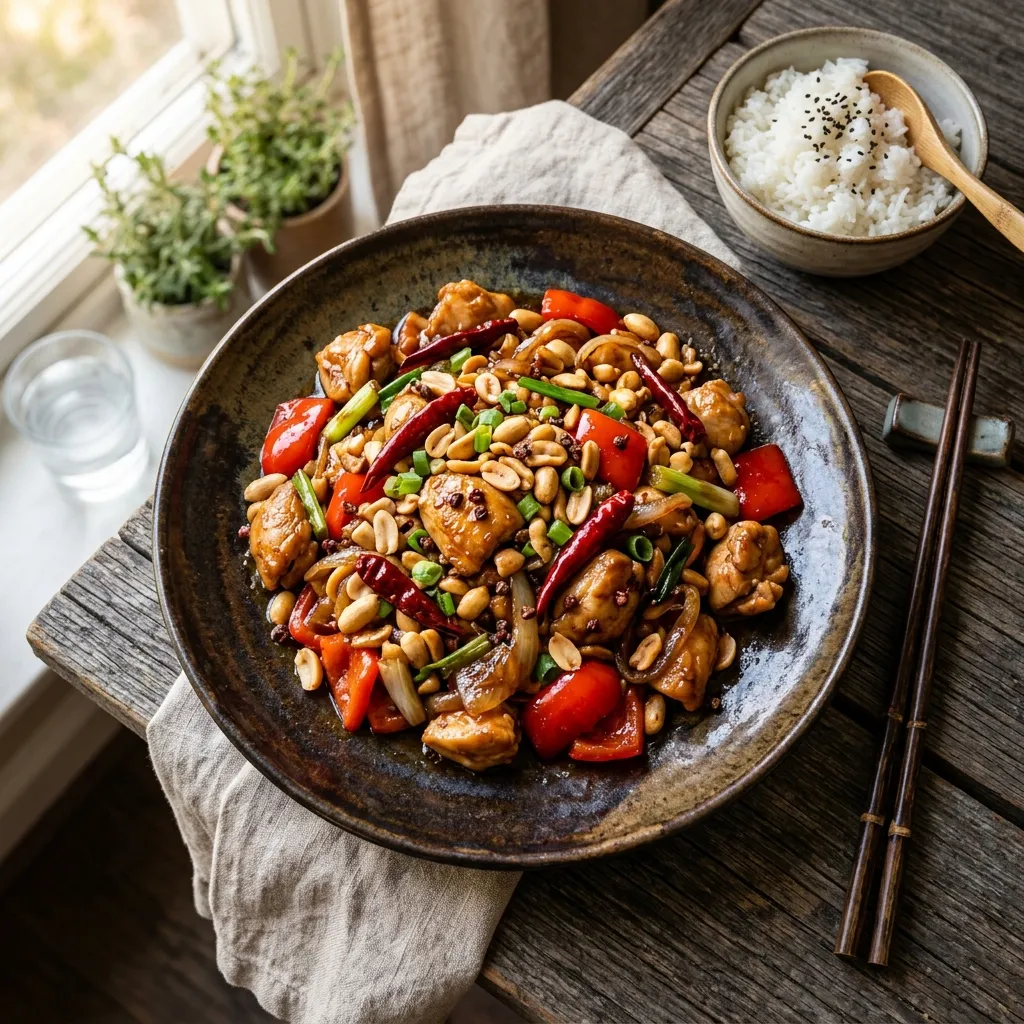
Kung Pao chicken (gong bao ji ding) is a Sichuan classic named after Ding Baozhen, a late Qing Dynasty governor of Sichuan province who held the official title "Gong Bao" (Palace Guardian). The dish features diced chicken stir-fried with dried red chilies, Sichuan peppercorns, and roasted peanuts in a sauce that balances sweet, sour, salty, and intensely spicy. The Sichuan peppercorn is the defining ingredient — it produces ma la, the signature numbing-spicy sensation that distinguishes Sichuan cuisine from merely hot food. The technique requires a screaming hot wok and fast execution. Chicken is velveted (coated in cornstarch and egg white, then briefly oil-blanched) to create a silky exterior. Dried chilies and peppercorns are flash-fried to release their volatile oils, then the chicken, sauce, and peanuts come together in under two minutes. The contrast between tender chicken, crunchy peanuts, and the complex heat of the sauce is what makes the dish extraordinary. Ayurvedically, this is one of the most pitta-provoking dishes in world cuisine. The combination of dried chilies, Sichuan peppercorn, garlic, and ginger creates intense pungent rasa that powerfully stimulates agni and circulation. The sweet and sour sauce components provide some counterbalance, but the overall energetic direction is strongly heating.
Powerfully stimulates agni and circulation. Strongly increases Pitta through chilies, garlic, and Sichuan peppercorn. Reduces Kapha through intense pungency and lightness. Mixed effect on Vata — warming but potentially overstimulating.
The combination of dried chilies, Sichuan peppercorn, and aromatic spices creates a potent ama-burning meal. Useful for stimulating stagnant digestion and promoting circulation in cold, damp conditions. Contraindicated for Pitta aggravation and inflammatory conditions.
Ingredients
- 500 g Boneless chicken thighs (diced into 3/4-inch cubes)
- 10-12 whole Dried red chilies (cut in half, seeds shaken out)
- 1 tbsp Sichuan peppercorns
- 1/3 cup Roasted peanuts
- 4 stalks Scallions (cut into 1-inch pieces)
- 3 cloves Garlic (minced)
- 1 tbsp Fresh ginger (minced)
- 2 tbsp Soy sauce
- 1 tbsp Chinese black vinegar (Chinkiang)
- 1 tbsp Shaoxing wine
- 2 tsp Sugar
- 2 tsp Cornstarch (for sauce, plus 1 tbsp for velveting)
- 1 large Egg white (for velveting)
- 1 tsp Sesame oil
- 3 tbsp Vegetable oil (for stir-frying)
Instructions
- Velvet the chicken: toss the diced chicken with 1 tablespoon cornstarch, the egg white, 1 teaspoon soy sauce, and 1 teaspoon Shaoxing wine. Mix well and let marinate for 15 minutes. This coating protects the meat during high-heat cooking and creates a silky texture.
- Prepare the sauce: in a small bowl, combine 1 tablespoon soy sauce, black vinegar, remaining Shaoxing wine, sugar, 2 teaspoons cornstarch, sesame oil, and 2 tablespoons water. Stir until the sugar dissolves. Set aside.
- Heat a wok over high heat until smoking. Add the vegetable oil and swirl to coat. Add the velveted chicken in a single layer and sear without stirring for 1 minute, then stir-fry for another 2 minutes until golden on the outside and just cooked through. Remove and set aside.
- In the same wok over high heat, add a splash more oil if needed. Add the dried chilies and Sichuan peppercorns. Stir-fry for 15-20 seconds until the chilies darken and the peppercorns become fragrant — the oil should smell intensely aromatic. Do not let them burn or the dish will taste bitter.
- Add the garlic and ginger, stir for 10 seconds. Immediately return the chicken to the wok and toss everything together.
- Give the sauce mixture a stir (the cornstarch settles) and pour it into the wok. Stir-fry vigorously for 30-45 seconds until the sauce thickens, glazes the chicken, and each piece is coated in a shiny, clingy sauce.
- Add the scallion pieces and roasted peanuts. Toss 2-3 times to distribute, then immediately transfer to a serving plate. The peanuts should retain their crunch — adding them last prevents them from softening.
Nutrition
These values are estimates calculated from the ingredient list and may vary based on brands, cooking methods, and serving size. Not a substitute for medical or dietary advice.
How This Recipe Affects Each Dosha
Vata
The warming spices, oily cooking method, and protein-rich chicken provide grounding for Vata. However, the intense pungency of dried chilies and Sichuan peppercorn can overstimulate Vata's sensitive nervous system, creating anxiety or restlessness. The dish is best for Vata in small portions with extra rice to buffer the heat.
Pitta
This is one of the most Pitta-provoking dishes in any cuisine. Dried chilies, Sichuan peppercorn, garlic, ginger, vinegar, and the high-heat cooking method create a cascade of Pitta aggravation. Pitta types should eat this rarely and in small amounts, or modify it substantially.
Kapha
The intense pungent heat is exactly what Kapha needs. Dried chilies, Sichuan peppercorn, garlic, and ginger all stimulate sluggish Kapha digestion and break up congestion. The light, sharp quality of the dish counters Kapha's tendency toward heaviness and lethargy. This is one of the better Kapha-balancing Chinese dishes.
One of the most powerful agni-stimulating dishes in world cuisine. The dried chilies, Sichuan peppercorn, garlic, ginger, and black vinegar create a multi-layered assault on sluggish digestion. Agni burns intensely after this meal — excellent for burning ama, but potentially damaging to Pitta constitutions.
Nourishes: Rasa (plasma), Rakta (blood), Mamsa (muscle)
Adjustments by Constitution
For Vata Types
Reduce dried chilies to 4-5 and cut the Sichuan peppercorn in half. Add cashews instead of peanuts for their sweeter, heavier quality. Include extra sesame oil for oleation. Serve over a generous portion of jasmine rice to provide grounding starch.
For Pitta Types
Replace dried red chilies with mild dried peppers or roasted red bell pepper strips for color without heat. Omit Sichuan peppercorn. Replace garlic with extra ginger (less Pitta-provoking). Add diced cucumber or water chestnuts for cooling crunch. Use coconut aminos instead of soy sauce for a milder flavor.
For Kapha Types
Increase dried chilies and Sichuan peppercorn to intensify the heat. Replace peanuts with toasted sunflower seeds for a lighter nut. Add broccoli and bell peppers to increase volume without heaviness. Serve with brown rice or skip the rice entirely to keep the meal light.
Seasonal Guidance
Best in cold months when the body craves intense warmth and agni needs support against the cold and damp. The fierce heat of this dish counteracts winter's Kapha-Vata influence. Strictly avoid in summer heat — the already-strong Pitta season combined with this dish's extreme pungency creates a recipe for inflammation.
Best time of day: Lunch or dinner, served with steamed rice
Cultural Context
Kung Pao chicken is one of the most internationally recognized Sichuan dishes, though the version served outside China often bears little resemblance to the original. American-Chinese restaurants typically make it sweeter, less numbing, and without Sichuan peppercorn — eliminating the ma la sensation that defines the authentic dish. In China during the Cultural Revolution, the dish was briefly renamed "hong bao ji ding" (fast-fried chicken cubes) because its namesake, Ding Baozhen, was a Qing Dynasty official and therefore ideologically suspect. The original name was restored after the political climate shifted.
Deeper Context
Origins
Named after Ding Baozhen (1820-1886), Qing Dynasty Governor of Sichuan Province and holder of the imperial title Gong Bao (Palace Guardian). His personal cook's recipe became canonical Sichuan cuisine. During the Cultural Revolution (1966-1976) the dish was renamed to avoid imperial references, but the original name was restored in the 1980s as political sensitivities eased. The Westernized American version (sweet, mild, without Sichuan peppercorn) substantially departs from the authentic Sichuan original.
Food as Medicine
Capsaicin's metabolic and mucus-clearing effects are well documented; peanut protein contributes substantial restoration value; black vinegar has mild blood-sugar-modulating activity in preliminary research. Sichuan peppercorn's numbing properties support chronic-pain patients per recent research. The dish is functionally warming-dispersing-nourishing — an appropriate prescription for cold-damp-stagnant patterns in Sichuan's mountain climate.
Ritual & Seasonal Role
Year-round Sichuan restaurant staple. Not seasonally bound in the way that ma-la hotpot is (winter-only). Global Chinese-restaurant standard; the authentic Sichuan version increasingly differentiates from the Americanized sweet-mild version as Sichuan cuisine has become globally recognizable.
Classical Pairings & Cautions
Steamed rice, stir-fried greens, cold beer or light white wine. Cautions: peanut allergies are severe and common (major contraindication); capsaicin for GERD and peptic ulcer; Pitta substantial aggravation; chicken allergies are rare but present; religious restrictions on chicken are uncommon but apply in some traditions; the Sichuan peppercorn numbing effect surprises unfamiliar eaters.
Cross-Tradition View
How other medical and food-wisdom traditions read this dish. Each tradition names the same physiological reality in its own language — the agreements across them are where universal principles live.
Greek Humoral
Hot-dry intense — choleric preparation. Similar temperament profile to dan-dan noodles, with the protein component adding hot-wet balance. Appropriate in Galenic terms for melancholic-phlegmatic types in cold-damp weather; inappropriate for choleric baseline or for summer consumption without substantial cooling accompaniments.
Ayurveda
Heating virya, pungent vipaka. Aggravates Pitta significantly through the chili-peppercorn-vinegar combination. Kapha-reducing strongly. Vata mixed — the protein and peanut provide warming-nourishing quality, but the spice load can aggravate sensitive Vata types.
Mesoamerican Chili & Peanut
Chilies are a 17th-century Mesoamerican arrival in Sichuan via Spanish-Portuguese Manila Galleon trade. Peanuts are also New World — Chinese cuisine without peanuts before 1600 is very different from post-Columbian Chinese cookery. Kung Pao's characteristic Mesoamerican-plus-Chinese ingredient architecture is a classic example of how post-Columbian global trade rewired Old World cuisines within a century.
Sichuan Taoist
Kung Pao Chicken was named after Qing Dynasty governor Ding Baozhen (1820-1886), who held the imperial title gong bao (Palace Guardian). His personal chef's adaptation of Sichuan ma-la principles to diced chicken became the signature dish of Sichuan provincial cuisine. The dish was renamed during the Cultural Revolution (to 'diced chicken with pepper') because gong bao was considered a feudal imperial rank; its original name was rehabilitated in the 1980s.
Chef's Notes
Wok hei — the charred, smoky flavor from a well-seasoned wok over extreme heat — is essential. A carbon steel wok on the highest burner setting you have is the minimum; a wok burner or outdoor propane burner is ideal. Work in batches if your wok is small — overcrowding drops the temperature and steams the chicken instead of searing it. Chinese black vinegar (Chinkiang) has a malty, complex flavor that rice vinegar cannot replicate; it is inexpensive and keeps indefinitely. Sichuan peppercorns can be toasted and ground fresh for the most potent numbing effect.
Frequently Asked Questions
Is Kung Pao Chicken good for my dosha?
Powerfully stimulates agni and circulation. Strongly increases Pitta through chilies, garlic, and Sichuan peppercorn. Reduces Kapha through intense pungency and lightness. Mixed effect on Vata — warming but potentially overstimulating. The warming spices, oily cooking method, and protein-rich chicken provide grounding for Vata. This is one of the most Pitta-provoking dishes in any cuisine. The intense pungent heat is exactly what Kapha needs.
When is the best time to eat Kung Pao Chicken?
Lunch or dinner, served with steamed rice Best in cold months when the body craves intense warmth and agni needs support against the cold and damp. The fierce heat of this dish counteracts winter's Kapha-Vata influence. Strictly avoid in summ
How can I adjust Kung Pao Chicken for my constitution?
For Vata types: Reduce dried chilies to 4-5 and cut the Sichuan peppercorn in half. Add cashews instead of peanuts for their sweeter, heavier quality. Include extra s For Pitta types: Replace dried red chilies with mild dried peppers or roasted red bell pepper strips for color without heat. Omit Sichuan peppercorn. Replace garlic wi
What are the Ayurvedic properties of Kung Pao Chicken?
Kung Pao Chicken has Pungent, Sweet, Sour, Salty taste (rasa), Heating energy (virya), and Pungent post-digestive effect (vipaka). Its qualities (gunas) are Light, Sharp, Warm, Oily. It nourishes Rasa (plasma), Rakta (blood), Mamsa (muscle). One of the most powerful agni-stimulating dishes in world cuisine. The dried chilies, Sichuan peppercorn, garlic, ginger, and black vinegar create a multi-layered assault on sluggish digestion. Agni burns intensely after this meal — excellent for burning ama, but potentially damaging to Pitta constitutions.