Cacio e Pepe
Italian Recipe
Overview
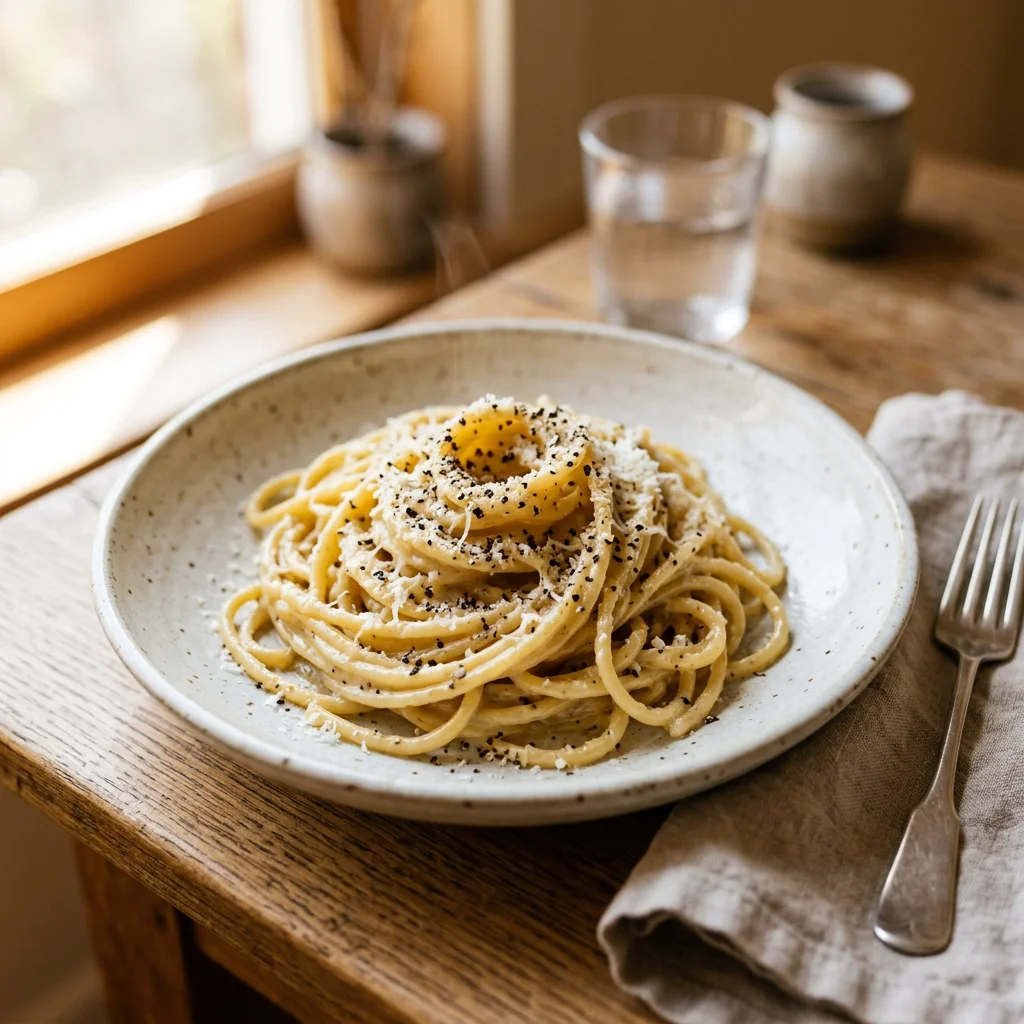
Cacio e pepe — "cheese and pepper" in Roman dialect — is the most deceptively simple dish in Italian cuisine. Three ingredients: pasta, Pecorino Romano, and black pepper. No cream, no butter, no garlic, no oil. The magic is entirely in technique: starchy pasta water emulsified with finely grated sharp sheep's cheese to create a glossy, clinging sauce that coats each strand of tonnarelli or spaghetti in a veil of peppery, tangy richness. It is the dish that humbles experienced cooks because the margin between silky perfection and a clumped, broken mess is vanishingly thin. Cacio e pepe is a shepherd's dish from the hills of Lazio, born of the provisions that Roman herders carried into the countryside — dried pasta, aged Pecorino (which keeps indefinitely), and peppercorns. It required no perishable ingredients, no refrigeration, no elaborate equipment — just a pot, water, fire, and the knowledge of how to make cheese and starch work together. That knowledge, passed down through Roman trattorias for generations, is the dish's true ingredient. Ayurvedically, this is a heating, heavy dish dominated by the pungent rasa of black pepper and the salty, sour qualities of aged sheep's cheese. Pecorino Romano is significantly more heating and pungent than Parmigiano — it is a harder, sharper, more aggressive cheese that carries the fire element. Combined with the strong pungency of freshly cracked black pepper, cacio e pepe is a dish that strongly kindles agni and moves energy, but can readily aggravate Pitta.
Strongly kindles agni. Pacifies Vata and Kapha due to warmth and sharpness. Can strongly aggravate Pitta from the combination of aged cheese, pepper, and overall heating quality.
Ingredients
- 400 g Tonnarelli or spaghetti
- 200 g Pecorino Romano (very finely grated — use a Microplane)
- 2 tbsp Black peppercorns (freshly cracked (not ground))
- 2 tbsp Salt (for pasta water)
Instructions
- Bring a large pot of water to a boil. Salt it — but less than usual, because the Pecorino is very salty. Cook the pasta until 2 minutes short of al dente, as it will finish cooking in the sauce.
- While the pasta cooks, toast the cracked black pepper in a large, dry skillet over medium heat for 1-2 minutes until fragrant and slightly smoking. Remove from heat.
- Place the finely grated Pecorino in a large bowl. Ladle in about 1/2 cup of hot (not boiling) pasta water and whisk vigorously until you have a smooth, creamy paste. This is the critical step — if the water is too hot, the cheese will seize into clumps.
- Add another 1/4 cup of pasta water to the toasted pepper in the skillet and bring to a simmer over medium heat. Transfer the pasta directly from the pot to the skillet using tongs, bringing some starchy water along with it.
- Toss the pasta in the peppered water for 1-2 minutes, adding small splashes of pasta water as needed, until the pasta finishes cooking and the liquid is mostly absorbed.
- Remove the skillet from heat and let it cool for 30 seconds — this temperature drop is essential. Pour the Pecorino paste over the pasta and toss vigorously, lifting and turning with tongs, until every strand is coated in a glossy, emulsified sauce. Add tiny amounts of pasta water if needed to maintain creaminess.
- Serve immediately on warm plates with additional cracked pepper and a light dusting of Pecorino on top.
Nutrition
These values are estimates calculated from the ingredient list and may vary based on brands, cooking methods, and serving size. Not a substitute for medical or dietary advice.
How This Recipe Affects Each Dosha
Vata
The warm, heavy, oily qualities of cacio e pepe ground and nourish Vata. Black pepper is one of the best spices for Vata — it kindles agni without drying tissues, and its warmth penetrates deeply. The wheat pasta provides stabilizing carbohydrates, and the fat from the cheese lubricates dry Vata channels. A very good dish for cold, depleted, or anxious Vata states.
Pitta
This is one of the most Pitta-aggravating dishes in Italian cuisine. Aged Pecorino Romano is salty, sour, and heating — three qualities that inflame Pitta. Black pepper in the quantity used here is strongly pungent and heating. The combination can trigger acid reflux, skin reactions, and irritability in Pitta-dominant individuals. Best avoided during summer and periods of Pitta imbalance.
Kapha
The sharp, heating, pungent qualities of cacio e pepe are beneficial for Kapha — black pepper is one of the primary Kapha-reducing spices, cutting through congestion and sluggishness. However, the heavy pasta and rich cheese also add density. Kapha types benefit from the pepper and heat but should moderate the portion and cheese quantity.
Strongly kindles agni. Black pepper is trikatu (one of the three pungents in Ayurveda) and Pecorino's sharp quality further stimulates digestive fire. This is one of the most agni-activating pasta dishes. However, the heavy cheese and starch require that kindled fire to process — so it is self-balancing when eaten in appropriate quantity.
Nourishes: Rasa (plasma), Mamsa (muscle), Meda (fat)
Adjustments by Constitution
For Vata Types
The dish is already excellent for Vata as written. For extra support, toss in a few sage leaves crisped in a tiny amount of olive oil. Serve with a side of sauteed greens dressed in lemon and olive oil to add nutritional breadth.
For Pitta Types
This dish is difficult to modify for Pitta without losing its identity. The best approach is to reduce pepper to 1 tablespoon, use a milder aged cheese (half Pecorino, half young Parmigiano), and serve a smaller portion alongside a cooling bitter salad of arugula, fennel, and lemon. Avoid in summer entirely.
For Kapha Types
Reduce the cheese by a third and increase the pepper. Use whole wheat or farro pasta for additional fiber and lighter quality. Add sauteed broccoli rabe or rapini — the bitter green cuts through the richness and adds Kapha-reducing bitter rasa. Eat a moderate portion.
Seasonal Guidance
Cacio e pepe is best in cooler months when the body can use the heat and heaviness. Autumn and winter are ideal, when the warming, pungent quality supports the body against cold and Vata accumulation. In spring, the sharp quality helps cut through Kapha accumulation from winter. Avoid in summer — the combined heat of pepper and aged cheese is excessive during Pitta season.
Best time of day: Lunch or dinner — the strong agni-kindling effect means it can be eaten slightly later than heavier dishes, as it brings its own digestive fire
Cultural Context
Cacio e pepe is one of the four canonical pastas of Rome, alongside carbonara, amatriciana, and gricia. These four dishes share a common DNA — Pecorino, black pepper, and guanciale (cured pork cheek) in various combinations, with egg yolk and tomato as additional variables. Cacio e pepe is the simplest and oldest of the four, the one from which the others evolved. In Rome, every trattoria serves it, and regulars judge an establishment by its cacio e pepe before anything else. The dish has experienced a global renaissance in the past decade, appearing on menus from New York to Tokyo, but Romans maintain that it can only be made properly with true Pecorino Romano and the starchy water from a Roman kitchen's pasta pot.
Deeper Context
Origins
Cacio e pepe descends from the transumanza shepherd-migration tradition of the Lazio region — Italian shepherds herding flocks between Abruzzo mountain pastures and Roman Campagna lowlands carried three non-perishable ingredients: dried pasta (durable), aged pecorino (resistant to spoilage), and peppercorns (flavor concentration). The dish is mentioned in Roman cookbooks as early as the 15th century but its origins likely date to classical Rome. Pecorino Romano holds PDO status and is produced only in Lazio, Sardinia, and Grosseto province.
Food as Medicine
Pecorino Romano provides substantial calcium, concentrated protein, and fermentation-related probiotic content. Black pepper piperine has well-documented bioenhancement effects on other compounds (most famously curcumin in the Indian golden milk preparation) and carries classical Galenic and Ayurvedic medicinal reputation. The pasta-cheese-pepper combination is surprisingly nutrient-dense despite its three-ingredient simplicity.
Ritual & Seasonal Role
Year-round Roman trattoria staple. Not ceremonial but deeply tied to Roman-Lazio culinary identity. The dish is one of the four classical Roman pasta preparations (alongside carbonara, amatriciana, and alla gricia), all of which share the transumanza shepherd-food lineage. Features on nearly every Roman restaurant menu and Italian-restaurant menus globally as shorthand for authentic Roman cuisine.
Classical Pairings & Cautions
A simple green salad, a glass of Frascati or Cesanese. No other accompaniments needed — the dish is complete. Cautions: gluten intolerance precludes traditional pasta; lactose sensitivity precludes pecorino (goat and sheep milk cheese is sometimes tolerated when cow-milk is not); the aggressive pepper content aggravates GERD and peptic ulcer in sensitive patients; Pitta aggravation substantial.
Cross-Tradition View
How other medical and food-wisdom traditions read this dish. Each tradition names the same physiological reality in its own language — the agreements across them are where universal principles live.
Traditional Chinese Medicine
Pasta is Spleen-Qi-tonifying; pecorino Romano is Yin-building and Kidney-essence-supporting; black pepper is hot-dry and disperses cold while descending Qi. A Yin-building Qi-tonic with strong descending-dispersing pepper accent — TCM physicians would class this as appropriate for Spleen-Qi-deficient patterns with cold-damp accumulation.
Greek Humoral
Hot-wet with hot-dry pepper correction. Sanguine-building with choleric accent. Classical Galenic working-class sustenance — the pasta-cheese combination provides substantial calories and the pepper prevents damp accumulation from the cheese fat.
Ayurveda
Heating virya, pungent vipaka. Pacifies Vata substantially through unctuousness and warmth. Mildly aggravates Pitta through aggressive black pepper. Kapha-mixed — the cheese aggravates, the pepper corrects. A classical Vata-pacifying preparation.
Lazio Transumanza
Ancient Roman shepherd food — the transumanza tradition of Lazio shepherds moving sheep between the Abruzzo mountains and the Roman Campagna for seasonal pasture. Three ingredients carried by shepherds for weeks of herding: dried pasta, aged pecorino Romano, and peppercorns. The dish predates written Roman cookery, with its modern form descending directly from shepherd portability requirements. Pecorino Romano is specifically made in Lazio and Sardinia under PDO protection.
Chef's Notes
The single most common failure is adding the cheese to pasta that is too hot — above roughly 75C (170F), the proteins in Pecorino seize and you get clumps instead of a sauce. This is why you remove from heat and wait before adding the cheese paste. The other critical factor is starch concentration in the pasta water — use a pot that is not too large, so the water becomes properly starchy. Some Roman cooks add a ladle of pasta water to the cheese bowl rather than whisking cheese into water; either method works if the temperature is controlled. Tonnarelli (fresh egg pasta, square-cut like thick spaghetti) is the traditional shape, but dried spaghetti or rigatoni work well. Never add cream — it is a shortcut that produces a fundamentally different (and inferior) dish.
Frequently Asked Questions
Is Cacio e Pepe good for my dosha?
Strongly kindles agni. Pacifies Vata and Kapha due to warmth and sharpness. Can strongly aggravate Pitta from the combination of aged cheese, pepper, and overall heating quality. The warm, heavy, oily qualities of cacio e pepe ground and nourish Vata. This is one of the most Pitta-aggravating dishes in Italian cuisine. The sharp, heating, pungent qualities of cacio e pepe are beneficial for Kapha — black pepper is one of the primary Kapha-reducing spices, cutting through congestion and sluggishness.
When is the best time to eat Cacio e Pepe?
Lunch or dinner — the strong agni-kindling effect means it can be eaten slightly later than heavier dishes, as it brings its own digestive fire Cacio e pepe is best in cooler months when the body can use the heat and heaviness. Autumn and winter are ideal, when the warming, pungent quality supports the body against cold and Vata accumulation.
How can I adjust Cacio e Pepe for my constitution?
For Vata types: The dish is already excellent for Vata as written. For extra support, toss in a few sage leaves crisped in a tiny amount of olive oil. Serve with a si For Pitta types: This dish is difficult to modify for Pitta without losing its identity. The best approach is to reduce pepper to 1 tablespoon, use a milder aged chees
What are the Ayurvedic properties of Cacio e Pepe?
Cacio e Pepe has Pungent, Salty, Sour taste (rasa), Heating energy (virya), and Pungent post-digestive effect (vipaka). Its qualities (gunas) are Heavy, Warm, Oily, Sharp. It nourishes Rasa (plasma), Mamsa (muscle), Meda (fat). Strongly kindles agni. Black pepper is trikatu (one of the three pungents in Ayurveda) and Pecorino's sharp quality further stimulates digestive fire. This is one of the most agni-activating pasta dishes. However, the heavy cheese and starch require that kindled fire to process — so it is self-balancing when eaten in appropriate quantity.