Cacik
Turkish Recipe
Overview
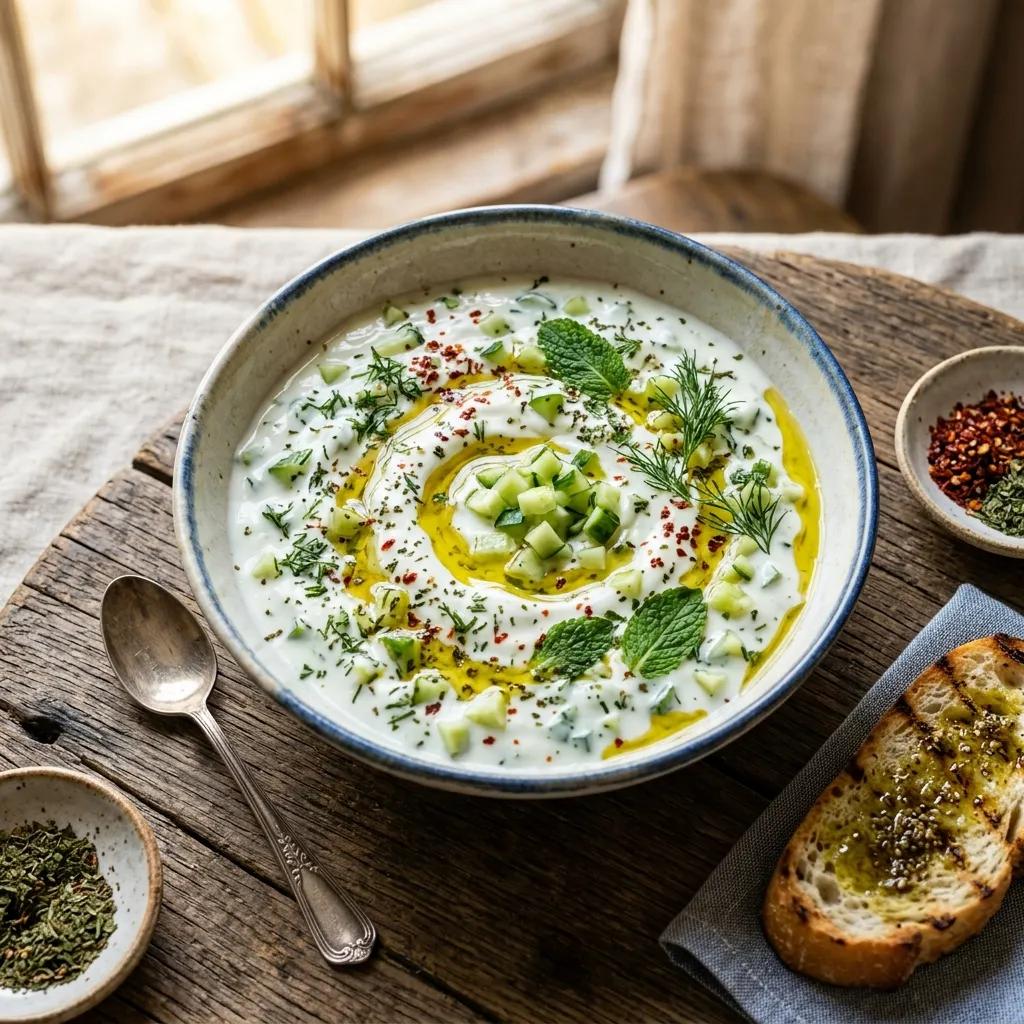
Cacik is Turkey's yogurt-cucumber-garlic preparation — strained yogurt beaten with grated cucumber, crushed garlic, dried mint, and a drizzle of olive oil. It occupies the same culinary space as Greek tzatziki and Indian raita, but the Turkish version is often thinned to a drinkable consistency with ice water and served as a cold soup alongside grilled meats, rice pilafs, and vegetable dishes. In its thicker form, it functions as a dip or condiment. The preparation is minimal. Thick yogurt — ideally strained through cheesecloth — is whisked until smooth, then combined with cucumber that has been grated and lightly squeezed to remove excess water. Raw garlic, crushed to a paste, provides a sharp bite. Dried mint (nane) is the signature herb, distinguishing cacik from the fresh-dill-flavored versions found elsewhere. A generous drizzle of good olive oil finishes the surface. Ayurvedically, cacik is a fundamentally cooling preparation. Yogurt, cucumber, and mint all carry cooling virya, making this an excellent Pitta-pacifying food. However, yogurt is sour and heavy in Ayurvedic classification, and the combination with raw garlic creates a complex energetic profile. The key is moderation — as a side dish or condiment, cacik provides therapeutic cooling; eaten in large quantities, the sour-heavy yogurt quality can create congestion.
Cools Pitta effectively when used as a condiment. The sour, heavy quality of yogurt can increase Kapha if consumed in large quantities. The garlic provides a pungent counterpoint that aids digestion.
Used therapeutically as a cooling condiment to balance heating foods and calm Pitta-related digestive heat. The combination of yogurt probiotics and cucumber hydration supports gut health during hot weather.
Ingredients
- 2 cups Plain yogurt (full-fat, preferably strained)
- 1 medium Cucumber (grated and squeezed dry)
- 1 clove Garlic (crushed to a paste)
- 1 tsp Dried mint
- 2 tbsp Olive oil
- 1/2 tsp Salt
- 1/4 cup Ice water (optional, for soup consistency)
- 1 tbsp Fresh dill (optional, chopped)
Instructions
- If the yogurt is thin, strain it through cheesecloth or a fine mesh strainer for 30 minutes to remove excess whey. The base should be thick and creamy.
- Grate the cucumber on the large holes of a box grater. Squeeze the grated cucumber firmly in your hands or a clean towel to extract as much water as possible — excess moisture will make the cacik watery.
- Combine the yogurt, squeezed cucumber, crushed garlic, dried mint, and salt in a bowl. Whisk until evenly combined.
- For condiment-thickness cacik, use as-is. For soup-consistency cacik, stir in ice water a tablespoon at a time until it reaches a pourable, drinkable consistency.
- Transfer to a serving bowl. Drizzle olive oil generously across the surface. Sprinkle with a pinch of dried mint and fresh dill if using.
- Refrigerate for at least 15 minutes before serving to allow flavors to meld. Serve cold alongside grilled meats, rice dishes, or as a standalone cold soup.
Nutrition
These values are estimates calculated from the ingredient list and may vary based on brands, cooking methods, and serving size. Not a substitute for medical or dietary advice.
How This Recipe Affects Each Dosha
Vata
The cold, heavy quality of cacik can aggravate Vata, particularly the cold and raw elements. However, yogurt's sour taste and the garlic's warming pungency provide some Vata-balancing effect. Vata types should eat cacik at room temperature rather than cold, and in small amounts.
Pitta
This is one of the most Pitta-pacifying preparations in Turkish cuisine. The cooling cucumber, the smooth yogurt, and the dried mint all carry cooling energy. The small amount of garlic is insufficient to offset the overall cooling effect. Use generously alongside heating foods.
Kapha
Yogurt is inherently Kapha-increasing — sour, heavy, cold, and mucus-forming. While the garlic and mint provide slight Kapha-reducing properties, the overall effect of cacik in quantity is Kapha-aggravating. Kapha types should use it sparingly as a condiment, never as a soup.
Mildly suppresses agni through cold, heavy quality of yogurt. The garlic provides a counteracting spark. Best used as a condiment alongside strongly agni-stimulating foods (grilled meats, spiced dishes) rather than eaten alone.
Nourishes: Rasa (plasma), Medas (fat)
Adjustments by Constitution
For Vata Types
Bring the cacik to room temperature before serving. Add a generous pinch of roasted cumin powder and a pinch of black pepper. Use a light hand on cucumber (which is cooling and light) and increase the garlic slightly. Serve alongside warm, grounding foods.
For Pitta Types
Omit the garlic entirely for maximum cooling effect. Add extra cucumber and a tablespoon of fresh chopped cilantro. Use coconut cream in place of some yogurt for deeper cooling. Increase the mint.
For Kapha Types
Reduce the yogurt quantity and dilute with water rather than using thick yogurt. Add extra garlic, a pinch of black pepper, and a pinch of dry ginger. Omit the olive oil drizzle. Use as a thin condiment rather than a substantial side dish.
Seasonal Guidance
Most appropriate in summer when Pitta is elevated and the body craves cold, cooling foods. Useful alongside heavy, grilled summer meats. Avoid as a regular food in winter when the cold quality will aggravate Vata and suppress agni.
Best time of day: Lunch or dinner as a side dish. Best consumed alongside warm, cooked foods rather than as a standalone cold dish.
Cultural Context
Cacik is ubiquitous across Turkey and appears at nearly every meal where grilled meat is served. The word derives from the Ottoman Turkish adaptation of a yogurt-based preparation found across the Central Asian Turkic world. In rural Anatolia, cacik was historically the primary way to make yogurt — a precious, protein-rich food — stretch further by thinning it with water and bulking it with cucumber. The tradition of serving yogurt-based preparations alongside meat reflects centuries of culinary wisdom about digestion: the cooling yogurt counterbalances the heat of grilled meat, a principle that aligns precisely with Ayurvedic food combining.
Deeper Context
Origins
Cacık descends from ancient Indo-European yogurt-and-cucumber preparations — the technique appears in Persian (mast-o-khiar), Greek (tzatziki), Turkish (cacık), Indian (raita), Balkan (tarator), and Central Asian variations. The Turkish cacık specifically uses dried mint (kuru nane) as a characteristic seasoning element that distinguishes it from Greek tzatziki (fresh dill) and Persian mast-o-khiar (dried mint and rose petals). Byzantine and Ottoman medical texts document cacık-adjacent preparations for summer heat and digestion.
Food as Medicine
Yogurt provides probiotic content (lactobacillus and bifidobacterium). Cucumber contributes hydration and silica. Garlic supports cardiovascular and antimicrobial function. Dried mint offers menthol and antioxidant compounds. A traditionally-therapeutic simple preparation with validated modern nutritional components.
Ritual & Seasonal Role
Summer Turkish dish. Meze array year-round. Ramadan iftar tables. Classical Turkish home cooking. Not religiously ceremonial but deeply tied to Turkish domestic food identity.
Classical Pairings & Cautions
Grilled meats, pide bread, additional meze (ezme, muhammara). Cautions: lactose sensitivity; garlic FODMAP issues; Ayurvedic viruddha ahara concern for habitual raw-cucumber-yogurt consumption; pregnancy should use pasteurized yogurt.
Cross-Tradition View
How other medical and food-wisdom traditions read this dish. Each tradition names the same physiological reality in its own language — the agreements across them are where universal principles live.
Traditional Chinese Medicine
Yogurt is Yin-building and Liver-soothing; cucumber is cool and builds Yin fluids; garlic is warm-pungent and disperses; dried mint is warm-aromatic and supports digestion; olive oil is cool-moistening. A Yin-building cooling preparation with dispersing-aromatic correction — TCM physicians would class cacik as appropriate summer Yin-deficient food.
Greek Humoral
Cold-wet with hot-dry correction. Galenic-suitable summer preparation — the Byzantine and Ottoman medical tradition endorses yogurt-cucumber preparations for summer heat and digestive support.
Ayurveda
Cooling virya, sour vipaka. Pacifies Pitta substantially. Kapha-aggravating through dairy. Vata-neutral with garlic-and-mint correction. Classical Ayurvedic viruddha ahara concern about raw-cucumber-and-yogurt combinations — the dried mint partly corrects this.
Ottoman Turkish & Levantine
Cacık is Turkish; tzatziki is Greek; mast-o-khiar is Persian; raita is Indian — all share the same yogurt-cucumber-aromatic architecture reflecting 2,000+ years of Indo-European dairy-preservation tradition across the region. The dried-mint-and-dill addition distinguishes Turkish cacık from Greek tzatziki (which typically uses fresh dill more prominently).
Chef's Notes
The garlic quantity is subjective — Turkish cacik typically uses less garlic than Greek tzatziki. Start with one clove and adjust. Squeezing the cucumber thoroughly is the single most important step; watery cacik is a failure. For the soup version, some cooks add a few ice cubes directly to the bowl. Dried mint is traditional and preferred over fresh mint in Turkish cacik — it has a different, more concentrated flavor. Cacik should be served very cold and consumed within a day; the garlic intensifies and the cucumber releases more water as it sits.
Frequently Asked Questions
Is Cacik good for my dosha?
Cools Pitta effectively when used as a condiment. The sour, heavy quality of yogurt can increase Kapha if consumed in large quantities. The garlic provides a pungent counterpoint that aids digestion. The cold, heavy quality of cacik can aggravate Vata, particularly the cold and raw elements. This is one of the most Pitta-pacifying preparations in Turkish cuisine. Yogurt is inherently Kapha-increasing — sour, heavy, cold, and mucus-forming.
When is the best time to eat Cacik?
Lunch or dinner as a side dish. Best consumed alongside warm, cooked foods rather than as a standalone cold dish. Most appropriate in summer when Pitta is elevated and the body craves cold, cooling foods. Useful alongside heavy, grilled summer meats. Avoid as a regular food in winter when the cold quality will ag
How can I adjust Cacik for my constitution?
For Vata types: Bring the cacik to room temperature before serving. Add a generous pinch of roasted cumin powder and a pinch of black pepper. Use a light hand on cucu For Pitta types: Omit the garlic entirely for maximum cooling effect. Add extra cucumber and a tablespoon of fresh chopped cilantro. Use coconut cream in place of some
What are the Ayurvedic properties of Cacik?
Cacik has Sour, Sweet, Pungent taste (rasa), Cooling energy (virya), and Sour post-digestive effect (vipaka). Its qualities (gunas) are Cold, Oily, Heavy, Smooth. It nourishes Rasa (plasma), Medas (fat). Mildly suppresses agni through cold, heavy quality of yogurt. The garlic provides a counteracting spark. Best used as a condiment alongside strongly agni-stimulating foods (grilled meats, spiced dishes) rather than eaten alone.