Butter Chicken
Indian Recipe
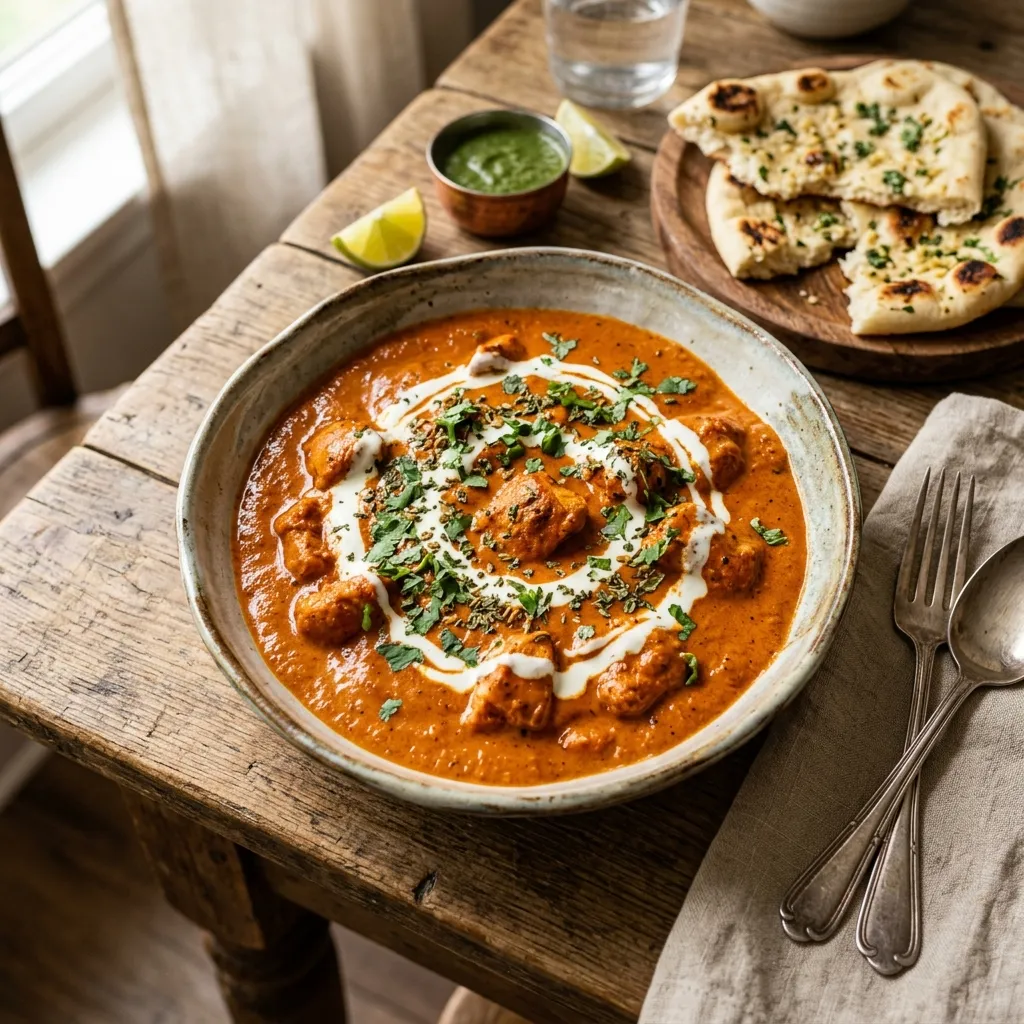
Overview
Butter chicken (murgh makhani) was invented in the 1950s at Moti Mahal restaurant in Delhi's Daryaganj neighborhood, when chef Kundan Lal Gujral repurposed leftover tandoori chicken in a sauce of tomatoes, butter, cream, and aromatic spices. The dish solved a practical problem — dry tandoori chicken reheated badly — and in doing so created what would become India's most famous restaurant dish globally. The sauce is distinctive: tomatoes cooked to a deep orange, finished with generous butter and cream, sweetened by the natural sugars in slow-cooked onions, and spiced with a restrained hand — fenugreek leaves (kasuri methi) provide the signature musty sweetness. Unlike many Indian curries that build complexity through layered spice additions, butter chicken achieves its character through richness and restraint. The spice level is deliberately mild, the textures uniformly smooth, and the color a warm, inviting orange. This accessibility is precisely what made it a global phenomenon — it is approachable enough for spice-averse palates while remaining genuinely delicious to those who eat Indian food daily. Ayurvedically, butter chicken is dominated by sweet and sour rasas — the tomato-cream-butter trinity creates an unctuous, slightly acidic sauce that is heating from the spices yet cooled by the dairy fat. The chicken provides rajasic protein, the cream and butter contribute heavy, oily, building qualities, and the spices (particularly fenugreek and garam masala) add digestive support. This is nourishing, tissue-building food — not light, not cleansing, but deeply satisfying.
Strongly nourishing and tissue-building. Pacifies Vata through heaviness, warmth, and unctuousness. The tomato and sour elements mildly increase Pitta. May increase Kapha through rich dairy and heaviness.
Butter chicken's heavy, nourishing quality makes it suitable for building tissue in underweight or depleted individuals. The combination of protein, fat, and warming spices supports recovery from illness, debility, or prolonged fasting — provided digestive fire is strong enough to handle the richness.
Ingredients
- 700 g Chicken thighs (boneless, cut into chunks)
- 1/2 cup Yogurt (for marinade)
- 1 tbsp Lemon juice (for marinade)
- 2 tsp Kashmiri chili powder (for color more than heat)
- 1 tsp Garam masala
- 1/2 tsp Turmeric
- 4 tbsp Butter (divided)
- 1 tbsp Vegetable oil
- 1 large Onion (finely diced)
- 6 cloves Garlic (minced)
- 1 tbsp Fresh ginger (grated)
- 400 g Tomato puree (canned crushed or pureed tomatoes)
- 1/2 cup Heavy cream
- 1 tbsp Kasuri methi (dried fenugreek leaves, crushed between palms)
- 1 tsp Sugar
- 1 tsp Salt
- 2 tbsp Fresh cilantro (for garnish)
Instructions
- Marinate the chicken: combine chicken chunks with yogurt, lemon juice, 1 teaspoon Kashmiri chili powder, half the garam masala, turmeric, and salt. Refrigerate for at least 1 hour, or overnight for deeper flavor.
- Heat oil and 1 tablespoon butter in a heavy pan over high heat. Remove chicken from the marinade (shake off excess) and sear in batches until charred spots develop on the surface, about 3-4 minutes per batch. The chicken does not need to be cooked through — it finishes in the sauce. Set aside.
- In the same pan, melt 2 tablespoons butter over medium heat. Add diced onion and cook slowly until deeply golden, about 8-10 minutes — do not rush this step, as the slow caramelization provides the sauce's sweetness.
- Add garlic and ginger, stir for 1 minute until fragrant. Add the remaining Kashmiri chili powder and stir for 30 seconds.
- Pour in the tomato puree and bring to a simmer. Cook for 12-15 minutes, stirring occasionally, until the sauce darkens and thickens noticeably. The oil should begin separating at the edges — this indicates the tomatoes are fully cooked.
- For a smooth sauce (restaurant-style), blend at this stage with an immersion blender or transfer to a regular blender and return to the pan. This step is optional but produces the characteristic velvety texture.
- Return the seared chicken to the sauce. Simmer for 8-10 minutes until the chicken is cooked through. Stir in cream, the remaining tablespoon of butter, sugar, kasuri methi (crush between your palms to release fragrance), and remaining garam masala.
- Taste and adjust: the sauce should be mildly spicy, noticeably sweet from the cream and onions, slightly tangy from the tomato, and aromatic from the kasuri methi. Garnish with cilantro and serve with naan, basmati rice, or both.
Nutrition
These values are estimates calculated from the ingredient list and may vary based on brands, cooking methods, and serving size. Not a substitute for medical or dietary advice.
How This Recipe Affects Each Dosha
Vata
Butter chicken is deeply satisfying for Vata. The butter, cream, and yogurt provide the oily, smooth, heavy qualities Vata craves. The warm spice blend drives gentle heat into Vata's cold core. The tomato sauce's sweet-sour profile stimulates Vata's often-variable appetite. The chicken offers grounding protein. This is comfort food in the Ayurvedic sense — it pacifies Vata's restlessness and nourishes depleted tissues.
Pitta
The tomato base and yogurt marinade contribute sour rasa, which increases Pitta. The garlic and ginger add moderate heat. However, the cream and butter cool the sauce significantly, and the overall spice level is mild compared to most Indian curries. Pitta types can enjoy butter chicken in moderation, particularly in cooler weather, but should avoid large portions during summer.
Kapha
The butter, cream, and chicken create a rich, heavy dish that directly increases Kapha. The oily, smooth qualities compound Kapha's natural tendencies. While the spices provide some metabolic stimulation, they are insufficient to offset the dairy richness. Kapha types should treat butter chicken as an occasional indulgence rather than a regular meal.
The spice blend (garam masala, ginger, garlic, fenugreek) supports digestion of the rich sauce. Kasuri methi is classified as deepana (appetite-kindling) in Ayurvedic texts. However, the heavy cream and butter content can dampen agni in those with naturally weak digestion — the richness requires robust digestive fire to process fully.
Nourishes: Rasa (plasma), Rakta (blood), Mamsa (muscle), Meda (fat), Asthi (bone — from dairy calcium)
Adjustments by Constitution
For Vata Types
This dish is already ideal for Vata. Add extra kasuri methi, which is bitter and aids digestion. Include a pinch of black pepper in the marinade. Serve with warm basmati rice and a side of sauteed greens for completeness.
For Pitta Types
Replace some cream with coconut milk for cooler dairy. Reduce garlic by half. Add extra kasuri methi (bitter and cooling) and fresh cilantro. Use chicken breast instead of thighs for less fat. Serve with plain rice rather than butter naan to reduce the total fat load.
For Kapha Types
Halve the butter and cream. Use yogurt-based sauce thickness instead of cream. Replace chicken thighs with breast meat. Add extra ginger, black pepper, and a pinch of cayenne to increase metabolic heat. Serve with a small portion of basmati rice or skip rice in favor of roti.
Seasonal Guidance
Butter chicken is best in cooler months when the body needs heavier, more nourishing food and agni naturally strengthens. The cream, butter, and protein provide caloric warmth for autumn and winter. In summer, the rich dairy and heating spices can feel oppressive and trigger Pitta symptoms.
Best time of day: Dinner — the rich, heavy sauce benefits from an empty stomach and active digestion, but should be eaten at least 3 hours before sleep
Cultural Context
Butter chicken's origin at Moti Mahal in 1950s Delhi makes it relatively young by Indian culinary standards, yet it has become synonymous with Indian cuisine worldwide. The dish emerged from the Partition era, when Kundan Lal Gujral and his partners brought their tandoor expertise from Peshawar (now Pakistan) to Delhi. It was born of frugality — using leftover tandoori chicken — and became a symbol of the restaurant culture that transformed Indian food in the post-independence era. Today, butter chicken is the most ordered Indian dish in the UK, Australia, and much of North America, and its orange-hued sauce has spawned countless adaptations including butter paneer and butter tofu.
Deeper Context
Origins
Butter chicken was invented at Moti Mahal in Delhi in the 1950s when owner Kundan Lal Gujral repurposed unsold tandoori chicken by stewing it in tomato, butter, and cream. A post-Partition dish rather than an ancient recipe — part of the same Delhi food revolution that produced dal makhani and paneer tikka masala. The dish was designed from inception for restaurant economics: to convert leftover protein into a high-margin, richly-flavored preparation that could be held on the stove.
Food as Medicine
Used as a restoration dish for underweight patients and convalescents in Punjabi home practice — the cream-butter-spice combination is one of the highest-calorie Ayurvedic-friendly vehicles for medicated ghee, and was historically used to rebuild body weight after tuberculosis recovery or prolonged fever. The kasuri methi (dried fenugreek) addition carries its own classical reputation as a digestive aid and blood-sugar modulator.
Ritual & Seasonal Role
Restaurant dish primarily; appears at celebrations, Punjabi weddings, Diwali feast tables, and north Indian festival dinners. Considered too rich for everyday meals in traditional households and explicitly flagged in classical Ayurveda as a preparation to reserve for festive occasions. The dish has become a global restaurant standard, but its ceremonial weight in north Indian homes remains that of an occasion food.
Classical Pairings & Cautions
Paired with naan, jeera rice, a kachumber salad for contrast, and a bowl of simple dal to balance the protein register. Cautions: heavily damp-heat generating; contraindicated in type-2 diabetes, non-alcoholic fatty liver disease, GERD, and acute Pitta imbalances. Pitta types should omit chili; Kapha types should skip entirely or use very small portions; post-partum women in the first 40 days should avoid the tomato and heavy cream.
Cross-Tradition View
How other medical and food-wisdom traditions read this dish. Each tradition names the same physiological reality in its own language — the agreements across them are where universal principles live.
Traditional Chinese Medicine
Chicken is warming and builds Qi and Blood, entering the Spleen and Stomach meridians. Butter and cream are warm-nourishing but heavy, generating Stomach dampness in excess. Tomato is cool-sour and moves Liver Qi, but creates damp-heat when combined with dairy. Fenugreek disperses and descends. Overall, butter chicken functions as a powerful Qi and Blood tonic that will generate damp-heat in habitual eaters, especially those with pre-existing Spleen deficiency.
Greek Humoral
A classical hot-wet dish — chicken and butter build sanguine temperament; tomato and cream moisten; the spice blend adds mild hot-dry correction without pushing the dish out of its wet register. Galenic physicians would prescribe this preparation for cold-dry (melancholic) types depleted by hard physical labor, excessive fasting, or chronic grief. The sanguine humor it generates is considered life-sustaining but dangerous in excess.
Unani Tibb
Hot in the first degree, wet in the first — a classic Indo-Persian convalescent dish in hakim practice, similar in function to the Mughlai shorba tradition. Prescribed for underweight patients, post-illness recovery, and those rebuilding after blood loss. Contraindicated in ghalaba-e-safra (yellow bile excess), diabetic insulin resistance, gastric ulcer, and any active inflammatory condition — the rich dairy base will aggravate each.
Tibetan Sowa Rigpa
Co-activates Bile (mKhris-pa) and Phlegm (Bad-kan). Chicken and butter nourish and pacify Wind (rLung) powerfully; the tomato moves Bile; the spice tempering keeps Phlegm from excessive accumulation. Tibetan physicians would prescribe this for cold-damp disorders arising in winter, but would caution against repeated summer consumption, when the dish provokes Bile-heat in hot climates.
Chef's Notes
Kashmiri chili powder provides the deep red-orange color without excessive heat — do not substitute cayenne, which is much hotter and will overpower the sauce's gentle character. Kasuri methi (dried fenugreek leaves) is non-negotiable; it provides the distinctive musty, slightly bitter note that defines butter chicken. Add it at the end, crushed between your palms, so its volatile oils release directly into the finished sauce. The sauce benefits enormously from being made a day ahead — the flavors merge and mellow overnight in the refrigerator.
Frequently Asked Questions
Is Butter Chicken good for my dosha?
Strongly nourishing and tissue-building. Pacifies Vata through heaviness, warmth, and unctuousness. The tomato and sour elements mildly increase Pitta. May increase Kapha through rich dairy and heaviness. Butter chicken is deeply satisfying for Vata. The tomato base and yogurt marinade contribute sour rasa, which increases Pitta. The butter, cream, and chicken create a rich, heavy dish that directly increases Kapha.
When is the best time to eat Butter Chicken?
Dinner — the rich, heavy sauce benefits from an empty stomach and active digestion, but should be eaten at least 3 hours before sleep Butter chicken is best in cooler months when the body needs heavier, more nourishing food and agni naturally strengthens. The cream, butter, and protein provide caloric warmth for autumn and winter. I
How can I adjust Butter Chicken for my constitution?
For Vata types: This dish is already ideal for Vata. Add extra kasuri methi, which is bitter and aids digestion. Include a pinch of black pepper in the marinade. Serv For Pitta types: Replace some cream with coconut milk for cooler dairy. Reduce garlic by half. Add extra kasuri methi (bitter and cooling) and fresh cilantro. Use chic
What are the Ayurvedic properties of Butter Chicken?
Butter Chicken has Sweet, Sour, Pungent, Salty taste (rasa), Heating energy (virya), and Sweet post-digestive effect (vipaka). Its qualities (gunas) are Heavy, Oily, Warm, Smooth. It nourishes Rasa (plasma), Rakta (blood), Mamsa (muscle), Meda (fat), Asthi (bone — from dairy calcium). The spice blend (garam masala, ginger, garlic, fenugreek) supports digestion of the rich sauce. Kasuri methi is classified as deepana (appetite-kindling) in Ayurvedic texts. However, the heavy cream and butter content can dampen agni in those with naturally weak digestion — the richness requires robust digestive fire to process fully.