Bruschetta
Italian Recipe
Overview
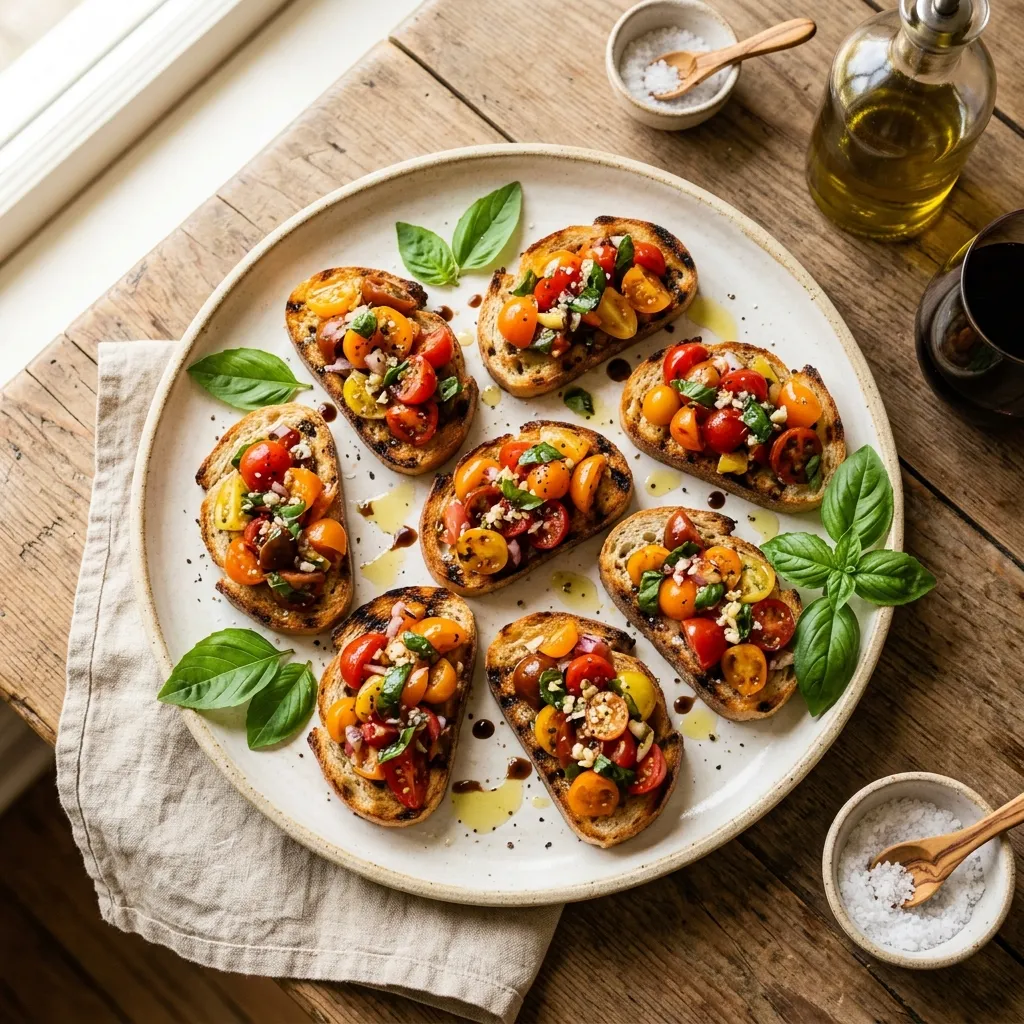
Bruschetta originated as a practical solution in central Italy — stale bread, rescued by grilling over coals and rubbing with raw garlic and olive oil. The word derives from the Roman dialect "bruscare," meaning to toast or roast over coals. In its simplest form, bruschetta is just grilled bread with oil and salt, a preparation that dates to at least the 15th century and remains the foundation of the antipasto course across Tuscany, Umbria, and Lazio. The tomato-topped version now famous worldwide emerged only after tomatoes became accepted in Italian cooking in the 18th century. Ripe summer tomatoes are diced, mixed with fresh basil, garlic, olive oil, and salt, then spooned over the warm, garlicky toast. The contrast between the crunchy, smoky bread and the cool, juicy topping is the entire point — which means timing matters. Top the bread just before serving, or the toast goes soggy. Ayurvedically, bruschetta is a light, heating preparation. The grilled bread is dry and rough, the raw garlic is intensely pungent, and the tomato adds sour and heating qualities. Olive oil provides the only unctuous element. This makes it stimulating for digestion and appetite but aggravating for constitutions that already run hot and dry.
Stimulates appetite and agni. Increases Pitta and Vata due to dry, heating, pungent qualities. Reduces Kapha moderately through its light, dry, and pungent nature.
Ingredients
- 1 loaf Ciabatta or rustic Italian bread (cut into 1/2-inch thick slices)
- 4 medium Ripe tomatoes (diced)
- 10 leaves Fresh basil (torn or chiffonade)
- 3 cloves Garlic (2 whole for rubbing, 1 minced for topping)
- 4 tbsp Extra virgin olive oil
- 1 tsp Balsamic vinegar (optional)
- to taste Flaky sea salt
- to taste Black pepper
Instructions
- Combine the diced tomatoes, minced garlic, torn basil, 2 tablespoons of olive oil, and balsamic vinegar in a bowl. Season with salt and pepper. Let this mixture sit at room temperature for 15-20 minutes so the salt draws out the tomato juices and the flavors meld.
- Preheat a grill, grill pan, or broiler to high heat.
- Brush the bread slices on both sides with the remaining olive oil. Grill or broil for 1-2 minutes per side until golden with distinct char marks. Watch carefully — the bread turns from perfect to burnt quickly.
- While the bread is still hot, take a whole garlic clove and rub it firmly across the surface of each toast. The rough, toasted surface acts as a grater, releasing garlic oil into the bread. This is the step that separates genuine bruschetta from bread with stuff on it.
- Spoon the tomato mixture generously over each piece of grilled bread, including the juices from the bowl.
- Finish with an extra drizzle of olive oil and a pinch of flaky salt. Serve immediately — within 2-3 minutes of topping, before the bread absorbs the liquid and softens.
Nutrition
These values are estimates calculated from the ingredient list and may vary based on brands, cooking methods, and serving size. Not a substitute for medical or dietary advice.
How This Recipe Affects Each Dosha
Vata
The dry, rough quality of grilled bread and the pungent raw garlic can aggravate Vata if eaten in excess. The olive oil provides some lubrication, but the overall preparation lacks the moist, heavy qualities Vata needs. As an occasional appetizer in small amounts, it is fine — as a meal replacement, it would worsen Vata imbalance.
Pitta
Raw garlic is one of the most heating foods in Ayurveda, and raw tomato adds sour heat on top. This combination strongly provokes Pitta. Pitta types may enjoy a small portion but should not make it a regular habit, especially in summer or during periods of inflammation.
Kapha
The light, dry, and pungent qualities of bruschetta are well-suited to Kapha. Grilled bread is drier than soft bread, the raw garlic and black pepper stimulate sluggish digestion, and the overall lightness avoids the heaviness Kapha constitutions should minimize. This is a good appetizer choice for Kapha types.
Strongly stimulates agni and appetite. The raw garlic, black pepper, and acidic tomato all kindle digestive fire. This is why bruschetta is traditionally served as an appetizer — it prepares the digestive system for the meal to come.
Nourishes: Rasa (plasma)
Adjustments by Constitution
For Vata Types
Increase the olive oil generously. Top with avocado or fresh ricotta for added moisture and fat. Reduce raw garlic and add roasted garlic instead, which is sweeter and less pungent. Serve alongside a warm soup to balance the dryness.
For Pitta Types
Omit raw garlic entirely — rub the bread with a halved cucumber instead for cooling moisture. Replace tomato with diced avocado and fresh mint. Use cilantro instead of basil. Drizzle with cooling coconut oil instead of olive oil.
For Kapha Types
Add thinly sliced red onion, capers, and a generous amount of cracked black pepper. Use a thin, crispy crostini rather than thick bread. Top with peppery arugula. The classic preparation already works well for Kapha — lean into the pungency.
Seasonal Guidance
Peak summer is the ideal time for bruschetta because that is when tomatoes are at their ripest and most flavorful. In autumn, the dish remains appropriate as temperatures begin to cool and the warming garlic becomes welcome. Avoid in deep winter when the body needs warming, cooked, moist foods rather than dry toast with raw toppings.
Best time of day: Midday as an appetizer or light lunch, or early evening as a pre-dinner snack
Cultural Context
Bruschetta is part of the fettunta tradition of central Italy, where new-harvest olive oil is celebrated each November by drizzling it over grilled bread — a ritual that dates back centuries. In modern Italian dining, bruschetta appears as part of the antipasto course, the opening act designed to stimulate appetite before the primo (first course) and secondo (main course). The pronunciation is "broo-SKET-tah" — the common English mispronunciation "broo-SHEH-tah" has become a reliable shibboleth for identifying someone who has not spent time in Italy.
Deeper Context
Origins
The word 'bruschetta' traces to 'bruscare' (to roast over coals) and represents ancient Roman-Lazio peasant cookery. The pre-tomato version (fett'unta in Tuscany, bruschetta schietta in Lazio) was olive-pressing-day food — farmers tasted new-pressed olive oil by pouring it over toasted bread and rubbing it with raw garlic. Tomato addition came in the 17th-18th century southern-Italian integration of New World vegetables. The modern globally-recognized bruschetta-with-tomato is a 20th-century Italian restaurant standardization that retained the ancient technique with the post-Columbian ingredient.
Food as Medicine
Olive oil polyphenols (especially from unfiltered new-pressed oil) have substantial modern research support for cardiovascular and cognitive benefit — the ancient Italian tradition of consuming new-pressed oil on bread represents one of the purest Mediterranean-diet interventions still practiced. Tomato lycopene is increased in bioavailability by the olive-oil pairing. Garlic provides allium compounds with documented cardiovascular action.
Ritual & Seasonal Role
Summer tomato-season peak (July through September). Olive-harvest time (October-November) features fett'unta specifically, celebrating new-pressed oil. Classical Italian antipasti staple year-round. Not religiously ceremonial, but deeply tied to Italian olive-harvest tradition and to Italian summer entertaining culture.
Classical Pairings & Cautions
Aperitif wines (Prosecco, Vermentino, light reds), additional antipasti plates, grilled vegetables. Cautions: gluten intolerance precludes traditional ciabatta; nightshade-family sensitivity from raw tomato; garlic allergies and FODMAP issues; olive allergies are rare but documented; raw tomato aggravates GERD and peptic ulcer in sensitive patients.
Cross-Tradition View
How other medical and food-wisdom traditions read this dish. Each tradition names the same physiological reality in its own language — the agreements across them are where universal principles live.
Traditional Chinese Medicine
Ciabatta bread is Spleen-Qi-tonifying; tomatoes are cool-sour and move Liver Qi; fresh basil is warm-aromatic and disperses stagnation; garlic is warm-pungent and disperses cold; olive oil is cool-moistening. A summer Liver-Qi-moving preparation with dispersing warming accents — TCM physicians would class this as appropriate summer-heat food with Liver Qi stagnation patterns.
Greek Humoral
Hot-wet with cold-wet tomato balance. A Galenic summer Mediterranean preparation — the Hippocratic and Galenic endorsement of toasted-bread-with-oil-and-aromatics specifically addresses hot-weather eating needs across Mediterranean working populations.
Ayurveda
Heating virya, pungent vipaka. Mixed dosha picture — the tomato-garlic-basil combination aggravates Pitta; olive oil and bread provide some balance; raw tomato aggravates Vata in sensitive types. A summer-occasional dish rather than daily food by Ayurvedic timing and constitutional logic.
Roman-Lazio
Bruschetta's word derives from Italian 'bruscare' (to roast over coals) — the roast-the-bread technique is ancient central-Italian cookery. Origin is Lazio and central Italy, with Tuscan 'fett'unta' (literally 'oily slice' — toasted bread rubbed with garlic and olive oil) as the pre-tomato ancestor. Tomato addition to bruschetta is post-Columbian, entering Italian cuisine through 17th-18th century southern-Italian adoption. The earliest bruschetta was olive-pressing-day food — farmers testing new olive oil by pouring it over toasted bread.
Chef's Notes
The quality of tomatoes makes or breaks this dish. Use only peak-season, vine-ripened tomatoes — out-of-season hothouse tomatoes produce a bland, watery result. If good fresh tomatoes are unavailable, roasted cherry tomatoes tossed with garlic and oil make a worthy winter substitute. The bread should be sturdy and open-crumbed, not soft sandwich bread. For a more robust garlic flavor, mince the raw garlic into the topping rather than just rubbing the bread. Bruschetta does not keep — make it, serve it, eat it.
Frequently Asked Questions
Is Bruschetta good for my dosha?
Stimulates appetite and agni. Increases Pitta and Vata due to dry, heating, pungent qualities. Reduces Kapha moderately through its light, dry, and pungent nature. The dry, rough quality of grilled bread and the pungent raw garlic can aggravate Vata if eaten in excess. Raw garlic is one of the most heating foods in Ayurveda, and raw tomato adds sour heat on top. The light, dry, and pungent qualities of bruschetta are well-suited to Kapha.
When is the best time to eat Bruschetta?
Midday as an appetizer or light lunch, or early evening as a pre-dinner snack Peak summer is the ideal time for bruschetta because that is when tomatoes are at their ripest and most flavorful. In autumn, the dish remains appropriate as temperatures begin to cool and the warming
How can I adjust Bruschetta for my constitution?
For Vata types: Increase the olive oil generously. Top with avocado or fresh ricotta for added moisture and fat. Reduce raw garlic and add roasted garlic instead, whi For Pitta types: Omit raw garlic entirely — rub the bread with a halved cucumber instead for cooling moisture. Replace tomato with diced avocado and fresh mint. Use ci
What are the Ayurvedic properties of Bruschetta?
Bruschetta has Sour, Pungent, Sweet taste (rasa), Heating energy (virya), and Pungent post-digestive effect (vipaka). Its qualities (gunas) are Light, Dry, Warm, Rough. It nourishes Rasa (plasma). Strongly stimulates agni and appetite. The raw garlic, black pepper, and acidic tomato all kindle digestive fire. This is why bruschetta is traditionally served as an appetizer — it prepares the digestive system for the meal to come.