Briam (Greek Roasted Vegetables)
Greek Recipe
Overview
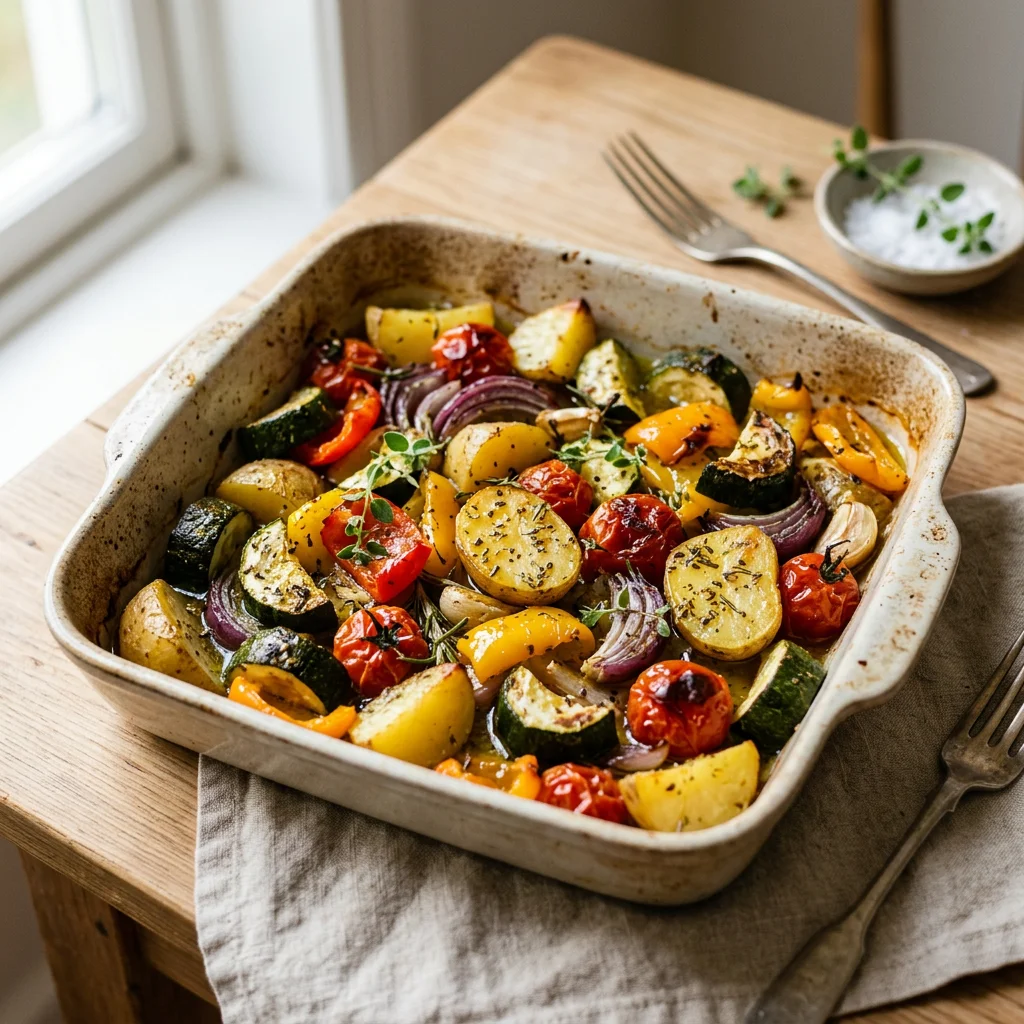
Briam is the Greek ratatouille — a medley of summer vegetables roasted slowly with olive oil, garlic, and herbs until they collapse into a sweet, concentrated, deeply satisfying dish. Unlike its French cousin, briam does not involve any stovetop steps; everything goes into the pan raw and the oven does all the work over the course of an hour or more. The result is simpler, more rustic, and arguably more honest about what it is: vegetables at their most elemental, transformed by heat and time. The classic combination includes zucchini, potatoes, tomatoes, onions, and bell peppers, though Greek cooks adapt freely based on what the garden offers. Eggplant makes a common addition, as do green beans. The vegetables are cut into generous pieces, tossed with an almost scandalous amount of olive oil, seasoned with dried oregano and fresh garlic, then spread in a single layer and left to roast until the edges caramelize and the center turns jammy. From an Ayurvedic perspective, briam is one of the most balanced vegetable preparations in Mediterranean cuisine. The slow roasting concentrates the natural sugars while the olive oil provides unctuousness. The mixed vegetables span multiple rasa and energetic categories, creating a preparation that is nourishing without heaviness — the kind of food that leaves you satisfied but not sluggish.
Balancing for all three doshas when eaten in appropriate portions. The mixed vegetable profile provides broad nutritional coverage without strongly aggravating any dosha.
Ingredients
- 3 medium Zucchini (cut into thick rounds)
- 3 medium Potato (peeled and cut into wedges)
- 4 large Ripe tomatoes (cut into wedges)
- 2 large Onion (cut into thick half-moons)
- 2 medium Bell pepper (seeded and cut into strips)
- 1 medium Eggplant (cubed, optional)
- 6 cloves Garlic (thinly sliced)
- 150 ml Olive oil
- 1 tbsp Dried oregano
- 1/2 bunch Fresh parsley (roughly chopped)
- 2 tsp Sea salt
- 1 tsp Black pepper (freshly ground)
Instructions
- Preheat the oven to 200C (400F). Prepare all vegetables as described — cut them into generous, rustic pieces. They will shrink significantly during roasting.
- Place all the vegetables in a large roasting pan. Add the sliced garlic, oregano, salt, and pepper. Pour the olive oil over everything.
- Using your hands, toss thoroughly until every piece is coated in oil and seasoning. Spread in a single layer — use two pans if necessary. Overcrowding steams rather than roasts.
- Roast for 30 minutes, then stir gently and redistribute the vegetables. Return to the oven.
- Continue roasting for another 30-45 minutes until the vegetables are completely tender, slightly collapsed, and caramelized at the edges. The tomatoes should have broken down into a sauce.
- Remove from the oven and let rest for 10 minutes. Scatter with fresh parsley. Serve warm or at room temperature with crusty bread and feta cheese.
Nutrition
These values are estimates calculated from the ingredient list and may vary based on brands, cooking methods, and serving size. Not a substitute for medical or dietary advice.
How This Recipe Affects Each Dosha
Vata
Well-suited for Vata due to the generous olive oil, the grounding potato, and the slow roasting that removes raw quality. The overall warming nature and sweet rasa are Vata-calming. Only the bell pepper may cause mild gas in very sensitive Vata digestion.
Pitta
Generally good for Pitta. The sweet, roasted vegetables are soothing, and the zucchini and tomatoes have cooling tendencies. The garlic and oregano are mildly heating but not enough to aggravate Pitta in a mixed-vegetable context.
Kapha
One of the better Greek dishes for Kapha. The vegetables are lighter than bean or cheese-based preparations, and the roasting dries out some of their water content. The pungent garlic and oregano stimulate digestion. Moderate the potato and oil for best results.
Gently supportive of agni. The roasting process concentrates the vegetables and removes their raw, hard-to-digest quality. The garlic and oregano provide mild digestive fire stimulation. This is one of the easier mixed-vegetable dishes to digest, suitable for moderate agni.
Nourishes: Rasa (plasma), Rakta (blood), Mamsa (muscle)
Adjustments by Constitution
For Vata Types
Include extra potato and eggplant. Add a drizzle of olive oil at serving. Serve warm rather than room temperature. A sprinkle of dried thyme adds further warming quality.
For Pitta Types
Increase the zucchini and reduce the garlic. Add fennel wedges for extra cooling sweetness. Replace oregano with fresh basil added after roasting. Finish with a squeeze of lemon.
For Kapha Types
Omit the potato entirely and add green beans or extra bell pepper. Reduce olive oil by one-third. Add a generous pinch of dried oregano and some fresh rosemary sprigs during roasting for extra stimulating aromatics.
Seasonal Guidance
Briam is at its best in late summer and early autumn when tomatoes, zucchini, bell peppers, and eggplant are all at peak ripeness. The dish celebrates the summer garden and is traditionally the way Greek cooks use their vegetable abundance. In late autumn and winter, consider a variation with root vegetables — potatoes, carrots, turnips — using heartier herbs like rosemary and thyme. Spring briam can include artichokes and peas. The guiding principle is to use whatever is seasonal and local, roasted with olive oil and herbs.
Best time of day: Lunch or early dinner, when its moderate weight can be comfortably digested
Cultural Context
Briam is everyday Greek home cooking at its most straightforward — the kind of dish that appears on the table several times a week in summer without anyone considering it special, yet it is deeply missed when summer ends. Every Greek cook makes it, and no one follows a recipe because the recipe is essentially "cut up whatever vegetables are ripe, add olive oil and oregano, and roast." It reflects the Greek philosophy that the best food comes from the best ingredients handled simply. Briam often appears as part of a spread with bread, feta, olives, and perhaps a fried egg — the quintessential Greek summer dinner.
Deeper Context
Origins
Briam descends from Byzantine monastic vegetable cookery adapted through the Ottoman period. The name 'briam' derives from Turkish 'büryan' (roasted). The dish's modern form stabilized with the post-Columbian adoption of New World vegetables (tomato and potato) into Greek cuisine — both arrived through Ottoman-Mediterranean trade in the 17th and 18th centuries. The olive-oil-and-vegetable-plus-herb format is much older, dating to classical Greek and Byzantine cookery.
Food as Medicine
Not therapeutically designed but well-composed Mediterranean-diet food by modern research standards. Lycopene (tomato, bioavailability increased by olive oil and cooking), potassium (potato), and magnesium (leafy herbs) contribute to cardiovascular benefit. Oregano contains carvacrol with documented antimicrobial activity. The slow-bake technique preserves most nutrients while concentrating flavor and increasing lycopene bioavailability.
Ritual & Seasonal Role
Summer and early autumn — all primary vegetables peak simultaneously in Mediterranean climates. Orthodox fasting-day staple year-round using stored and winter-grown variants. Classical Sunday-supper dish in rural Greek households. Not religiously ceremonial in the feast sense, but deeply woven into Orthodox fasting-cycle cookery.
Classical Pairings & Cautions
Crusty bread, feta cheese (non-fasting days only), kalamata olives. A glass of assyrtiko or Agiorgitiko red wine. Cautions: nightshade-family sensitivity (fibromyalgia, autoimmune flares); Pitta aggravation in sensitive types during summer; FODMAP issues from garlic (substitution possible); high potassium contraindicates advanced renal disease.
Cross-Tradition View
How other medical and food-wisdom traditions read this dish. Each tradition names the same physiological reality in its own language — the agreements across them are where universal principles live.
Traditional Chinese Medicine
Zucchini is cool-sweet and Spleen-Qi-supporting; tomato is cool-sour and moves Liver Qi; potato is sweet-neutral and tonifies Spleen Qi; olive oil is cool-moistening; oregano is warm-aromatic and disperses stagnation; garlic is warm-pungent and disperses cold. A balanced summer vegetable stew — TCM physicians would class this as appropriate for summer damp-heat with Liver Qi stagnation.
Ayurveda
Neutral to mildly heating virya, sweet vipaka. Mild Pitta aggravation from the nightshade combination (tomato, potato). Vata-pacifying through olive oil. Kapha-neutral. A summer-and-early-autumn preparation by Ayurvedic timing logic.
Ottoman Turkish
Direct Turkish parallel is türlü güveç — a mixed-vegetable oven-baked stew with near-identical technique. The preparation reflects 400 years of Ottoman-Greek culinary unity across the Aegean, with shared techniques predating modern national divisions. Imam bayıldı (eggplant-only Turkish version) is a close cousin from the Ottoman imperial kitchen tradition.
Byzantine Orthodox
Classical Orthodox fasting food — meat-free, dairy-free, egg-free, cooked in olive oil. Appropriate for Lenten, Advent, Apostles' Fast, and Assumption Fast observances plus weekly Wednesday-Friday fasts. The olive-oil-and-vegetable slow-bake format has Byzantine monastic tradition dating to the Athos and Meteora monastic communities, where plant-based cookery reached sophisticated development during the medieval Orthodox period.
Chef's Notes
Do not be shy with the olive oil — briam that is under-oiled will be dry and disappointing. The vegetables should be glossy and lush, not parched. Cut everything into similar-sized pieces so they cook evenly, though the potatoes can be slightly smaller since they take longer. Resist the urge to stir too often; the caramelization that develops on the bottom layer is part of the dish's character. Briam is traditionally served at room temperature, and many Greeks consider it better the next day when the flavors have melded overnight. It is almost always accompanied by feta cheese and bread.
Frequently Asked Questions
Is Briam (Greek Roasted Vegetables) good for my dosha?
Balancing for all three doshas when eaten in appropriate portions. The mixed vegetable profile provides broad nutritional coverage without strongly aggravating any dosha. Well-suited for Vata due to the generous olive oil, the grounding potato, and the slow roasting that removes raw quality. Generally good for Pitta. One of the better Greek dishes for Kapha.
When is the best time to eat Briam (Greek Roasted Vegetables)?
Lunch or early dinner, when its moderate weight can be comfortably digested Briam is at its best in late summer and early autumn when tomatoes, zucchini, bell peppers, and eggplant are all at peak ripeness. The dish celebrates the summer garden and is traditionally the way Gr
How can I adjust Briam (Greek Roasted Vegetables) for my constitution?
For Vata types: Include extra potato and eggplant. Add a drizzle of olive oil at serving. Serve warm rather than room temperature. A sprinkle of dried thyme adds furt For Pitta types: Increase the zucchini and reduce the garlic. Add fennel wedges for extra cooling sweetness. Replace oregano with fresh basil added after roasting. Fin
What are the Ayurvedic properties of Briam (Greek Roasted Vegetables)?
Briam (Greek Roasted Vegetables) has Sweet, Astringent, Pungent taste (rasa), Neutral to mildly Heating energy (virya), and Sweet post-digestive effect (vipaka). Its qualities (gunas) are Light to Medium, Warm, Oily. It nourishes Rasa (plasma), Rakta (blood), Mamsa (muscle). Gently supportive of agni. The roasting process concentrates the vegetables and removes their raw, hard-to-digest quality. The garlic and oregano provide mild digestive fire stimulation. This is one of the easier mixed-vegetable dishes to digest, suitable for moderate agni.