Buffalo Wings
American Recipe
Overview
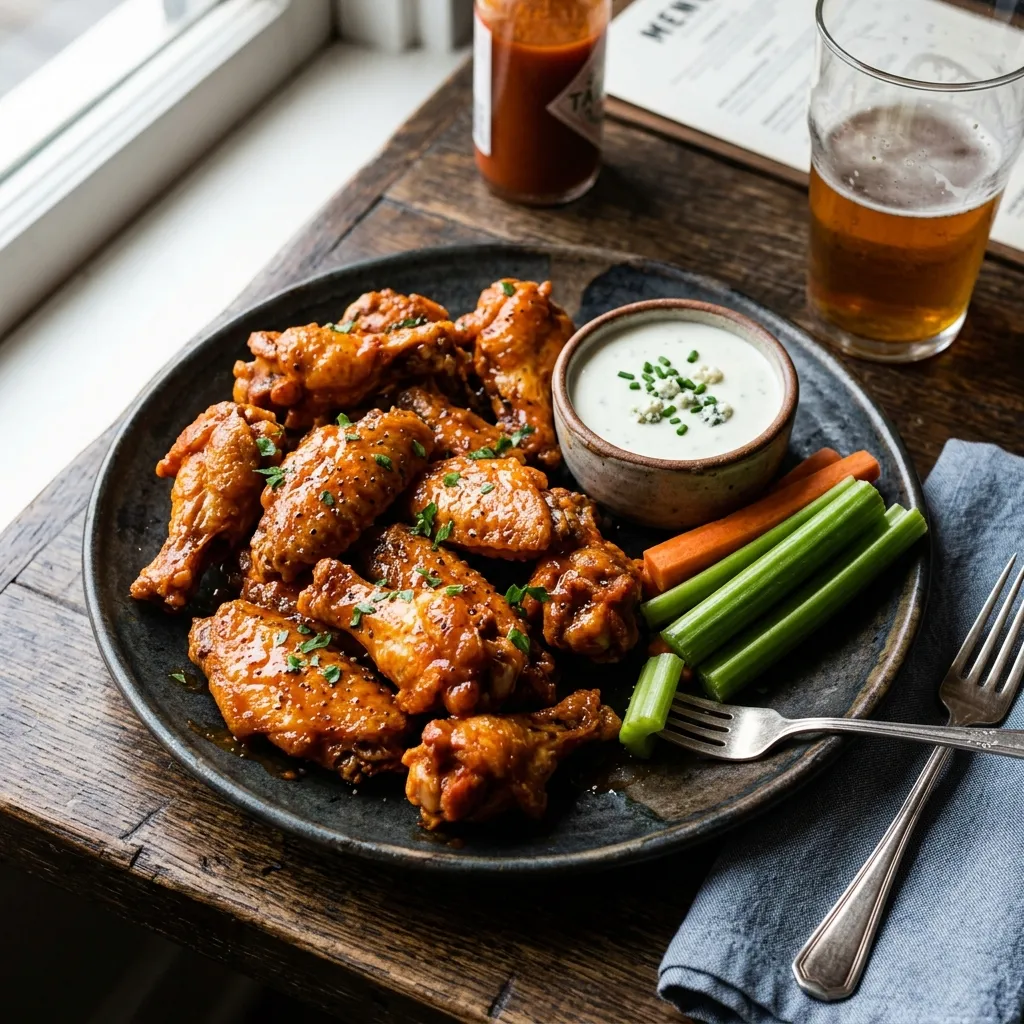
Buffalo wings were invented in 1964 at the Anchor Bar in Buffalo, New York, when Teressa Bellissimo deep-fried leftover chicken wings and tossed them in a sauce of melted butter and Frank's RedHot cayenne pepper sauce. The dish transformed an ingredient previously considered scrap meat into one of America's most consumed foods — an estimated 1.4 billion wings are eaten during Super Bowl weekend alone. The preparation is elemental: chicken wings separated at the joint into drumettes and flats, cooked until the skin is crisp, then coated in a butter-and-hot-sauce emulsion. This recipe uses a baked method that produces comparably crisp skin through a baking powder technique that raises the skin's pH, accelerating Maillard browning in dry oven heat. Ayurvedically, buffalo wings concentrate several intense qualities — the pungent heat of cayenne, the sharpness of vinegar, the oiliness of butter, and the heating energy of chicken skin. The result is a dish with strong pitta-provoking potential that simultaneously stimulates agni powerfully. The cooling effect of the blue cheese dressing traditionally served alongside is not merely a flavor pairing but a digestive counterbalance, providing the sweet and astringent tastes that moderate the sauce's fire.
Strongly increases pitta through the concentrated pungent, sour, and salty tastes of the buffalo sauce combined with the inherent heating energy of chicken. Mildly reduces kapha due to the stimulating pungent quality, though the butter and oil content partially offsets this benefit.
The intense pungent quality of buffalo wings can help break up kapha-type congestion in the sinuses and chest. Useful in small amounts during colds with heavy mucus or sinus pressure. Not appropriate for pitta-type inflammation or acid conditions.
Ingredients
- 3 pounds chicken wings (separated into drumettes and flats, tips discarded)
- 1 tablespoon baking powder (aluminum-free)
- 1 teaspoon sea salt
- 0.5 teaspoon garlic powder
- 0.67 cup hot sauce (cayenne-based such as Frank's RedHot)
- 4 tablespoons unsalted butter
- 1 tablespoon white vinegar
- 4 ounces blue cheese (crumbled)
- 0.33 cup sour cream
- 0.25 cup mayonnaise
- 1 tablespoon lemon juice
- 4 stalks celery stalks (cut into sticks)
- 1 cup carrot sticks
Instructions
- Pat the chicken wings thoroughly dry with paper towels — this is the most important step for crispy baked wings. Any surface moisture will steam rather than brown in the oven. Combine baking powder, salt, and garlic powder in a small bowl.
- Place the wings in a large bowl and toss with the baking powder mixture until evenly coated. The baking powder raises the skin's pH, which breaks down peptide bonds and allows the skin to dehydrate and crisp in the oven. Arrange wings in a single layer on a wire rack set over a rimmed baking sheet, leaving space between each piece for air circulation.
- Refrigerate the wings uncovered for at least 1 hour if time allows, or proceed directly to baking. The refrigerator's dry air further dehydrates the skin surface, improving crispness. Preheat the oven to 425°F (220°C).
- Bake for 25 minutes, then flip each wing using tongs. Bake for another 20-25 minutes until the skin is golden and crisp and the internal temperature reads 190°F (88°C). Going above the standard 165°F safe temperature is intentional — the extra heat renders more fat from the skin and crisps it further without drying the meat, since wings have a high collagen content that keeps them moist.
- While the wings bake, prepare the buffalo sauce. Melt butter in a small saucepan over low heat. Whisk in the hot sauce and white vinegar until emulsified. Keep warm. The ratio of butter to hot sauce controls the heat level — this produces a medium heat. Adjust by changing the proportion.
- Prepare the blue cheese dressing by mashing half the blue cheese with a fork in a bowl. Stir in sour cream, mayonnaise, and lemon juice. Fold in the remaining crumbled blue cheese for texture. Season with a pinch of salt and black pepper.
- When the wings are done, transfer them to a large bowl. Pour the warm buffalo sauce over the wings and toss with tongs until every piece is evenly coated. The sauce should cling to the crispy skin without pooling at the bottom.
- Arrange the wings on a platter. Serve immediately with blue cheese dressing, celery sticks, and carrot sticks on the side. The celery and carrots are traditional accompaniments that provide bitter and sweet tastes to counterbalance the sauce's pungent heat.
Nutrition
These values are estimates calculated from the ingredient list and may vary based on brands, cooking methods, and serving size. Not a substitute for medical or dietary advice.
How This Recipe Affects Each Dosha
Vata
Buffalo wings have a mixed effect on vata. The oily quality of butter and chicken fat, the warming energy, and the salty taste all pacify vata's cold, dry, and light qualities. However, the sharp pungent heat of cayenne and the sour vinegar can overstimulate vata's nervous system, potentially causing restlessness or digestive discomfort. The chicken wing itself is lighter than thigh or leg meat, reducing the grounding benefit. Pair with the blue cheese dressing — its heavy, cool, sweet qualities help anchor the dish for vata constitutions.
Pitta
This dish is among the most pitta-aggravating in American cuisine. Cayenne pepper is intensely heating with pungent vipaka. Combined with vinegar (sour, heating), butter (mildly heating), and fried or roasted chicken skin (oily, sharp), the cumulative effect is a significant increase in pitta dosha. Symptoms may include heartburn, acid reflux, skin flushing, or irritability — particularly if consumed in large quantities or during summer. The blue cheese dressing provides some counterbalance but is insufficient for true pitta types.
Kapha
The pungent, stimulating quality of buffalo sauce makes this one of the more kapha-friendly American foods in small portions. Cayenne, vinegar, and garlic all stimulate agni and help counter kapha's tendency toward sluggish digestion. However, the butter in the sauce and the fat rendered from chicken skin add oily heaviness that can increase kapha when consumed in excess. The blue cheese dressing is strongly kapha-aggravating — heavy, cold, oily, and sweet. Kapha types should skip or minimize the dressing.
Buffalo wings are a strong agni stimulant. The cayenne pepper in the sauce directly kindles jatharagni (stomach fire), while the vinegar and garlic provide additional digestive stimulation. The combination can overshoot optimal agni in pitta types, creating tikshna agni (sharp, overactive digestion) that processes food too quickly and generates excess heat.
Nourishes: rasaraktamamsa
Adjustments by Constitution
For Vata Types
Reduce hot sauce by half and increase butter to compensate, creating a milder, more unctuous coating. Add a pinch of cumin and coriander to the sauce for warming without sharpness. Use the blue cheese dressing generously — its grounding qualities balance the dish for vata. Eat as a dinner portion with a side of warm grain like rice rather than as a standalone snack, which can destabilize vata's need for regular, complete meals.
For Pitta Types
Replace cayenne-based hot sauce with a milder pepper sauce or use only 2 tablespoons of hot sauce mixed with extra butter and a squeeze of lime. Season with coriander, fennel seed, and a small amount of black pepper instead of cayenne for warmth without excessive heat. Increase the cooling accompaniments — serve with cucumber sticks, fresh mint, and a yogurt-based ranch instead of blue cheese. Avoid eating buffalo wings in summer entirely.
For Kapha Types
Skip the butter in the sauce — toss the wings directly in hot sauce thinned with a tablespoon of water and a teaspoon of honey. Bake until extra-crisp to render out maximum fat. Add extra cayenne, a pinch of dry ginger, and black pepper to the sauce for increased metabolic stimulation. Replace blue cheese dressing with a thin yogurt sauce spiked with horseradish and lemon. Serve alongside celery and radishes rather than carrots.
Seasonal Guidance
The intense heating quality makes buffalo wings most appropriate for cold-weather months when the body benefits from internally warming foods. Avoid during summer or during pitta season (June-October) when ambient heat compounds the dish's heating effect.
Best time of day: Best consumed as a late lunch or early dinner when agni is strong enough to handle the pungent, oily qualities. Avoid as a late-night snack — the heating energy disrupts sleep, and the heavy fat content sits in the stomach overnight.
Cultural Context
The buffalo wing's origin at the Anchor Bar is well-documented but the reasons for its rapid spread reveal something about American eating culture — the wing format encourages communal, hands-on eating that slows consumption and promotes social connection. The traditional pairing of blue cheese dressing and celery demonstrates an intuitive nutritional intelligence: the cooling dairy counterbalances the capsaicin heat, while the celery's bitter compounds and high water content cleanse the palate and support digestion between bites. Super Bowl wing consumption has become a cultural ritual with its own economics — wing prices reliably spike every January.
Deeper Context
Origins
Buffalo wings were invented at Anchor Bar in Buffalo, New York in 1964 by Teressa Bellissimo, who tossed deep-fried chicken wings in cayenne hot sauce and butter to feed her son and his friends. A genuinely recent invention — the dish is less than a lifetime old. Before 1964, chicken wings were a low-value cut sold cheaply or discarded; Buffalo wings transformed the wing into a premium menu item across American food economy and created an entire sports-bar menu category.
Food as Medicine
Capsaicin (the active compound in cayenne) has extensive traditional and modern medicinal use for pain management, metabolic stimulation, and mucus-clearing. Across Mexican, Thai, Korean, and Ethiopian cuisines, chili-containing preparations are used for similar therapeutic purposes — the buffalo wing delivers these effects through an American party-food format. Blue cheese adds lactose-fermented probiotic content that partly balances the deep-fried heaviness.
Ritual & Seasonal Role
Game-day food, especially during American football season (September through February) and the Super Bowl. The 1.4 billion wings consumed on Super Bowl Sunday make this arguably the largest single-day food ritual in American culture. Not ceremonial in a religious sense, but deeply ritualized in sports-spectator culture — wings are the central communion of the American football living room.
Classical Pairings & Cautions
Classical sides: celery sticks, carrot sticks, blue cheese or ranch dressing. Beer alongside. Cautions: GERD and ulcer aggravation from capsaicin; Pitta imbalances in hot weather; respiratory challenge in sensitive asthmatic patients; religious restrictions (Hindu, some Buddhist) may restrict chicken; the deep-frying adds a significant oxidized-fat load that modern cardiology flags as a cumulative cardiovascular concern.
Cross-Tradition View
How other medical and food-wisdom traditions read this dish. Each tradition names the same physiological reality in its own language — the agreements across them are where universal principles live.
Traditional Chinese Medicine
Chicken is warming and builds Qi; cayenne is strongly hot-pungent, disperses cold and descends Qi; butter is warm-moistening; blue cheese is cool-salty and builds Yin. The dish simultaneously warms and cools — cayenne pushes heat outward while blue cheese pulls fluids inward. TCM physicians would call this thermally volatile, exciting for a party context but inappropriate for daily medicinal use.
Greek Humoral
Hot-dry cayenne, hot-wet chicken-and-butter, cold-wet blue cheese. Predominantly hot-dry in overall temperament — a fully choleric dish. Sanguine and choleric types should approach with caution; phlegmatic types benefit from the heat; melancholic types should avoid the drying combination without substantial accompanying moisture (the celery and blue-cheese dressing provide exactly this).
Ayurveda
Heating virya, pungent vipaka. Strongly Pitta-aggravating through cayenne heat; Vata-pacifying through chicken and butter warmth; Kapha-reducing through the heat and spice. The blue cheese adds a Kapha-aggravating counterweight. Pitta types should avoid entirely; Kapha types benefit in small portions; Vata types tolerate if the heat is moderated from traditional hot-sauce levels.
Mesoamerican Chile Tradition
Capsicum — the chili pepper family from which cayenne descends — was domesticated in Mesoamerica over 6,000 years ago and is central to Aztec, Maya, and modern Mexican medicine. Pre-Columbian healers prescribed chile for sluggish digestion, respiratory congestion, and cold-damp illness. The hot-sauce-on-meat format traces back to Mexican folk preparations; Buffalo wings are an American reformatting of the same underlying chile-medicine principle in a party-food wrapper.
Chef's Notes
The baking powder technique produces wings that rival deep-fried versions without the oil. Use aluminum-free baking powder to avoid any metallic aftertaste. If you prefer extra-crisp wings, broil for the final 2-3 minutes, watching carefully to prevent burning. Leftover sauce keeps refrigerated for a week and works well on grilled chicken or roasted cauliflower.
Frequently Asked Questions
Is Buffalo Wings good for my dosha?
Strongly increases pitta through the concentrated pungent, sour, and salty tastes of the buffalo sauce combined with the inherent heating energy of chicken. Mildly reduces kapha due to the stimulating pungent quality, though the butter and oil content partially offsets this benefit. Buffalo wings have a mixed effect on vata. This dish is among the most pitta-aggravating in American cuisine. The pungent, stimulating quality of buffalo sauce makes this one of the more kapha-friendly American foods in small portions.
When is the best time to eat Buffalo Wings?
Best consumed as a late lunch or early dinner when agni is strong enough to handle the pungent, oily qualities. Avoid as a late-night snack — the heating energy disrupts sleep, and the heavy fat content sits in the stomach overnight. The intense heating quality makes buffalo wings most appropriate for cold-weather months when the body benefits from internally warming foods. Avoid during summer or during pitta season (June-October)
How can I adjust Buffalo Wings for my constitution?
For Vata types: Reduce hot sauce by half and increase butter to compensate, creating a milder, more unctuous coating. Add a pinch of cumin and coriander to the sauce For Pitta types: Replace cayenne-based hot sauce with a milder pepper sauce or use only 2 tablespoons of hot sauce mixed with extra butter and a squeeze of lime. Seaso
What are the Ayurvedic properties of Buffalo Wings?
Buffalo Wings has pungent,sour,salty taste (rasa), heating energy (virya), and pungent post-digestive effect (vipaka). Its qualities (gunas) are hot,oily,sharp,light. It nourishes rasa,rakta,mamsa. Buffalo wings are a strong agni stimulant. The cayenne pepper in the sauce directly kindles jatharagni (stomach fire), while the vinegar and garlic provide additional digestive stimulation. The combination can overshoot optimal agni in pitta types, creating tikshna agni (sharp, overactive digestion) that processes food too quickly and generates excess heat.