Tteokbokki
Korean Recipe
Overview
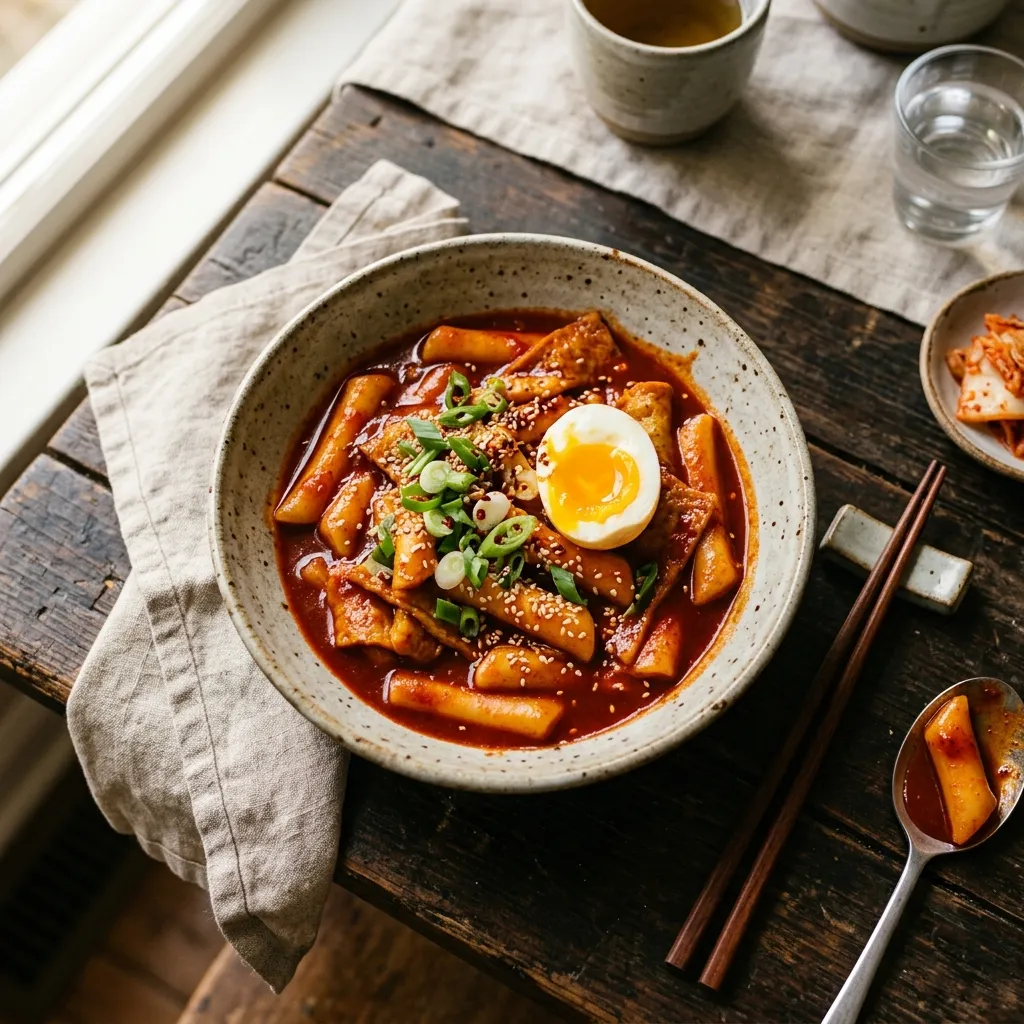
Tteokbokki is chewy rice cakes (tteok) simmered in a spicy-sweet sauce of gochujang (fermented red pepper paste), gochugaru (red pepper flakes), and anchovy stock. The cylindrical white rice cakes transform as they cook — softening from firm and dense to yielding and chewy, absorbing the fiery red sauce until each piece becomes a concentrated delivery vehicle for heat and sweetness in equal measure. Fish cakes (eomuk), boiled eggs, and scallions are common additions, though the core is always the rice cake and its sauce. Modern tteokbokki is Korean street food royalty. Vendors in Seoul's Sindang-dong Tteokbokki Town (an entire alley of competing stalls) have been serving it since the 1950s, when the spicy version displaced an older, milder, soy sauce-based court preparation. That original royal tteokbokki (gungjung tteokbokki) — stir-fried in soy sauce with beef and vegetables — bears little resemblance to today's fiery street food. The transformation happened when a snack vendor named Ma Bok-rim reportedly dropped rice cakes into her jajangmyeon sauce, experimented with gochujang, and created the red, spicy version that now dominates. Ayurvedically, tteokbokki is dominated by three qualities: heavy (from glutinous rice), pungent (from gochujang and gochugaru), and sweet (from sugar and rice). The rice cakes are made from pulverized glutinous rice, making them dense, sticky, and slow to digest. The gochujang itself is a fermented paste — sour, pungent, and heating. This is a high-energy, high-heat food that drives warmth and stimulates circulation powerfully.
Strongly heating and heavy. Pacifies Vata through warmth and groundedness but can overwhelm Vata digestion with stickiness. Aggravates Pitta through intense heat and fermented paste. Best for Kapha in moderate portions for its metabolic stimulation.
Ingredients
- 400 g Cylindrical rice cakes (tteok) (if frozen, soak in warm water for 20 minutes)
- 150 g Fish cakes (eomuk) (cut into triangles)
- 4 pieces Hard-boiled eggs (peeled)
- 2 tbsp Gochujang (Korean fermented red pepper paste)
- 1 tbsp Gochugaru (Korean red pepper flakes)
- 1 tbsp Soy sauce
- 2 tbsp Sugar
- 2 cloves Garlic (minced)
- 2.5 cups Anchovy-kelp stock
- 2 stalks Scallions (cut into 2-inch pieces)
- 1 tsp Sesame seeds (for garnish)
Instructions
- If using frozen rice cakes, soak them in warm water for 20 minutes until they separate easily and become pliable. Fresh rice cakes need no soaking.
- Combine the anchovy-kelp stock, gochujang, gochugaru, soy sauce, sugar, and minced garlic in a wide, shallow pan or pot. Whisk until the paste dissolves into the broth.
- Bring the sauce to a boil over medium-high heat. The color should be deep red and the aroma intensely spicy-sweet.
- Add the rice cakes and fish cake triangles. Stir to coat everything in sauce. Reduce heat to medium and simmer for 8-10 minutes, stirring frequently to prevent the rice cakes from sticking to the bottom.
- Add the hard-boiled eggs and nestle them into the sauce. Continue simmering for another 5 minutes. The sauce will thicken significantly as the rice cakes release starch — this is essential for the glossy, coating consistency.
- Test a rice cake — it should be soft and chewy throughout, with no hard center. If still firm, add a splash of water and continue cooking for 2-3 more minutes.
- Add the scallion pieces in the final minute. Remove from heat, sprinkle with sesame seeds, and serve immediately in the pan or a shallow bowl while the sauce is still bubbling and glossy.
Nutrition
These values are estimates calculated from the ingredient list and may vary based on brands, cooking methods, and serving size. Not a substitute for medical or dietary advice.
How This Recipe Affects Each Dosha
Vata
The warm, heavy, sticky qualities provide grounding that Vata needs, and the heating spices drive warmth into Vata's cold core. However, the dense, glutinous rice cakes are difficult to digest and can create ama (undigested residue) if Vata's already-variable agni cannot handle the load. The sticky quality specifically can obstruct Vata's channels.
Pitta
Tteokbokki is one of the most Pitta-aggravating Korean dishes. The gochujang and gochugaru deliver concentrated heat, the fermented paste adds sour Pitta-increasing quality, and the sugar creates a heating sweet-sour-pungent combination. Pitta types frequently experience acid reflux, facial flushing, or loose stools after eating tteokbokki.
Kapha
The pungent heat of tteokbokki stimulates Kapha's sluggish metabolism powerfully. The gochujang drives circulation and clears congestion. However, the heavy, sticky rice cakes contribute exactly the qualities Kapha needs least — density and adhesiveness. A Kapha-adapted version requires significant modification.
The gochujang and gochugaru powerfully kindle agni — these are concentrated digestive stimulants. However, the heavy, sticky rice cakes simultaneously burden agni with a dense, slow-to-digest load. The net effect depends on the individual's baseline digestive strength: robust agni will handle the combination; weak agni will be overwhelmed.
Nourishes: Rasa (plasma), Meda (fat — from the calorie density), Mamsa (muscle — from fish cake protein)
Adjustments by Constitution
For Vata Types
Reduce the rice cake portion and add soft tofu for easier digestion. Decrease gochugaru and add a teaspoon of sesame oil for unctuousness. Include hearty vegetables like mushrooms and zucchini to lighten the starchy load. Eat a small portion as part of a larger, more varied meal rather than as a standalone dish.
For Pitta Types
Replace gochujang with a mild soy sauce-sesame base (closer to the original royal gungjung tteokbokki). Omit gochugaru entirely. Add cooling vegetables like cabbage and mushrooms. Reduce sugar. This makes a fundamentally different dish, but one that Pitta constitutions can enjoy without consequences.
For Kapha Types
Halve the rice cake quantity and fill the difference with konjac noodles or extra vegetables. Increase gochugaru for more metabolic heat. Add cabbage, mushrooms, and leafy greens. Skip the sugar — Kapha does not need the extra sweetness. Keep the portion small and serve without additional rice.
Seasonal Guidance
Tteokbokki is a cold-weather food. The heating spices and calorie-dense rice cakes serve as fuel during Korea's harsh winters. In spring and summer, the intense heat and heaviness become burdensome rather than comforting. If craving tteokbokki in warm months, opt for the milder gungjung (royal) soy-sauce version.
Best time of day: Afternoon snack or early dinner — the dense rice cakes need active agni to digest, so avoid late-night eating
Cultural Context
Tteokbokki occupies a singular position in Korean food culture as both street food and comfort food, eaten from childhood through old age. In Seoul, Sindang-dong Tteokbokki Town has been operating since the 1950s and remains a destination for locals and tourists. Korean students eat tteokbokki as an after-school snack so universally that it functions as a generational marker — Korean adults associate the taste with adolescence. The dish is endlessly adaptable: rose tteokbokki (with cream sauce), jjajang tteokbokki (with black bean sauce), and cheese tteokbokki represent modern variations. Korean convenience stores stock instant tteokbokki cups, further embedding the dish in daily life.
Deeper Context
Origins
Rice cakes (tteok) are ancient Korean food documented in Goryeo-period (918-1392) texts. The original tteokbokki (gungjung tteokbokki — royal court version) used soy sauce rather than chili paste and was a Joseon-royal-cuisine dish. Modern spicy tteokbokki was invented in 1953 by Ma Bok-rim in Seoul's Sindang-dong district when she accidentally dropped rice cakes into hot pepper paste. The dish became a pojangmacha street-cart staple through the 1960s-80s and is now a canonical Korean youth and popular cuisine dish.
Food as Medicine
Not therapeutically designed. Fermented gochujang provides probiotic content; capsaicin from gochugaru supports metabolic and mucus-clearing effects; anchovy stock contributes iodine and minerals. The dish is primarily comfort food rather than therapeutic, though the spice content genuinely warms and disperses cold in appropriate contexts.
Ritual & Seasonal Role
Year-round Korean street food. Particularly associated with Korean youth culture, after-school snacks, and late-night eating. Not religiously ceremonial but culturally significant in Korean working-class and youth food identity.
Classical Pairings & Cautions
Fish cake skewers (eomuk), boiled egg, beer or makgeolli. Cautions: capsaicin GERD and peptic ulcer aggravation; Pitta substantial; gluten intolerance affects some gochujang brands (tamari-based alternatives available); diabetic monitoring for the rice-cake starch load; sodium substantial; gluten in some fish cake varieties.
Cross-Tradition View
How other medical and food-wisdom traditions read this dish. Each tradition names the same physiological reality in its own language — the agreements across them are where universal principles live.
Traditional Chinese Medicine
Rice cakes are Spleen-Qi-tonifying; gochujang and gochugaru are hot-pungent and disperse cold aggressively; fish cake is salty-warm; anchovy stock contributes Kidney-Yin-supporting foundation. A Qi-building preparation with aggressive dispersing heat — TCM physicians would class tteokbokki as winter cold-damp-clearing food, inappropriate for heat-pattern constitutions.
Greek Humoral
Hot-dry choleric preparation. Inappropriate for choleric and sanguine temperaments; useful for phlegmatic-melancholic types in cold weather. Classical Galenic framework would flag the aggressive spice content for habitual consumers.
Ayurveda
Heating virya, pungent vipaka. Aggravates Pitta substantially through the gochujang-gochugaru combination. Kapha-reducing strongly. Vata mixed — the rice cakes soothe, but the spice heat aggravates sensitive types.
Korean Pojangmacha Street Food
Tteokbokki is quintessential Korean pojangmacha (street cart) food. Rice cakes (tteok) are ancient Korean food, but the modern spicy gochujang-based tteokbokki dates to the 1953 post-Korean-War era, when Ma Bok-rim accidentally dropped rice cakes into hot pepper paste and created the modern preparation at Sindang-dong (Seoul). Cheap accessible street food since — particular cultural weight as a Korean youth comfort food and as a symbol of working-class Korean culinary creativity.
Chef's Notes
Do not walk away from tteokbokki — the rice cakes go from chewy to mushy within minutes of overcooking, and the sauce scorches easily once it thickens. The ideal texture is a rice cake that yields to the teeth with pleasant resistance but has no chalky dry center. If the sauce reduces too fast before the rice cakes are cooked, add water in small splashes. For a richer version, melt a slice of mozzarella cheese on top (this is a popular modern Korean variation called cheese tteokbokki). Gochujang brands vary wildly in heat and sweetness — taste your sauce early and adjust.
Frequently Asked Questions
Is Tteokbokki good for my dosha?
Strongly heating and heavy. Pacifies Vata through warmth and groundedness but can overwhelm Vata digestion with stickiness. Aggravates Pitta through intense heat and fermented paste. Best for Kapha in moderate portions for its metabolic stimulation. The warm, heavy, sticky qualities provide grounding that Vata needs, and the heating spices drive warmth into Vata's cold core. Tteokbokki is one of the most Pitta-aggravating Korean dishes. The pungent heat of tteokbokki stimulates Kapha's sluggish metabolism powerfully.
When is the best time to eat Tteokbokki?
Afternoon snack or early dinner — the dense rice cakes need active agni to digest, so avoid late-night eating Tteokbokki is a cold-weather food. The heating spices and calorie-dense rice cakes serve as fuel during Korea's harsh winters. In spring and summer, the intense heat and heaviness become burdensome ra
How can I adjust Tteokbokki for my constitution?
For Vata types: Reduce the rice cake portion and add soft tofu for easier digestion. Decrease gochugaru and add a teaspoon of sesame oil for unctuousness. Include hea For Pitta types: Replace gochujang with a mild soy sauce-sesame base (closer to the original royal gungjung tteokbokki). Omit gochugaru entirely. Add cooling vegetable
What are the Ayurvedic properties of Tteokbokki?
Tteokbokki has Pungent, Sweet, Salty, Sour taste (rasa), Heating energy (virya), and Pungent post-digestive effect (vipaka). Its qualities (gunas) are Heavy, Warm, Sticky. It nourishes Rasa (plasma), Meda (fat — from the calorie density), Mamsa (muscle — from fish cake protein). The gochujang and gochugaru powerfully kindle agni — these are concentrated digestive stimulants. However, the heavy, sticky rice cakes simultaneously burden agni with a dense, slow-to-digest load. The net effect depends on the individual's baseline digestive strength: robust agni will handle the combination; weak agni will be overwhelmed.