Tonkotsu Ramen
Japanese Recipe
Overview
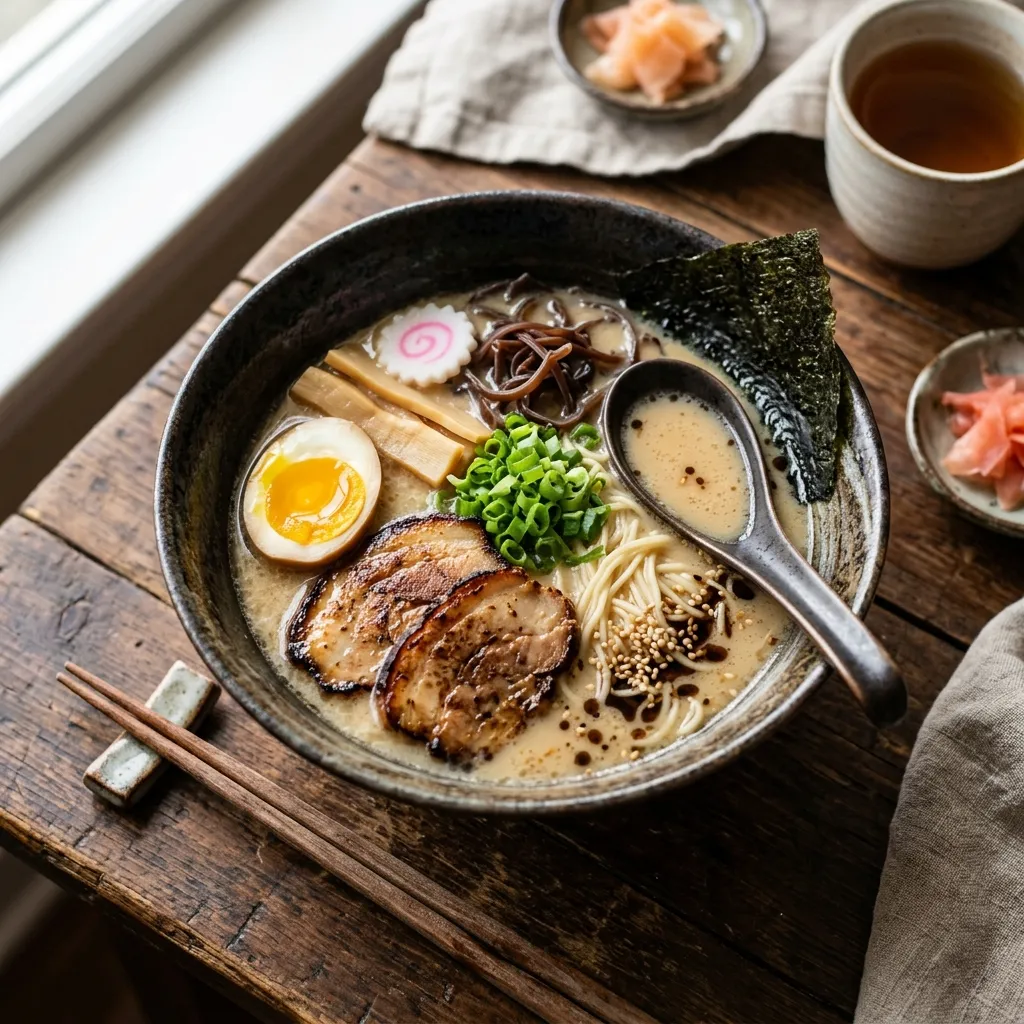
Tonkotsu ramen originated in Fukuoka, on Japan's southern island of Kyushu, in the late 1930s or 1940s. The broth is made by boiling pork bones at a hard, rolling boil for 12-18 hours until the collagen, marrow, and fat emulsify into a thick, opaque, ivory-white soup. This violent boiling is the opposite of the gentle simmering used for clear stocks — the turbulence is what forces the fat and gelatin into permanent emulsion, creating the characteristic creamy consistency. The result is among the richest broths in world cuisine. A bowl of tonkotsu ramen is an assembly of precisely prepared components. The broth forms the foundation. Tare (a concentrated seasoning base, typically soy or salt-based) provides salinity and umami. Thin, straight noodles (hosomen) are cooked to precise firmness — Fukuoka style prefers "bari-kata" (very firm). Toppings include chashu (braised pork belly), a soft-boiled egg marinated in soy and mirin (ajitama), sliced scallions, wood ear mushrooms, pickled ginger, and mayu (black garlic oil). Ayurvedically, tonkotsu ramen is a deeply nourishing, heavy, heating preparation. The collagen-rich bone broth is a building food that nourishes every dhatu from rasa to shukra. The pork fat creates intense oleation. The wheat noodles add dense carbohydrate energy. The soy-based tare and garlic oil increase the heating, pungent dimension. This is a meal designed to generate internal heat and sustain the body through physical labor or cold weather.
Intensely nourishing and building. The collagen-rich broth, fatty pork, and wheat noodles create a deeply grounding meal that strongly pacifies Vata. Significantly increases Kapha. The heating garlic, ginger, and fermented soy moderately provoke Pitta.
Bone broth-based ramen nourishes all seven dhatus, from plasma to reproductive tissue. The collagen supports joint health, skin elasticity, and gut lining repair. Useful for recovery from wasting, exhaustion, or prolonged cold exposure. The rich fat content makes it inappropriate for those with ama or sluggish digestion.
Ingredients
- 2 kg Pork leg bones (cut into 3-inch pieces by your butcher)
- 200 g Pork fatback (optional, for extra richness)
- 3 inches Fresh ginger (sliced)
- 1 head Garlic (halved crosswise)
- 4 stalks Scallions (green parts for broth, whites for topping)
- 400 g Fresh ramen noodles (thin, straight style)
- 500 g Pork belly (for chashu)
- 100 ml Soy sauce (for tare and chashu)
- 50 ml Mirin
- 50 ml Sake
- 1 tbsp Sugar
- 4 large Eggs (for ajitama)
- 1 tbsp Sesame oil
- 4 pieces Nori sheets (cut in half)
- 30 g Wood ear mushrooms (dried, rehydrated and sliced)
- 2 tbsp Black garlic oil (mayu) (optional)
Instructions
- Prepare the bones: place the pork bones in a large pot, cover with cold water, and bring to a boil. Boil for 10 minutes, then drain and rinse each bone under cold water, scrubbing away any dark impurities. This blanching step removes blood and scum that would otherwise cloud and muddy the broth. Clean the pot thoroughly.
- Return the cleaned bones to the pot with the pork fatback (if using), ginger, garlic, and scallion greens. Add enough cold water to cover by 2 inches — about 4 liters. Bring to a hard, rolling boil over high heat.
- Maintain a vigorous boil (not a gentle simmer — the violent agitation is essential) for 10-12 hours, adding water as needed to keep the bones submerged. The broth will gradually turn from clear to cloudy to opaque white as the collagen and fat emulsify. Stir occasionally and scrape the bottom to prevent sticking. After 10-12 hours, the broth should be thick, creamy, and coat the back of a spoon.
- While the broth cooks, prepare the chashu: roll the pork belly into a tight cylinder and tie with kitchen twine. Sear in a hot pan until golden on all sides. Combine the soy sauce, mirin, sake, and sugar in a small pot, add the pork belly, and braise at a gentle simmer for 2-3 hours until fork-tender. Let cool in the braising liquid.
- Prepare the ajitama: soft-boil the eggs for 6 minutes and 30 seconds, then immediately transfer to an ice bath. Peel carefully. Submerge in a mixture of 1/4 cup soy sauce, 1/4 cup mirin, and 1/4 cup water. Marinate for at least 4 hours, or overnight.
- Make the tare: in a small saucepan, combine 3 tablespoons soy sauce with 1 tablespoon mirin, 1 teaspoon sesame oil, and a splash of the chashu braising liquid. Warm gently — do not boil.
- To assemble: strain the broth through a fine-mesh sieve, pressing the solids to extract all the creamy liquid. Season with salt. Cook the ramen noodles in a separate pot of boiling water for 1-2 minutes until just firm (not soft). Place 2 tablespoons of tare in each bowl, ladle in the hot broth, and stir to combine. Add the drained noodles.
- Slice the chashu into 1/4-inch rounds. Halve the marinated eggs. Top each bowl with 3-4 slices of chashu, half an ajitama, sliced scallion whites, rehydrated wood ear mushrooms, a sheet of nori, and a drizzle of mayu. Serve immediately — ramen waits for no one.
Nutrition
These values are estimates calculated from the ingredient list and may vary based on brands, cooking methods, and serving size. Not a substitute for medical or dietary advice.
How This Recipe Affects Each Dosha
Vata
Tonkotsu ramen is among the most Vata-pacifying foods in world cuisine. The warm, heavy, oily, liquid broth delivers oleation directly to Vata's dry, depleted tissues. The collagen rebuilds connective tissue. The noodles ground restless Vata energy. The overall warmth and density create a sense of deep nourishment and stability. This is the kind of food that makes Vata types feel held.
Pitta
The rich, fatty broth generates substantial internal heat. Garlic, ginger, soy sauce, and black garlic oil compound the heating effect. Pork is one of the more heating meats. Pitta types can enjoy ramen in cooler weather but should choose lighter broth styles (shio or shoyu) over tonkotsu. In summer, this dish is strongly Pitta-provoking.
Kapha
Tonkotsu hits every Kapha-aggravating quality: heavy, oily, dense, sweet. The pork fat emulsified into the broth is pure unctuousness. The wheat noodles add dense carbohydrate energy. The overall meal is building and congesting for constitutions that already have excess Kapha. Small, infrequent portions in deep winter are the most appropriate approach.
The ginger, garlic, and fermented soy in the tare support digestion of the rich broth, but the sheer density and fat content of tonkotsu still demands robust agni. Those with weak digestive fire may feel heavy and sluggish after a full bowl. The warm, liquid form does make nutrients more accessible than a solid meal of equivalent density.
Nourishes: Rasa (plasma), Rakta (blood), Mamsa (muscle), Meda (fat), Asthi (bone), Majja (marrow), Shukra (reproductive)
Adjustments by Constitution
For Vata Types
The standard preparation is ideal for Vata. Add extra ginger to the broth and include nori for its mineral content. A drizzle of chili oil adds warming stimulation without overwhelming. Keep the noodle portion generous and the egg yolk runny.
For Pitta Types
Switch to a shio (salt) or shoyu (soy sauce) ramen with a lighter chicken broth instead of tonkotsu. Omit garlic oil. Add cooling toppings: blanched spinach, bamboo shoots, and corn. Replace pork belly chashu with lean chicken breast. Use less soy in the tare.
For Kapha Types
Use a lighter tonkotsu (shorter cook time, less fat) or switch to a spicy miso broth. Halve the noodle portion and add extra vegetables: bean sprouts, cabbage, mushrooms, and corn. Request bari-kata (very firm) noodles — firmer noodles are less Kapha-aggravating. Add generous chili oil or rayu for pungent heat.
Seasonal Guidance
Tonkotsu ramen is a cold-weather food. The intense warming, building, oleating qualities are designed for harsh winters — Fukuoka, where it originated, has cold, damp winters that call for exactly this kind of fortification. In summer, the heavy, heating combination creates excess heat and sluggishness. Spring requires lighter preparations as the body sheds winter accumulation.
Best time of day: Lunch when agni peaks, or dinner on cold evenings when the body needs warming and sustenance before rest
Cultural Context
Ramen arrived in Japan through Chinese immigrants in the late 19th century and underwent a radical transformation in the decades after World War II. Tonkotsu specifically emerged in the Hakata district of Fukuoka — the original Hakata ramen shops were tiny, counter-only operations where a single cook tended a perpetual broth. The "kaedama" system (ordering an extra portion of noodles to add to remaining broth) originated here and reflects the dish's street-food efficiency. Japan now has over 30,000 ramen shops, regional ramen tourism is a significant industry, and the Shin-Yokohama Ramen Museum chronicles the dish's evolution from Chinese import to Japan's de facto national comfort food.
Deeper Context
Origins
Ramen arrived in Japan from China in the late 19th-early 20th century, with Yokohama Chinatown serving as the primary entry point. Regional Japanese ramen styles developed distinctly: Sapporo miso ramen, Kitakata shio ramen, Kyushu Hakata tonkotsu ramen. Tonkotsu specifically emerged in the 1930s-50s as Fukuoka regional cuisine. Post-WWII Japanese ramen culture exploded through the 1970s-90s, and global ramen tourism cemented tonkotsu as one of Japan's most internationally-recognized dishes.
Food as Medicine
Pork bone broth provides substantial gelatin, glycine, proline, and minerals extracted through the long cookery. Modern gut-health research validates bone-broth preparations for digestive repair and joint support. Soft-boiled egg adds complete protein and choline. Pork belly contributes fat-soluble vitamins. The dish is nutritionally dense — a concentrated restoration preparation despite its indulgent reputation.
Ritual & Seasonal Role
Year-round restaurant food. Winter peak when the warm rich broth is particularly welcome. Not religiously ceremonial but deeply tied to Japanese ramen culture and to Kyushu regional identity.
Classical Pairings & Cautions
Gyoza, pickled bamboo shoots (menma), soft-boiled egg on top. Beer or sake. Cautions: religious pork restrictions; sodium load substantial; gluten intolerance precludes traditional noodles; soy allergies; gout patients should moderate the purine-heavy broth; the 6-12 hour preparation time limits this to restaurant or occasion cookery.
Cross-Tradition View
How other medical and food-wisdom traditions read this dish. Each tradition names the same physiological reality in its own language — the agreements across them are where universal principles live.
Traditional Chinese Medicine
Pork bones build Kidney Jing (Essence) substantially — marrow specifically is the most prized TCM tonic for Jing; ramen noodles are Spleen-Qi-tonifying; pork belly is Yin-and-Qi tonifying; soy sauce is salty-warm and supports Kidney; soft-boiled egg builds Yin and Blood. A comprehensive Yin-Qi-and-Jing tonic — TCM physicians would class this as powerful restoration food, though excessive for habitual consumption due to damp-heat generation.
Greek Humoral
Hot-wet sanguine-building aggressively. A Galenic feast or convalescent preparation — the long-simmered pork-bone broth matches classical Hippocratic endorsement of extended cookery for making hard-to-digest foods accessible to weak constitutions.
Ayurveda
Heating virya, sweet vipaka. Pacifies Vata strongly through protein, marrow, and extended-braise unctuousness. Aggravates Kapha substantially. Aggravates Pitta through pork-bone heat. Pork is heavy and tamasic in classical Ayurveda — tonkotsu is festival food rather than daily eating.
Fukuoka Hakata
Tonkotsu ramen is specifically a Fukuoka-Hakata regional style — long-boiled pork-bone white broth (unlike clear-broth regional ramen variants), thin straight noodles, pork belly chashu, soft-boiled egg, pickled mustard greens. The style developed in the 1930s-50s in Kyushu and spread globally through ramen-chain expansion in the 2000s-2010s (Ippudo, Ichiran). The Hakata ramen lineage is specifically protected by regional culinary identity.
Chef's Notes
Tonkotsu broth cannot be rushed. The 10-12 hour boil is the minimum for proper emulsification — some shops in Fukuoka maintain a perpetual broth, adding fresh bones and water to a pot that has been boiling continuously for years. Use a pressure cooker to reduce the time to 3-4 hours if needed, though purists note a difference in body. The noodles must be cooked separately and added to the assembled bowl at the last second — cooking them in the broth makes both the noodles and broth starchy and muddy. Noodle firmness is a personal preference; order "kata" (firm) at a ramen shop if you want the Fukuoka experience. The ajitama egg should have a custardy, jammy center — 6 minutes 30 seconds in boiling water, then immediate ice bath, is the standard.
Frequently Asked Questions
Is Tonkotsu Ramen good for my dosha?
Intensely nourishing and building. The collagen-rich broth, fatty pork, and wheat noodles create a deeply grounding meal that strongly pacifies Vata. Significantly increases Kapha. The heating garlic, ginger, and fermented soy moderately provoke Pitta. Tonkotsu ramen is among the most Vata-pacifying foods in world cuisine. The rich, fatty broth generates substantial internal heat. Tonkotsu hits every Kapha-aggravating quality: heavy, oily, dense, sweet.
When is the best time to eat Tonkotsu Ramen?
Lunch when agni peaks, or dinner on cold evenings when the body needs warming and sustenance before rest Tonkotsu ramen is a cold-weather food. The intense warming, building, oleating qualities are designed for harsh winters — Fukuoka, where it originated, has cold, damp winters that call for exactly thi
How can I adjust Tonkotsu Ramen for my constitution?
For Vata types: The standard preparation is ideal for Vata. Add extra ginger to the broth and include nori for its mineral content. A drizzle of chili oil adds warmin For Pitta types: Switch to a shio (salt) or shoyu (soy sauce) ramen with a lighter chicken broth instead of tonkotsu. Omit garlic oil. Add cooling toppings: blanched s
What are the Ayurvedic properties of Tonkotsu Ramen?
Tonkotsu Ramen has Sweet, Salty, Pungent taste (rasa), Heating energy (virya), and Sweet post-digestive effect (vipaka). Its qualities (gunas) are Heavy, Oily, Warm, Dense, Liquid. It nourishes Rasa (plasma), Rakta (blood), Mamsa (muscle), Meda (fat), Asthi (bone), Majja (marrow), Shukra (reproductive). The ginger, garlic, and fermented soy in the tare support digestion of the rich broth, but the sheer density and fat content of tonkotsu still demands robust agni. Those with weak digestive fire may feel heavy and sluggish after a full bowl. The warm, liquid form does make nutrients more accessible than a solid meal of equivalent density.