Tomato Soup
American Recipe
Overview
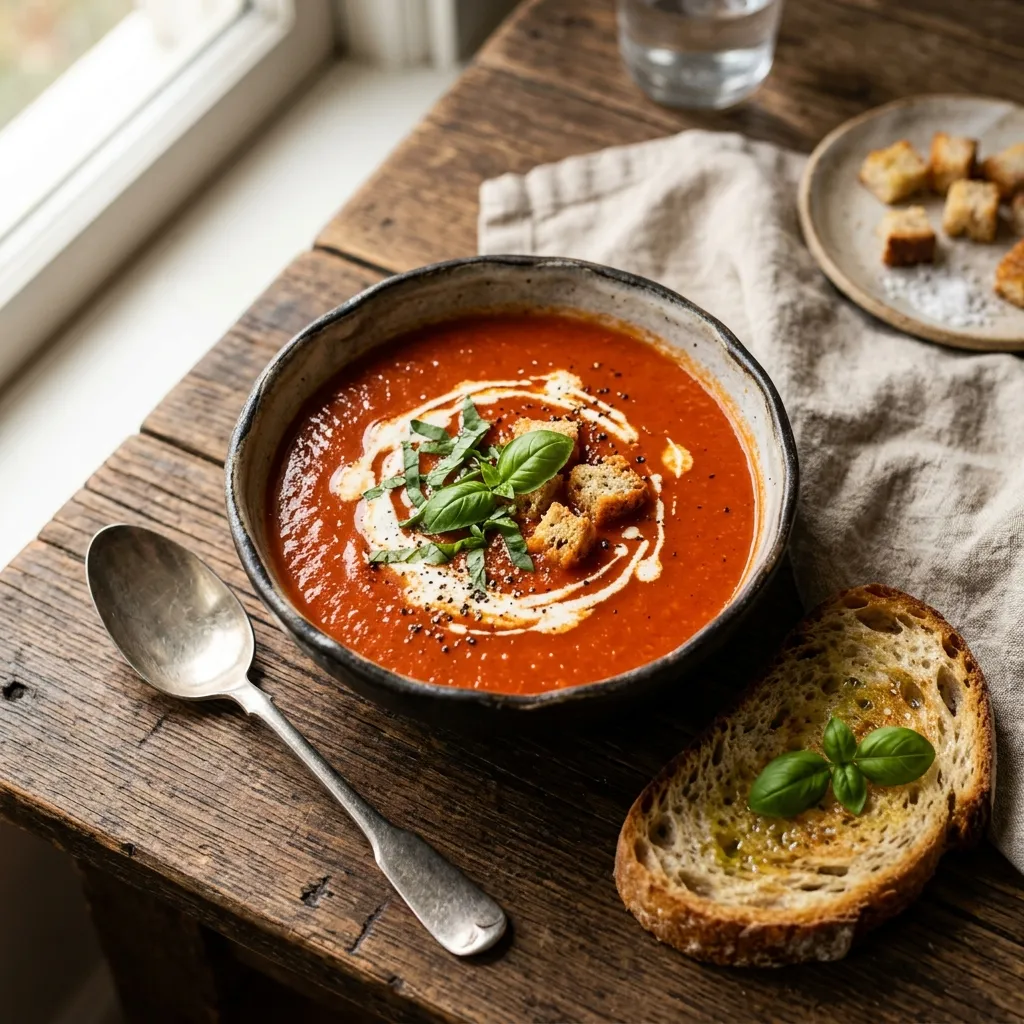
Tomato soup entered American kitchens through Campbell's condensed version in 1897, but scratch-made tomato soup predates that by decades, appearing in cookbooks from the 1850s onward. The dish combines tomatoes with aromatic vegetables, often finished with cream or butter, and served alongside grilled cheese sandwiches in a pairing so ubiquitous it has become a cultural shorthand for comfort food. Regional variations abound — some use roasted tomatoes for deeper flavor, others add basil or red pepper flakes, and cream content ranges from none to generous. From an Ayurvedic perspective, tomato soup presents an interesting duality. Tomatoes are sour and heating, which stimulates agni (digestive fire) effectively, but their acidity and nightshade classification make them aggravating for pitta in excess. The addition of cream and butter introduces sweet rasa and cooling virya that partially offset the tomato's heat, creating a more balanced preparation. Onion and garlic add pungency that supports digestion and circulation. This soup works best in autumn and winter when its warming nature counters cold weather and its grounding heaviness satisfies vata's need for stability. Spring preparation benefits from reducing cream and adding black pepper to counteract kapha's seasonal tendency toward congestion. The liquid format makes nutrients highly bioavailable, and the cooked tomatoes provide lycopene in a form the body absorbs more readily than from raw fruit.
Tomato soup's sour and heating nature stimulates pitta and can aggravate it in excess, while its warmth and moisture help pacify vata. Kapha benefits from the heating quality but may find the cream version too heavy.
Warm tomato soup serves as a recovery food during colds and respiratory congestion due to its heating nature and liquid format, which helps loosen mucus and stimulate circulation. The lycopene in cooked tomatoes has documented antioxidant activity, and the combination of garlic and onion provides additional immune support during illness.
Ingredients
- two 28-oz cans canned whole tomatoes (San Marzano preferred)
- 1 large yellow onion (diced)
- 4 cloves garlic (minced)
- 1 medium carrot (diced, adds natural sweetness)
- 2 stalks celery (diced)
- 3 tablespoons butter
- 2 tablespoons olive oil
- 1/2 cup heavy cream (optional)
- 2 cups vegetable broth
- 2 tablespoons tomato paste
- 1 teaspoon dried basil
- 1/2 teaspoon dried oregano
- 1 teaspoon sugar (to balance acidity)
- 1 teaspoon salt
- 1/2 teaspoon black pepper
- 1/4 cup fresh basil (for garnish)
Instructions
- Melt butter with olive oil in a large Dutch oven or heavy-bottomed pot over medium heat. Add the diced onion, carrot, and celery and cook for 8-10 minutes, stirring occasionally, until the onion is translucent and the vegetables have softened.
- Add the minced garlic and tomato paste. Stir continuously for 1-2 minutes until the paste darkens slightly and the garlic is fragrant. This step deepens the flavor base considerably.
- Pour in the canned whole tomatoes with their juices, breaking them up with a wooden spoon or your hands as you add them. Add the vegetable broth, dried basil, dried oregano, sugar, salt, and black pepper.
- Bring the mixture to a boil, then reduce heat to low and simmer uncovered for 25-30 minutes. The liquid will reduce slightly and the flavors will concentrate. Stir every 10 minutes to prevent sticking.
- Remove the pot from heat and let it cool for 5 minutes. Using an immersion blender, puree the soup until smooth. Alternatively, carefully transfer in batches to a countertop blender, filling no more than halfway each time and venting the lid to prevent pressure buildup.
- Return the pureed soup to low heat. If using cream, stir it in now and warm through for 2-3 minutes without boiling. Taste and adjust salt, pepper, and sugar as needed — the soup should taste bright but not sharply acidic.
- Ladle into bowls and garnish with torn fresh basil leaves. Serve immediately with crusty bread or grilled cheese sandwiches.
Nutrition
These values are estimates calculated from the ingredient list and may vary based on brands, cooking methods, and serving size. Not a substitute for medical or dietary advice.
How This Recipe Affects Each Dosha
Vata
The warm, liquid, and moist qualities of tomato soup directly address vata's cold, dry, and light tendencies. The butter and cream add the unctuousness (snigdha) that vata requires for proper tissue nourishment. The sour taste stimulates appetite and supports vata's often variable digestion. However, the lightness of a broth-based soup without cream may not provide enough grounding for severely aggravated vata — pairing with bread or grains adds the needed heaviness.
Pitta
Tomatoes are inherently pitta-aggravating due to their sour taste, heating virya, and nightshade classification. The acidic quality (amla rasa) increases bile production and can inflame pitta-type digestive issues including acid reflux and gastritis. The garlic and onion add further heat. Cream provides some cooling offset, but this soup should be consumed in moderation by pitta-dominant individuals, particularly during summer months when pitta is already elevated.
Kapha
The heating and light qualities of tomato soup support kapha by stimulating sluggish digestion and promoting circulation. The sour taste encourages appetite, which kapha types often lack in the morning. However, the cream and butter add heaviness and moisture that kapha does not need, and the sweet vipaka of dairy contributes to the congestion and weight gain kapha is prone to. A cream-free version with extra black pepper serves kapha best.
Tomato soup kindles agni through its sour taste and heating virya, making it an effective appetite stimulant. The combination of cooked onion, garlic, and black pepper further supports the digestive fire. In Ayurvedic terms, this preparation can help clear mild ama when made without cream, though the cream version may slightly dampen agni for those with already weak digestion.
Nourishes: Rasa (plasma), Rakta (blood)
Adjustments by Constitution
For Vata Types
Add an extra tablespoon of butter or ghee and use the full amount of cream to increase unctuousness. Stir in a pinch of cumin and a pinch of asafoetida (hing) while sauteing the onions to reduce the gas-producing potential of tomatoes. Serve with buttered sourdough bread for additional grounding. A dollop of sour cream on top adds both fat and fermented quality that vata digestion handles well.
For Pitta Types
Replace half the tomatoes with roasted red bell peppers to reduce overall acidity. Omit the garlic entirely and reduce onion by half. Use coconut cream instead of heavy cream for its cooling quality. Add a generous handful of fresh cilantro at serving rather than basil. Stir in 1/2 teaspoon of fennel powder during cooking — fennel's sweet and cooling nature directly counteracts the tomato's pitta-aggravating properties. Avoid serving with spicy accompaniments.
For Kapha Types
Omit the cream and butter entirely. Use only olive oil for sauteing and reduce it to 1 tablespoon. Add 1/2 teaspoon cayenne pepper or red pepper flakes and 1 teaspoon freshly grated ginger during cooking to amplify the heating, metabolism-stimulating quality. Include a generous amount of black pepper. Serve the soup thin rather than thick, and pair with a small amount of toasted rye bread rather than buttery white bread.
Seasonal Guidance
Best suited to autumn and winter when its warming properties counter environmental cold and the body craves liquid nourishment. In spring, reduce or omit cream and add extra black pepper and ginger to prevent kapha accumulation. Avoid during hot summer months when pitta is already elevated — the sour, heating combination can provoke acid reflux and skin inflammation.
Best time of day: Serve at lunch when digestive fire peaks, maximizing the body's ability to process the tomato's acidity and extract nutrients. As an evening meal, consume at least 2-3 hours before bed to allow digestion to complete.
Cultural Context
Tomato soup became an American staple after Joseph Campbell began selling condensed tomato soup in 1897 for 10 cents a can, making it accessible to working-class families nationwide. Andy Warhol cemented its cultural icon status with his 1962 Campbell's Soup Cans paintings. The pairing of tomato soup with grilled cheese sandwiches emerged during the Great Depression when both were affordable and filling. Regional variations include Manhattan-style with chunky vegetables and cream-free preparations common in the South.
Deeper Context
Origins
Tomato is an Aztec domesticate, transported to Europe via Spanish colonial trade in the early 1500s. European adoption was slow — 16th and 17th century European doctors feared the tomato as nightshade-family (potentially toxic), and widespread culinary use in Italy and France only stabilized in the 18th century. Cream-of-tomato soup in its current form emerged through British and French recipe traditions in the 19th century; Campbell's Condensed Tomato Soup (1897) made it an American pantry staple.
Food as Medicine
Lycopene (the red pigment in cooked tomato) has substantial modern research support for cardiovascular and prostate health — notably increased in bioavailability by cooking and by fat pairing. The tomato-basil folk combination appears in Italian and Provençal traditional medicine as a digestive aid. Cream adds classical convalescent-food quality across European traditions. The Campbell's-and-grilled-cheese sick-day ritual functions as domestic food-as-medicine even when the chemistry is modest.
Ritual & Seasonal Role
Paired with grilled cheese as one of the most culturally-recognized American food rituals — the sick-day lunch, the diner comfort meal, the cold-weather quick supper. Year-round but peaks in autumn and winter. Not religiously ceremonial, but deeply embedded in American illness-care and childhood-comfort memory.
Classical Pairings & Cautions
Grilled cheese (the classical pairing), oyster crackers, goldfish crackers, a grilled-cheese panini for a modern form. Cautions: GERD and acid reflux aggravation from tomato acid; nightshade-family allergies or sensitivities (fibromyalgia, autoimmune); Pitta aggravation in hot weather; dairy sensitivity precludes the cream base — coconut-cream or cashew-cream versions approximate; commercial canned versions carry substantial sodium and added sugar.
Cross-Tradition View
How other medical and food-wisdom traditions read this dish. Each tradition names the same physiological reality in its own language — the agreements across them are where universal principles live.
Traditional Chinese Medicine
Tomato is cool-sour and moves Liver Qi; cream is cool-sweet and builds Yin; basil is warm-aromatic and disperses Qi stagnation; garlic is warm-pungent and disperses cold. A Liver-Qi-moving Yin-building preparation with mild dispersing quality. TCM physicians would prescribe similar preparations for Liver-Qi-stuck irritability with underlying Yin deficiency, particularly in spring.
Greek Humoral
Hot-sour-wet temperament. Sanguine-phlegmatic balance. Traditional Italian-Mediterranean tomato-cream preparations appear in 19th-century cookbooks as Galenic-inspired convalescent foods. The basil and garlic provide the hot-dry correction that prevents the tomato-cream base from becoming too phlegmatic.
Ayurveda
Heating virya (tomato is slightly heating when cooked), sour vipaka. Pitta-aggravating substantially — the tomato-garlic combination is one of the more reliably Pitta-disturbing preparations in Western cookery. Vata-neutral with cream present. Kapha-aggravating through the cream-and-starchy-sweetness of tomato.
Mesoamerican Tomato Heritage
Tomato (xitomatl in Nahuatl) was domesticated in Mesoamerica approximately 7,000 years ago. Pre-Columbian Nahua peoples used cooked tomato for fever-cooling and for skin conditions, with tomato-leaf decoctions appearing in medicinal uses documented by post-conquest Spanish chroniclers. Global tomato cuisine is post-Columbian — no Italian pasta sauce existed before the 1500s. The cream-tomato soup specifically is a British-French-American invention of the 19th and 20th centuries built on Mesoamerican foundation.
Chef's Notes
San Marzano tomatoes make a noticeable difference — their lower acidity and sweeter flesh produce a smoother, less sharp soup. If using regular canned tomatoes, you may need an extra teaspoon of sugar. The soup freezes well for up to 3 months; freeze without cream and add it when reheating. For a roasted variation, halve fresh Roma tomatoes, toss with olive oil and salt, and roast at 400°F for 35 minutes before adding to the pot — this caramelization adds depth that canned tomatoes cannot match. A tablespoon of miso paste stirred in at the end adds umami complexity without detectably changing the flavor profile.
Frequently Asked Questions
Is Tomato Soup good for my dosha?
Tomato soup's sour and heating nature stimulates pitta and can aggravate it in excess, while its warmth and moisture help pacify vata. Kapha benefits from the heating quality but may find the cream version too heavy. The warm, liquid, and moist qualities of tomato soup directly address vata's cold, dry, and light tendencies. Tomatoes are inherently pitta-aggravating due to their sour taste, heating virya, and nightshade classification. The heating and light qualities of tomato soup support kapha by stimulating sluggish digestion and promoting circulation.
When is the best time to eat Tomato Soup?
Serve at lunch when digestive fire peaks, maximizing the body's ability to process the tomato's acidity and extract nutrients. As an evening meal, consume at least 2-3 hours before bed to allow digestion to complete. Best suited to autumn and winter when its warming properties counter environmental cold and the body craves liquid nourishment. In spring, reduce or omit cream and add extra black pepper and ginger to
How can I adjust Tomato Soup for my constitution?
For Vata types: Add an extra tablespoon of butter or ghee and use the full amount of cream to increase unctuousness. Stir in a pinch of cumin and a pinch of asafoetid For Pitta types: Replace half the tomatoes with roasted red bell peppers to reduce overall acidity. Omit the garlic entirely and reduce onion by half. Use coconut crea
What are the Ayurvedic properties of Tomato Soup?
Tomato Soup has Sour, Sweet taste (rasa), Heating energy (virya), and Sour post-digestive effect (vipaka). Its qualities (gunas) are Light, Moist, Hot. It nourishes Rasa (plasma), Rakta (blood). Tomato soup kindles agni through its sour taste and heating virya, making it an effective appetite stimulant. The combination of cooked onion, garlic, and black pepper further supports the digestive fire. In Ayurvedic terms, this preparation can help clear mild ama when made without cream, though the cream version may slightly dampen agni for those with already weak digestion.