Tuna Salad
American Recipe
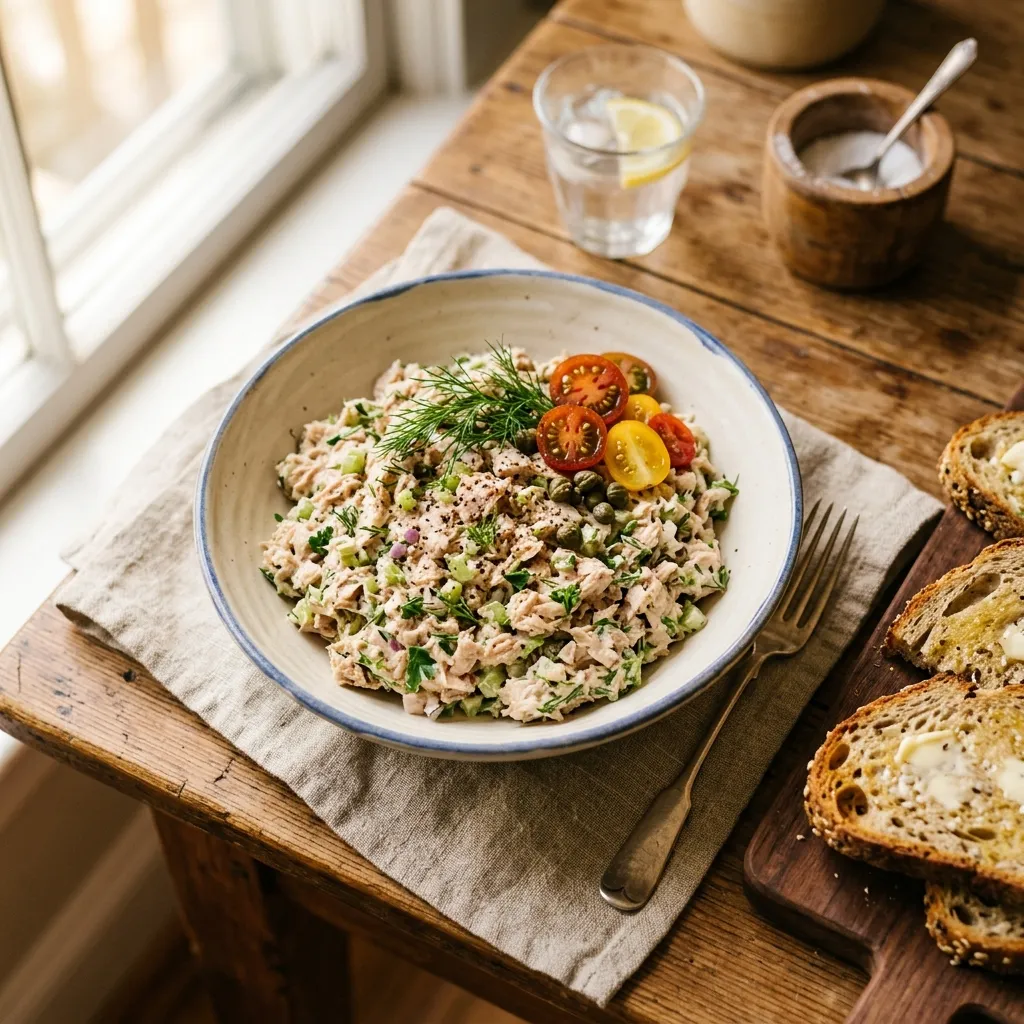
Overview
Tuna salad as Americans know it — canned tuna mixed with mayonnaise, celery, and seasonings — became a household staple during World War II when canned fish was plentiful and affordable while fresh meat was rationed. Before commercial canning, tuna was rarely eaten in the United States; the first American tuna cannery opened in San Pedro, California in 1903. By the 1950s, tuna salad sandwiches had become the default school lunch and office cafeteria offering, a position they still hold. Ayurvedically, tuna is a tamasic food in its canned form — the high heat processing and extended shelf life reduce its pranic (vital energy) content compared to fresh fish. The fish itself carries sweet and salty rasas with a heating virya, making it protein-dense and tissue-nourishing but potentially pitta-aggravating. Mayonnaise adds oiliness and heaviness. The celery and lemon juice provide important counterbalancing qualities: celery is cooling, light, and mildly bitter, while lemon stimulates agni and helps the body process the heavy protein. Despite its tamasic base, tuna salad offers practical nutritive value — complete protein, omega-3 fatty acids, and minerals including selenium and vitamin D. The preparation method matters: generous celery, a touch of acid, and restraint with mayonnaise produce a lighter version that digestion handles more efficiently. Fresh herbs elevate both the prana and the flavor considerably.
Tuna salad's heavy, oily, and heating nature strongly nourishes vata but requires pitta types to eat in moderation due to the salty, heating combination. Kapha types should reduce the mayonnaise and increase the celery and lemon to prevent stagnation.
Tuna's high protein and omega-3 content make it supportive during recovery from illness or physical exertion, particularly for rebuilding mamsa dhatu (muscle tissue). The selenium content supports thyroid function, and vitamin D supports bone and immune health. The cold preparation preserves the heat-sensitive omega-3 fatty acids better than cooked fish preparations.
Ingredients
- 2 5-oz cans canned albacore tuna (drained well)
- 3 tablespoons mayonnaise
- 2 stalks celery (finely diced)
- 2 tablespoons red onion (finely minced)
- 1 tablespoon lemon juice (fresh)
- 1 teaspoon Dijon mustard
- 1 tablespoon fresh dill (chopped)
- 1 tablespoon capers (drained and roughly chopped)
- 1/4 teaspoon salt
- 1/4 teaspoon black pepper
- 1/4 teaspoon celery salt
Instructions
- Open the cans of tuna and drain thoroughly, pressing the fish against the lid or strainer to extract as much liquid as possible. Excess moisture makes the salad watery and dilutes flavors. Place the drained tuna in a medium mixing bowl.
- Use a fork to break the tuna into flakes — the texture should have some variation, with both fine flakes and small chunks. Over-mashing produces a paste-like consistency that lacks the textural interest the salad needs.
- In a small bowl, whisk together the mayonnaise, lemon juice, Dijon mustard, salt, black pepper, and celery salt until smooth. This pre-mixing ensures even seasoning distribution rather than pockets of mustard or unmixed mayo.
- Add the finely diced celery, minced red onion, chopped capers, and fresh dill to the tuna. Toss gently with a fork to distribute the vegetables evenly through the fish.
- Pour the dressing mixture over the tuna and vegetables. Fold together using a rubber spatula or fork until everything is evenly coated but not compacted. The salad should look moist but not swimming in dressing.
- Taste and adjust seasoning — tuna salad often needs more lemon juice or salt than expected. The flavors will meld and intensify slightly after chilling.
- Cover and refrigerate for at least 20 minutes before serving. This resting period allows the celery to release some moisture into the salad and the flavors to integrate. Serve on toasted bread, in lettuce wraps, with crackers, or over a bed of greens.
Nutrition
These values are estimates calculated from the ingredient list and may vary based on brands, cooking methods, and serving size. Not a substitute for medical or dietary advice.
How This Recipe Affects Each Dosha
Vata
Tuna salad offers grounding qualities that vata needs — protein-dense, moist from the mayonnaise, and satisfying in a way that addresses vata's tendency to feel unanchored. The omega-3 fatty acids in tuna nourish the nervous system, which is vata's primary domain. The celery's lightness prevents the salad from being excessively heavy. However, the cold temperature of refrigerated tuna salad can challenge vata digestion, which prefers warm foods. Eating at room temperature or in a warm sandwich partially mitigates this.
Pitta
The heating virya of tuna combines with salty rasa and the oiliness of mayonnaise to create a pitta-provocative profile. Fish generally increases pitta, and canned fish with its concentrated salty quality does so more than fresh. The lemon juice adds further sour, heating quality. The celery and dill offer modest cooling, but they are minority ingredients. Pitta types who eat tuna salad regularly may notice increased skin inflammation, acid reflux, or irritability during warm months.
Kapha
The heavy, oily, and dense qualities of tuna salad with full mayonnaise feed kapha's tendency toward congestion and slow metabolism. The sweet rasa of the tuna and the cold serving temperature further dampen kapha's already sluggish agni. However, the protein content supports muscle maintenance that kapha types need for their heavier frames. The lemon and mustard provide some metabolic stimulation. Kapha types need a significantly modified version with reduced mayo and added spice.
The cold, heavy nature of tuna salad requires moderate to strong agni for proper digestion. The lemon juice and mustard support digestive fire, but the dense protein and oiliness demand efficient stomach acid production. Those with weak agni may feel heavy or sluggish after eating tuna salad, a sign that the preparation is producing ama rather than proper nutrition.
Nourishes: Rasa (plasma), Rakta (blood), Mamsa (muscle), Asthi (bone)
Adjustments by Constitution
For Vata Types
Serve the tuna salad in a warm sandwich or melt rather than cold on a plate. Add a pinch of ground cumin and a small amount of freshly grated ginger to the dressing to warm the preparation from within. Use the full amount of mayonnaise. A small dice of avocado folded in adds additional unctuousness and sweet rasa that deeply nourishes vata. Use sourdough bread, which is easier for vata to digest than whole grain.
For Pitta Types
Reduce mayonnaise to 1.5 tablespoons and add 1.5 tablespoons of plain yogurt for its cooling probiotic quality. Omit the capers and red onion, replacing them with diced cucumber for crunch without heat. Add generous fresh cilantro instead of dill. Squeeze of lime instead of lemon provides slightly less heating acidity. Serve in butter lettuce wraps rather than bread to keep the preparation lighter and cooler. Add diced fennel for its sweet, cooling properties.
For Kapha Types
Replace 2 tablespoons of the mayonnaise with Greek yogurt mixed with an extra teaspoon of Dijon mustard and a pinch of cayenne pepper. Double the celery and add diced radish for additional pungent, light, and drying quality. Increase lemon juice to 2 tablespoons. Add a generous amount of freshly cracked black pepper and a pinch of turmeric. Serve over a large bed of arugula and bitter greens rather than on bread. The pungent and bitter tastes stimulate kapha's metabolism.
Seasonal Guidance
Tuna salad suits spring and summer when its cold serving temperature is appropriate and lighter meals are preferred. In autumn and winter, serving it warm — as a tuna melt or mixed into hot pasta — makes it more seasonally appropriate. Reduce mayonnaise in spring to prevent kapha accumulation. In summer, pitta types should eat sparingly despite the cold temperature, as the fish itself is heating.
Best time of day: Best at lunch when agni is strong enough to handle the dense protein and oil. The cold temperature makes it particularly unsuitable for breakfast when agni is still building, or as a late dinner when digestive capacity is declining.
Cultural Context
Canned tuna became an American dietary staple during World War II when the US government promoted it as a protein source that did not require rationing points. By 1945, tuna had surpassed salmon as America's most consumed canned fish. The combination with mayonnaise and celery likely evolved from earlier chicken salad recipes, which used the same base dressing applied to a cheaper protein. Tuna salad sandwiches remain the second most popular sandwich in America after ham, with an estimated 1 billion consumed annually.
Deeper Context
Origins
Tuna canning emerged in California in the late 19th century as a byproduct of the declining sardine industry; the first albacore cannery opened in 1903. A 1907 Good Housekeeping tuna salad recipe became widely reproduced and established the American form — canned tuna, celery, mayonnaise, and lemon. The dish spread through mid-Atlantic American Jewish, Italian-American, and New England diner traditions as a cheap protein lunch during the Depression.
Food as Medicine
Tuna is an excellent source of omega-3 fatty acids (EPA and DHA), selenium, and vitamin B12. Traditional Mediterranean fishing communities consumed tuna as a restoration food during heavy work seasons. Celery carries classical Galenic and Chinese medicinal status as a diuretic and Liver-clearing vegetable. The accidental nutrition density of tuna salad exceeds what its diner-counter status would suggest.
Ritual & Seasonal Role
A lunch staple rather than a ceremonial food. Year-round. Associated with diner culture, the American sandwich-shop lunch tradition, and the brown-bag school lunch. New England church-luncheon tradition includes tuna salad as a standard white-bread finger sandwich alongside chicken salad and egg salad.
Classical Pairings & Cautions
Sliced bread or toast, crackers, lettuce and tomato, iced tea. Cautions: mercury accumulation in tuna — pregnant women and young children should limit frequency and favor lower-mercury varieties (skipjack over albacore); shellfish and fish allergies; raw-egg risk in homemade mayonnaise (commercial mayo is pasteurized); dairy-free eaters can use the mayo form since mayo is egg-based rather than dairy-based.
Cross-Tradition View
How other medical and food-wisdom traditions read this dish. Each tradition names the same physiological reality in its own language — the agreements across them are where universal principles live.
Traditional Chinese Medicine
Tuna is salty-cool, builds Yin and Blood, particularly marrow; celery is cool-bitter and Heat-clearing with Liver-Qi-moving action; mayonnaise is Yin-building through its egg base; lemon is cool-sour and moves Liver Qi; dill is warm-aromatic and disperses stagnation. A Yin-and-Blood-building Liver-clearing dish appropriate for summer convalescence and for hot-weather Yin-deficient types.
Greek Humoral
Cool-wet overall. Phlegmatic with mild choleric accent from dill and pepper. Summer-appropriate for most temperaments; winter use benefits from additional hot-dry spices. Galenic physicians specifically praised fish for melancholic types and convalescents — the cold-moist character of fish was considered gentle on weak digestion.
Ayurveda
Heating virya, pungent vipaka. Fish is considered heavy and tamasic in classical Ayurveda and was traditionally avoided by Brahmin and monastic vegetarians. Vata-neutral through heaviness-plus-moisture; Pitta mixed; Kapha-aggravating through the mayonnaise-fish combination. The lemon is the only Kapha-reducing element.
Mediterranean Coastal
Tuna salad descends from Mediterranean conserva-style preserved-fish preparations. Italian insalata di tonno, Spanish ensalada de atún, French salade niçoise all predate American tuna salad and share the preserved-fish-plus-fresh-vegetable-plus-acid architecture. American tuna salad specifically emerged from a 1907 Good Housekeeping recipe that used newly-available canned tuna — the industrial canning technology is what made the American form possible at scale.
Chef's Notes
Albacore (white) tuna has a milder, cleaner flavor and firmer texture than chunk light (skipjack), which is why it costs more. For budget-friendly versions, chunk light works well when you add extra celery and lemon to compensate for its stronger fishiness. Always drain canned tuna obsessively — the single most common tuna salad mistake is excess liquid. The salad keeps refrigerated for 3 days; after that, the celery softens and the onion intensifies unpleasantly. Adding a diced hard-boiled egg per can enriches the protein content and mellows the fish flavor. A small handful of sweet pickle relish is the classic diner addition — it adds sweet and sour notes that balance the richness.
Frequently Asked Questions
Is Tuna Salad good for my dosha?
Tuna salad's heavy, oily, and heating nature strongly nourishes vata but requires pitta types to eat in moderation due to the salty, heating combination. Kapha types should reduce the mayonnaise and increase the celery and lemon to prevent stagnation. Tuna salad offers grounding qualities that vata needs — protein-dense, moist from the mayonnaise, and satisfying in a way that addresses vata's tendency to feel unanchored. The heating virya of tuna combines with salty rasa and the oiliness of mayonnaise to create a pitta-provocative profile. The heavy, oily, and dense qualities of tuna salad with full mayonnaise feed kapha's tendency toward congestion and slow metabolism.
When is the best time to eat Tuna Salad?
Best at lunch when agni is strong enough to handle the dense protein and oil. The cold temperature makes it particularly unsuitable for breakfast when agni is still building, or as a late dinner when digestive capacity is declining. Tuna salad suits spring and summer when its cold serving temperature is appropriate and lighter meals are preferred. In autumn and winter, serving it warm — as a tuna melt or mixed into hot pasta — ma
How can I adjust Tuna Salad for my constitution?
For Vata types: Serve the tuna salad in a warm sandwich or melt rather than cold on a plate. Add a pinch of ground cumin and a small amount of freshly grated ginger t For Pitta types: Reduce mayonnaise to 1.5 tablespoons and add 1.5 tablespoons of plain yogurt for its cooling probiotic quality. Omit the capers and red onion, replaci
What are the Ayurvedic properties of Tuna Salad?
Tuna Salad has Sweet, Salty, Sour taste (rasa), Heating energy (virya), and Pungent post-digestive effect (vipaka). Its qualities (gunas) are Heavy, Oily, Dense. It nourishes Rasa (plasma), Rakta (blood), Mamsa (muscle), Asthi (bone). The cold, heavy nature of tuna salad requires moderate to strong agni for proper digestion. The lemon juice and mustard support digestive fire, but the dense protein and oiliness demand efficient stomach acid production. Those with weak agni may feel heavy or sluggish after eating tuna salad, a sign that the preparation is producing ama rather than proper nutrition.