Tempura
Japanese Recipe
Overview
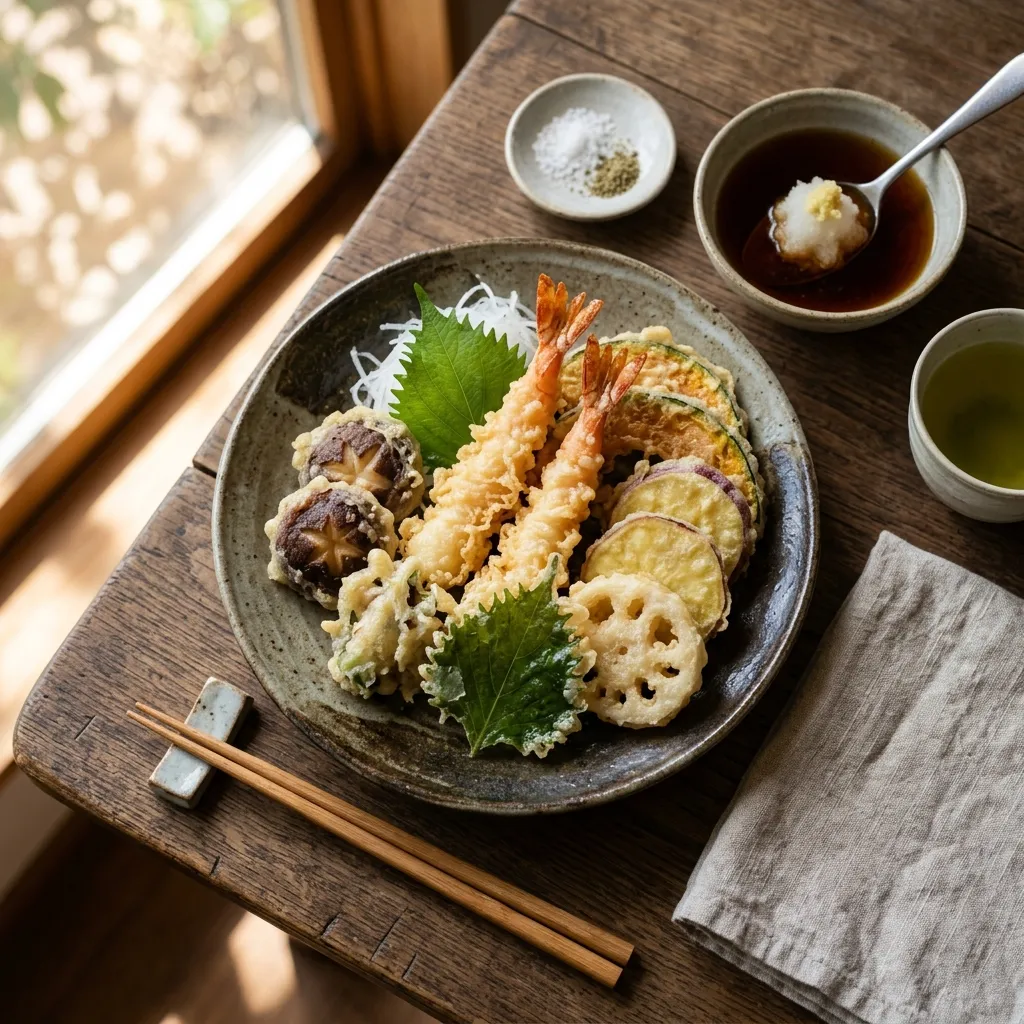
Tempura is vegetables and seafood dipped in a cold, barely mixed batter and deep-fried in sesame oil until shatteringly crisp. The batter — made from iced water, egg, and soft wheat flour — is deliberately undermixed, leaving lumps and streaks of dry flour that create the characteristic airy, lacy coating. Portuguese missionaries introduced frying techniques to Japan in the 16th century during Lent (the word "tempura" likely derives from the Latin "tempora," referring to the Ember Days of fasting), but Japanese cooks transformed the method into something distinctly their own. Precision governs every step: the oil temperature must hold steady at 170-180C, the batter must stay ice-cold even as it sits beside a vat of hot oil, and each piece fries for exactly the right number of seconds — sweet potato takes longer than shiso leaf. Master tempura chefs in Tokyo's Ginza district train for years to develop the sensitivity to judge doneness by sound alone, listening for the pitch of the bubbling oil to shift. From an Ayurvedic lens, deep-frying transforms light vegetables into heavy, oily foods — increasing Kapha qualities significantly. The sesame oil adds heating virya and the wheat batter contributes further heaviness. The saving grace is portion control: traditional tempura portions are small, served a piece or two at a time directly from the fryer, often alongside grated daikon radish — a digestive that cuts through oil and stimulates agni.
Deep-frying increases heaviness and oil content dramatically. Pacifies Vata through warmth and unctuousness. Aggravates Kapha and may increase Pitta from heating oil and fried preparation.
Ingredients
- 12 pieces Large shrimp (peeled, deveined, tails on)
- 1 medium Sweet potato (sliced 5mm thick on the bias)
- 1 small Eggplant (sliced into fans)
- 8 leaves Shiso leaves (patted dry)
- 4 slices Kabocha squash (5mm thick, skin on)
- 1 cup Cake flour (sifted — do not use all-purpose)
- 1 large Egg (beaten)
- 1 cup Ice water (with ice cubes included)
- 3 cups Sesame oil (for deep frying)
- 1 cup Vegetable oil (blended with sesame oil for frying)
- 3 inches Daikon radish (finely grated, for serving)
- 1 cup Dashi (for tentsuyu dipping sauce)
- 3 tbsp Mirin
- 3 tbsp Soy sauce
Instructions
- Prepare the tentsuyu dipping sauce by combining dashi, mirin, and soy sauce in a small pot. Bring to a brief simmer, then remove from heat and keep warm.
- Heat the sesame oil and vegetable oil blend in a deep pot or wok to 175C (345F). Use a thermometer — temperature precision is non-negotiable for tempura.
- While the oil heats, prepare the batter. Combine the beaten egg with ice water (remove ice cubes). Dump the sifted cake flour on top all at once. Stir 3-4 times with chopsticks — the batter should be lumpy with visible streaks of dry flour. Do not whisk, do not homogenize. Overmixed batter produces tough, bready coating instead of crispy lace.
- Pat all vegetables and shrimp completely dry with paper towels. Lightly dust each piece with a thin coating of plain flour before dipping in batter — this helps the batter adhere.
- Dip each piece in batter, letting excess drip off for 2 seconds, then lower gently into the oil. Fry in small batches of 3-4 pieces — overcrowding drops the oil temperature and produces greasy results.
- Fry shrimp for 2 minutes, thin vegetables (shiso, eggplant) for 1-2 minutes, and dense vegetables (sweet potato, kabocha) for 3-4 minutes. The tempura is done when bubbling slows dramatically and the batter turns pale gold — not brown.
- Remove with a wire spider or chopsticks and drain on a wire rack set over a sheet pan. Never use paper towels — they trap steam and make the coating soggy.
- Serve immediately on a paper-lined plate with tentsuyu dipping sauce, grated daikon, and grated ginger on the side. Tempura waits for no one — it loses its crispness within minutes.
Nutrition
These values are estimates calculated from the ingredient list and may vary based on brands, cooking methods, and serving size. Not a substitute for medical or dietary advice.
How This Recipe Affects Each Dosha
Vata
Tempura offers Vata exactly what it craves — warmth, oil, and substance. The sesame oil is specifically Vata-pacifying in Ayurvedic texts, and the warm, heavy qualities of fried food ground Vata's lightness and instability. The sweet potato and kabocha provide stable, slow-releasing energy. Served with warm tentsuyu, this is deeply comforting Vata food.
Pitta
The deep-frying process and sesame oil both add significant heat. Pitta types may find tempura triggers acid reflux or digestive burning, particularly if consumed in the evening. The sweet vegetables (sweet potato, kabocha) help buffer the heat somewhat, but the overall energetic profile trends heating.
Kapha
Tempura is among the most Kapha-aggravating preparations: heavy batter coating, deep-fried in oil, served with dense root vegetables. It amplifies every quality Kapha already has in excess — heaviness, oiliness, sluggishness. The grated daikon served alongside is a traditional digestive counterbalance, but the dish remains challenging for Kapha constitutions.
Deep-fried foods challenge agni by requiring substantial digestive effort. The grated daikon traditionally served with tempura is medicinal — its enzymes (diastase) help break down oils and starches. Without this accompaniment, tempura can dampen agni in those with weak digestion.
Nourishes: Rasa (plasma), Meda (fat), Asthi (bone — from minerals in root vegetables)
Adjustments by Constitution
For Vata Types
Emphasize root vegetables (sweet potato, kabocha, lotus root) which are grounding. Serve with extra grated ginger in the dipping sauce for digestive warmth. A cup of warm miso soup alongside aids digestion of the heavy oil. Eat at midday when agni can handle the richness.
For Pitta Types
Replace sesame oil with sunflower or coconut oil for a cooler frying medium. Emphasize cooling vegetables — zucchini, asparagus, green beans — over heating roots. Serve with extra grated daikon to cut the oil. Limit portion to 4-5 pieces and pair with steamed rice and a light broth.
For Kapha Types
Limit to 3-4 pieces as a side dish rather than a main course. Choose light vegetables over dense roots — green beans, shiso, mushrooms. Make the batter extra thin by adding more ice water. Serve with generous grated daikon and ginger. Pair with a hot, clear soup rather than rice to keep the meal from becoming too heavy.
Seasonal Guidance
Tempura belongs to the cooler months when the body tolerates and benefits from heavier, oily foods. In autumn, the seasonal vegetables (sweet potato, kabocha, matsutake mushroom) align perfectly with traditional tempura offerings. Avoid in summer when Pitta runs high and the body rejects excess oil and heat.
Best time of day: Lunch when agni peaks, or as a small early dinner course — never late at night when digestive capacity diminishes
Cultural Context
Tempura arrived in Japan through Portuguese trade missions in the 1540s-1600s, making it one of the earliest Western culinary influences on Japanese cooking. Tokugawa-era street vendors in Edo (Tokyo) popularized it as fast food for laborers. By the Meiji era, tempura had split into two distinct traditions: the refined counter-service style of high-end Tokyo restaurants (where a chef fries each piece to order) and the casual izakaya style of mixed platters. Tendon (tempura rice bowl) and tempura soba/udon became everyday lunch staples. The seasonal rotation of tempura ingredients — spring bamboo shoots, summer shiso, autumn matsutake, winter root vegetables — reflects the Japanese principle of shun (eating at peak season).
Deeper Context
Origins
Tempura was introduced to Japan by Portuguese Jesuit missionaries in 16th-century Nagasaki during the Ember Days fasting periods (quatuor anni tempora in Latin — the four-times-per-year fasting days when Catholic clergy abstained from meat). Japanese cooks adopted the fried-seafood-and-vegetable technique and refined it over 400 years into the specifically Japanese form — cold batter, hot oil, minimal frying time, precise ingredient selection. Edo-period street food popularization made tempura accessible to working populations; the modern kaiseki-tempura presentation is a 20th-century refinement.
Food as Medicine
Not therapeutically designed. Shrimp provides complete protein, iodine, and selenium; sweet potato delivers beta-carotene and fiber; kabocha adds beta-carotene and potassium. The sesame oil contributes sesamin lignans with documented cardiovascular-supporting activity. The frying adds oxidized-fat concerns in frequent consumption but preserves most nutrients when performed at proper temperature (180°C for short duration).
Ritual & Seasonal Role
Year-round. Not religiously ceremonial in current Japanese practice, despite its Jesuit-fasting-origin. Featured at tempura-specialty restaurants (tempura-ya), at kaiseki dining, at home celebrations. Summer peak for lighter vegetable-forward versions; winter peak for richer seafood variants.
Classical Pairings & Cautions
Tentsuyu dipping sauce (dashi-soy-mirin), grated daikon and ginger, soba or udon noodles, rice, green tea. Cautions: shellfish allergies (shrimp contraindication); gluten intolerance precludes traditional wheat batter; sesame allergies; fried-food oxidation concerns in frequent consumption; high sodium in dipping sauce.
Cross-Tradition View
How other medical and food-wisdom traditions read this dish. Each tradition names the same physiological reality in its own language — the agreements across them are where universal principles live.
Traditional Chinese Medicine
Shrimp is warming and Yin-Kidney-supporting; sweet potato is sweet-warm and Spleen-Qi-tonifying; kabocha is sweet-warm and Spleen-Qi-supporting; sesame oil is warm-moistening; cake flour is Spleen-Qi-tonifying. A Qi-building Yin-supporting preparation with warming-dispersing accents — TCM physicians would class tempura as substantial restoration food when freshly prepared.
Greek Humoral
Hot-dry frying on variable-temperament ingredients. Sanguine-building through the protein-and-starch combination. Galenic-suitable occasional food — the Hippocratic caution about fried preparations limits appropriate frequency, but occasional consumption is endorsed for working constitutions.
Ayurveda
Heating virya, sweet vipaka. Pacifies Vata substantially through warmth and unctuousness. Aggravates Kapha substantially through fried-batter heaviness. Mildly aggravates Pitta through the hot-oil cookery. A classical Vata-pacifying occasional food.
Portuguese Jesuit Nagasaki
Tempura's origin traces to 16th-century Portuguese Jesuit missionaries in Nagasaki during Ember Days fasting — the name tempura derives from Latin 'quatuor anni tempora' (four-times-per-year fasting days when Catholics abstained from meat and ate fried fish and vegetables instead). Japan adopted and refined the technique over 400+ years, developing the specific cold-batter, hot-oil, short-fry methodology that distinguishes Japanese tempura from Western tempura-adjacent preparations.
Chef's Notes
Three rules govern great tempura: cold batter, hot oil, small batches. Keep the batter bowl nested inside a larger bowl of ice throughout cooking. If the oil temperature drops below 165C, stop frying and wait for it to recover. The flour must be cake flour (low protein) — all-purpose or bread flour develops gluten and produces a tough, chewy coating. For an even lighter result, substitute half the flour with cornstarch. Leftover tempura bits (tenkasu) are prized in Japanese cooking — scatter them over udon or rice bowls.
Frequently Asked Questions
Is Tempura good for my dosha?
Deep-frying increases heaviness and oil content dramatically. Pacifies Vata through warmth and unctuousness. Aggravates Kapha and may increase Pitta from heating oil and fried preparation. Tempura offers Vata exactly what it craves — warmth, oil, and substance. The deep-frying process and sesame oil both add significant heat. Tempura is among the most Kapha-aggravating preparations: heavy batter coating, deep-fried in oil, served with dense root vegetables.
When is the best time to eat Tempura?
Lunch when agni peaks, or as a small early dinner course — never late at night when digestive capacity diminishes Tempura belongs to the cooler months when the body tolerates and benefits from heavier, oily foods. In autumn, the seasonal vegetables (sweet potato, kabocha, matsutake mushroom) align perfectly with
How can I adjust Tempura for my constitution?
For Vata types: Emphasize root vegetables (sweet potato, kabocha, lotus root) which are grounding. Serve with extra grated ginger in the dipping sauce for digestive w For Pitta types: Replace sesame oil with sunflower or coconut oil for a cooler frying medium. Emphasize cooling vegetables — zucchini, asparagus, green beans — over he
What are the Ayurvedic properties of Tempura?
Tempura has Sweet, Salty taste (rasa), Heating energy (virya), and Sweet post-digestive effect (vipaka). Its qualities (gunas) are Heavy, Oily, Warm. It nourishes Rasa (plasma), Meda (fat), Asthi (bone — from minerals in root vegetables). Deep-fried foods challenge agni by requiring substantial digestive effort. The grated daikon traditionally served with tempura is medicinal — its enzymes (diastase) help break down oils and starches. Without this accompaniment, tempura can dampen agni in those with weak digestion.