Thai Mango Salad
Thai Recipe
Overview
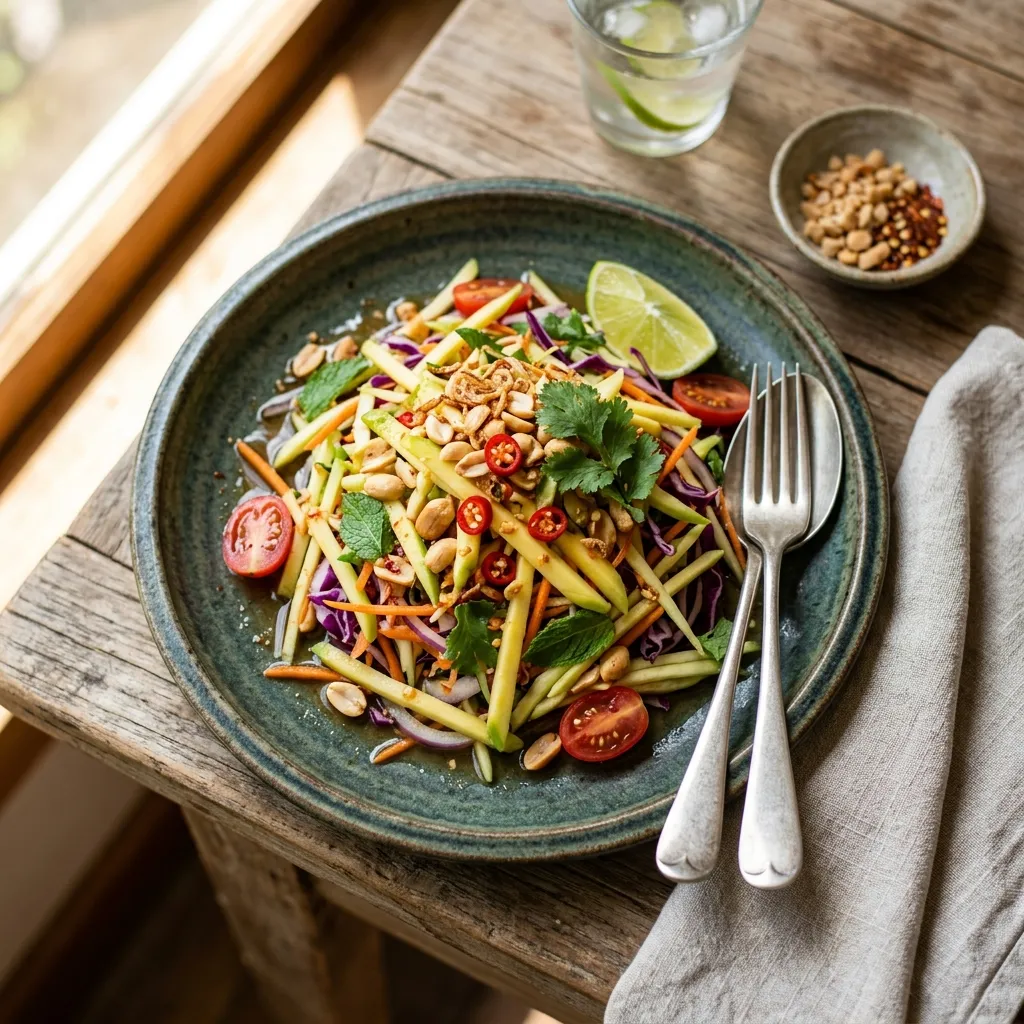
Thai green mango salad (yam mamuang) is a sharp, crunchy salad of shredded unripe mango dressed with lime juice, fish sauce, palm sugar, and dried chilies, tossed with peanuts and fresh herbs. The foundation is sour green mango — firm, tart, and astringent — which provides the structural crunch and the dominant flavor note. Unlike sweet ripe mango salads, this preparation belongs to the Thai tradition of som (sour) dishes that stimulate appetite and cut through the richness of other courses. Green mango salad appears across Southeast Asian cuisines — in Vietnam as goi xoai, in Cambodia, Laos, and Myanmar with regional variations — but the Thai version is distinguished by its balance of fish sauce depth and dried chili heat against the mango's sourness. Street vendors in Bangkok often serve it in plastic bags with a skewer, a portable snack eaten while walking through markets. From an Ayurvedic perspective, unripe mango is markedly different from ripe mango. Green mango is sour, astringent, and cooling — it increases Vata and Pitta while reducing Kapha. The combination with heating elements (chili, fish sauce) and sweet elements (palm sugar, peanuts) creates a dish that spans five of the six tastes, making it relatively balanced despite its dramatic flavor profile.
Reduces Kapha through light, dry, astringent qualities. The sour and pungent elements may increase Pitta. Can aggravate Vata due to raw, cold, dry, and rough qualities.
Ingredients
- 2 large Green (unripe) mango (firm and sour, peeled and julienned)
- 2 medium Shallots (thinly sliced)
- 2 tbsp Dried shrimp (toasted lightly in a dry pan)
- 3 tbsp Roasted peanuts (roughly crushed)
- 2 pieces Fresh red chili (thinly sliced)
- 1/4 cup Fresh cilantro (leaves and tender stems)
- 2 tbsp Fresh mint (torn leaves)
- 2 tbsp Fish sauce
- 3 tbsp Lime juice (fresh)
- 1 tbsp Palm sugar (grated)
- 1 clove Garlic (minced)
Instructions
- Peel the green mangoes and julienne into matchstick-sized strips using a mandoline or sharp knife. The pieces should be about 5cm long and 3mm wide — thin enough to absorb dressing but thick enough to retain crunch.
- Prepare the dressing by whisking together fish sauce, lime juice, palm sugar, minced garlic, and half the sliced chili in a bowl. Stir until the palm sugar dissolves completely.
- Toast the dried shrimp in a dry pan over medium heat for 2 minutes until fragrant and slightly crispy. Set aside.
- Lightly crush the peanuts with the flat side of a knife or in a mortar — you want rough pieces, not powder.
- In a large bowl, combine the julienned mango, sliced shallots, and toasted dried shrimp. Pour the dressing over and toss thoroughly with your hands or tongs, ensuring every strand of mango is coated.
- Add the crushed peanuts, cilantro, mint, and remaining sliced chili. Toss once more — gently this time, so the herbs do not bruise and the peanuts remain on top rather than sinking to the bottom.
- Serve immediately on a plate or in a shallow bowl. This salad does not hold — the salt in the fish sauce draws moisture from the mango, and it becomes soggy within 30 minutes.
Nutrition
These values are estimates calculated from the ingredient list and may vary based on brands, cooking methods, and serving size. Not a substitute for medical or dietary advice.
How This Recipe Affects Each Dosha
Vata
Raw salads are generally challenging for Vata, and this one is particularly so. The cold, rough, dry qualities of raw green mango directly aggravate Vata. The astringency of unripe mango creates a drying effect in the mouth and digestive tract. The peanuts and fish sauce provide some grounding, but the overall profile remains Vata-increasing.
Pitta
The sour taste of green mango increases Pitta, as does the chili heat and garlic. However, the cooling virya of the mango itself and the fresh herbs (mint, cilantro) provide some counterbalance. Pitta types with good tolerance for sour foods can enjoy this in moderation, particularly in cooler weather.
Kapha
This salad is well-suited to Kapha. The light, dry, rough qualities counter Kapha's heaviness and congestion. The astringency of green mango helps reduce fluid retention, the chili stimulates metabolism, and the raw preparation avoids adding heaviness from cooking. The pungent and sour tastes both stimulate Kapha's sluggish digestion.
The sour, pungent, and salty tastes all stimulate agni and appetite. In Thai meal structure, sour dishes like this are served specifically to kindle appetite before heavier courses. The lime juice and chili combination is a classical digestive stimulant across Southeast Asian traditions.
Nourishes: Rasa (plasma), Rakta (blood — vitamin C from lime and mango)
Adjustments by Constitution
For Vata Types
Serve as a small side dish rather than a main course. Add extra peanuts for grounding. Drizzle a teaspoon of sesame oil into the dressing for unctuousness. Eat with a warm dish — pair alongside a hot soup or warm rice to offset the cold, raw quality. Eat at midday, never in the evening.
For Pitta Types
Reduce chili by half or omit entirely. Replace garlic with a small amount of grated ginger. Increase the fresh mint and cilantro, which are cooling. Reduce lime juice slightly and increase palm sugar for a sweeter balance. Choose a less sour mango if possible.
For Kapha Types
This salad is already Kapha-friendly. Increase the chili for more pungent kick. Add thinly sliced raw red onion for extra sharpness. Reduce the peanuts (heavy) and increase the herbs. Add a few drops of sesame oil and a pinch of black pepper for extra metabolism support.
Seasonal Guidance
Best in spring when the light, dry qualities help clear accumulated Kapha from winter. Appropriate in early summer as a cooling, refreshing side. Avoid in autumn and winter when the cold, raw, dry qualities compound Vata season's challenges.
Best time of day: Midday as part of a larger meal — the raw, light quality works best when paired with heavier, cooked dishes
Cultural Context
Yam mamuang belongs to the broader Thai tradition of yam (tossed salad) dishes, which are always assembled rather than cooked, and always dressed with a sour-salty-sweet-spicy dressing. In Thailand, green mango season in late spring triggers an explosion of mango-based street food. The salad is often served as an appetite stimulant (known as opening the palate) before a rice-based meal. In the cuisine's logic, the sour and spicy flavors prime the digestive system for heavier dishes to follow — an intuitive application of the Ayurvedic principle that appetizers should kindle agni.
Deeper Context
Origins
Green mango salads exist across Southeast Asia — Thai yum mamuang, Lao tam mak hoong variants, Cambodian bok mak hoong, Filipino ensaladang mangga, Vietnamese goi xoai. The shared tradition reflects pan-Southeast-Asian use of unripe mango as sour-crisp-summer vegetable. Thai version crystallized as distinct preparation during 20th century, with Northern-Thai and Central-Thai regional variants.
Food as Medicine
Green mango contains enzymes aiding digestion (particularly of fats and proteins); vitamin C substantial; lime enhances iron absorption; peanuts add protein and magnesium. Traditional Southeast Asian use for digestive support matches modern research on green mango's papain-family enzymes.
Ritual & Seasonal Role
Hot-weather summer Thai food. Year-round with mango-season peak (April-June). Cultural association with Thai beach resorts and summer vacation cuisine.
Classical Pairings & Cautions
Grilled seafood, Thai iced tea, Singha beer. Cautions: peanut allergies; mango allergies (related to poison-ivy family urushiol); pregnancy should limit green mango traditionally; Pitta aggravation from Thai chilies.
Cross-Tradition View
How other medical and food-wisdom traditions read this dish. Each tradition names the same physiological reality in its own language — the agreements across them are where universal principles live.
Traditional Chinese Medicine
Green mango is cool-sour and moves Liver Qi; fish sauce is salty-warm; lime is cool-sour; peanuts build Kidney essence; mint is cool and disperses Wind-Heat. A cool Liver-Qi-moving summer preparation — TCM physicians would class this as appropriate hot-weather Liver-Qi-stagnation food.
Greek Humoral
Cool-wet summer preparation with hot-dry accents. Galenic summer food for choleric-excess correction.
Ayurveda
Cooling virya, sour vipaka. Pacifies Pitta substantially. Vata aggravated through rawness and cold preparation. Kapha mildly reducing.
Isan & Thai Summer
Thai mango salad (yum mamuang) is classical Isan-and-central Thai summer food — prepared with green (unripe) mango for its crisp-sour character rather than the sweet ripe mango. Hot-climate Southeast Asian cooling tradition alongside som tum (green papaya salad) and other cold-sour preparations. Regional Lao, Cambodian, and Vietnamese versions exist with slight variations.
Chef's Notes
The mango must be unripe — hard, green, and sour. A ripe or even half-ripe mango will collapse into mush when dressed. Test by pressing: there should be no give whatsoever. If green mangoes are unavailable, firm Granny Smith apples or green papaya provide a similar sour crunch. The dressing should hit all four Thai flavor pillars simultaneously: sour (lime), salty (fish sauce), sweet (palm sugar), spicy (chili). Adjust these until none dominates. For a vegetarian version, replace fish sauce with soy sauce and dried shrimp with toasted coconut flakes.
Frequently Asked Questions
Is Thai Mango Salad good for my dosha?
Reduces Kapha through light, dry, astringent qualities. The sour and pungent elements may increase Pitta. Can aggravate Vata due to raw, cold, dry, and rough qualities. Raw salads are generally challenging for Vata, and this one is particularly so. The sour taste of green mango increases Pitta, as does the chili heat and garlic. This salad is well-suited to Kapha.
When is the best time to eat Thai Mango Salad?
Midday as part of a larger meal — the raw, light quality works best when paired with heavier, cooked dishes Best in spring when the light, dry qualities help clear accumulated Kapha from winter. Appropriate in early summer as a cooling, refreshing side. Avoid in autumn and winter when the cold, raw, dry qua
How can I adjust Thai Mango Salad for my constitution?
For Vata types: Serve as a small side dish rather than a main course. Add extra peanuts for grounding. Drizzle a teaspoon of sesame oil into the dressing for unctuous For Pitta types: Reduce chili by half or omit entirely. Replace garlic with a small amount of grated ginger. Increase the fresh mint and cilantro, which are cooling. R
What are the Ayurvedic properties of Thai Mango Salad?
Thai Mango Salad has Sour, Pungent, Sweet, Salty, Astringent taste (rasa), Cooling energy (virya), and Sour post-digestive effect (vipaka). Its qualities (gunas) are Light, Dry, Rough. It nourishes Rasa (plasma), Rakta (blood — vitamin C from lime and mango). The sour, pungent, and salty tastes all stimulate agni and appetite. In Thai meal structure, sour dishes like this are served specifically to kindle appetite before heavier courses. The lime juice and chili combination is a classical digestive stimulant across Southeast Asian traditions.