Tarte Tatin
French Recipe
Overview
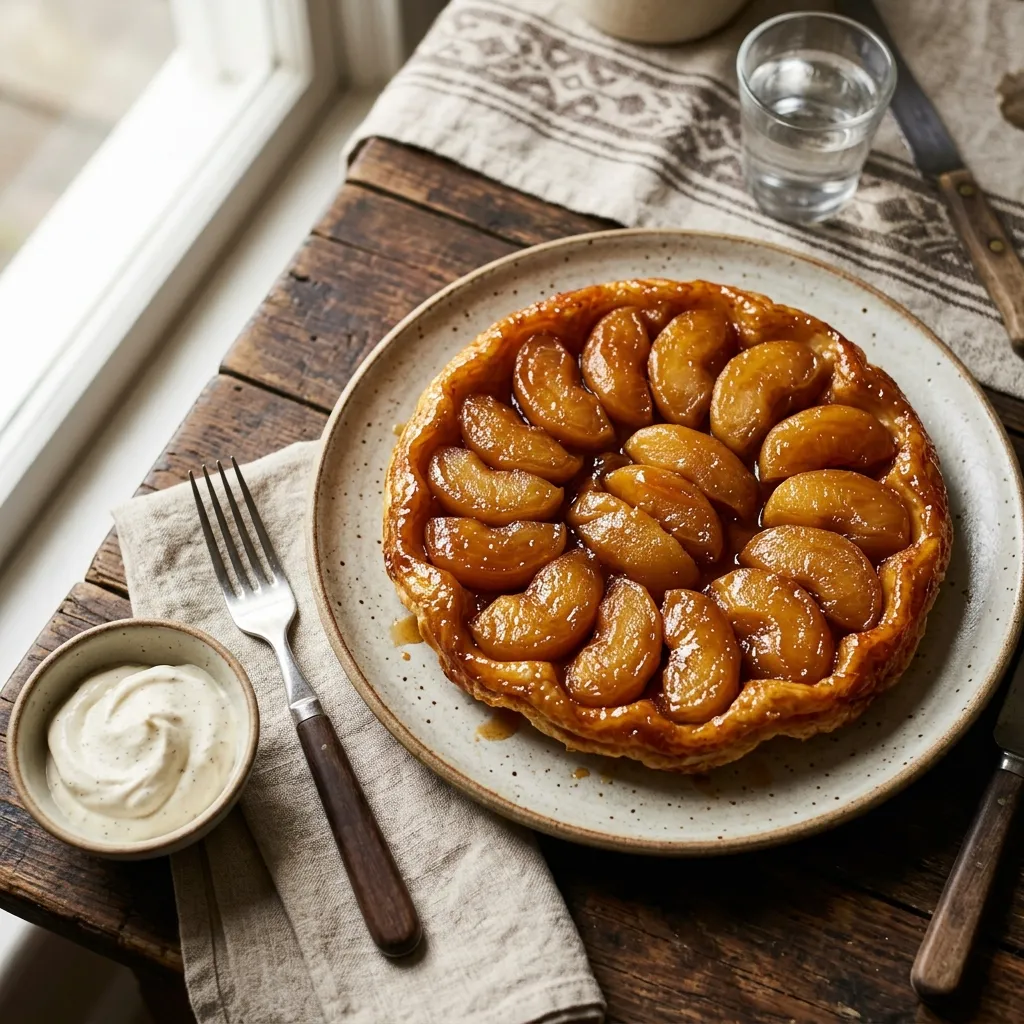
Tarte Tatin was born from a mistake at the Hôtel Tatin in Lamotte-Beuvron, a small town in the Sologne region south of Paris, sometime in the 1880s. Stéphanie Tatin, one of two sisters who ran the hotel, was making a traditional apple tart when she left the apples cooking in butter and sugar too long. Rather than discard them, she covered the caramelized apples with pastry and baked the whole thing upside down. The resulting tart — with its lacquered, deeply caramelized apple top and crisp pastry base — was so successful that it became the hotel's signature dish and eventually entered the canon of French pastry. The Ayurvedic profile of tarte Tatin centers on the transformation of apples through caramelization. Raw apples are astringent, cooling, and relatively light — properties that make them vata-aggravating for many. But cooking apples with butter and sugar fundamentally alters these qualities: the astringency mellows into deep sweetness, the cooling nature becomes warming through the caramelization process, and the lightness becomes rich and substantial. Caramelized apples are among the most vata-pacifying fruit preparations in any cuisine. The buttery puff or shortcrust pastry adds significant guru (heavy) and snigdha (oily) qualities through its wheat and butter content. The caramel itself — sugar heated to 340-350 degrees F until its molecular structure breaks down and reforms into hundreds of new flavor compounds — carries intensely sweet and mildly bitter tastes. The overall dish is dominated by madhura rasa, with the caramel's slight bitterness providing depth and complexity.
Tarte Tatin is strongly madhura and kapha-increasing through its butter, sugar, and wheat content. The warming caramelization and cinnamon make it less kapha-aggravating than cold dairy desserts. The cooked apples and warming spice pacify vata effectively. Pitta is moderately increased by the caramelized sugar's heating quality.
Cooked apples with warming spices are a classic Ayurvedic recommendation for vata-type constipation and dry, cold conditions. The warmth, sweetness, and unctuousness of tarte Tatin serve a therapeutic purpose for individuals needing comforting, grounding nourishment — though the sugar content means this is a treat, not a medicine.
Ingredients
- 6 large Firm baking apples (about 3 pounds — Granny Smith, Braeburn, or Honeycrisp)
- 6 tablespoons Unsalted butter (3/4 stick)
- 3/4 cup Granulated sugar
- 1 tablespoon Lemon juice
- 1 teaspoon Vanilla extract
- 1/2 teaspoon Cinnamon
- 1/4 teaspoon Salt
- 1 sheet Puff pastry (thawed if frozen, or homemade shortcrust)
- 1/2 cup Crème fraîche (for serving)
Instructions
- Peel, core, and quarter the apples. Cut each quarter in half lengthwise if the apples are very large — you want pieces that are substantial enough to hold their shape through extended cooking but not so large that they remain raw in the center. Toss with lemon juice to prevent browning.
- Melt the butter in a 10-inch oven-safe skillet (cast iron is ideal) over medium heat. Add the sugar and stir until it dissolves into the butter. Continue cooking without stirring for 5-7 minutes, watching carefully, until the mixture turns a deep amber caramel color. Swirl the pan occasionally for even coloring but do not stir — stirring causes crystallization.
- Remove the skillet from heat. Arrange the apple pieces tightly in the caramel in concentric circles, standing them on their edges with the rounded sides facing down (this will become the top when inverted). Pack them tightly — they shrink significantly during cooking. Sprinkle with cinnamon, vanilla, and salt.
- Return the skillet to medium heat. Cook the apples in the caramel for 15-20 minutes, occasionally pressing them gently with a spatula to submerge them in the bubbling caramel. The apples should soften, release their juices, and the caramel should darken further and thicken. The liquid should reduce to a thick, syrupy consistency — not watery.
- While the apples cook, preheat the oven to 400 degrees F. Roll out the puff pastry on a lightly floured surface to a circle about 11 inches in diameter — 1 inch larger than your skillet.
- Remove the skillet from heat. Drape the pastry over the apples, tucking the edges down between the fruit and the sides of the pan using a butter knife or the handle of a spoon. This tuck creates the raised edge when inverted. Pierce the pastry in 4-5 places with a knife to allow steam to escape.
- Bake for 25-30 minutes until the pastry is deeply golden and puffed. The caramel should be bubbling visibly around the edges of the pastry.
- Remove from the oven and let cool in the pan for exactly 5 minutes — long enough for the caramel to thicken slightly but not long enough for it to set solid and glue the tart to the pan. Place a serving plate (larger than the skillet) upside down on top of the pan.
- In one confident motion, flip the skillet and plate together. Lift the skillet away. If any apple pieces have shifted, use a spatula to reposition them. The caramel should flow slowly over and around the apples, creating a lacquered surface.
- Serve warm (not hot) with a dollop of crème fraîche. The cool tang of crème fraîche against the warm, sweet caramel is the classic and correct pairing.
Nutrition
These values are estimates calculated from the ingredient list and may vary based on brands, cooking methods, and serving size. Not a substitute for medical or dietary advice.
How This Recipe Affects Each Dosha
Vata
Tarte Tatin is an excellent dessert choice for vata. The cooked apples lose their raw astringency and become soft, warm, and sweet — all qualities that pacify vata. The generous butter provides the oily quality vata craves. The caramel's deep sweetness nourishes vata's nervous system. The cinnamon adds gentle warmth that supports vata's cold nature. The pastry, while heavy, provides grounding substance. The crème fraîche adds additional rich, smooth, cooling quality that soothes vata. This is comfort food at its most vata-calming.
Pitta
Caramelized sugar, while sweet, carries significant heating quality from the browning process. The butter adds mild heat. The cinnamon, though used in small quantity, is warming. Overall, the tart is moderately pitta-increasing — acceptable as an occasional dessert but not a daily choice for pitta types. The crème fraîche provides some cooling counterbalance. The sweetness itself is pitta-calming, creating a mixed effect where the taste pacifies but the virya (potency) slightly aggravates. Pitta does best with this tart at room temperature rather than warm.
Kapha
Butter, sugar, wheat pastry, and cream — tarte Tatin contains concentrated kapha-increasing elements. The sweet taste dominates completely, and excessive sweetness is kapha's primary dietary pitfall. The heavy, sticky quality of the caramel and the dense pastry add earth and water elements that kapha types already have in excess. The one redeeming element for kapha is the cinnamon's mild warming and metabolism-stimulating action, but it is overwhelmed by the sugar and butter. Kapha types should treat tarte Tatin as a rare indulgence, not a regular dessert.
The caramelization process produces compounds that are easier to digest than raw sugar, and the cinnamon provides mild agni support. However, the overall sugar and butter content can dampen agni if consumed in excess, producing a heavy, sluggish feeling. Small portions are key for maintaining digestive comfort.
Nourishes: rasameda
Adjustments by Constitution
For Vata Types
Tarte Tatin is already vata-friendly. Enhance by adding a pinch of ground cardamom and ginger to the apples along with the cinnamon — these warming spices further support vata digestion of the heavy dessert. Serve warm with a thin drizzle of honey instead of crème fraîche if dairy is problematic. A sprinkle of toasted walnuts adds additional grounding energy and healthy fats.
For Pitta Types
Reduce the sugar to 1/2 cup and cook the caramel to a lighter amber for less heating intensity. Replace cinnamon with 1/2 teaspoon of ground cardamom, which is cooling and pitta-pacifying. Use pears instead of apples for a naturally sweeter, less astringent fruit that needs less sugar. Increase the crème fraîche serving or use vanilla ice cream — the cold dairy directly counterbalances the caramel's heat. Serve at room temperature rather than warm.
For Kapha Types
Replace the puff pastry with a thin, cracker-like crust made from almond flour and a small amount of coconut oil — this eliminates the wheat and butter while adding protein. Reduce sugar to 1/3 cup and add 1 teaspoon of dried ginger to the caramel for metabolic stimulation. Add a squeeze of lemon juice to cut the sweetness. Skip the crème fraîche and serve with a tiny pinch of flaky sea salt, which enhances flavor without adding richness. Keep portions small — one thin slice rather than a full wedge.
Seasonal Guidance
Tarte Tatin is an autumn dessert, designed for the apple harvest season from September through November. It remains appropriate through winter when warming, rich desserts complement the cold weather. In spring and summer, the richness feels oppressive and lighter fruit desserts are more suitable.
Best time of day: Serve as an afternoon treat or dessert after a lighter meal. The sugar and butter content make it too heavy for late evening consumption. After a light lunch, a thin slice of tarte Tatin with tea is a satisfying way to close the meal.
Cultural Context
The Hôtel Tatin in Lamotte-Beuvron still exists and still serves tarte Tatin, though the original building has been renovated many times since the Tatin sisters' era. The story of the accidental creation has been disputed — some food historians suggest the sisters were already making an established regional dessert and the accident narrative was marketing. Regardless, the technique of inverting caramelized fruit under pastry became a French standard, applied now to pears, peaches, tomatoes, and even onions. In 1898, the Parisian restaurant Maxim's allegedly sent a spy to Lamotte-Beuvron to steal the recipe, which then appeared on their menu as 'tarte des demoiselles Tatin.'
Deeper Context
Origins
Invented at Hotel Tatin in Lamotte-Beuvron (Sologne region, Loire Valley) in the 1880s by the Tatin sisters — Stéphanie and Caroline. The accidental-inversion origin story (one sister distracted, began the tart without pastry, reversed the order) is probably apocryphal but captures the cultural weight of the dish. Curnonsky, the early-20th-century gastronomic authority, publicized the dish after discovering it at the Tatin hotel. Maxim's in Paris adopted it in the early 20th century, cementing its haute-cuisine status.
Food as Medicine
Not therapeutically designed as a named preparation. Apple carries classical folk-medicine reputation for cardiovascular and digestive support; cinnamon has documented blood-sugar-modulating and anti-inflammatory effects with modern clinical research support. The cooking process breaks down apple pectin into more bioavailable forms and increases polyphenol extraction. A dessert with accidental therapeutic accents.
Ritual & Seasonal Role
Autumn and winter dessert — apple peak harvest season. Featured on French bistro menus year-round; Sunday lunch and celebration food. Not religiously ceremonial but deeply French in cultural weight. The dish is a French-cookery right-of-passage skill — demonstrating proper tarte Tatin preparation is considered a measure of competence in French home cookery.
Classical Pairings & Cautions
Crème fraîche, vanilla ice cream, a glass of Calvados (apple brandy) or a cup of coffee. Cautions: substantial sugar and butter load — diabetic restriction applies; gluten intolerance precludes the pastry base; dairy sensitivity affects the crème fraîche accompaniment; Kapha substantial aggravation; cinnamon at high doses in pregnancy is traditionally avoided, though culinary quantities are safe.
Cross-Tradition View
How other medical and food-wisdom traditions read this dish. Each tradition names the same physiological reality in its own language — the agreements across them are where universal principles live.
Traditional Chinese Medicine
Apple is cool-sweet-sour and moistens Lung Yin; butter is warm-moistening; sugar is Spleen-Qi-tonifying (with damp-heat caution in excess); cinnamon warms the middle and enters the Kidney meridian. A Yin-moistening Spleen-tonic dessert with cinnamon's Kidney-Yang support. TCM physicians would class this as autumn convalescent dessert — appropriate for dry coughs and post-illness recovery.
Greek Humoral
Hot-wet sanguine-melancholic balance. The caramelization pulls the apples toward hot-sweet; the butter adds hot-wet moisture. Galenic reading: appropriate for melancholic types in autumn, dispels cold-dry constitutional tendencies through the heated sweet-fat combination.
Sologne (Loire Valley)
Tarte Tatin originated at Hotel Tatin in Lamotte-Beuvron, Sologne (Loire Valley) in the 1880s. Sisters Stéphanie and Caroline Tatin accidentally inverted a traditional French apple tart — one origin legend runs that one sister was distracted and began without the pastry, reversed the order, and the inverted dish became a signature. Curnonsky (the 'Prince of Gastronomes') popularized the dish after discovering it at the Tatin sisters' hotel. Paris's Maxim's restaurant adopted it in the early 20th century, giving it haute-cuisine status.
Ayurveda
Heating virya (from cinnamon and caramelization), sweet vipaka. Pacifies Vata through unctuousness and warmth; aggravates Kapha substantially through sugar and butter; mildly aggravates Pitta through caramelized heat. A classical Vata-pacifying dessert — the cinnamon is the therapeutic accent that partly compensates for the sugar load.
Chef's Notes
The two critical moments in tarte Tatin are the caramel and the flip. The caramel should be taken to a deep amber — too light and the tart tastes simply sweet; too dark and it tastes bitter and burnt. The line between perfect and burnt caramel is about 30 seconds, so watch it relentlessly. For the flip, hesitation causes disaster — commit to the motion and execute it quickly and smoothly. The 5-minute rest before flipping is precise: too early and the caramel is liquid lava that will burn you; too late and it cements the tart to the pan. Choose firm baking apples that hold their shape — soft varieties like McIntosh will dissolve into applesauce.
Frequently Asked Questions
Is Tarte Tatin good for my dosha?
Tarte Tatin is strongly madhura and kapha-increasing through its butter, sugar, and wheat content. The warming caramelization and cinnamon make it less kapha-aggravating than cold dairy desserts. The cooked apples and warming spice pacify vata effectively. Pitta is moderately increased by the caramelized sugar's heating quality. Tarte Tatin is an excellent dessert choice for vata. Caramelized sugar, while sweet, carries significant heating quality from the browning process. Butter, sugar, wheat pastry, and cream — tarte Tatin contains concentrated kapha-increasing elements.
When is the best time to eat Tarte Tatin?
Serve as an afternoon treat or dessert after a lighter meal. The sugar and butter content make it too heavy for late evening consumption. After a light lunch, a thin slice of tarte Tatin with tea is a satisfying way to close the meal. Tarte Tatin is an autumn dessert, designed for the apple harvest season from September through November. It remains appropriate through winter when warming, rich desserts complement the cold weather.
How can I adjust Tarte Tatin for my constitution?
For Vata types: Tarte Tatin is already vata-friendly. Enhance by adding a pinch of ground cardamom and ginger to the apples along with the cinnamon — these warming sp For Pitta types: Reduce the sugar to 1/2 cup and cook the caramel to a lighter amber for less heating intensity. Replace cinnamon with 1/2 teaspoon of ground cardamom,
What are the Ayurvedic properties of Tarte Tatin?
Tarte Tatin has madhura,tikta taste (rasa), ushna energy (virya), and madhura post-digestive effect (vipaka). Its qualities (gunas) are guru,snigdha. It nourishes rasa,meda. The caramelization process produces compounds that are easier to digest than raw sugar, and the cinnamon provides mild agni support. However, the overall sugar and butter content can dampen agni if consumed in excess, producing a heavy, sluggish feeling. Small portions are key for maintaining digestive comfort.