Tamales
Mexican Recipe
Overview
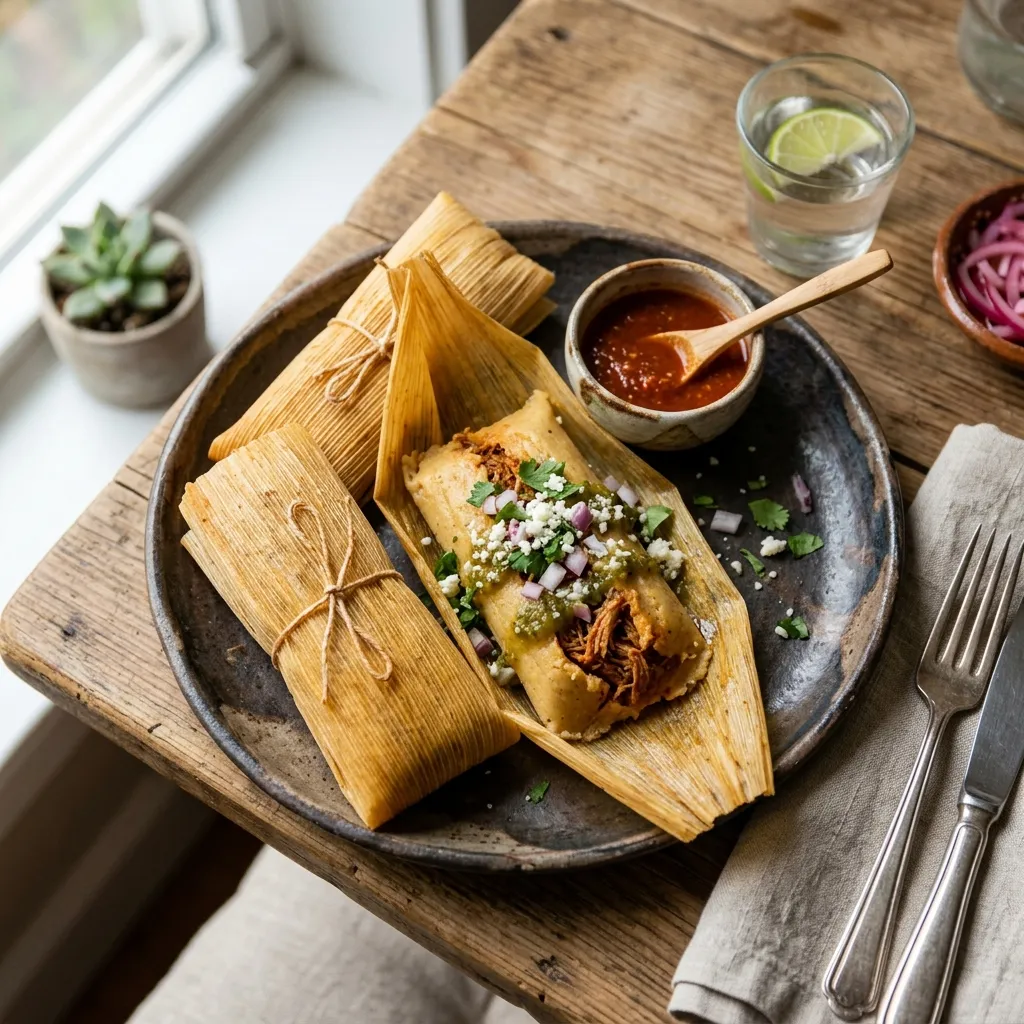
Tamales are among the oldest prepared foods in the Americas — archaeological evidence from the Oaxaca valley dates maize-based tamale preparation to approximately 8000 BCE. The Maya and Aztecs made tamales for warriors, travelers, feasts, and ritual offerings. The basic concept has remained unchanged for millennia: masa (corn dough enriched with fat) is spread onto corn husks or banana leaves, filled with meat, chilies, cheese, fruit, or nothing at all, then folded and steamed until the dough sets into a tender, aromatic package. Making tamales is communal work. The traditional tamalada brings family members together — someone soaks the husks, someone beats the masa, someone prepares the fillings, and everyone assembles. The masa must be beaten vigorously with lard or butter until it is light and airy; a test of readiness is dropping a small ball into water — if it floats, the masa is properly aerated. Steaming transforms the raw dough into a firm yet yielding texture that peels cleanly from the husk. Ayurvedically, tamales are a study in corn's energetic properties wrapped in steam. Corn is sweet, light, and slightly drying — it increases Vata more than wheat does. The lard or butter in the masa adds necessary oleation. The filling determines the overall doshic impact: a chile verde pork filling heats and stimulates, while a sweet corn or fruit tamale soothes and grounds.
The masa is heavy and grounding; the chili-pork filling is heating and stimulating. Together they pacify Vata through warmth and density but increase Kapha through heaviness. Pitta is moderately provoked by the chili sauce.
Ingredients
- 30 pieces Dried corn husks (soaked in hot water for 1 hour)
- 500 g Masa harina
- 200 g Lard or unsalted butter (at room temperature)
- 350 ml Chicken broth (warm)
- 1.5 tsp Baking powder
- 1.5 tsp Salt
- 500 g Pork shoulder (cooked and shredded)
- 4 whole Dried guajillo chilies (stemmed and seeded)
- 1 whole Dried ancho chili (stemmed and seeded)
- 2 cloves Garlic
- 1/2 tsp Cumin
- 1/2 tsp Dried oregano
Instructions
- Prepare the filling: toast the guajillo and ancho chilies in a dry skillet until fragrant, about 30 seconds per side. Soak in boiling water for 15 minutes. Blend the softened chilies with garlic, cumin, oregano, salt, and 1/4 cup soaking liquid until smooth. Simmer the sauce in a skillet for 5 minutes, then toss the shredded pork in the sauce until well coated.
- Beat the lard or butter with an electric mixer on medium-high speed for 3-5 minutes until light and fluffy. This step is crucial — properly beaten fat incorporates air that makes the tamale tender.
- In a separate bowl, mix the masa harina with baking powder and salt. Gradually add this to the beaten fat, alternating with warm chicken broth, mixing on medium speed until a soft, spreadable dough forms. The masa should be moist but not sticky. Test by dropping a small ball into cold water — if it floats, the masa is ready.
- Drain the soaked corn husks and pat dry. Select the largest, most intact husks for wrapping. Tear a few damaged husks into thin strips to use as ties if needed.
- Spread about 3 tablespoons of masa onto the smooth side of a corn husk, forming a rectangle that covers the wider two-thirds of the husk, leaving a border at the edges and the narrow tail end uncovered. The masa layer should be about 1/4 inch thick.
- Place 2 tablespoons of the sauced pork filling down the center of the masa. Fold one side of the husk over the filling so the masa edges meet and seal. Fold the other side over, then fold the narrow tail end up toward the seam. The tamal should be a neat, enclosed package.
- Stand the tamales upright in a steamer basket with the folded tail end down, packing them snugly so they support each other. Fill the steamer pot with 2-3 inches of water. Cover the tamales with a layer of extra corn husks and a damp towel, then seal with a tight-fitting lid.
- Steam over medium heat for 75-90 minutes, checking the water level periodically and adding more if needed. The tamales are done when the masa pulls away cleanly from the husk and feels firm to the touch. Let rest for 10 minutes before serving.
Nutrition
These values are estimates calculated from the ingredient list and may vary based on brands, cooking methods, and serving size. Not a substitute for medical or dietary advice.
How This Recipe Affects Each Dosha
Vata
The combination of corn masa enriched with fat and a warm, sauced meat filling provides substantial grounding for Vata. The steaming method makes the dough moist and soft, which Vata's dry tissues appreciate. The warming spices in the filling support Vata-type digestion. The heaviness can overwhelm delicate Vata agni if too many are consumed.
Pitta
The chili sauce in the filling is the primary Pitta concern — dried guajillo and ancho chilies generate moderate heat. The masa itself is relatively neutral for Pitta. The lard adds heating quality as well. Pitta types should eat these in moderation and may prefer cheese or vegetable fillings over the pork-chili version.
Kapha
The heavy, dense masa combined with lard creates a Kapha-increasing base. However, the pungent chili filling and warming spices provide some counterbalance. Kapha types should limit portions and choose the spiciest filling available to stimulate digestion and offset the heavy dough.
The chili-spiced filling kindles agni, but the heavy masa can dampen it if portions are excessive. The steaming process makes the corn dough more digestible than fried corn preparations. Eating 2-3 tamales with a pungent salsa supports balanced digestion; more than that challenges most agni levels.
Nourishes: Rasa (plasma), Mamsa (muscle), Meda (fat)
Adjustments by Constitution
For Vata Types
Use butter instead of lard for a sweeter fat. Add a pinch of black pepper and extra cumin to the masa for digestive support. Fill with mild, well-spiced shredded chicken instead of the chili pork. Serve with warm avocado salsa.
For Pitta Types
Fill with black beans and roasted zucchini instead of chili-sauced pork. Reduce the chili in the sauce or replace with a mild tomatillo salsa. Add fresh corn kernels to the masa for sweetness. Top with cooling crema and cilantro.
For Kapha Types
Reduce the lard by half and use chicken broth to compensate for moisture. Fill with the spiciest option available — chipotles in adobo with shredded turkey. Add epazote to the filling for its carminative properties. Serve with pico de gallo heavy on raw onion and jalapeño.
Seasonal Guidance
Tamales are traditionally a winter and holiday food, and this aligns with Ayurvedic principles. The heavy, warming qualities match the cold season's need for building nourishment, and the stronger winter agni can handle the dense masa. In warmer months, the heaviness becomes burdensome — lighter preparations serve the body better.
Best time of day: Lunch or early dinner, though Mexican tradition also embraces tamales for breakfast with a cup of atole or hot chocolate
Cultural Context
Tamales are woven into the ceremonial fabric of Mesoamerica. The Aztec Florentine Codex describes dozens of varieties made for specific rituals and deities. In modern Mexico, tamales remain central to celebrations — especially Christmas, Dia de la Candelaria (February 2), and Day of the Dead. On Candelaria, whoever finds the plastic baby Jesus figure in their Rosca de Reyes (King's cake) must host a tamalada for friends and family. The communal nature of tamale-making reinforces social bonds across generations.
Deeper Context
Origins
Tamales are among the oldest documented Mesoamerican foods — archaeobotanical evidence and Aztec codex documentation show continuous ceremonial use for at least 3,000 years. The Florentine Codex (1577) documents dozens of Aztec tamale varieties with different fillings, wrappers, and occasions. Contemporary Mexican tamales continue in hundreds of regional varieties: Oaxacan banana-leaf-wrapped, Yucatecan cochinita-filled, Guatemalan sweet-corn-based, and many others. The tamalada (tamale-making gathering) is a multigenerational Mexican family tradition.
Food as Medicine
Nixtamalized masa provides niacin and bioavailable calcium. Lard contributes fat-soluble vitamin delivery. Pork adds complete protein. The slow steaming preserves nutrients. Historically substantial winter-and-festival food for working populations. The tamalada tradition specifically builds multigenerational cultural knowledge transmission — grandmothers teaching grandchildren the preparation preserves embodied family memory.
Ritual & Seasonal Role
Christmas Eve (Nochebuena, December 24), Day of the Dead (November 1-2), Candlemas (February 2), family celebrations across the Mexican calendar. One of the most ceremonially-important Mexican foods. The tamalada (making gathering) is itself a culturally-central multigenerational practice. Mexican diaspora communities maintain tamalada traditions as identity preservation.
Classical Pairings & Cautions
Atole or champurrado (Mexican hot chocolate) alongside — the atole-and-tamales pairing is essential Mexican food tradition. Pickled vegetables on the side. Cautions: religious pork restrictions; gluten-free by default; corn allergies rare; Kapha substantial aggravation from lard-masa combination; diabetic monitoring for the corn-based carbohydrate load.
Cross-Tradition View
How other medical and food-wisdom traditions read this dish. Each tradition names the same physiological reality in its own language — the agreements across them are where universal principles live.
Traditional Chinese Medicine
Masa harina (nixtamalized corn) is Spleen-Qi-tonifying; lard is Yin-building and warm-moistening; pork is Yin-building; guajillo chilies are hot-pungent and disperse cold; corn husks serve as wrapping (no TCM correlate for wrapping). A Qi-and-Yin-building preparation — TCM physicians would class tamales as appropriate festival restoration food.
Greek Humoral
Hot-wet sanguine-building. A Galenic-suitable wrapped-and-steamed preparation — classical Greek and Roman stuffed-dough preparations (variants of empanadas and parallel ancient traditions) share architectural logic with Mesoamerican tamales.
Ayurveda
Heating virya, sweet vipaka. Pacifies Vata substantially through unctuousness and warmth. Kapha-aggravating through the masa-lard-meat combination. Pitta mildly aggravated through chile content.
Mesoamerican Ceremonial
Tamales are pre-Columbian Mesoamerican ceremonial food. The Florentine Codex documents Aztec ritual tamale preparations with multiple regional varieties. Tamales appear at every major Mesoamerican and contemporary Mexican celebration — Christmas, Day of the Dead, Candlemas (La Candelaria, February 2, when the person who found the baby Jesus in the Rosca de Reyes at Epiphany is obligated to provide tamales for the community), family celebrations, and life-cycle events. The corn-husk-wrapping tradition is ancient and retains ceremonial weight.
Chef's Notes
The masa must be beaten long enough to incorporate air — underbeaten masa produces dense, heavy tamales. The float test is reliable: if a marble-sized piece bobs in cold water, proceed. If it sinks, keep beating and add a splash more broth. Do not open the steamer during the first 45 minutes of cooking, as the steam environment must remain consistent. Tamales freeze beautifully for months — steam from frozen, adding 15-20 minutes to the cook time. A tamalada makes 40-60 tamales at a time; scale up and freeze the surplus.
Frequently Asked Questions
Is Tamales good for my dosha?
The masa is heavy and grounding; the chili-pork filling is heating and stimulating. Together they pacify Vata through warmth and density but increase Kapha through heaviness. Pitta is moderately provoked by the chili sauce. The combination of corn masa enriched with fat and a warm, sauced meat filling provides substantial grounding for Vata. The chili sauce in the filling is the primary Pitta concern — dried guajillo and ancho chilies generate moderate heat. The heavy, dense masa combined with lard creates a Kapha-increasing base.
When is the best time to eat Tamales?
Lunch or early dinner, though Mexican tradition also embraces tamales for breakfast with a cup of atole or hot chocolate Tamales are traditionally a winter and holiday food, and this aligns with Ayurvedic principles. The heavy, warming qualities match the cold season's need for building nourishment, and the stronger win
How can I adjust Tamales for my constitution?
For Vata types: Use butter instead of lard for a sweeter fat. Add a pinch of black pepper and extra cumin to the masa for digestive support. Fill with mild, well-spic For Pitta types: Fill with black beans and roasted zucchini instead of chili-sauced pork. Reduce the chili in the sauce or replace with a mild tomatillo salsa. Add fre
What are the Ayurvedic properties of Tamales?
Tamales has Sweet, Pungent, Sour taste (rasa), Heating energy (virya), and Sweet post-digestive effect (vipaka). Its qualities (gunas) are Heavy, Warm, Oily, Dense. It nourishes Rasa (plasma), Mamsa (muscle), Meda (fat). The chili-spiced filling kindles agni, but the heavy masa can dampen it if portions are excessive. The steaming process makes the corn dough more digestible than fried corn preparations. Eating 2-3 tamales with a pungent salsa supports balanced digestion; more than that challenges most agni levels.