Tacos al Pastor
Mexican Recipe
Overview
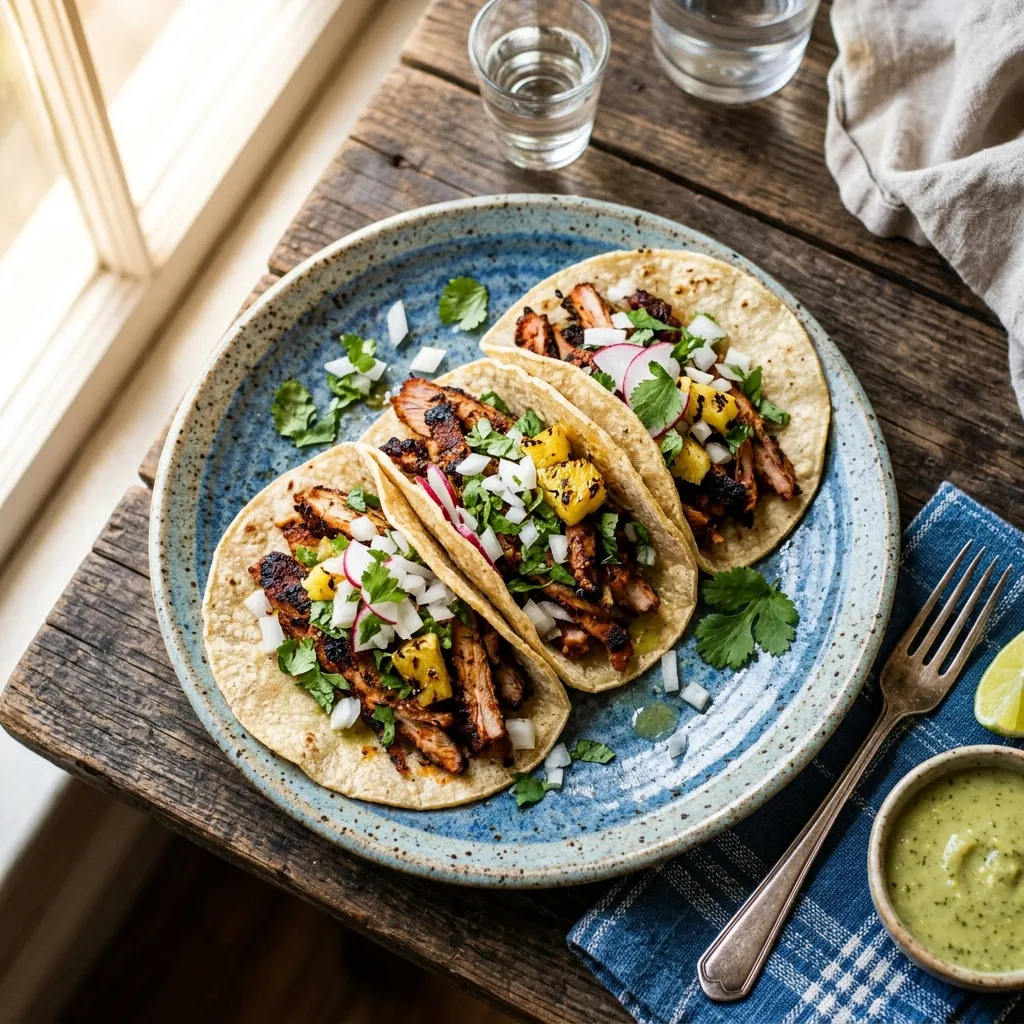
Tacos al pastor are Mexico City's signature street taco — thin-sliced pork marinated in a paste of dried chilies, achiote, pineapple, and spices, then stacked on a vertical spit (trompo) and slow-roasted. The technique was brought to Mexico by Lebanese immigrants in the early 20th century, who adapted their shawarma traditions to local ingredients. The vertical spit and shaved meat method is identical; what changed was the marinade, the tortilla replacing pita, and the addition of pineapple — a transformative Mexican innovation. On the streets of Mexico City, a taquero shaves the outer layer of caramelized meat from the spinning trompo directly onto small corn tortillas, finishing with a slice of pineapple carved from the fruit perched atop the spit. The home version marinates the pork and cooks it in a hot skillet or under a broiler to achieve similar caramelization. The result is the same: smoky, sweet, tangy, and deeply savory meat on soft corn tortillas with cilantro, onion, and salsa verde. Ayurvedically, tacos al pastor are complex — the pork is sweet and heavy, the dried chilies are pungent and heating, the pineapple adds sour and sharp digestive enzymes, and the achiote provides subtle bitter notes. This creates a multidimensional rasa profile that stimulates agni powerfully while delivering substantial nourishment.
Powerfully stimulates agni through the combined heat of dried chilies, pork, and aromatic spices. Reduces Kapha and Vata moderately. Increases Pitta significantly.
The high chili and spice content, combined with pineapple's bromelain enzymes, make this meal useful for stimulating sluggish digestion and breaking down accumulated ama in constitutions that can handle heat.
Ingredients
- 1 kg Pork shoulder (sliced into 1/4-inch thin steaks)
- 4 whole Dried guajillo chilies (stemmed and seeded)
- 2 whole Dried ancho chili (stemmed and seeded)
- 2 tbsp Achiote paste
- 4 slices Pineapple (fresh, 1/2-inch thick)
- 1 large White onion (half for marinade, half diced for topping)
- 4 cloves Garlic
- 2 tbsp White vinegar
- 1 tsp Cumin
- 1 tsp Dried oregano (Mexican oregano preferred)
- 1/2 tsp Black pepper
- 1.5 tsp Salt
- 18 small Corn tortillas (doubled for serving)
- 1/2 cup Fresh cilantro (chopped)
- 3 whole Lime (quartered)
Instructions
- Toast the dried guajillo and ancho chilies in a dry skillet over medium heat for 30 seconds per side until fragrant and slightly puffed. Place them in a bowl, cover with boiling water, and soak for 15 minutes until softened.
- Drain the chilies and transfer to a blender. Add the achiote paste, half of the onion (roughly chopped), garlic, vinegar, cumin, oregano, black pepper, salt, and 1/4 cup of the chili soaking water. Blend until completely smooth — the paste should be thick and vivid red.
- Coat the thin pork slices thoroughly with the marinade in a large bowl or zip-top bag. Marinate for at least 1 hour, or ideally overnight in the refrigerator for deeper flavor penetration.
- Heat a large cast-iron skillet or griddle over high heat until smoking. Cook the marinated pork slices in batches without crowding — 2-3 minutes per side until charred at the edges and cooked through. The caramelization of the chili paste and natural sugars is essential to the al pastor flavor.
- In the same hot skillet, cook the pineapple slices for 1-2 minutes per side until they develop dark grill marks and the sugars caramelize. Dice the grilled pineapple into small pieces.
- Chop the cooked pork into small pieces on a cutting board, mimicking the thin shavings from a traditional trompo.
- Warm the corn tortillas on a dry skillet or directly over a gas flame for 15 seconds per side. Stack two tortillas per taco for structural integrity.
- Assemble: pile the chopped pork onto doubled tortillas, top with grilled pineapple, diced white onion, fresh cilantro, and a generous squeeze of lime juice. Serve immediately with salsa verde on the side.
Nutrition
These values are estimates calculated from the ingredient list and may vary based on brands, cooking methods, and serving size. Not a substitute for medical or dietary advice.
How This Recipe Affects Each Dosha
Vata
The heavy, oily, warm qualities of the pork and the warming spice blend provide good grounding for Vata. The corn tortilla is lighter than wheat but still provides earth energy. The sour lime and pineapple stimulate Vata-type digestion. The overall effect is moderately balancing for Vata, though the pungent heat can be destabilizing in excess.
Pitta
Dried chilies, cumin, black pepper, garlic, and the inherent heat of pork create a strongly Pitta-provoking combination. The sour elements (vinegar, lime, pineapple) add to the heat. This is a dish that Pitta types should approach with caution, especially in summer or during periods of inflammation.
Kapha
The heating spices, pungent chilies, and light corn tortillas make this reasonably suitable for Kapha. The pork adds heaviness, but the intense spice profile stimulates sluggish digestion and moves stagnation. Kapha types benefit from the pungent and sour tastes that dominate this dish.
Strongly kindles agni. The combination of dried chilies, cumin, black pepper, garlic, pineapple enzymes (bromelain), and lime juice creates a potent digestive stimulus. The pork itself requires strong agni to process, but the spice profile ensures the fire is stoked.
Nourishes: Rasa (plasma), Rakta (blood), Mamsa (muscle), Meda (fat)
Adjustments by Constitution
For Vata Types
Reduce the quantity of dried chilies by half for less pungency. Add avocado slices on top for extra oleation and grounding. Use warm flour tortillas instead of corn for softer, more lubricating texture. Serve with a cooling crema drizzle.
For Pitta Types
Replace pork with chicken breast, which runs cooler. Use only guajillo chilies (mild) and omit ancho. Reduce garlic and add extra pineapple for sweetness. Top with shredded lettuce and a cucumber-yogurt crema instead of raw onion. Omit black pepper.
For Kapha Types
The preparation suits Kapha well. Add extra chili and a chipotle pepper to the marinade for more pungent heat. Use only one tortilla per taco instead of two. Top generously with raw onion and radish slices for their sharp, cutting quality. Skip any crema or avocado.
Seasonal Guidance
Best in cooler months when the body welcomes heating foods and agni is naturally stronger. The pungent spice profile helps counter cold and damp weather. Avoid as a regular summer meal due to the intense heat — occasional enjoyment is fine, but daily consumption in Pitta season risks overheating.
Best time of day: Lunch or dinner, paired with lime and pineapple to support digestion of the rich pork
Cultural Context
Al pastor is a culinary bridge between the Middle East and Mexico, born from the Lebanese diaspora that settled in Puebla and Mexico City in the early 1900s. The adaptation of shawarma — replacing lamb with pork (abundant and cheap in Mexico), adding dried chilies and achiote, swapping pita for tortillas, and crowning the spit with pineapple — produced something entirely new. In Mexico City today, al pastor taqueros are artisans; the best are mobbed nightly, and each has a signature adobo recipe guarded as a trade secret.
Deeper Context
Origins
Tacos al pastor trace directly to Lebanese immigrant cooks in Mexico City during the 1920s-30s, who brought the vertical-trompo spit-cooking technique from their homeland's shawarma tradition. Mexican cooks adapted the preparation: pork replaced lamb (lamb was scarce and culturally unfamiliar); guajillo-achiote Mexican chili marinade replaced Lebanese spice blend; pineapple addition was Mexican innovation (possibly to tenderize the pork through bromelain or to add regional tropical fruit character). The dish is now canonical Mexican City street food, but its Lebanese origin is remembered and acknowledged.
Food as Medicine
Bromelain enzyme in pineapple provides documented digestive and mild anti-inflammatory activity. Guajillo chili carotenoids and achiote seeds contribute antioxidant compounds. Pork provides complete protein with Yin-building quality in TCM terms. A surprisingly nutritionally balanced street food despite its indulgent reputation.
Ritual & Seasonal Role
Street food year-round. Mexico City specifically — taco stands featuring vertical-trompo pastor cooking are concentrated in the capital. Not religiously ceremonial but culturally central to Mexico City food identity. Featured globally as signature Mexican street food.
Classical Pairings & Cautions
Corn tortillas (warm), diced onion, cilantro, lime, salsa verde or salsa roja. Mexican beer (Victoria, Modelo) or aguas frescas. Cautions: religious pork restrictions; Pitta substantial aggravation; pineapple allergies (rare); achiote allergies (rare); gluten-free by default; high sodium.
Cross-Tradition View
How other medical and food-wisdom traditions read this dish. Each tradition names the same physiological reality in its own language — the agreements across them are where universal principles live.
Traditional Chinese Medicine
Pork shoulder is Yin-building and warming; guajillo chilies are hot-pungent and disperse cold; achiote (annatto) is warm-pungent and moves Liver Qi while providing carotenoid color; pineapple is cool-sweet-sour and supports digestion through bromelain; corn tortillas (nixtamalized) are Spleen-Qi-tonifying. A Yin-building dispersing preparation with digestive-enzyme support — TCM physicians would class this as appropriate restoration food.
Greek Humoral
Hot-wet sanguine-building. Classical Galenic-suitable meat preparation — the chile-marinated slow-cooked pork matches Mediterranean spit-cooking traditions (shawarma, gyro) that share common Levantine-Mediterranean lineage.
Ayurveda
Heating virya, pungent vipaka. Pacifies Vata through warmth, protein, and unctuousness. Aggravates Pitta through the chile-and-achiote combination. Kapha-reducing through heat. Pork is tamasic in classical Ayurveda.
Lebanese-Mexican Fusion
Al pastor literally means 'shepherd-style' in Spanish, but the specific vertical-spit cooking technique derives from Lebanese immigrant shawarma tradition. Lebanese immigrants to Mexico City in the 1920s-30s brought the vertical-trompo spit-cooking technique; Mexican cooks adapted the lamb-based shawarma with pork and native guajillo-achiote chili marinade. Pineapple on top was added to the Mexican adaptation. Tacos al pastor are one of the clearest examples of Arab-Mesoamerican culinary fusion in North American food history, and emblematic of Mexico City's 20th-century Levantine immigrant contribution.
Chef's Notes
The key to great home al pastor is maximum caramelization — the charred edges of the chili-marinated pork are where the flavor lives. Do not crowd the pan; cook in single-layer batches and resist the urge to move the meat around. If you have a broiler, arrange marinated pork on a sheet pan 4 inches from the element for even better results. The pineapple is not optional — its acidity cuts the richness of the pork and its enzymes aid digestion. Mexican oregano has a different flavor profile from Mediterranean oregano; if unavailable, marjoram is a closer substitute than Italian oregano.
Frequently Asked Questions
Is Tacos al Pastor good for my dosha?
Powerfully stimulates agni through the combined heat of dried chilies, pork, and aromatic spices. Reduces Kapha and Vata moderately. Increases Pitta significantly. The heavy, oily, warm qualities of the pork and the warming spice blend provide good grounding for Vata. Dried chilies, cumin, black pepper, garlic, and the inherent heat of pork create a strongly Pitta-provoking combination. The heating spices, pungent chilies, and light corn tortillas make this reasonably suitable for Kapha.
When is the best time to eat Tacos al Pastor?
Lunch or dinner, paired with lime and pineapple to support digestion of the rich pork Best in cooler months when the body welcomes heating foods and agni is naturally stronger. The pungent spice profile helps counter cold and damp weather. Avoid as a regular summer meal due to the inte
How can I adjust Tacos al Pastor for my constitution?
For Vata types: Reduce the quantity of dried chilies by half for less pungency. Add avocado slices on top for extra oleation and grounding. Use warm flour tortillas i For Pitta types: Replace pork with chicken breast, which runs cooler. Use only guajillo chilies (mild) and omit ancho. Reduce garlic and add extra pineapple for sweetn
What are the Ayurvedic properties of Tacos al Pastor?
Tacos al Pastor has Sweet, Pungent, Sour taste (rasa), Heating energy (virya), and Pungent post-digestive effect (vipaka). Its qualities (gunas) are Heavy, Oily, Warm, Sharp. It nourishes Rasa (plasma), Rakta (blood), Mamsa (muscle), Meda (fat). Strongly kindles agni. The combination of dried chilies, cumin, black pepper, garlic, pineapple enzymes (bromelain), and lime juice creates a potent digestive stimulus. The pork itself requires strong agni to process, but the spice profile ensures the fire is stoked.