Sweet Potato Tahini Bowl
Middle Eastern Recipe
Overview
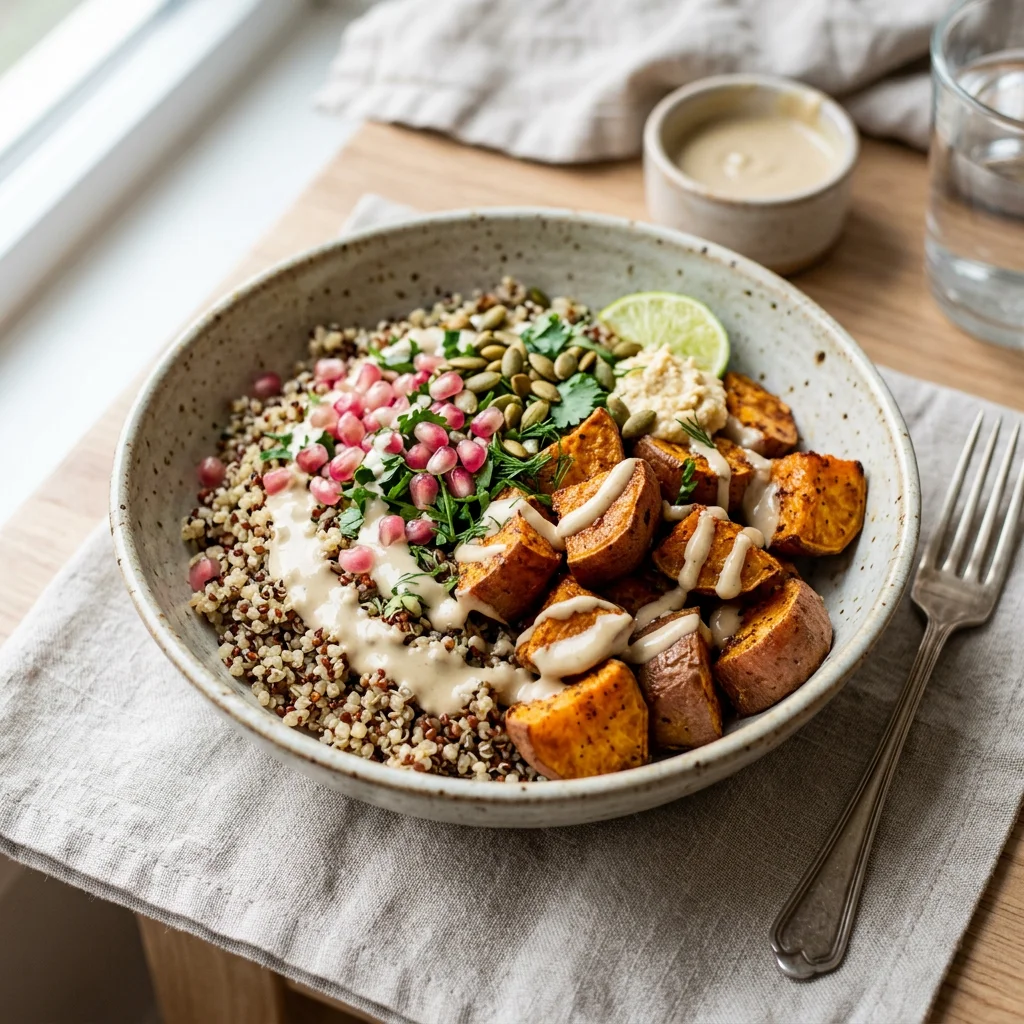
This bowl is a study in how to cool Pitta without sacrificing depth or satisfaction. Roasted sweet potato — one of the most universally balancing vegetables in the Ayurvedic pharmacopoeia — meets tahini, the Middle Eastern sesame paste that delivers cooling, heavy, oily qualities precisely where Pitta types need them. Steamed greens add the bitter rasa that Pitta craves but rarely gets in a Western diet, and a small side of cucumber raita ties the entire plate together with probiotic tang and additional cooling. The Pitta-cooling logic is embedded in every component. Sweet potato's sweet rasa and cooling virya directly pacify Pitta's heat. Tahini provides the healthy fats that Pitta needs for nerve insulation and hormonal balance — sesame is slightly warming in its whole form, but as tahini (ground, raw), the cooling and heavy gunas dominate, making it appropriate for Pitta in moderation. The steamed greens deliver the bitter taste that is Pitta's best medicine — bitter is cooling, drying, and detoxifying, exactly the qualities needed when internal heat accumulates. And the cucumber raita provides the cooling, soothing, probiotic counterpoint that makes the entire meal feel like a balm rather than just food. What elevates this bowl beyond a simple vegetable plate is the interplay of textures and temperatures: the caramelized sweetness of roasted sweet potato against the cool creaminess of tahini, the mineral bite of dark greens against the smooth tang of raita. It satisfies on every level — nutritional, energetic, and sensory — without the heaviness that burdens Pitta digestion.
Pacifies Pitta strongly. Balances Vata when served warm with generous tahini. May increase Kapha if portions are heavy or yogurt is excessive.
Ingredients
- 2 medium Sweet potatoes (scrubbed and cut into 1-inch cubes)
- 2 tbsp Olive oil
- 1 tsp Cumin (ground)
- 1/2 tsp Coriander (ground)
- 3/4 tsp Salt
- 4 cups Fresh spinach or kale (steamed until just wilted)
- 3 tbsp Tahini
- 2 tbsp Lemon juice
- 1 clove Garlic (minced or pressed)
- 2-3 tbsp Water (to thin the tahini dressing)
- 1/2 medium Cucumber (diced, for raita or garnish)
- 1/4 cup Plain yogurt (for raita)
- 1 tbsp Fresh mint (chopped, for garnish)
- 1 tbsp Sesame seeds (for garnish)
Instructions
- Preheat oven to 200C (400F). Toss the sweet potato cubes with olive oil, cumin, coriander, and half the salt. Spread in a single layer on a parchment-lined baking sheet.
- Roast for 25-30 minutes, flipping once halfway through, until golden and caramelized at the edges but soft within.
- While the sweet potatoes roast, prepare the tahini dressing: whisk together tahini, lemon juice, garlic, remaining salt, and water until smooth and pourable. It should be the consistency of heavy cream — add more water a teaspoon at a time if needed.
- Steam the greens: bring an inch of water to a boil in a pot with a steamer insert, add the spinach or kale, cover, and steam for 2-3 minutes until just wilted but still vibrantly green. Remove and season with a pinch of salt.
- Make a quick raita: combine the diced cucumber with yogurt and a pinch of salt and cumin. Set aside.
- Assemble the bowls: divide the steamed greens between two bowls as a bed. Top with the roasted sweet potato. Drizzle generously with tahini dressing. Add a spoonful of cucumber raita to each bowl.
- Garnish with fresh mint, sesame seeds, and an extra squeeze of lemon if desired.
Nutrition
These values are estimates calculated from the ingredient list and may vary based on brands, cooking methods, and serving size. Not a substitute for medical or dietary advice.
How This Recipe Affects Each Dosha
Vata
Sweet potato and tahini both offer the grounding, nourishing qualities Vata needs. The warm roasted vegetables and oily tahini dressing counter Vata's cold and dry tendencies. Served warm, this is a suitable Vata meal — though Vata types may want to reduce the raw greens and increase the cooked elements.
Pitta
This is a near-ideal Pitta meal. Sweet potato's cooling virya, the bitter taste of the greens, the cooling cucumber raita, and the sweet vipaka of the overall dish all work to draw heat down and out. The tahini provides the fat Pitta needs without the heating quality of most oils. Lemon adds a gentle sour note that stimulates Pitta's already-strong agni without aggravating it.
Kapha
The heavy, oily qualities of tahini and yogurt can increase Kapha. The sweet potato is acceptable for Kapha in moderation but should not be a daily staple. Kapha types should reduce tahini, skip the raita, and emphasize the bitter greens, which are Kapha's best food medicine.
The cumin and coriander in the roasted vegetables gently support agni. The lemon in the tahini dressing stimulates digestive secretions. The overall meal is moderate on agni — nourishing rather than strongly stimulating. Best at lunch when digestive fire is naturally strongest.
Nourishes: Rasa (plasma), Rakta (blood), Mamsa (muscle), Meda (fat tissue)
Adjustments by Constitution
For Vata Types
Replace olive oil with ghee for roasting. Add a pinch of black pepper and ginger powder to the sweet potatoes before roasting. Increase tahini in the dressing for more richness. Serve over warm cooked quinoa instead of raw greens, and wilt the spinach more thoroughly. Add avocado slices for extra grounding.
For Pitta Types
This bowl is already Pitta-balanced. For extra cooling, replace garlic in the dressing with a teaspoon of fresh mint. Add shredded coconut as a topping. Increase the cucumber raita portion. Use coconut oil instead of olive oil for roasting if Pitta is highly aggravated.
For Kapha Types
Reduce tahini to 1 tablespoon and thin with extra lemon juice rather than adding water. Skip the yogurt raita entirely and use a squeeze of lemon with fresh herbs instead. Halve the sweet potato and double the steamed greens. Add a pinch of cayenne or black pepper to the roasted vegetables. Use pumpkin seeds instead of sesame for garnish.
Seasonal Guidance
This bowl shines in autumn when sweet potatoes are at their peak and the body begins craving warming, grounding food. It carries well through winter with extra warming spices. In spring, lighten the tahini dressing and emphasize the bitter greens. In summer, this can be served at room temperature with extra cooling elements — more cucumber, more mint, lighter on the roasted component.
Best time of day: Lunch, when agni is strongest and can handle the combination of roasted root vegetables, tahini, and greens. Also suitable as an early dinner if portions are moderate.
Cultural Context
This bowl sits at the intersection of Middle Eastern and Ayurvedic food traditions — two ancient cuisines that share more common ground than most people realize. Tahini appears in texts spanning Mesopotamia, the Levant, and the Ottoman Empire as both food and medicine. Sweet potato, though a New World crop, was adopted into Ayurvedic dietary practice because its energetic profile — sweet, cooling, grounding — fills a niche that traditional Indian root vegetables also occupy. The combination of roasted root vegetable, mineral-rich greens, and a sesame-based sauce appears in variations across Lebanese, Palestinian, Israeli, and Turkish kitchens, each culture recognizing the same principle: that this combination of flavors and nutrients produces a meal greater than the sum of its parts.
Deeper Context
Origins
The sweet-potato-tahini bowl is a 21st-century creation — a contemporary wellness-restaurant format reflecting 2010s Western integration of Middle-Eastern ingredients (tahini, sumac, za'atar) into health-conscious cookery. Yotam Ottolenghi's cookbooks (Plenty 2010, Jerusalem 2012, Ottolenghi Simple 2018) drove much of this cross-cultural integration and helped establish tahini as a mainstream Western kitchen ingredient rather than a specialty Middle-Eastern item.
Food as Medicine
Sweet potato provides substantial beta-carotene, vitamin A, potassium, and fiber. Tahini contributes calcium, magnesium, iron, and lignans with estrogen-modulating activity. Spinach adds iron, folate, and vitamin K. Cucumber offers hydration and silica. Cumin supports digestion. A legitimately well-composed therapeutic preparation, despite its recent invention.
Ritual & Seasonal Role
Year-round contemporary wellness food. Not religiously ceremonial. Associated with 2010s Instagram-wellness aesthetics and with health-conscious urban restaurant culture. Features at wellness-café chains globally.
Classical Pairings & Cautions
Fresh herbs, a squeeze of lemon, additional protein (chickpeas, grilled chicken) as desired. Cautions: sesame allergies through tahini (major contraindication); nightshade sensitivity absent; FODMAP-friendly when garlic is omitted; high potassium contraindicates advanced renal disease; oxalate content in spinach limits frequency for kidney-stone patients.
Cross-Tradition View
How other medical and food-wisdom traditions read this dish. Each tradition names the same physiological reality in its own language — the agreements across them are where universal principles live.
Traditional Chinese Medicine
Sweet potato is sweet-warm and Spleen-Qi-tonifying; tahini is Yin-building and Kidney-essence-supporting; spinach builds Blood and moves Liver Qi; cucumber is cool and builds Yin; cumin is warm-aromatic and supports digestion. A comprehensive Qi-Yin-and-Blood tonic — TCM physicians would class this as restoration food with surprising therapeutic depth for a modern wellness preparation.
Greek Humoral
Cool-wet sanguine-building with warm-aromatic corrections. Galenic-balanced preparation — the combination of cooked root vegetable with cooling greens and warming seed-paste matches classical Mediterranean balanced-meal architecture.
Ayurveda
Cooling virya, sweet vipaka. Pacifies Pitta substantially through the sweet-potato-cooling base. Kapha mildly aggravated through the tahini-sweet-potato combination. Vata mildly aggravated through raw cucumber and greens, though the cumin and tahini compensate.
Modern Wellness Levantine Fusion
The sweet-potato-tahini bowl is a contemporary wellness-restaurant format — the marriage of roasted-root-vegetable technique with Levantine tahini architecture reflects the 2010s Western adoption of Middle-Eastern ingredients in health-conscious restaurant culture. Yotam Ottolenghi's influential cookbooks (Plenty, Jerusalem, Ottolenghi Simple) drove much of this cross-cultural integration. Not traditional in any specific cuisine, but represents how Levantine wellness has shaped global modern cookery.
Chef's Notes
The key to great roasted sweet potato is space — overcrowding the pan steams them instead of caramelizing. Use two baking sheets if needed. For the tahini dressing, quality matters enormously: a good tahini (Soom, Al Arz, or any brand where the ingredient list says only "sesame seeds") will be smooth and pourable, while cheap tahini can be gritty and bitter. If your tahini has separated, stir it thoroughly before measuring. This bowl works beautifully at room temperature, making it excellent for meal prep — roast the sweet potatoes and make the dressing in advance, then assemble fresh.
Frequently Asked Questions
Is Sweet Potato Tahini Bowl good for my dosha?
Pacifies Pitta strongly. Balances Vata when served warm with generous tahini. May increase Kapha if portions are heavy or yogurt is excessive. Sweet potato and tahini both offer the grounding, nourishing qualities Vata needs. This is a near-ideal Pitta meal. The heavy, oily qualities of tahini and yogurt can increase Kapha.
When is the best time to eat Sweet Potato Tahini Bowl?
Lunch, when agni is strongest and can handle the combination of roasted root vegetables, tahini, and greens. Also suitable as an early dinner if portions are moderate. This bowl shines in autumn when sweet potatoes are at their peak and the body begins craving warming, grounding food. It carries well through winter with extra warming spices. In spring, lighten the t
How can I adjust Sweet Potato Tahini Bowl for my constitution?
For Vata types: Replace olive oil with ghee for roasting. Add a pinch of black pepper and ginger powder to the sweet potatoes before roasting. Increase tahini in the For Pitta types: This bowl is already Pitta-balanced. For extra cooling, replace garlic in the dressing with a teaspoon of fresh mint. Add shredded coconut as a toppin
What are the Ayurvedic properties of Sweet Potato Tahini Bowl?
Sweet Potato Tahini Bowl has Sweet, Bitter, Astringent taste (rasa), Cooling energy (virya), and Sweet post-digestive effect (vipaka). Its qualities (gunas) are Heavy, Oily, Smooth, Grounding. It nourishes Rasa (plasma), Rakta (blood), Mamsa (muscle), Meda (fat tissue). The cumin and coriander in the roasted vegetables gently support agni. The lemon in the tahini dressing stimulates digestive secretions. The overall meal is moderate on agni — nourishing rather than strongly stimulating. Best at lunch when digestive fire is naturally strongest.