Shepherd's Pie
British Recipe
Overview
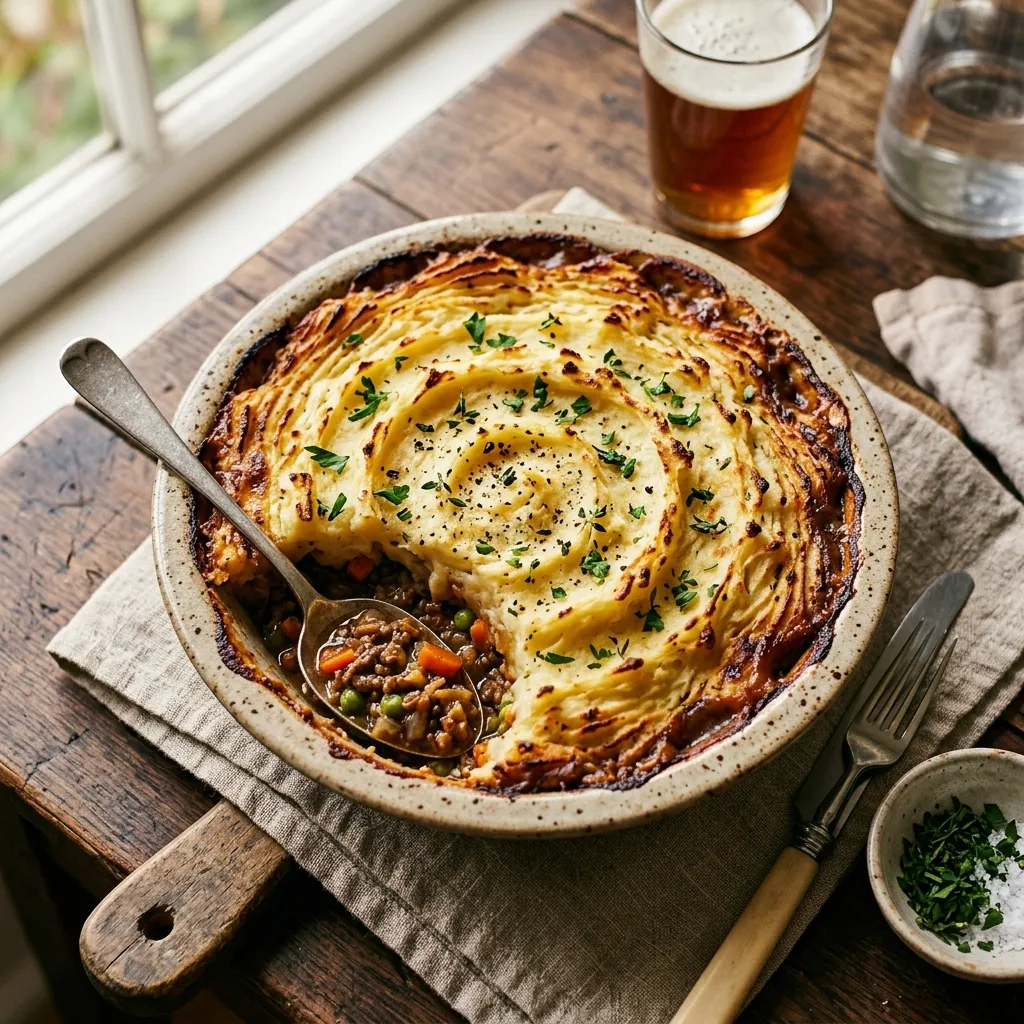
Shepherd's pie originated in the late 18th century as a practical way for British and Irish households to repurpose leftover roasted meat — specifically lamb or mutton, which distinguishes it from cottage pie (made with beef). The dish first appears in print around 1791, and by the Victorian era it had become a cornerstone of working-class cooking across England, Scotland, and Wales. The name references the shepherd's connection to sheep, and purists insist the term applies only when lamb is the protein. The construction is straightforward: seasoned ground lamb cooked with onions, carrots, and peas in a rich gravy, topped with a thick layer of mashed potato and baked until the surface turns golden and slightly crisp. The gravy typically includes Worcestershire sauce and sometimes tomato paste, building layers of umami beneath the creamy potato lid. Ayurvedically, this is a dense, grounding dish dominated by earth and water elements. Lamb is one of the most heating meats in the Ayurvedic classification, and combined with root vegetables and butter-laden potatoes, the dish delivers heavy, oily, and warm qualities that make it deeply satisfying in cold weather but potentially aggravating during warmer months or for constitutions already running hot.
Strongly pacifies Vata with its heavy, warm, oily qualities. Increases Pitta due to heating lamb and pungent spices. Increases Kapha due to heaviness, dairy, and starchy potato.
Grounding and strengthening during Vata-dominant conditions, convalescence from illness, or periods of physical exhaustion in cold weather. The combination of meat, root vegetables, and warm spices builds mamsa and meda dhatus.
Ingredients
- 700 g Ground lamb (not too lean)
- 1 large Onion (finely diced)
- 2 medium Carrots (diced small)
- 2 stalks Celery (diced)
- 1 cup Frozen peas
- 3 cloves Garlic (minced)
- 2 tbsp Tomato paste
- 2 tbsp Worcestershire sauce
- 1 cup Lamb or beef stock
- 1 tbsp Fresh thyme (leaves only)
- 1 tsp Fresh rosemary (finely chopped)
- 1 kg Potatoes (peeled and quartered)
- 60 g Butter
- 1/3 cup Whole milk
- 1.5 tsp Salt
- 1/2 tsp Black pepper
Instructions
- Boil the potatoes in salted water for 15-18 minutes until fork-tender. Drain thoroughly and mash with butter, milk, salt, and pepper until smooth and creamy. Set aside.
- Heat a large oven-safe skillet or deep pan over medium-high heat. Add the ground lamb and cook, breaking it apart, until well-browned and the fat has rendered — about 8 minutes. Drain off all but 2 tablespoons of fat.
- Reduce heat to medium. Add the onion, carrots, and celery to the lamb. Cook for 5-6 minutes until the vegetables begin to soften. Add garlic and cook 30 seconds more.
- Stir in the tomato paste and cook for 1 minute to caramelize slightly. Add Worcestershire sauce, stock, thyme, and rosemary. Bring to a simmer and cook for 10 minutes until the gravy thickens and the carrots are tender.
- Stir in the frozen peas and season with salt and pepper. Remove from heat. Preheat the oven to 200°C (400°F).
- Spread the mashed potato evenly over the lamb filling, starting from the edges to create a seal. Use a fork to create ridges across the surface — these will crisp up during baking.
- Dot the potato surface with small pieces of butter. Place on a baking sheet to catch drips.
- Bake for 25-30 minutes until the potato topping is golden brown and the filling is bubbling at the edges. Let rest for 10 minutes before serving.
Nutrition
These values are estimates calculated from the ingredient list and may vary based on brands, cooking methods, and serving size. Not a substitute for medical or dietary advice.
How This Recipe Affects Each Dosha
Vata
Deeply grounding for Vata in every dimension. The lamb provides heating, unctuous nourishment that counteracts Vata's cold and dry tendencies. Root vegetables and mashed potato deliver the earth element that Vata craves. The buttery, warm, and moist qualities of the complete dish are among the most Vata-pacifying in British cooking.
Pitta
Lamb is classified as one of the most heating meats in Ayurveda, and combined with garlic, black pepper, and Worcestershire sauce, this dish generates significant internal heat. Pitta types will find it aggravating during summer or when inflammation is already present. The potato topping offers some cooling balance, but not enough to offset the heating core.
Kapha
The combination of starchy potatoes, butter, milk, and fatty lamb concentrates the heavy, dense, and oily qualities that slow Kapha digestion. The earth and water elements dominate. Kapha types will feel sluggish after eating a full portion, particularly in the evening when digestive fire is naturally lower.
The heaviness of this dish requires strong agni to digest properly. The thyme, rosemary, and black pepper provide some digestive support, but the overall density means this meal will dampen a weak digestive fire. Best consumed at midday by those with moderate to strong digestion.
Nourishes: Mamsa (muscle), Meda (fat), Asthi (bone via stock minerals)
Adjustments by Constitution
For Vata Types
This dish is well-suited to Vata as written. For additional support, add a generous pinch of ground cumin and black pepper to the lamb filling. Use plenty of butter in the mashed potato and serve with a small side of warm, cooked greens dressed in olive oil.
For Pitta Types
Replace lamb with turkey mince, which is significantly cooler. Omit garlic and Worcestershire sauce, adding fresh fennel and coriander to the filling instead. Use sweet potato for the topping — it carries less starchy heaviness and adds a natural sweetness that pacifies Pitta. Finish with fresh mint.
For Kapha Types
Use lean turkey or chicken mince instead of lamb to reduce fat and heaviness. Replace mashed potato with a cauliflower mash blended with a small amount of goat milk and mustard. Add extra black pepper, dried ginger, and a pinch of cayenne to the filling. Keep the portion modest and serve at lunch when agni is strongest.
Seasonal Guidance
A quintessential cold-weather dish. The heavy, grounding qualities are ideal during Vata season (autumn) and the cold of winter when the body needs dense fuel. Avoid during summer — the heating lamb and heavy potato will overwhelm Pitta-season digestion.
Best time of day: Lunch or early dinner. The heavy, dense nature requires peak digestive fire to process without creating ama.
Cultural Context
Shepherd's pie reflects the thrift and resourcefulness of British agrarian life, where leftover Sunday roast lamb was transformed into Monday's dinner. The dish became a symbol of wartime and post-war economy cooking — filling, affordable, and requiring no exotic ingredients. In British pubs today, it remains one of the most ordered comfort dishes, particularly during the colder months. Regional variations exist across Britain: some add a layer of cheese on top, others include turnip or parsnip in the mash. The distinction between shepherd's pie (lamb) and cottage pie (beef) is fiercely defended in some households and cheerfully ignored in others.
Deeper Context
Origins
The term cottage pie appears first in 1791 English cookbooks referring to any meat-and-potato topped pie eaten by rural cottage-dwellers. The shepherd's pie (lamb-specific) name is later, probably late 19th century, reflecting the Scottish and Irish Highland sheep-farming tradition. Potato integration in the 17th-18th centuries created the modern form. The dish spread through the British Empire via Irish and Scottish diaspora, and is now considered representative Celtic-British cookery globally.
Food as Medicine
Lamb is a Yang tonic in TCM terms and a classical Ayurvedic meat for Vata depletion. Iron content is significant; carnitine and zinc content substantial. Rosemary is a classical European memory-and-digestive herb with modern research support for cognitive benefit and antioxidant activity. Potato provides easy-to-digest carbohydrate energy. The dish is accidentally well-suited as cold-season restoration food.
Ritual & Seasonal Role
Winter Sunday dinner, Saint Patrick's Day Irish-American tradition, comfort food in the autumn and winter months. Not religiously ceremonial in most contexts, though carrying strong Celtic-diaspora identity weight. Featured in Irish-pub menus globally; appears on British-pub menus as a daily special rather than a permanent fixture.
Classical Pairings & Cautions
Peas, HP sauce, Worcestershire sauce, a side of crusty bread to soak the gravy. A pint of Guinness or a glass of red wine alongside. Cautions: religious lamb restrictions (Jain strict vegetarian); heavy and rich — cardiac and Kapha restrictions apply; gluten intolerance precludes standard flour-thickened versions; pregnancy should limit rosemary to culinary quantities only.
Cross-Tradition View
How other medical and food-wisdom traditions read this dish. Each tradition names the same physiological reality in its own language — the agreements across them are where universal principles live.
Traditional Chinese Medicine
Lamb is strongly warming and builds Blood and Qi — TCM classifies it as the warmest of common meats, specifically prescribed for Yang deficiency; potato tonifies Spleen Qi; carrot is Blood-supporting and moves Liver Qi; thyme and rosemary are warming and dispersing. A Qi-and-Blood tonic archetypal — classical TCM winter restoration for cold-deficient types.
Greek Humoral
Hot-wet sanguine-building. Lamb is a specifically Galenic favorite for sanguine-melancholic constitutions, with classical references in both Hippocratic and Arab-Galenic (Avicenna) sources praising the meat for its balanced warming-without-excess-heat character. A winter dish par excellence.
Ayurveda
Heating virya, pungent vipaka. Pacifies Vata substantially through lamb warmth; aggravates Kapha through the starch-meat heaviness; Pitta mildly aggravated through the warming spice-meat combination. A winter restoration dish for depleted Vata types, inappropriate for daily household consumption.
Celtic Scottish-Irish Cottage
Shepherd's pie (lamb-based) vs. cottage pie (beef-based) is a Celtic-British regional distinction. The dish descends from medieval Scottish and Irish peasant cookery, where leftover roast lamb was repurposed under a potato topping for the next day's meal. Potato introduction in the 17th and 18th centuries created the modern form; the Irish famine era (mid-19th century) gave the dish its economic-necessity working-class anchor.
Chef's Notes
The key to a proper shepherd's pie is reducing the lamb filling until it is thick and cohesive — a soupy filling makes the potato topping sink. Brown the lamb aggressively; the fond (browned bits on the pan bottom) provides most of the flavor depth. For extra richness, stir an egg yolk into the mashed potato — it helps the top set firmly and brown more evenly. Leftovers reheat well at 180°C for 20 minutes covered with foil.
Frequently Asked Questions
Is Shepherd's Pie good for my dosha?
Strongly pacifies Vata with its heavy, warm, oily qualities. Increases Pitta due to heating lamb and pungent spices. Increases Kapha due to heaviness, dairy, and starchy potato. Deeply grounding for Vata in every dimension. Lamb is classified as one of the most heating meats in Ayurveda, and combined with garlic, black pepper, and Worcestershire sauce, this dish generates significant internal heat. The combination of starchy potatoes, butter, milk, and fatty lamb concentrates the heavy, dense, and oily qualities that slow Kapha digestion.
When is the best time to eat Shepherd's Pie?
Lunch or early dinner. The heavy, dense nature requires peak digestive fire to process without creating ama. A quintessential cold-weather dish. The heavy, grounding qualities are ideal during Vata season (autumn) and the cold of winter when the body needs dense fuel. Avoid during summer — the heating lamb a
How can I adjust Shepherd's Pie for my constitution?
For Vata types: This dish is well-suited to Vata as written. For additional support, add a generous pinch of ground cumin and black pepper to the lamb filling. Use pl For Pitta types: Replace lamb with turkey mince, which is significantly cooler. Omit garlic and Worcestershire sauce, adding fresh fennel and coriander to the filling
What are the Ayurvedic properties of Shepherd's Pie?
Shepherd's Pie has Sweet, Salty, Pungent taste (rasa), Heating energy (virya), and Pungent post-digestive effect (vipaka). Its qualities (gunas) are Heavy, Oily, Warm, Dense. It nourishes Mamsa (muscle), Meda (fat), Asthi (bone via stock minerals). The heaviness of this dish requires strong agni to digest properly. The thyme, rosemary, and black pepper provide some digestive support, but the overall density means this meal will dampen a weak digestive fire. Best consumed at midday by those with moderate to strong digestion.