Shiro
Ethiopian Recipe
Overview
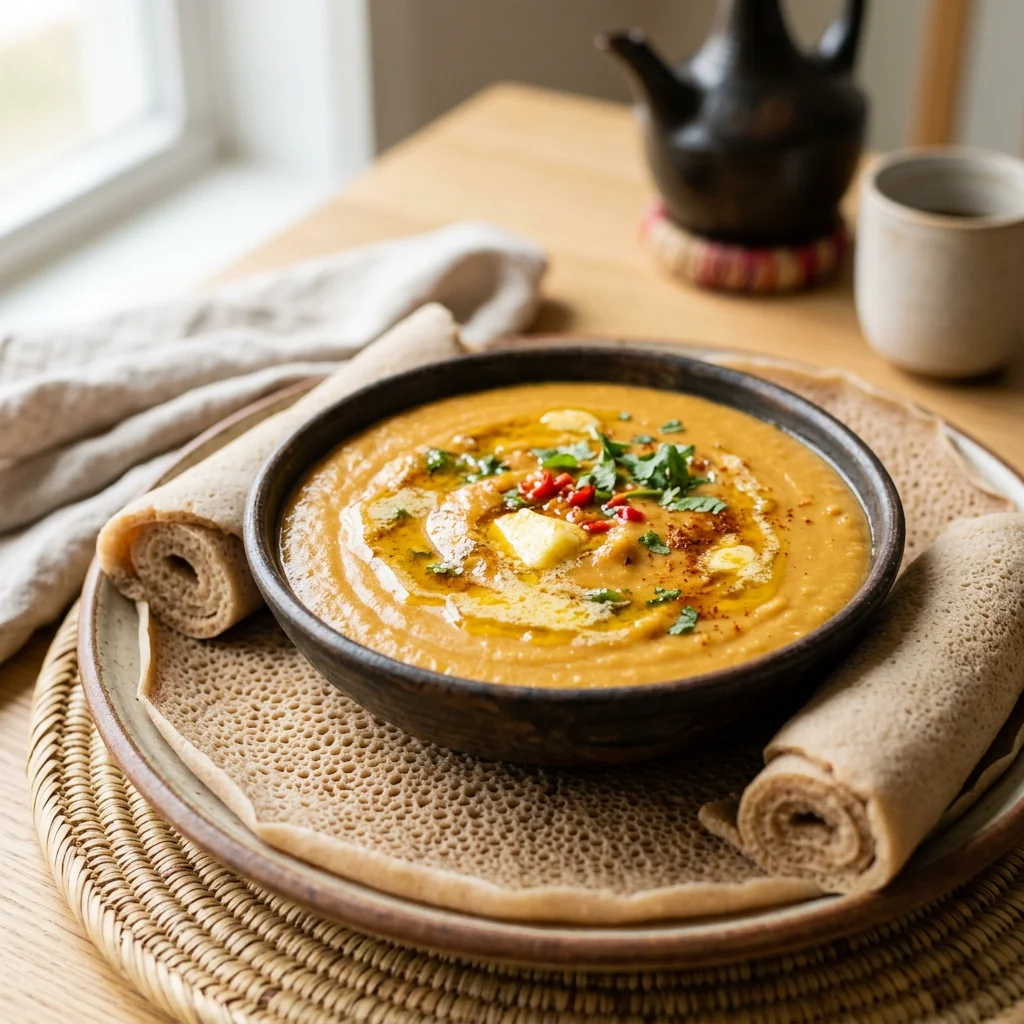
Shiro is the silky, humble chickpea flour stew that may be the most frequently eaten dish in all of Ethiopia. Made from roasted chickpea flour (shiro powder) — sometimes blended with ground spices, dried herbs, and legume flours into a proprietary family mix — it cooks in minutes and produces a thick, velvety stew with a depth of flavor that belies its simplicity. In a country where millions rely on affordable, nutrient-dense food, shiro is the great equalizer: inexpensive, protein-rich, endlessly satisfying, and deeply tied to national identity. The basic method is disarmingly simple: slow-cook onions until deeply caramelized, add oil or niter kibbeh, stir in shiro powder with water, and simmer until thick. Yet within this simplicity lies enormous variation. "Shiro tegamino" is a richer version baked in a clay pot with extra butter. "Bozena shiro" adds chunks of dried beef for a heartier, non-fasting preparation. Every family guards their particular shiro powder blend, often prepared in large batches with proprietary ratios of chickpea, broad bean, lentil flour, and a carefully calibrated spice mix. Ayurvedically, shiro represents a fascinating preparation: roasted chickpea flour is lighter and more digestible than whole chickpeas, and the roasting process itself reduces the vata-aggravating qualities that make legumes difficult for sensitive digestion. The slow-cooked onion base adds sweetness and grounding, while the spice blend provides the pungent, bitter, and astringent tastes that complete the rasa spectrum.
Balances Vata well due to warmth and oiliness. Neutral to mildly increasing for Pitta. May increase Kapha due to the heavy, dense nature of chickpea flour.
Ingredients
- 1 cup Shiro powder (roasted chickpea flour) (pre-spiced Ethiopian blend preferred)
- 2 large Red onions (very finely diced)
- 3 tbsp Niter kibbeh (Ethiopian spiced butter) (or vegetable oil for fasting version)
- 3 cloves Garlic (minced)
- 1 tsp Fresh ginger (grated)
- 1 medium Tomato (finely diced)
- 1 tbsp Berbere spice blend (optional, for a spicier shiro)
- 2.5 cups Water (warm)
- 3/4 tsp Salt (or to taste)
- 1 whole Fresh green chili (slit lengthwise, optional)
Instructions
- Cook the finely diced onions in a dry pot over medium heat for 8-10 minutes, stirring frequently, until they soften and begin to caramelize. This is the same foundational step used across Ethiopian stew-making.
- Add the niter kibbeh (or oil) and stir to combine. Cook for 2-3 more minutes until the onions are deeply golden and fragrant.
- Add the garlic, ginger, and optional berbere. Stir for 1 minute to bloom the aromatics.
- Add the diced tomato and cook until softened, about 3 minutes. If using the green chili, add it now.
- Slowly pour in the warm water while stirring. Bring to a gentle simmer.
- Gradually whisk in the shiro powder a few tablespoons at a time, stirring constantly to prevent lumps. Continue stirring as the mixture thickens — this is the critical step, as shiro can go from silky to lumpy in seconds if the powder is added too fast.
- Reduce heat to low and simmer for 10-15 minutes, stirring frequently, until the shiro reaches a thick, creamy, porridge-like consistency. It should hold its shape on injera without being stiff.
- Adjust salt, drizzle with a little extra niter kibbeh if desired, and serve immediately on a platter of injera alongside other dishes.
Nutrition
These values are estimates calculated from the ingredient list and may vary based on brands, cooking methods, and serving size. Not a substitute for medical or dietary advice.
How This Recipe Affects Each Dosha
Vata
The warm, heavy, oily qualities of shiro are deeply stabilizing for Vata. Roasted chickpea flour is lighter than whole chickpeas and less likely to cause gas and bloating. The niter kibbeh provides the oleation Vata needs, and the slow-cooked onion base grounds erratic Vata energy.
Pitta
Moderately suitable for Pitta. The sweet, heavy qualities of chickpea flour are Pitta-balancing, but the niter kibbeh spices and optional berbere add heat. Without berbere and with plain ghee substituted for niter kibbeh, shiro becomes quite Pitta-friendly.
Kapha
The dense, heavy nature of chickpea flour and the oiliness of niter kibbeh can increase Kapha. Kapha types should eat smaller portions and ensure the dish is well-spiced to compensate for the heaviness. The fasting version with oil is preferable.
The roasting of the chickpea flour pre-processes it, reducing the raw, heavy quality that makes uncooked legume flours difficult to digest. The spice blend in the powder and the niter kibbeh together support agni, making this more digestible than its dense consistency might suggest.
Nourishes: Rasa (plasma), Mamsa (muscle), Meda (fat)
Adjustments by Constitution
For Vata Types
Use extra niter kibbeh (4 tablespoons) and add a pinch of korarima (Ethiopian cardamom) and fenugreek seed during cooking for their carminative, warming properties. Serve with warm injera and a small side of gomen (cooked greens) for balance.
For Pitta Types
Substitute plain ghee for niter kibbeh and omit berbere entirely. Reduce garlic to 1 clove. Add a squeeze of fresh lemon at the end and serve alongside cooling ayib (fresh cheese) to offset any residual heat.
For Kapha Types
Use the fasting oil-based version with only 1 tablespoon of oil. Add 1 tablespoon of berbere and a pinch of mitmita to increase the pungent quality. Thin the shiro slightly with extra water so it is less dense, and serve with a generous portion of gomen rather than extra injera.
Seasonal Guidance
Best during cooler months when the heavy, warming qualities are welcome. In autumn and winter, make it rich with generous niter kibbeh. In spring, lighten it with the oil-based fasting version and pair with bitter greens to balance the heaviness. In summer, eat small portions only, or switch to lighter lentil-based wots.
Best time of day: Lunch, when agni is strongest and can handle the dense chickpea flour
Cultural Context
Shiro is often called the "national dish of Ethiopia" alongside injera — not because it is the most celebrated, but because it is the most eaten. Its affordability and speed of preparation make it the food of the working class, students, monks, and anyone who needs a deeply satisfying, protein-rich meal in minutes. During the long Orthodox fasting seasons — which can stretch for 55 consecutive days before Easter — shiro is eaten daily by millions. The family shiro powder blend is a source of pride, and bags of custom-ground shiro powder are common gifts between households.
Deeper Context
Origins
Chickpea cultivation in Ethiopian highlands is ancient — archaeobotanical evidence shows continuous cultivation for at least 4,000 years. Ethiopia remains a major world producer of both kabuli and desi chickpea varieties, with several endemic varieties not found elsewhere. Shiro as a dish is the primary cultural technology for converting this protein crop into a fasting-compatible everyday staple that can be stored as flour and reconstituted quickly.
Food as Medicine
Chickpea combined with the teff-grain injera provides complete amino acid complementation — the legume-and-grain pairing is nutritionally identical to Latin American rice-and-beans or Indian dal-and-rice. High fiber content, substantial iron, and modest zinc. Classical Ayurvedic preparations use chickpea flour (besan) for postpartum skin care and for anti-inflammatory support. The niter kibbeh variant adds fat-soluble vitamin delivery that the fasting-oil variant loses.
Ritual & Seasonal Role
Fasting-day essential — one of the three primary fasting-day stews (alongside gomen and misir wot). Year-round. Served with injera at nearly every fasting-day meal in observant Ethiopian Orthodox households. A cultural workhorse dish rather than a celebration food.
Classical Pairings & Cautions
Injera, ayib (non-fasting days only), gomen, misir wot. Cautions: FODMAP sensitivity from the onion-garlic-chickpea combination (substantial in IBS patients); legume-induced gas in weak agni; chickpea allergies are rare but present; strict lactose intolerance requires the fasting-oil version; the flour-based preparation is less fiber-rich than whole-chickpea cookery.
Cross-Tradition View
How other medical and food-wisdom traditions read this dish. Each tradition names the same physiological reality in its own language — the agreements across them are where universal principles live.
Traditional Chinese Medicine
Chickpea flour is Spleen-Qi-tonifying and builds Kidney essence; onion and garlic are dispersing; ginger is warming; niter kibbeh is warm-wet. A Qi-building dispersing preparation. TCM physicians would class this as appropriate winter food for Spleen-deficiency patterns, with the chickpea providing sustained protein for Qi restoration.
Greek Humoral
Hot-dry corrected by chickpea protein body. Sanguine-building. Galenic physicians would recognize chickpea flour preparations as classical working-class sustenance — the combination of cheap plant protein with aromatic spice is a cross-Mediterranean pattern (Italian farinata, Provençal socca, Libyan shroro) that Ethiopian shiro joins.
Ayurveda
Heating virya, sweet vipaka. Chickpea is a classical Ayurvedic protein with its own substantial materia medica — considered heating and Vata-reducing. Tridoshic with proper ghee content. The Ethiopian preparation is close in principle to Indian besan-based preparations (kadhi, pakora base) despite the entirely different spice register.
Habesha Orthodox Fasting
An essential Orthodox fasting dish — legumes are permitted during fast, and chickpea flour shiro provides concentrated plant protein on days when meat and dairy are prohibited. Shiro tegabino (thin, broth-like) versus shiro tegamino (thick, almost spread-able) are the two major regional variations. Chickpea cultivation in Ethiopian highlands is ancient — Ethiopia is a major world producer of kabuli chickpeas, and the local varieties are botanically distinct from South Asian varieties.
Chef's Notes
Pre-spiced shiro powder from Ethiopian grocers produces the most authentic result — the spice blend is already calibrated and toasted into the flour. If using plain chickpea flour (besan), toast it in a dry pan first and add your own spice blend: ground fenugreek, coriander, black pepper, cardamom, and a touch of bishop's weed. The key technique is adding the powder gradually to warm liquid while stirring constantly. Shiro thickens dramatically as it sits, so aim for a slightly looser consistency than desired — it will firm up within minutes of leaving the heat. For shiro tegamino, transfer the finished stew to a small clay dish, top with extra niter kibbeh, and bake at 200C for 10 minutes until bubbling.
Frequently Asked Questions
Is Shiro good for my dosha?
Balances Vata well due to warmth and oiliness. Neutral to mildly increasing for Pitta. May increase Kapha due to the heavy, dense nature of chickpea flour. The warm, heavy, oily qualities of shiro are deeply stabilizing for Vata. Moderately suitable for Pitta. The dense, heavy nature of chickpea flour and the oiliness of niter kibbeh can increase Kapha.
When is the best time to eat Shiro?
Lunch, when agni is strongest and can handle the dense chickpea flour Best during cooler months when the heavy, warming qualities are welcome. In autumn and winter, make it rich with generous niter kibbeh. In spring, lighten it with the oil-based fasting version and pai
How can I adjust Shiro for my constitution?
For Vata types: Use extra niter kibbeh (4 tablespoons) and add a pinch of korarima (Ethiopian cardamom) and fenugreek seed during cooking for their carminative, warmi For Pitta types: Substitute plain ghee for niter kibbeh and omit berbere entirely. Reduce garlic to 1 clove. Add a squeeze of fresh lemon at the end and serve alongsid
What are the Ayurvedic properties of Shiro?
Shiro has Sweet, Astringent, Pungent taste (rasa), Heating energy (virya), and Sweet post-digestive effect (vipaka). Its qualities (gunas) are Heavy, Warm, Oily. It nourishes Rasa (plasma), Mamsa (muscle), Meda (fat). The roasting of the chickpea flour pre-processes it, reducing the raw, heavy quality that makes uncooked legume flours difficult to digest. The spice blend in the powder and the niter kibbeh together support agni, making this more digestible than its dense consistency might suggest.