Scrambled Eggs
American Recipe
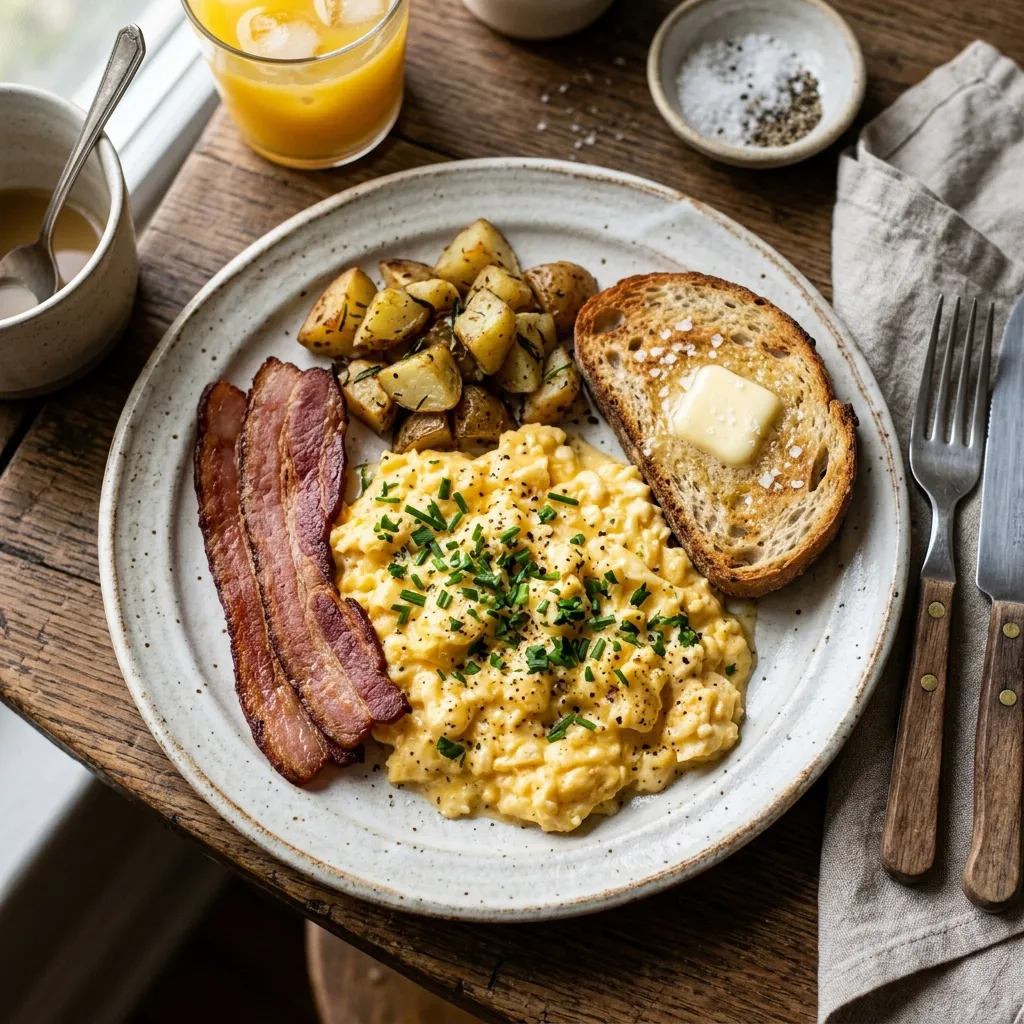
Overview
Scrambled eggs emerged as a staple of the American breakfast table during the early twentieth century, when industrialized egg production made them affordable and accessible year-round. The technique itself — stirring eggs in a hot pan with fat until they form soft, moist curds — appears in cookbooks dating back to the 1600s across English and French traditions. In the United States, scrambled eggs became synonymous with the diner breakfast, served alongside toast, bacon, and hash browns as part of the calorie-dense morning meal that fueled an agricultural and industrial workforce. From an Ayurvedic perspective, eggs are sweet in rasa with a heating virya, making them grounding and nourishing but potentially aggravating for pitta types when consumed in excess. The combination of protein and fat in scrambled eggs provides sustained energy without the blood sugar spikes of grain-heavy breakfasts. Cooked with ghee or butter, the dish becomes more sattvic and easier to digest than eggs prepared with vegetable oils. The key to exceptional scrambled eggs lies in low heat and patience. High heat produces rubbery, dry curds with a sulfurous flavor, while gentle stirring over medium-low heat creates custard-like texture. Adding dairy — whether cream, milk, or creme fraiche — introduces additional moisture that steams during cooking, producing lighter curds. Salt should be added at the end, as early salting draws out moisture and can toughen the proteins.
Scrambled eggs are highly grounding and stabilizing for vata due to their heavy, moist, oily qualities and sweet rasa. The heating virya can aggravate pitta in excess, particularly during summer or inflammatory conditions. Kapha types should eat eggs in moderation as the heavy, dense qualities increase earth and water elements.
Scrambled eggs prepared with ghee and digestive spices serve as a recovery food during convalescence, postpartum, and periods of vata-type exhaustion. The high bioavailability of egg protein supports tissue repair, while the fat content ensures absorption of fat-soluble vitamins A, D, E, and K present in the yolks.
Ingredients
- 4 large eggs
- 1 tablespoon butter (ghee preferred for Ayurvedic benefits)
- 2 tablespoons whole milk or cream
- 1/4 teaspoon salt
- 1 pinch black pepper (freshly ground)
- 1 tablespoon chives (finely chopped, optional)
Instructions
- Crack four eggs into a mixing bowl. Add the milk or cream but do not add salt yet.
- Beat the eggs vigorously with a fork for 30-40 seconds until the whites and yolks are fully combined and the mixture is a uniform pale yellow with no streaks.
- Place a non-stick or well-seasoned skillet over medium-low heat. Add the butter or ghee and let it melt completely, tilting the pan to coat the surface evenly.
- Pour the egg mixture into the pan. Let it sit undisturbed for 20-30 seconds until you see the edges begin to set.
- Using a silicone spatula, gently push the eggs from the edges toward the center, allowing uncooked egg to flow into the cleared space. Work slowly — this is not a stir-fry.
- Continue this folding motion every 15-20 seconds, creating large, soft curds. Resist the urge to stir constantly, which produces small, dry pieces.
- When the eggs are about 75% set but still look slightly wet and glossy on top, remove the pan from heat. The residual heat will finish cooking them. Add salt and pepper now.
- Let the eggs rest in the pan for 20 seconds off heat, then transfer immediately to warmed plates. Garnish with chives if using. Serve without delay — scrambled eggs cool and stiffen quickly.
Nutrition
These values are estimates calculated from the ingredient list and may vary based on brands, cooking methods, and serving size. Not a substitute for medical or dietary advice.
How This Recipe Affects Each Dosha
Vata
Eggs are among the best animal proteins for pacifying vata dosha. Their heavy, moist, oily qualities directly counter vata's light, dry, mobile nature. The sweet rasa nourishes depleted tissues, while the heating virya supports vata's cold tendency. Scrambled eggs cooked in ghee with a pinch of black pepper make an ideal vata breakfast, providing sustained energy and grounding. The protein-fat combination stabilizes blood sugar, reducing the erratic energy patterns common in vata imbalance.
Pitta
The heating virya of eggs can increase pitta, especially during summer months or when pitta is already elevated. However, the sweet rasa and heavy guna provide nourishment without being overly stimulating in moderate amounts. Pitta types should limit eggs to 2-3 times per week and avoid adding hot spices like cayenne or excessive black pepper. Cooking with ghee rather than butter helps, as ghee is cooling despite being a dairy fat. The addition of cooling herbs like cilantro or dill can further balance the heating quality.
Kapha
Eggs increase kapha due to their heavy, dense, moist qualities — all attributes that kapha already has in abundance. The sweet rasa and sweet vipaka further build tissue mass, which kapha types typically do not need. Kapha individuals can still enjoy scrambled eggs occasionally but should balance them with pungent and bitter additions. Cooking with less fat, adding stimulating spices, and pairing with light, dry sides like toasted bread helps offset the congesting potential. Avoid adding cream or cheese, which compounds the heavy qualities.
Scrambled eggs are moderately easy to digest when cooked with ghee over low heat, as the soft curd texture requires less mechanical breakdown than fried or hard-boiled preparations. The heating virya mildly stimulates agni without overwhelming it. However, the heavy guna means large portions can dampen digestive fire in those with already weak agni — two eggs per serving is sufficient for most constitutions.
Nourishes: Rasa (plasma), Rakta (blood), Mamsa (muscle), Shukra (reproductive)
Adjustments by Constitution
For Vata Types
Cook with generous ghee — up to 2 tablespoons — for maximum grounding effect. Add a pinch of hing (asafoetida) and cumin while melting the ghee, both of which support vata digestion. Stir in a tablespoon of cream cheese or sour cream at the end for extra unctuousness. Serve with warm, buttered toast rather than cold sides. A squeeze of lemon adds sour rasa, which further pacifies vata.
For Pitta Types
Replace butter with coconut oil or ghee to reduce heating potential. Omit black pepper entirely and add fresh cilantro and a pinch of turmeric instead. Use only 2 eggs rather than 4 per serving to reduce the heating protein load. Pair with cooling cucumber slices or avocado on the side. Add a small amount of fresh dill, which has a cooling effect and complements eggs well in American cooking.
For Kapha Types
Use only 1 teaspoon of ghee or cook with a light coating of mustard oil to add pungency. Add 1/4 teaspoon each of black pepper, turmeric, and a pinch of cayenne to the egg mixture before cooking. Fold in sauteed spinach, mushrooms, or bell peppers to add lightness and bitter/pungent rasas. Skip the milk or cream addition entirely. Serve without toast or with a single thin slice of dry-toasted rye bread.
Seasonal Guidance
Best consumed during cold-weather months when the body needs warming, grounding nourishment and agni is naturally stronger. In summer, reduce portion size and add cooling garnishes like cilantro or pair with fresh vegetables. Spring consumption should include stimulating spices to offset the heavy qualities during kapha season.
Best time of day: Ideal as a morning meal between 7-9 AM when digestive fire is building. Eggs consumed at breakfast provide sustained energy through the morning without the mid-morning crash associated with grain-based breakfasts.
Cultural Context
Scrambled eggs became a fixture of American breakfast culture in the early 1900s alongside the rise of industrial egg farming and the American diner. Prior to refrigeration, eggs were seasonal — hens lay more in spring and summer — making year-round scrambled eggs a relatively modern convenience. The classic American preparation diverges from the French method (which uses a double boiler for ultra-creamy curds) in favor of direct-heat cooking in a skillet. Diner culture standardized the dish as part of the 'two eggs any style' breakfast that remains on menus across the country. The shift toward pasture-raised and organic eggs since the 2000s has renewed interest in egg quality as a flavor variable.
Deeper Context
Origins
Eggs as food are Paleolithic — domesticated chicken eggs have been consumed continuously across every continent for at least 3,000 years. The scrambled technique appears in medieval European cookbooks, refined by Escoffier at the turn of the 20th century into two distinct schools: the French low-slow with cream, and the British-American hot-fast without. American diner tradition formalized the fast-scrambled version as breakfast canon; the French technique remains the fine-dining standard.
Food as Medicine
Eggs hold classical restoration-food status across Chinese, Greek, Ayurvedic, and European folk medicine. Post-illness and postpartum nutrition across multiple traditions. Easily-digested protein when scrambled soft. Modern nutrition identifies eggs as one of the most bioavailable sources of complete protein, choline, and fat-soluble vitamins (A, D, E, K). The traditional uses for egg in convalescence align tightly with current nutritional science.
Ritual & Seasonal Role
Breakfast staple, year-round. Not religiously ceremonial in most cultures, though eggs carry symbolic weight in specific observances (Passover seder, Orthodox Christian Easter, spring-equinox traditions globally). American weekend breakfast and diner culture give scrambled eggs consistent ritual weight. Appears in nearly every hotel-breakfast service, hospital-food tray, and military mess hall.
Classical Pairings & Cautions
Bacon, toast, hash browns, breakfast sausage, biscuits and gravy. Cautions: high cholesterol (modern research has largely reversed the earlier cholesterol alarm, but specific patients still require moderation); salmonella risk in raw or undercooked eggs — pregnant, elderly, and immunocompromised patients should use pasteurized eggs or cook fully; egg allergies are common in children and severe.
Cross-Tradition View
How other medical and food-wisdom traditions read this dish. Each tradition names the same physiological reality in its own language — the agreements across them are where universal principles live.
Traditional Chinese Medicine
Eggs build Yin and Blood — classical TCM postpartum and convalescent food; butter is warm-moistening; black pepper is hot-dry and disperses cold. A Yin-building Qi tonic with mild heat-moving corrective. Appropriate for Yin deficiency patterns, for post-illness recovery, and for thin-nervous constitutions. Classical TCM uses egg preparations specifically for postpartum women and for those recovering from prolonged illness.
Greek Humoral
Hot-wet. Sanguine-building. Eggs in any form are classical Galenic restoration food — Hippocratic and Galenic texts both recommend them for the weak, the elderly, and those recovering from blood loss. The scrambled format makes eggs easier on weak digestion than fried or hard-boiled preparations.
Ayurveda
Heating virya, pungent vipaka. Vata-pacifying through warmth and unctuousness. Pitta-aggravating through egg's inherent heat. Kapha-neutral to mildly-aggravating. Egg consumption is contested in classical Ayurveda's vegetarian tradition, but in actual practice widely consumed in non-strictly-vegetarian households and specifically used in Vata-restoration diets.
European / French Technique
Auguste Escoffier formalized scrambled egg technique in his 1903 Le Guide Culinaire (oeufs brouillés). The French low-and-slow cream-finished method is one technique; the faster American hot-pan version is another. The French tradition treats scrambled eggs as a vehicle for truffle, cream, and fine herbs; the American diner version treats them as a protein-focused breakfast base. Both descend from medieval European egg-cookery traditions.
Chef's Notes
The single most common mistake is overcooking. Remove the eggs from heat while they still look underdone — they continue cooking on the plate. For richer flavor, substitute 1 tablespoon of creme fraiche for the milk, stirred in during the last 30 seconds of cooking. Ghee produces a nuttier flavor than butter and tolerates the heat better without browning. Leftover scrambled eggs do not store well; cook only what you plan to eat immediately.
Frequently Asked Questions
Is Scrambled Eggs good for my dosha?
Scrambled eggs are highly grounding and stabilizing for vata due to their heavy, moist, oily qualities and sweet rasa. The heating virya can aggravate pitta in excess, particularly during summer or inflammatory conditions. Kapha types should eat eggs in moderation as the heavy, dense qualities increase earth and water elements. Eggs are among the best animal proteins for pacifying vata dosha. The heating virya of eggs can increase pitta, especially during summer months or when pitta is already elevated. Eggs increase kapha due to their heavy, dense, moist qualities — all attributes that kapha already has in abundance.
When is the best time to eat Scrambled Eggs?
Ideal as a morning meal between 7-9 AM when digestive fire is building. Eggs consumed at breakfast provide sustained energy through the morning without the mid-morning crash associated with grain-based breakfasts. Best consumed during cold-weather months when the body needs warming, grounding nourishment and agni is naturally stronger. In summer, reduce portion size and add cooling garnishes like cilantro or pa
How can I adjust Scrambled Eggs for my constitution?
For Vata types: Cook with generous ghee — up to 2 tablespoons — for maximum grounding effect. Add a pinch of hing (asafoetida) and cumin while melting the ghee, both For Pitta types: Replace butter with coconut oil or ghee to reduce heating potential. Omit black pepper entirely and add fresh cilantro and a pinch of turmeric instead
What are the Ayurvedic properties of Scrambled Eggs?
Scrambled Eggs has Sweet, Salty taste (rasa), Heating energy (virya), and Pungent post-digestive effect (vipaka). Its qualities (gunas) are Heavy, Moist, Dense. It nourishes Rasa (plasma), Rakta (blood), Mamsa (muscle), Shukra (reproductive). Scrambled eggs are moderately easy to digest when cooked with ghee over low heat, as the soft curd texture requires less mechanical breakdown than fried or hard-boiled preparations. The heating virya mildly stimulates agni without overwhelming it. However, the heavy guna means large portions can dampen digestive fire in those with already weak agni — two eggs per serving is sufficient for most constitutions.