Seafood Chowder
Irish Recipe
Overview
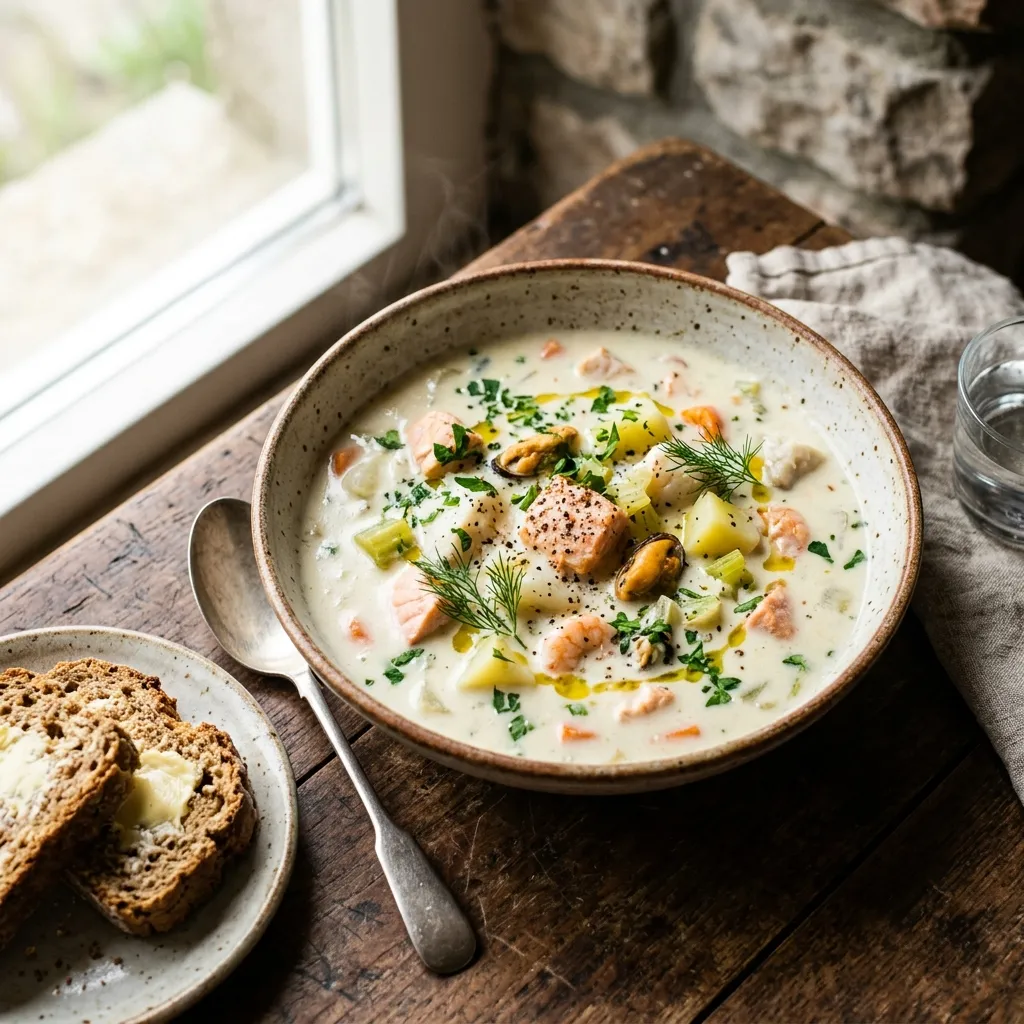
Irish seafood chowder is the Atlantic coast's defining dish — a thick, creamy soup loaded with whatever the day's catch brings in. Along the western seaboard from Dingle to Donegal, every pub and restaurant has its own version, and competitions to crown the best chowder in Ireland draw fierce local competition. The dish reflects Ireland's relationship with its 3,172 kilometres of coastline: rich fishing grounds that produce world-class salmon, cod, haddock, prawns, mussels, and smoked fish. The base is a classic white roux — butter, flour, and milk or cream — into which a soffritto of onion, celery, and leek (the 'holy trinity' of Irish chowder) is incorporated. Potatoes thicken the soup further and provide body. The fish is added in stages: firmer pieces (salmon, cod) go in first, delicate shellfish (mussels, prawns) at the end. Smoked haddock or smoked salmon is the secret weapon of the best chowders, adding a layer of savory depth that distinguishes Irish versions from American clam chowder. Ayurvedically, this is a warm, heavy, oily, and sweet dish with complex energetics from the multiple types of seafood. Fish is generally sweet and cooling in Ayurveda, but the cream, butter, and flour base adds warmth and heaviness. The result is nourishing for Vata without being excessively heating, making it more balanced than many other cream-based soups.
Strongly pacifies Vata with warm, moist, oily, heavy qualities and excellent protein variety. Mildly increases Pitta due to heating fish and cream. Increases Kapha due to heaviness, cream, and starchy potato.
The combination of multiple seafood types provides omega-3 fatty acids that support nervous system health, reduce inflammation, and nourish majja dhatu (nerve and marrow tissue). The warm, mineral-rich broth supports joint health and tissue hydration during cold, damp conditions.
Ingredients
- 200 g Salmon fillet (skinned, cut into chunks)
- 200 g Cod or haddock fillet (skinned, cut into chunks)
- 150 g Smoked haddock (skinned, cut into chunks)
- 200 g Mussels (cleaned and debearded)
- 150 g Raw prawns (peeled)
- 300 g Potatoes (peeled and diced small)
- 1 large Onion (finely diced)
- 1 medium Leek (white part, sliced)
- 2 stalks Celery (finely diced)
- 50 g Butter
- 40 g Plain flour
- 500 ml Fish stock
- 300 ml Whole milk
- 100 ml Double cream
- 1 leaf Bay leaf
- 2 tbsp Fresh dill (chopped)
- 2 tbsp Fresh parsley (chopped)
- 1 tbsp Lemon juice
- 1 tsp Salt
- 1/4 tsp White pepper
Instructions
- Melt the butter in a large, heavy pot over medium heat. Add the onion, leek, and celery with a pinch of salt. Cook gently for 8 minutes until soft and translucent — do not brown.
- Sprinkle the flour over the vegetables and stir for 2 minutes to cook the raw flour taste out. This creates the roux that will thicken the chowder.
- Gradually pour in the fish stock, stirring constantly to prevent lumps. Add the milk and bay leaf. Bring to a gentle simmer.
- Add the diced potatoes and cook for 10-12 minutes until just tender.
- Add the salmon, cod, and smoked haddock pieces. Simmer gently for 4 minutes — do not boil or stir aggressively, as the fish will break apart.
- Add the mussels (in their shells) and prawns. Cover and cook for 3-4 minutes until the mussels open and the prawns turn pink. Discard any mussels that remain closed.
- Stir in the cream, lemon juice, dill, and parsley. Season with salt and white pepper. Remove the bay leaf.
- Ladle into warm bowls and serve with crusty bread or Irish soda bread.
Nutrition
These values are estimates calculated from the ingredient list and may vary based on brands, cooking methods, and serving size. Not a substitute for medical or dietary advice.
How This Recipe Affects Each Dosha
Vata
This chowder is exceptional for Vata pacification. The warm, creamy broth soothes dry, rough Vata tissues. The combination of multiple seafood types provides diverse amino acids for tissue repair. The potato adds grounding starch, and the butter-cream base delivers the unctuousness that Vata digestion depends on. The leek and dill provide gentle digestive support without harsh heat.
Pitta
Fish is sweet and generally cooling, which Pitta tolerates well. However, the cream-and-butter base adds oily heat, and the smoked haddock introduces a concentrated, salty-heating element. Pitta types with strong digestion can enjoy this in cool weather. The lemon juice and dill provide mild Pitta-pacifying coolness.
Kapha
Cream-based soups are inherently Kapha-increasing, and the addition of butter, milk, and potato compounds the heaviness. The variety of seafood is lighter than red meat, which is a positive for Kapha, but the overall density of the chowder — thick, rich, starchy — requires modification for Kapha constitutions.
The roux base and gentle cooking produce a soup that is relatively easy to digest despite its richness. The leek and celery provide mild digestive support, and the lemon juice aids protein assimilation. The diversity of seafood proteins means the body receives a broad spectrum of nutrients in an accessible form.
Nourishes: Rasa (plasma), Rakta (blood), Mamsa (muscle), Asthi (bone via fish minerals), Majja (nervous via omega-3)
Adjustments by Constitution
For Vata Types
This chowder suits Vata well. Add a pinch of black pepper and a small amount of fresh ginger grated into the base. Serve with warm, buttered soda bread. A small glass of dry white wine alongside aids digestion.
For Pitta Types
Omit the smoked haddock (too salty and heating). Replace double cream with coconut milk. Use olive oil instead of butter. Add extra dill and fresh mint. Squeeze extra lemon juice over each bowl.
For Kapha Types
Omit the cream and reduce butter to 1 tablespoon. Replace potato with diced turnip or cauliflower florets. Add extra celery, a pinch of mustard powder, and generous black pepper to the base. Use lighter fish (sole, plaice) rather than salmon. Serve in a smaller bowl with a thin slice of toasted soda bread.
Seasonal Guidance
An Atlantic coast dish for cold and transitional seasons. The warm, rich broth is ideal when the damp Irish climate aggravates Vata and the body needs warming, nourishing food. In spring, lighten by reducing cream and adding fresh herbs. Not a summer dish — switch to a lighter fish soup or ceviche in warm weather.
Best time of day: Lunch — the traditional time for a bowl of chowder in an Irish coastal pub, served between 12 and 2 PM when the fishing boats are in and the catch is fresh.
Cultural Context
Irish seafood chowder is the culinary expression of Ireland's Atlantic identity. The western and southern coasts — Kerry, Clare, Galway, Mayo, Donegal — all claim the best version, and the annual All-Ireland Chowder Championship (held in Kinsale, County Cork) is a fiercely contested event that draws chefs from across the country. The dish connects to Ireland's fishing heritage, which predates written history: shell middens along the coast confirm that Irish communities have harvested seafood for over 10,000 years. Today, the chowder is often the first dish visitors order upon arriving on the coast, and coastal pubs are judged by its quality. The inclusion of smoked fish nods to Ireland's long tradition of smoking salmon and haddock — a preservation technique that gives Irish chowder its distinctive character.
Deeper Context
Origins
Irish seafood chowder represents post-Columbian adaptation of pre-existing Atlantic Irish fish-and-shellfish preparations to include potato and cream (both 17th-18th century additions). The chowder name derives from French 'chaudière' (cauldron) and reflects Breton-Irish fishing-community exchange across the Atlantic. Modern Irish seafood chowder stabilized in 20th-century restaurant culture, particularly in western coastal Irish restaurants serving tourism demand.
Food as Medicine
Salmon provides substantial omega-3 fatty acids (EPA and DHA) with extensively-documented cardiovascular and cognitive benefits. Smoked haddock is lower in omega-3 but carries concentrated vitamin D and B12 (the smoking preserves these through Irish winters when fresh fish was less available). Mussels are iron-rich, zinc-rich, and provide trace minerals (selenium, iodine). A nutritionally dense preparation by modern standards.
Ritual & Seasonal Role
Year-round on Irish western coast restaurant menus. Winter peak when warm creamy seafood soups are particularly welcome. Not religiously ceremonial, though fishing-village Friday tradition (pre-Vatican II Catholic meatless Friday) made seafood dishes Friday-specific in some households historically. Featured globally as quintessentially Irish-coastal cuisine.
Classical Pairings & Cautions
Crusty soda bread or brown bread, a glass of dry white wine or stout. Cautions: shellfish allergies are severe and common (major mussel contraindication); fish allergies; mercury in salmon is generally low but present; smoked-fish sodium load is substantial; dairy sensitivity precludes cream-based preparations; pregnancy should favor lower-mercury varieties and cooked-through shellfish.
Cross-Tradition View
How other medical and food-wisdom traditions read this dish. Each tradition names the same physiological reality in its own language — the agreements across them are where universal principles live.
Traditional Chinese Medicine
Salmon is Yin-and-Blood-building and omega-3-rich; smoked haddock is Yin-salty and Lung-supporting; mussels are Yin-salty and build Kidney essence; potato is Spleen-Qi-tonifying; cream is Yin-building. A comprehensive Yin-Blood-and-Essence tonic — TCM physicians would recognize Irish seafood chowder as substantial restoration food for Yin-deficient Atlantic-coast populations.
Greek Humoral
Cold-wet corrected by cream-and-starch warmth. Classical Galenic fishermen's food — the Hippocratic corpus specifically endorses shellfish and cold-water fish broths for convalescence and for thin-underweight populations.
Ayurveda
Heating virya (fish is heating), sweet vipaka. Fish and shellfish are classically heavy and tamasic in Ayurveda, but the salmon-haddock-mussel combination has concentrated Yin-building quality that Ayurveda recognizes for Vata restoration. Kapha-aggravating through cream-potato combination.
Irish Atlantic Fishing
Atlantic-coast Ireland (Galway, Mayo, Donegal, West Cork, Wexford) fishing tradition is ancient — neolithic fish-processing sites in Sligo and Mayo show continuous marine-food harvesting for at least 6,000 years. Smoked haddock (or mackerel) and mussels are specifically Atlantic Irish traditions. The chowder format itself is post-Columbian (potato, cream techniques European-Atlantic development), but the seafood-harvesting traditions pre-date recorded history.
Chef's Notes
The key to great chowder is gentle cooking — fish that is boiled becomes tough and rubbery, while fish simmered gently stays tender and flaky. Add the seafood in stages based on cooking time: firm fish first, delicate shellfish last. The smoked haddock is what separates an excellent chowder from a good one — its smoky, salty depth permeates the broth. If using fresh mussels, prepare them by scrubbing shells and pulling off beards just before cooking. For a lighter chowder, omit the cream and increase the milk. For a richer version, add another tablespoon of cream and a splash of white wine to the base.
Frequently Asked Questions
Is Seafood Chowder good for my dosha?
Strongly pacifies Vata with warm, moist, oily, heavy qualities and excellent protein variety. Mildly increases Pitta due to heating fish and cream. Increases Kapha due to heaviness, cream, and starchy potato. This chowder is exceptional for Vata pacification. Fish is sweet and generally cooling, which Pitta tolerates well. Cream-based soups are inherently Kapha-increasing, and the addition of butter, milk, and potato compounds the heaviness.
When is the best time to eat Seafood Chowder?
Lunch — the traditional time for a bowl of chowder in an Irish coastal pub, served between 12 and 2 PM when the fishing boats are in and the catch is fresh. An Atlantic coast dish for cold and transitional seasons. The warm, rich broth is ideal when the damp Irish climate aggravates Vata and the body needs warming, nourishing food. In spring, lighten by r
How can I adjust Seafood Chowder for my constitution?
For Vata types: This chowder suits Vata well. Add a pinch of black pepper and a small amount of fresh ginger grated into the base. Serve with warm, buttered soda brea For Pitta types: Omit the smoked haddock (too salty and heating). Replace double cream with coconut milk. Use olive oil instead of butter. Add extra dill and fresh min
What are the Ayurvedic properties of Seafood Chowder?
Seafood Chowder has Sweet, Salty taste (rasa), Warming energy (virya), and Sweet post-digestive effect (vipaka). Its qualities (gunas) are Heavy, Warm, Moist, Oily, Smooth. It nourishes Rasa (plasma), Rakta (blood), Mamsa (muscle), Asthi (bone via fish minerals), Majja (nervous via omega-3). The roux base and gentle cooking produce a soup that is relatively easy to digest despite its richness. The leek and celery provide mild digestive support, and the lemon juice aids protein assimilation. The diversity of seafood proteins means the body receives a broad spectrum of nutrients in an accessible form.