Scones with Clotted Cream
British Recipe
Overview
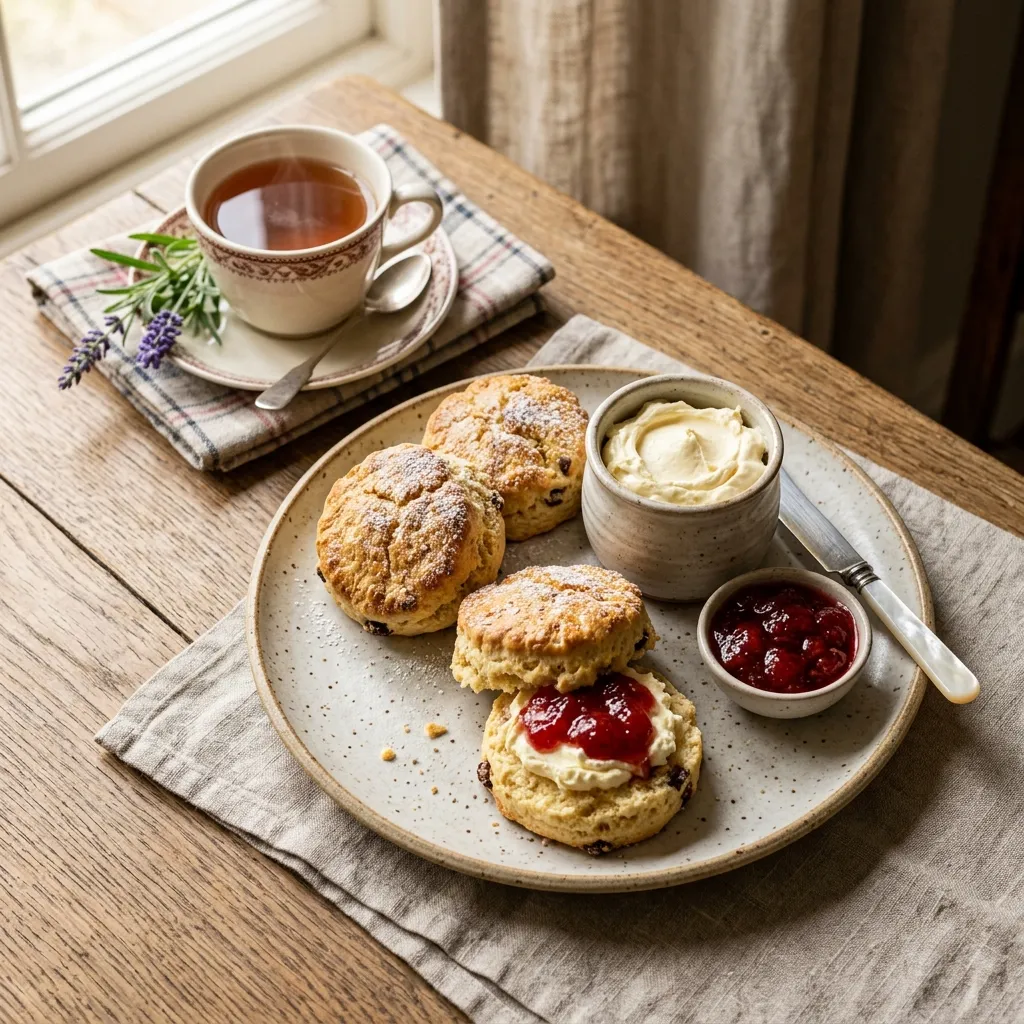
The scone emerged in early 16th-century Scotland, originally a round, flat oat cake cooked on a griddle. The modern baked scone — risen with baking powder, enriched with butter, and served split with clotted cream and jam — became the centerpiece of afternoon tea in the 1840s when Anna, Duchess of Bedford, popularized the ritual of tea and light refreshments between lunch and dinner. The scone's migration from Scottish griddle cake to English tearoom staple tracks the broader movement of baking technology across Britain. Proper scone technique demands a light hand. The butter must be cold and rubbed into the flour until the mixture resembles coarse breadcrumbs — overworking melts the fat and produces a tough, dense result. The dough is brought together quickly with cold buttermilk, patted (never rolled with force) to about 3cm thickness, and cut with a sharp, un-twisted motion. The result should rise tall, break apart into flaky layers, and carry a subtle sweetness that yields to clotted cream and preserves. Clotted cream is unique to Devon and Cornwall in southwest England — a 55-60% butterfat cream produced by slowly heating unpasteurized cow's milk until a thick, golden crust forms. Ayurvedically, this extreme concentration of dairy fat makes the complete dish (scone, clotted cream, and jam) profoundly sweet, heavy, and cooling — a Kapha-increasing combination that Vata constitutions find deeply satisfying.
Mildly pacifies Vata with sweet, heavy, oily qualities. Neutral to mildly cooling for Pitta. Significantly increases Kapha due to extreme sweetness, heaviness, and dairy-fat concentration.
Ingredients
- 350 g Self-raising flour
- 1 tsp Baking powder
- 3 tbsp Caster sugar
- 85 g Cold butter (cut into small cubes)
- 175 ml Buttermilk
- 1 large Egg (beaten, for glazing)
- 1/4 tsp Salt
- 1 tsp Vanilla extract
- 200 g Clotted cream (for serving)
- 200 g Strawberry jam (for serving)
Instructions
- Preheat the oven to 220°C (425°F). Line a baking sheet with parchment paper.
- Sift the flour, baking powder, sugar, and salt into a large bowl. Add the cold butter cubes and rub into the flour using your fingertips until the mixture resembles coarse breadcrumbs. Work quickly to keep the butter cold.
- Make a well in the centre. Pour in the buttermilk and vanilla extract. Use a butter knife to mix in cutting motions until the dough just comes together — stop the moment it forms a shaggy mass. Do not knead or overwork.
- Turn the dough onto a lightly floured surface and pat gently to a 3cm thickness. Use a 6cm round cutter dipped in flour to stamp out scones, pressing straight down without twisting. Re-pat the scraps once to cut additional scones.
- Place the scones close together on the lined baking sheet — the proximity helps them rise upward rather than spreading. Brush the tops with beaten egg, taking care not to let it drip down the sides (this seals the layers and prevents rising).
- Bake for 12-15 minutes until risen, golden on top, and the sides look set. They should sound slightly hollow when tapped on the bottom.
- Cool on a wire rack for 5 minutes. Split each scone in half horizontally.
- Serve warm with a generous spoonful of clotted cream and strawberry jam. Whether the cream or jam goes on first is a matter of fierce regional debate — Devon puts cream first, then jam; Cornwall does the reverse.
Nutrition
These values are estimates calculated from the ingredient list and may vary based on brands, cooking methods, and serving size. Not a substitute for medical or dietary advice.
How This Recipe Affects Each Dosha
Vata
The sweet taste, heavy quality, and rich dairy fat content provide grounding nourishment for Vata. The wheat flour offers stability, the butter provides oleation, and the clotted cream delivers a concentrated dose of the madhura rasa that Vata craves. However, the wheat can be drying to some Vata digestions, and the sugar may create energy spikes followed by crashes.
Pitta
The sweet taste and cooling virya of dairy generally pacify Pitta. Clotted cream's cooling, unctuous quality soothes internal heat. However, the refined flour and sugar lack the complexity that Pitta digestion thrives on. Pitta types will tolerate this well as an occasional treat, particularly with less sugary jam.
Kapha
Every component — white flour, sugar, butter, clotted cream, and jam — increases Kapha. The meal is essentially concentrated sweet taste with no bitter, astringent, or pungent balance. Kapha types will experience increased mucus production, heaviness, and congestion. This is among the most Kapha-aggravating British foods.
The sweet, cool, and heavy qualities of this dish slow digestion. Clotted cream's extreme fat content requires robust agni to process without producing ama. Weak digestive types will feel sluggish and heavy afterward. The buttermilk in the scone itself provides minor digestive support due to its cultured nature.
Nourishes: Rasa (plasma), Meda (fat), Shukra (reproductive)
Adjustments by Constitution
For Vata Types
Serve scones warm with a cup of spiced chai to add pungent, warming balance. A pinch of ground cardamom in the dough complements the sweetness and aids Vata digestion. Replace strawberry jam with a warm stewed apple compote spiced with cinnamon and clove.
For Pitta Types
Replace clotted cream with coconut cream for a lighter dairy alternative. Use a rose petal or mixed berry jam rather than intensely sweet strawberry. Add a pinch of ground cardamom to the dough. Serve with fresh mint tea rather than black tea.
For Kapha Types
Replace half the wheat flour with spelt or oat flour. Reduce sugar by half and add ground ginger, cardamom, and a pinch of black pepper to the dough. Skip the clotted cream entirely — serve with a thin layer of raw honey and a squeeze of lemon. Pair with strong black tea or ginger tea to counteract heaviness.
Seasonal Guidance
Most appropriate during cooler months when the body tolerates heavier, sweeter foods. In summer, the cooling quality of the dairy is welcome, but the heaviness may be excessive. Reduce portion size in warm weather. In spring (Kapha season), limit consumption as the sweet, heavy qualities compound seasonal Kapha accumulation.
Best time of day: Mid-afternoon, between 3 and 5 PM — the traditional time for afternoon tea. This avoids competing with main meals and provides energy during the natural afternoon dip.
Cultural Context
The cream tea — scones, clotted cream, and jam served with a pot of tea — is one of Britain's most cherished social rituals. It reached its modern form in the mid-19th century and remains central to tourism in Devon and Cornwall, where cream tea rooms dot every village. The 'cream first or jam first' debate is a genuine cultural fault line: Devon places cream on the scone first, then jam on top; Cornwall does the reverse. This division is maintained with real conviction — the Cornish Cream Tea Protection Association and Devon cream tea enthusiasts both claim historical authenticity. Beyond the rivalry, the cream tea represents a slower, more deliberate pace of eating — a pause in the day for simple pleasure.
Deeper Context
Origins
Medieval Tavistock Abbey records in Devon document cream-and-bread monastic food from around 997 CE. Victorian afternoon tea tradition (attributed to Anna Russell, 7th Duchess of Bedford, around 1840) formalized the mid-afternoon meal that included scones and cream. The Cornish and Devonshire cream teas received PDO protection in 1998 and 2011 respectively, recognizing clotted cream as a regionally-specific product with particular production methods.
Food as Medicine
Not designed as medicine. Calorie-dense restoration food for agricultural and laborer populations in West Country England. Jam functions as fruit preservation that sustained vitamin content through winter months historically. Clotted cream is essentially concentrated dairy fat, providing fat-soluble vitamins and substantial caloric density. The dish is nutritionally rich in the way historical peasant indulgence food tends to be — carrying meaningful nutrients in a highly pleasurable format.
Ritual & Seasonal Role
Afternoon tea ritual (3-5pm), bank holidays, tourist-season summer peak in Devon and Cornwall. Sunday afternoon in many British households. Queen's Jubilee and royal-occasion celebratory food. The cream-tea ritual is a cultural touchstone that overseas tourists specifically seek out when visiting the British West Country.
Classical Pairings & Cautions
Hot English breakfast tea or Earl Grey, sometimes with a splash of milk. Occasionally champagne or prosecco for upscale cream tea service. Cautions: substantial dairy load — lactose sensitivity precludes standard preparation; gluten intolerance precludes the scone base; sugar load from jam and scones is high — diabetic restriction applies; Kapha substantially aggravated; historical cream teas contributed to West Country cardiovascular disease patterns.
Cross-Tradition View
How other medical and food-wisdom traditions read this dish. Each tradition names the same physiological reality in its own language — the agreements across them are where universal principles live.
Traditional Chinese Medicine
Flour tonifies Spleen Qi; clotted cream is concentrated Yin-building; butter is warm-wet; strawberry jam is cool-sweet and moves Liver Qi; buttermilk is cool-sour and Yin-building with mild Liver-Qi-moving action. Concentrated Yin-building preparation with mild Liver-moving accent. TCM physicians would call this afternoon-tea food suitable for thin Yin-deficient types; damp-heat-generating in habitual consumers.
Greek Humoral
Hot-wet baking on cold-wet cream — sanguine-phlegmatic balance. An afternoon pick-me-up in Galenic framework, appropriate for melancholic constitutions needing brief restoration. Classical Mediterranean honey-cream-bread preparations are ancestors; the British tea-time form is a unique development of the Devon-Cornwall tradition.
Ayurveda
Cooling virya, sweet vipaka. Pacifies Vata substantially through unctuousness. Aggravates Kapha substantially through the cream-flour-sugar combination. Pitta-neutral. Afternoon dessert food rather than meal food by Ayurvedic timing rules — sweet courses traditionally follow a meal rather than replacing one.
West Country (Devon & Cornwall)
Cream tea is a Devon and Cornwall regional tradition dating to at least the 11th century — Tavistock Abbey records reference cream-and-bread meals for monks and agricultural workers. The Devon-vs-Cornwall debate (cream first or jam first on the scone) is centuries-old regional identity. West Country clotted cream holds Protected Designation of Origin status under EU law. The cream tea is one of the most successfully regionally-branded food traditions in Britain.
Chef's Notes
Cold butter and minimal handling are the two non-negotiable principles. If your kitchen is warm, chill the flour in the freezer for 15 minutes before starting. The buttermilk's acidity reacts with the baking powder to create lift — do not substitute with regular milk. If buttermilk is unavailable, add 1 tablespoon of lemon juice to regular milk and let it sit for 10 minutes. Scones are best eaten within 2 hours of baking; they stale quickly. Day-old scones can be revived by warming in a 150°C oven for 5 minutes.
Frequently Asked Questions
Is Scones with Clotted Cream good for my dosha?
Mildly pacifies Vata with sweet, heavy, oily qualities. Neutral to mildly cooling for Pitta. Significantly increases Kapha due to extreme sweetness, heaviness, and dairy-fat concentration. The sweet taste, heavy quality, and rich dairy fat content provide grounding nourishment for Vata. The sweet taste and cooling virya of dairy generally pacify Pitta. Every component — white flour, sugar, butter, clotted cream, and jam — increases Kapha.
When is the best time to eat Scones with Clotted Cream?
Mid-afternoon, between 3 and 5 PM — the traditional time for afternoon tea. This avoids competing with main meals and provides energy during the natural afternoon dip. Most appropriate during cooler months when the body tolerates heavier, sweeter foods. In summer, the cooling quality of the dairy is welcome, but the heaviness may be excessive. Reduce portion size in
How can I adjust Scones with Clotted Cream for my constitution?
For Vata types: Serve scones warm with a cup of spiced chai to add pungent, warming balance. A pinch of ground cardamom in the dough complements the sweetness and aid For Pitta types: Replace clotted cream with coconut cream for a lighter dairy alternative. Use a rose petal or mixed berry jam rather than intensely sweet strawberry.
What are the Ayurvedic properties of Scones with Clotted Cream?
Scones with Clotted Cream has Sweet taste (rasa), Cooling energy (virya), and Sweet post-digestive effect (vipaka). Its qualities (gunas) are Heavy, Oily, Smooth, Dense, Cool. It nourishes Rasa (plasma), Meda (fat), Shukra (reproductive). The sweet, cool, and heavy qualities of this dish slow digestion. Clotted cream's extreme fat content requires robust agni to process without producing ama. Weak digestive types will feel sluggish and heavy afterward. The buttermilk in the scone itself provides minor digestive support due to its cultured nature.