Sambar
Indian Recipe
Overview
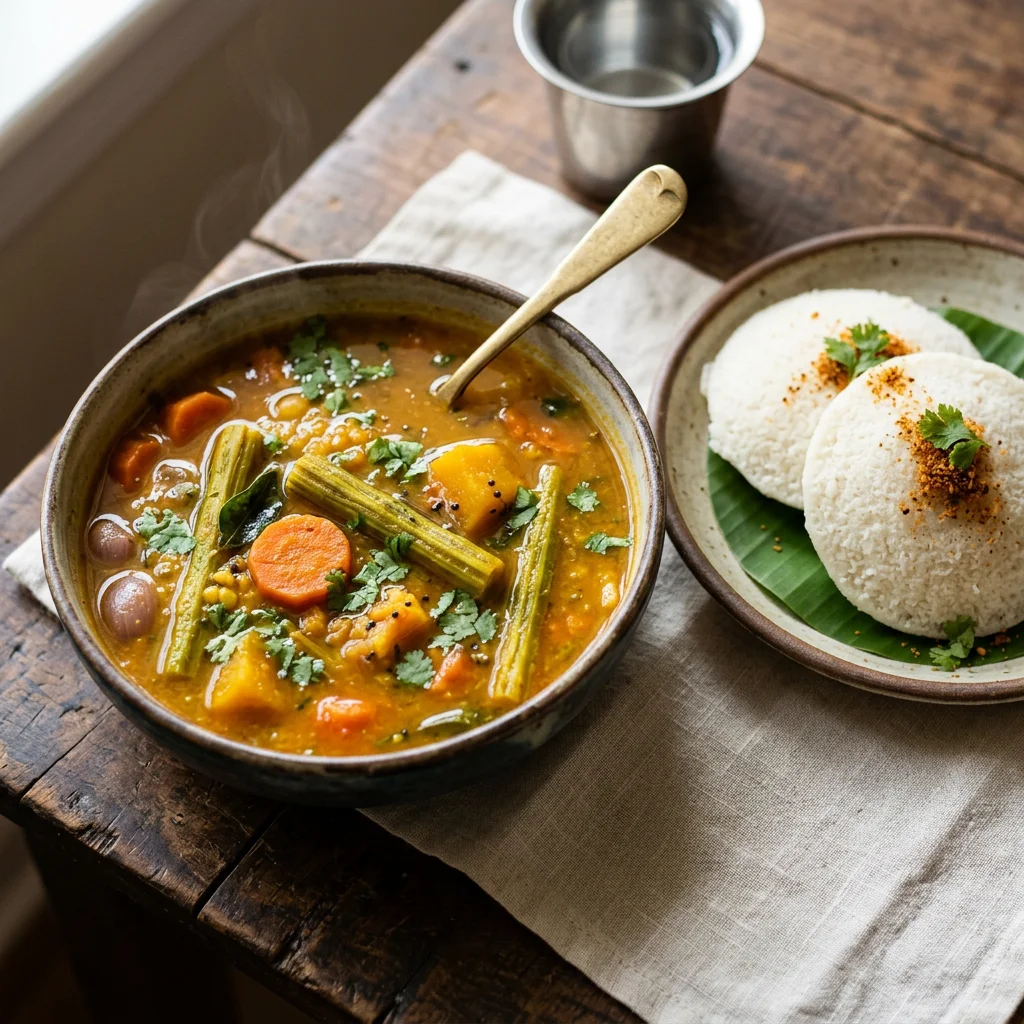
Sambar is the soul of South Indian cooking — a tangy, spice-rich stew of toor dal (pigeon pea lentils) and seasonal vegetables, flavored with a proprietary spice blend called sambar podi and finished with tamarind. It is served with rice, idli, dosa, and vada across Tamil Nadu, Karnataka, Kerala, and Andhra Pradesh, and no South Indian meal is complete without it. What distinguishes sambar from North Indian dals is the tamarind — it introduces a bright, tart acidity that cuts through the earthiness of the lentils and lifts the whole dish. The sambar powder itself is a complex blend that typically includes coriander, cumin, fenugreek, black pepper, red chili, turmeric, and curry leaves, all dry-roasted and ground. Each family and each region has its own proportions, making sambar endlessly varied despite its basic structure. Ayurvedically, sambar is a masterclass in balancing tastes. It contains all six rasas (tastes) — sweet from the dal and vegetables, sour from the tamarind, salty from the salt, pungent from the spices, bitter from fenugreek and curry leaves, and astringent from the lentils. This six-taste completeness is precisely what Ayurveda recommends for a satisfying, balancing meal.
Balances Vata and Kapha due to warming spices and light quality. The sourness and heat may aggravate Pitta in sensitive individuals.
Ingredients
- 1 cup Toor dal (pigeon peas) (rinsed)
- 1 tbsp Tamarind paste (or a marble-sized ball of tamarind pulp soaked in 1/4 cup water)
- 1 whole Drumstick (cut into 3-inch pieces (or substitute okra))
- 1 medium Carrot (cubed)
- 1 small Potato (cubed)
- 1 small Onion (quartered)
- 1 medium Tomato (chopped)
- 1/2 tsp Turmeric powder
- 2 tbsp Sambar powder
- 1 tsp Jaggery (to balance tartness)
- 1 tsp Salt
- 2 tbsp Ghee or sesame oil
- 1 tsp Mustard seeds
- 1/2 tsp Cumin seeds
- 1/4 tsp Fenugreek seeds
- 2 whole Dried red chilies
- 10-12 leaves Curry leaves
- 1/4 tsp Asafoetida
- 2 tbsp Fresh cilantro (for garnish)
Instructions
- Pressure cook the toor dal with 3 cups of water and turmeric for 3 whistles (or simmer in a pot for 30 minutes until completely soft). Mash the cooked dal to a smooth consistency and set aside.
- In a separate pot, bring 2 cups of water to a boil. Add the drumstick, carrot, and potato. Cook until the vegetables are tender, about 10 minutes. Add the onion and tomato and cook for another 5 minutes.
- If using tamarind pulp, strain the soaked tamarind and discard the fibers. Add the tamarind water (or tamarind paste) to the vegetables.
- Add the sambar powder, jaggery, and salt. Stir well and simmer for 5 minutes, allowing the tamarind and spices to meld.
- Pour the mashed dal into the vegetable pot. Stir to combine and adjust the consistency with water — sambar should be thinner than dal but not watery. Simmer for 5-7 minutes.
- Prepare the tempering: heat ghee or sesame oil in a small pan. Add mustard seeds — when they pop, add cumin seeds, fenugreek seeds, dried red chilies, curry leaves, and asafoetida. Fry for 10 seconds.
- Pour the tempering over the sambar and stir through. Simmer for 2 more minutes.
- Garnish with fresh cilantro and serve hot with steamed rice, idli, or dosa.
Nutrition
These values are estimates calculated from the ingredient list and may vary based on brands, cooking methods, and serving size. Not a substitute for medical or dietary advice.
How This Recipe Affects Each Dosha
Vata
Sambar's warm, soupy, well-spiced nature is excellent for Vata. The combination of lentils, root vegetables, and warming spices provides grounding nourishment. The oiliness from the tempering and the sour taste both directly pacify Vata. This is a deeply satisfying Vata-balancing food.
Pitta
The tamarind sourness, heating spices, and pungent vipaka make sambar somewhat Pitta-aggravating. The tomato adds further heat. Pitta types with strong digestion can handle it, but those with acid reflux or inflammatory conditions should modify the recipe.
Kapha
Sambar is well-suited to Kapha — its light quality, pungent spices, and heating energy help stimulate sluggish digestion and move stagnant Kapha. The bitter and astringent tastes from fenugreek, curry leaves, and lentils further support Kapha balance.
Strongly kindles agni. The combination of heating spices, sour tamarind, and pungent sambar powder makes this one of the most digestion-stimulating preparations in South Indian cuisine. The fenugreek seeds are especially potent agni-kindlers.
Nourishes: Rasa (plasma), Rakta (blood), Mamsa (muscle)
Adjustments by Constitution
For Vata Types
Increase ghee in the tempering to 3 tablespoons. Use sweet vegetables like sweet potato and carrot rather than bitter or astringent ones. Add a pinch of asafoetida directly to the dal while cooking. Reduce tamarind slightly.
For Pitta Types
Reduce tamarind by half and increase jaggery slightly. Omit tomato. Replace red chilies with a mild variety or omit entirely. Add cooling vegetables like bottle gourd, zucchini, and ash gourd. Use coconut oil for the tempering. Finish with fresh grated coconut.
For Kapha Types
Use sesame oil or mustard oil instead of ghee. Increase black pepper and add extra ginger. Use lighter vegetables like drumstick, okra, and leafy greens. Skip the potato. Add extra curry leaves and fenugreek for their bitter, Kapha-clearing qualities.
Seasonal Guidance
Ideal during cooler months when its heating, stimulating qualities support the body's need for warmth and strong digestion. In spring, it helps clear Kapha accumulation — use more bitter vegetables and pungent spices. In summer, lighten the spice load and increase cooling vegetables like ash gourd and bottle gourd. The sourness of tamarind is less appropriate in hot weather when Pitta is already elevated. Year-round in South India, it adapts seasonally through vegetable selection.
Best time of day: Lunch, as the centerpiece of a South Indian rice meal
Cultural Context
Sambar is to South India what dal tadka is to the North — the essential, daily, non-negotiable component of every meal. Its origins are debated: one legend attributes it to the Maratha ruler Sambhaji, who improvised with tamarind when cooking dal in Thanjavur. Tamil, Karnataka, Kerala, and Andhra versions differ significantly in spice blends and preferred vegetables, and arguments about whose sambar is best are a beloved cultural pastime. In Tamil Nadu, the first sambar a new bride makes for her in-laws is a test of culinary skill — it reveals her hand with spices, her understanding of balance, and her family's cooking lineage.
Deeper Context
Origins
Sambar's popular origin story credits Shahuji, the Maratha king of Thanjavur (late 17th century), who according to legend invented the dish when he added tamarind to dal for a northern-style sour taste. Whether the story is literal history or post-hoc legend, sambar as a distinct dish crystallized in Tamil Nadu over the last four centuries and now defines south Indian cuisine in the global imagination as much as dosa does.
Food as Medicine
The drumstick (moringa) content makes sambar genuinely functional — drumstick is one of the most nutrient-dense vegetables catalogued in Ayurveda (kshira-vriksha in some texts, literally tree-that-gives-milk for its galactagogue properties). The curry leaves add iron and a specific anti-anemic quality. Used in postpartum nutrition across Tamil Nadu and Karnataka, where new mothers receive daily drumstick-heavy sambar for at least 40 days.
Ritual & Seasonal Role
A daily dish rather than a ceremonial one, though sambar features prominently at temple annadanam (community food-offering) meals and at south Indian weddings. Year-round with seasonal vegetable swaps: drumstick in summer, ash gourd in winter, yellow pumpkin in monsoon, small onions in the post-harvest months. The vegetable rotation is its own form of seasonal literacy.
Classical Pairings & Cautions
Classical pairings are dosa, idli, vada, steamed rice, and uppittu. Always with coconut chutney for the sweet-cold counterpoint to the hot-sour dal. Cautions: very sour — Pitta types should reduce tamarind substantially; ulcer patients should avoid; chronic acidity sufferers should limit to occasional use and reduce the spice heat; those with drumstick allergies should skip entirely.
Cross-Tradition View
How other medical and food-wisdom traditions read this dish. Each tradition names the same physiological reality in its own language — the agreements across them are where universal principles live.
Traditional Chinese Medicine
The six-flavor profile is unusual in TCM dietetics — sambar touches every major TCM taste (sweet, sour, salty, pungent, bitter) and would be called a meridian-balanced preparation. Toor dal tonifies Spleen; tamarind moves Liver Qi; curry leaves disperse Wind; drumstick is warming and channel-opening. A dish that addresses multiple deficiency patterns simultaneously, which is rare in folk cookery.
Greek Humoral
Hot-dry temperament from the spice base; tamarind adds sour-wet; drumstick reinforces hot-dry; the overall profile is hot-dry and useful for phlegmatic and melancholic constitutions. Choleric and sanguine types should limit frequency or reduce the sambar powder. Galenic reading: a winter-and-monsoon dish by temperament, poorly suited to hot-summer peak weeks.
Unani Tibb
Hot in the second degree. South Indian hakims prescribe sambar's sour-pungent-astringent combination for digestive weakness, post-viral recovery, and seasonal flu. Drumstick (sahjan) is its own classical jadi-booti with extensive Unani materia medica — a blood-purifier, galactagogue, and joint-opener. Sambar functions as a drumstick delivery vehicle as much as a standalone dish.
Tibetan Sowa Rigpa
Light, warm, slightly oily. Primarily Phlegm-reducing, Wind-neutral, Bile-mildly-aggravating. The drumstick and curry leaves are especially valued in Sowa Rigpa for what is called 'clearing channels' in the body — opening srotas (channels) for better flow of nutrients and waste. Mid-day meal recommendation across Wind and Phlegm types; Bile types should reduce tamarind.
Chef's Notes
The balance between tamarind sourness and jaggery sweetness is what makes or breaks sambar — taste and adjust until you hit the sweet spot where neither dominates. If you cannot find drumstick (moringa pods), okra is the most traditional substitute. Homemade sambar powder makes a noticeable difference over store-bought — toast coriander seeds, cumin, fenugreek, dried red chilies, black pepper, and curry leaves in a dry pan, then grind. This keeps for months in an airtight jar. Sambar improves dramatically the next day as flavors deepen.
Frequently Asked Questions
Is Sambar good for my dosha?
Balances Vata and Kapha due to warming spices and light quality. The sourness and heat may aggravate Pitta in sensitive individuals. Sambar's warm, soupy, well-spiced nature is excellent for Vata. The tamarind sourness, heating spices, and pungent vipaka make sambar somewhat Pitta-aggravating. Sambar is well-suited to Kapha — its light quality, pungent spices, and heating energy help stimulate sluggish digestion and move stagnant Kapha.
When is the best time to eat Sambar?
Lunch, as the centerpiece of a South Indian rice meal Ideal during cooler months when its heating, stimulating qualities support the body's need for warmth and strong digestion. In spring, it helps clear Kapha accumulation — use more bitter vegetables an
How can I adjust Sambar for my constitution?
For Vata types: Increase ghee in the tempering to 3 tablespoons. Use sweet vegetables like sweet potato and carrot rather than bitter or astringent ones. Add a pinch For Pitta types: Reduce tamarind by half and increase jaggery slightly. Omit tomato. Replace red chilies with a mild variety or omit entirely. Add cooling vegetables l
What are the Ayurvedic properties of Sambar?
Sambar has All six: Sweet, Sour, Salty, Pungent, Bitter, Astringent taste (rasa), Heating energy (virya), and Pungent post-digestive effect (vipaka). Its qualities (gunas) are Light, Warm, Slightly Oily. It nourishes Rasa (plasma), Rakta (blood), Mamsa (muscle). Strongly kindles agni. The combination of heating spices, sour tamarind, and pungent sambar powder makes this one of the most digestion-stimulating preparations in South Indian cuisine. The fenugreek seeds are especially potent agni-kindlers.