Salade Niçoise
French Recipe
Overview
Salade Niçoise is a composed salad from Nice, on the French Riviera, where it emerged as a showcase for the region's extraordinary raw ingredients: ripe tomatoes, local olives, fresh anchovies, and the first green beans of the season. The original Niçois version — defended with passionate intensity by locals — contains no cooked vegetables whatsoever: raw tomatoes, raw peppers, raw artichoke hearts, raw fava beans, and raw spring onions, dressed simply with olive oil and arranged without tossing. The version known internationally, with boiled potatoes, steamed green beans, and seared tuna, is a Parisian adaptation that would provoke genuine indignation at a café in the Cours Saleya market. Ayurvedically, salade Niçoise presents a complex profile due to its many components. The raw vegetables carry more prana (life force) and lighter qualities than cooked preparations, but they also demand stronger agni to digest. The olive oil dressing provides the snigdha (oily) quality that helps the body absorb the fat-soluble nutrients from the vegetables. The tuna or anchovies add protein with a mildly heating, building quality. The olives contribute an unusual combination of bitter and oily qualities. The diversity of the salad creates an unusually wide rasa profile for a single dish — sweet (potatoes, green beans), sour (tomatoes, vinaigrette), salty (anchovies, olives, capers), bitter (greens, olives), and pungent (onion, mustard vinaigrette). This breadth of taste is therapeutically valuable in Ayurveda, as meals containing all six tastes are considered the most balancing and complete.
The remarkable breadth of tastes makes this salad more balancing than most dishes for all three doshas. The raw vegetables and vinegar increase vata and pitta in sensitive constitutions. The olive oil and protein provide grounding. The overall cooling nature and lightness make it most appropriate for pitta and kapha.
The combination of all six tastes in a single dish makes salade Niçoise valuable as a balancing meal during periods of dietary monotony or taste-specific cravings. The olive oil and fish provide omega-3 fatty acids that support rakta dhatu health and reduce systemic inflammation.
Ingredients
- 12 ounces Sushi-grade tuna steaks (1 inch thick, or 2 cans of oil-packed tuna)
- 1 pound Small waxy potatoes (such as fingerling or new potatoes)
- 8 ounces Green beans (trimmed)
- 4 whole Large eggs (for hard-boiling)
- 2 medium Ripe tomatoes (cut into wedges)
- 1/2 cup Niçoise olives (or Kalamata)
- 4 cups Mixed lettuces (butter lettuce or mesclun)
- 8 fillets Anchovy fillets (oil-packed)
- 2 tablespoons Capers (drained)
- 1/2 small Red onion (thinly sliced)
- 6 tablespoons Extra-virgin olive oil (divided — 1 for searing, 5 for vinaigrette)
- 2 tablespoons Red wine vinegar
- 1 teaspoon Dijon mustard
- 1 clove Garlic (finely grated)
- 1 teaspoon Salt
- 1/2 teaspoon Black pepper
- 8 leaves Fresh basil (torn)
Instructions
- Boil the potatoes in well-salted water until tender when pierced with a knife, about 15-18 minutes depending on size. Drain and let cool slightly before cutting in half. Dress the warm potatoes with 1 tablespoon of the vinaigrette — potatoes absorb dressing best when warm.
- While the potatoes cook, prepare the green beans: blanch in boiling salted water for 3-4 minutes until crisp-tender and vibrant green, then immediately plunge into ice water to stop the cooking. This technique preserves both the color and the nutrients. Drain and pat dry.
- Place the eggs in a single layer in a saucepan and cover with cold water by 1 inch. Bring to a boil, then immediately remove from heat, cover, and let sit for exactly 10 minutes. Transfer to ice water. This method produces a fully set yolk without the grey-green ring of overcooking.
- Make the vinaigrette: whisk together the remaining 5 tablespoons of olive oil, red wine vinegar, Dijon mustard, grated garlic, salt, and pepper. Taste and adjust — it should be assertive and bright, as it needs to stand up to the robust ingredients.
- If using fresh tuna, pat the steaks dry and season with salt and pepper. Heat 1 tablespoon of olive oil in a skillet over high heat until smoking. Sear the tuna for 90 seconds per side for rare to medium-rare. The exterior should be browned while the interior remains pink. Let rest 3 minutes, then slice into 1/4-inch strips.
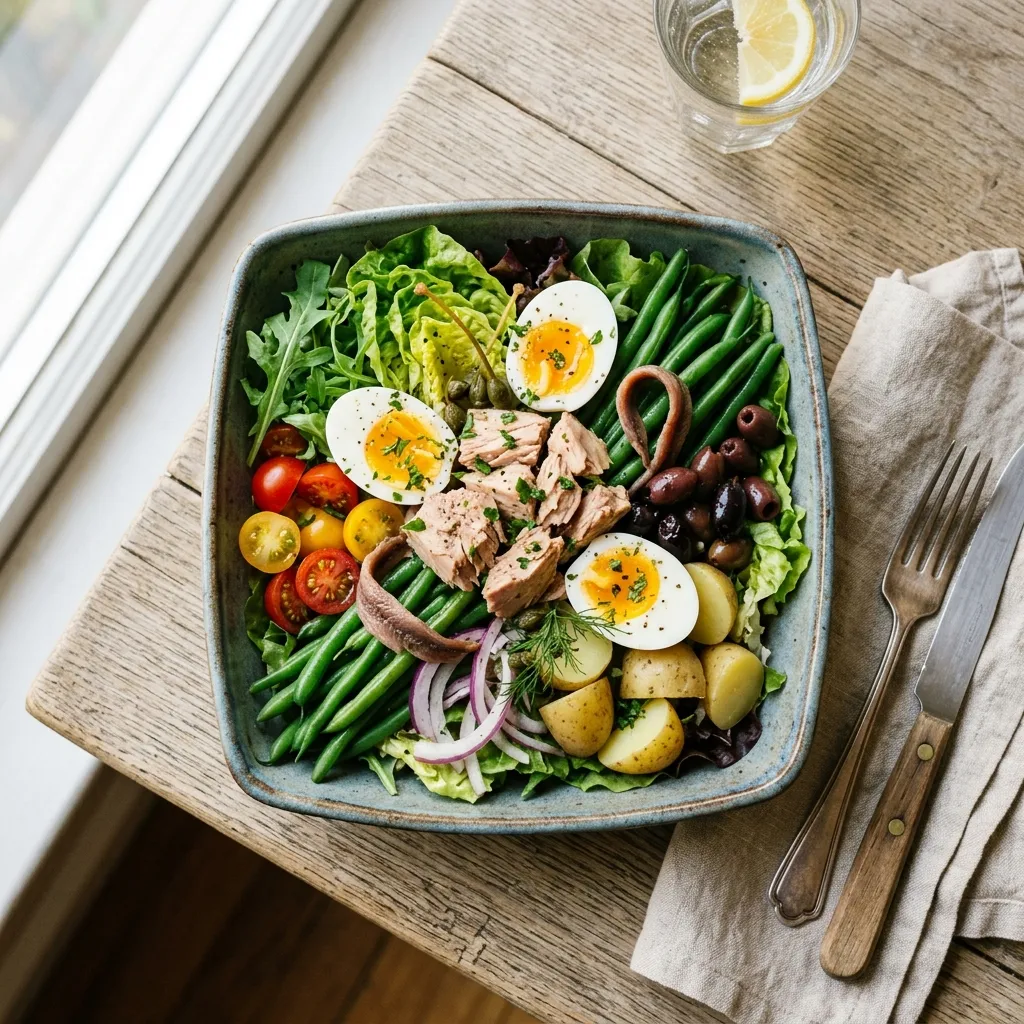
- Arrange the lettuce on a large platter or individual plates. A Niçoise is composed, not tossed — each ingredient occupies its own space on the plate so diners can appreciate each element and combine bites as they choose.
- Arrange the potatoes, green beans, tomato wedges, halved eggs, olives, and red onion slices in distinct sections over the lettuce. Place the anchovy fillets across the vegetables. Scatter the capers over the entire salad.
- Fan the sliced tuna (or mound the canned tuna) in the center of the salad as the focal point.
- Drizzle the vinaigrette over the entire composed salad. Scatter the torn basil leaves over the top. Serve immediately with the remaining vinaigrette on the side — some components may need additional dressing.
Nutrition
These values are estimates calculated from the ingredient list and may vary based on brands, cooking methods, and serving size. Not a substitute for medical or dietary advice.
How This Recipe Affects Each Dosha
Vata
The raw and cold nature of this salad presents the primary challenge for vata. Cold food, raw vegetables, and vinegar all aggravate vata's cold, dry, erratic digestive tendencies. However, the olive oil, eggs, potatoes, and tuna provide meaningful grounding and nourishment. The diversity of ingredients — while interesting for the palate — can scatter vata's digestion, which prefers simplicity. Vata types can enjoy this salad but should eat it at room temperature rather than cold, ensure generous olive oil dressing, and consider having a warm soup beforehand to kindle digestive fire.
Pitta
Salade Niçoise is well-suited for pitta, particularly in summer. The cooling greens, raw vegetables, and olive oil base calm pitta's heat. The cooked potatoes and eggs provide substance without excessive heating. The tomatoes and vinaigrette carry some pitta-increasing acidity but in moderate amounts that most pitta types tolerate well. The anchovies and olives add saltiness that pitta should monitor but not avoid. Overall, this is one of the more pitta-balancing dishes in French cuisine.
Kapha
The lightness, variety of tastes, and vegetable-forward composition make this salad quite good for kapha. The bitter greens, astringent green beans, and pungent onion all actively reduce kapha. The raw preparation maintains the vegetables' lightness and prana. The vinaigrette's acidity and mustard cut through kapha's heaviness. The main kapha concerns are the potatoes (heavy and starchy) and the quantity of olive oil in the dressing. The protein from tuna and eggs provides nourishment without excessive building.
The vinaigrette's mustard, garlic, and vinegar combination provides moderate agni stimulation. However, the overall cold preparation and raw vegetables require existing strong agni to digest properly. This is not a dish for weak or variable digestion — the combination of raw vegetables, cold protein, and acidic dressing demands robust digestive capacity.
Nourishes: rasaraktamamsa
Adjustments by Constitution
For Vata Types
Serve the salad at room temperature, not cold. Increase the olive oil in the vinaigrette to 7 tablespoons. Lightly warm the green beans and potatoes before arranging — vata does not do well with cold food. Add a soft-boiled egg instead of hard-boiled for a creamier, more moistening texture. Add a few slices of avocado for additional grounding fat. Replace the red wine vinegar with a milder rice vinegar to reduce the sharpness that aggravates vata.
For Pitta Types
Increase the lettuce and green beans, which are cooling and pitta-pacifying. Replace the red wine vinegar with lemon juice for a less heating acid. Reduce or omit the raw onion, which is pitta-aggravating. Use canned tuna rather than seared fresh tuna — the searing process adds heating Maillard compounds. Add cucumber slices and fresh mint for additional cooling. The anchovies can stay as their salt is balanced by the overall cooling composition.
For Kapha Types
Reduce the potatoes to 2-3 small pieces per serving or omit them entirely. Reduce olive oil to 3 tablespoons in the vinaigrette and increase the vinegar and mustard for more sharpness. Add arugula, radicchio, or watercress for additional bitter and pungent tastes that reduce kapha. Use water-packed tuna rather than oil-packed. Skip the extra dressing on the side. Add radishes and raw fennel for additional crunch and lightness.
Seasonal Guidance
Salade Niçoise is a warm-weather dish by design, created for the Mediterranean summer when raw vegetables are at their peak and the body craves cooling, lighter food. It is most appropriate from late spring through early fall. In winter, the cold, raw composition aggravates vata and provides insufficient warmth for the season.
Best time of day: Lunch is ideal — the salad provides substantial protein and fat for sustained afternoon energy while remaining light enough that it does not cause afternoon heaviness. The raw vegetables are best digested when the midday sun supports peak agni.
Cultural Context
The debate over what constitutes an authentic salade Niçoise is among the most passionate in French gastronomy. Jacques Médecin, the former mayor of Nice, wrote an entire book defending the original version and specifically forbidding cooked vegetables. The Niçois insist that potatoes, green beans, and seared tuna are Parisian corruptions of their dish. At the Cours Saleya market in old Nice, the salad is served with raw vegetables, canned tuna or anchovies, hard-boiled eggs, and olives — nothing more. The international version, standardized by Auguste Escoffier (himself from nearby Villeneuve-Loubet), added the cooked elements that make it a heartier composed plate.
Deeper Context
Origins
Nice mayor Henri Heyraud documented the recipe in 1903, though the dish was eaten informally in Nice households for decades prior. The authenticity debate centers on cooked-vs-raw ingredients — the traditional Niçoise version uses only raw vegetables plus egg and tuna; the green beans and cooked potatoes in the internationally-recognized Julia Child version (published 1961) are considered modern additions. The Comité de Défense de la Cuisine Niçoise formalized traditional recipe protection in the 1970s-1980s.
Food as Medicine
Tuna provides omega-3 fatty acids and selenium; olive oil delivers monounsaturated fat with cardiovascular and anti-inflammatory compounds; tomato contributes lycopene (particularly bioavailable when paired with olive oil); egg provides complete protein and choline. The salad is a template Mediterranean-diet dish — meta-analyses have repeatedly validated similar-composition meals for cardiovascular and metabolic benefit.
Ritual & Seasonal Role
Summer lunch staple. Not religiously ceremonial. Niçoise cafés and restaurants serve the dish year-round, with summer peak when tomatoes reach peak local-Provençal ripeness. Featured at French bistro menus globally and at American restaurants as shorthand for 'sophisticated composed salad.'
Classical Pairings & Cautions
Rosé de Provence (classical), crusty bread, a small bowl of olives. Cautions: mercury accumulation in tuna — pregnancy should favor lower-mercury varieties (skipjack over albacore); anchovy allergies; raw tomato and nightshade-family sensitivities; high sodium from olives and anchovy; vegetarian versions substitute white beans or chickpeas for protein.
Cross-Tradition View
How other medical and food-wisdom traditions read this dish. Each tradition names the same physiological reality in its own language — the agreements across them are where universal principles live.
Traditional Chinese Medicine
Tuna is Yin-and-Blood-building; olive oil is cool-moistening; green beans are Spleen-Qi-supporting; egg builds Yin; tomato is cool-sour and moves Liver Qi; olives are salty-warm and build fluid. A Yin-building Liver-Qi-moving summer dish — TCM physicians would class this as appropriate for summer heat with Yin deficiency, particularly for post-menopausal women and thin nervous types.
Greek Humoral
Cold-wet with warm-dry accents from the olives. Galenic summer-balanced preparation — the combination of preserved fish, raw-and-cooked vegetables, and olive oil reflects classical Mediterranean summer dietetics. Appropriate for choleric types in hot weather; sanguine types benefit year-round.
Niçoise
The Nice salad — specifically from Nice, with a 1903 documented recipe by Nice mayor Henri Heyraud. Classical debate: the original used only raw tomato, anchovy or tuna, hard-boiled egg, and olive oil — the green beans and cooked potatoes in the American/Julia Child version are later additions that Niçoise purists consider inauthentic. The Comité de Défense de la Cuisine Niçoise defends the original composition against 'cooked-vegetable drift.'
Ayurveda
Heating virya (fish is heating), sweet vipaka. Mixed dosha picture — the cooling vegetables pacify Pitta while fish aggravates; egg is Pitta-aggravating; raw elements aggravate Vata. A summer-occasional dish rather than year-round household food by Ayurvedic classification.
Chef's Notes
A salade Niçoise is composed, not tossed — this is the non-negotiable rule that distinguishes it from an ordinary salad. Each ingredient should be visible, distinct, and arranged with intention. The vinaigrette should dress the components, not drown them. If using canned tuna, choose oil-packed Italian or Spanish tuna, which has more flavor and better texture than water-packed. The anchovies are not optional — they provide the salt and umami backbone of the dish. If you dislike anchovies, dissolve 2 anchovy fillets into the vinaigrette where their fishiness disappears into a complex savory depth.
Frequently Asked Questions
Is Salade Niçoise good for my dosha?
The remarkable breadth of tastes makes this salad more balancing than most dishes for all three doshas. The raw vegetables and vinegar increase vata and pitta in sensitive constitutions. The olive oil and protein provide grounding. The overall cooling nature and lightness make it most appropriate for pitta and kapha. The raw and cold nature of this salad presents the primary challenge for vata. Salade Niçoise is well-suited for pitta, particularly in summer. The lightness, variety of tastes, and vegetable-forward composition make this salad quite good for kapha.
When is the best time to eat Salade Niçoise?
Lunch is ideal — the salad provides substantial protein and fat for sustained afternoon energy while remaining light enough that it does not cause afternoon heaviness. The raw vegetables are best digested when the midday sun supports peak agni. Salade Niçoise is a warm-weather dish by design, created for the Mediterranean summer when raw vegetables are at their peak and the body craves cooling, lighter food. It is most appropriate from late
How can I adjust Salade Niçoise for my constitution?
For Vata types: Serve the salad at room temperature, not cold. Increase the olive oil in the vinaigrette to 7 tablespoons. Lightly warm the green beans and potatoes b For Pitta types: Increase the lettuce and green beans, which are cooling and pitta-pacifying. Replace the red wine vinegar with lemon juice for a less heating acid. Re
What are the Ayurvedic properties of Salade Niçoise?
Salade Niçoise has madhura,amla,lavana,tikta,katu,kashaya taste (rasa), sheeta energy (virya), and madhura post-digestive effect (vipaka). Its qualities (gunas) are laghu,snigdha. It nourishes rasa,rakta,mamsa. The vinaigrette's mustard, garlic, and vinegar combination provides moderate agni stimulation. However, the overall cold preparation and raw vegetables require existing strong agni to digest properly. This is not a dish for weak or variable digestion — the combination of raw vegetables, cold protein, and acidic dressing demands robust digestive capacity.