Ratatouille
French Recipe
Overview
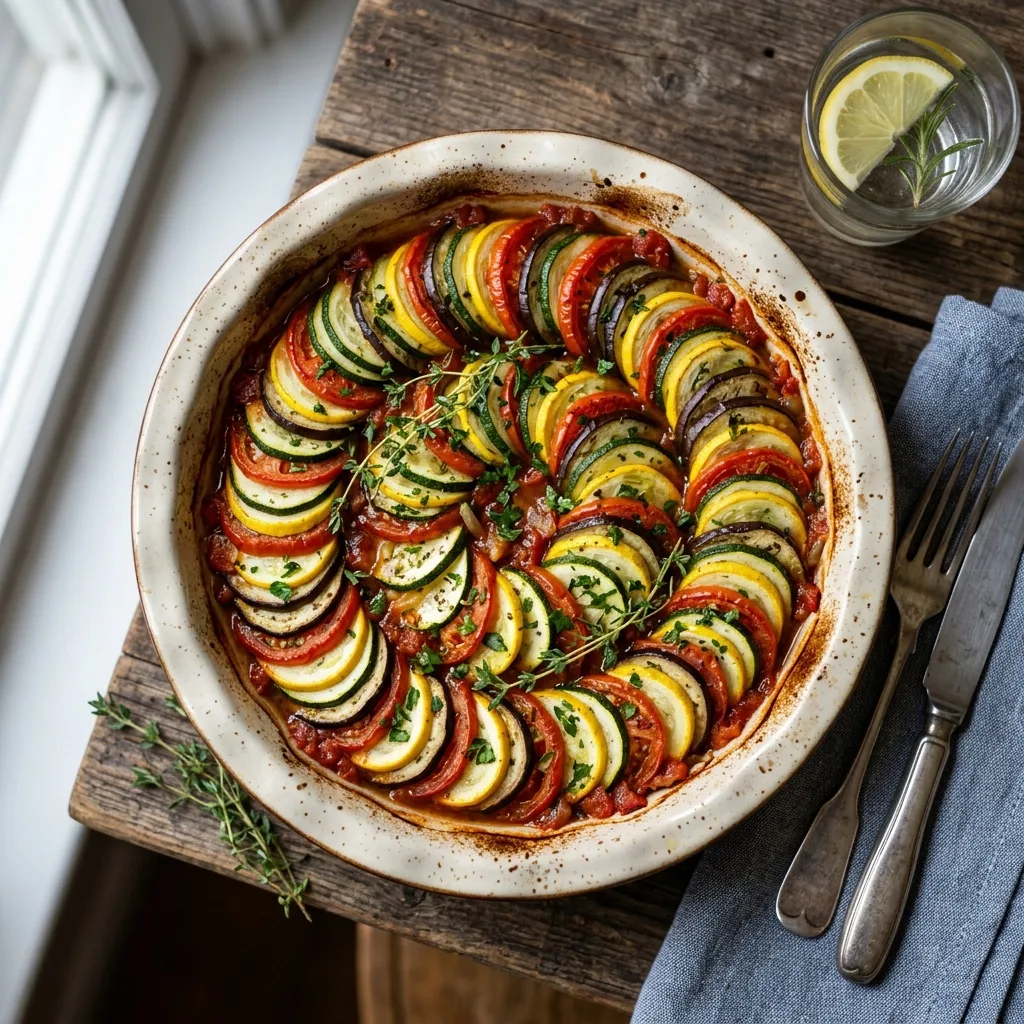
Ratatouille comes from Nice, in the Provençal region of southeastern France, where the dish emerged as a late-summer farmer's solution to the simultaneous ripening of tomatoes, zucchini, eggplant, and bell peppers. The name derives from the Occitan 'ratatolha,' meaning to stir up — a reference to the original rough, peasant-style stew that bore little resemblance to the precise layered presentations popular today. The traditional method involves cooking each vegetable separately before combining them, a technique that preserves individual textures and prevents the dish from becoming a uniform mush. The Ayurvedic profile of ratatouille is remarkably balanced for a single dish. Eggplant brings bitter and astringent rasas with a heating virya. Zucchini contributes cooling, hydrating sweetness. Tomatoes add sour and sweet tastes with significant pitta-increasing properties. Bell peppers introduce additional sweetness and a mild pungency. The olive oil base provides the snigdha (oily) quality that makes the vegetables' nutrients more bioavailable. As a vegetable-dominant dish, ratatouille is comparatively light (laghu) and easy to digest when prepared properly — meaning the vegetables are cooked through rather than left al dente. The herbes de Provence (thyme, rosemary, basil, oregano) are not merely flavor additions but function as digestive catalysts, each carrying carminative properties that help the body process the diverse vegetable matter.
The diversity of vegetables creates a relatively balanced dish, but the tomatoes and eggplant make it moderately pitta-increasing. The lightness and variety of vegetables help manage kapha, while the olive oil and cooked preparation provide enough grounding for vata in moderate portions.
The variety of colorful vegetables provides a broad spectrum of antioxidants and phytonutrients. The combination of bitter (eggplant), astringent (peppers), and pungent (garlic) tastes supports gentle detoxification and lymphatic movement, making ratatouille a useful dish during seasonal cleansing or kapha-reducing protocols.
Ingredients
- 1 large Eggplant (about 1 pound, cut into 3/4-inch cubes)
- 2 medium Zucchini (cut into 3/4-inch cubes)
- 1 medium Yellow squash (cut into 3/4-inch cubes)
- 2 large Red bell pepper (seeded, cut into 3/4-inch pieces)
- 4 large Ripe tomatoes (about 2 pounds, roughly chopped, or one 28-oz can)
- 1 large Yellow onion (diced)
- 6 cloves Garlic (minced)
- 6 tablespoons Extra-virgin olive oil (divided)
- 1 tablespoon Fresh thyme (leaves stripped from stems)
- 1/4 cup Fresh basil (torn, plus more for garnish)
- 1 teaspoon Fresh rosemary (finely minced)
- 1.5 teaspoons Salt
- 1/2 teaspoon Black pepper
- 1/4 teaspoon Red pepper flakes (optional)
Instructions
- Salt the cubed eggplant and place in a colander over a bowl for 20 minutes. This draws out bitter compounds and excess moisture, improving both flavor and texture. Pat dry thoroughly with paper towels before cooking.
- Heat 2 tablespoons of olive oil in a large, heavy skillet over medium-high heat. Sear the eggplant cubes in a single layer, working in batches to avoid crowding, until golden brown on at least two sides — about 4 minutes per batch. Transfer to a large bowl. The eggplant will absorb oil quickly; resist adding more.
- Add 1 tablespoon of olive oil to the same skillet. Sear the zucchini and yellow squash cubes until lightly browned, about 3 minutes. They should retain some firmness. Transfer to the bowl with the eggplant.
- Add 1 tablespoon of olive oil and sear the bell peppers until the edges char slightly, about 4 minutes. Transfer to the bowl.
- Reduce heat to medium. Add the remaining 2 tablespoons of olive oil, then cook the diced onion until softened and translucent, about 6 minutes. Add the garlic and cook for 1 minute until fragrant but not browned.
- Add the chopped tomatoes, thyme, rosemary, salt, and black pepper to the onion mixture. Cook for 10 minutes, stirring occasionally, until the tomatoes break down into a thick, saucy base. Crush any large tomato pieces with the back of your spoon.
- Return all the seared vegetables to the pot. Fold them gently into the tomato base — do not stir aggressively, as you want the vegetable cubes to maintain their shape. Add the red pepper flakes if using.
- Reduce heat to low, cover, and simmer for 20-25 minutes, stirring gently twice. The vegetables should be tender throughout but not falling apart, and the sauce should be thick and clinging rather than watery.
- Remove from heat and fold in the torn basil. Taste and adjust seasoning — ratatouille often needs more salt than you expect.
- Let the ratatouille rest for at least 15 minutes before serving. Like most stews, it improves dramatically after resting and is even better the next day. Serve warm or at room temperature with a drizzle of fresh olive oil and additional torn basil.
Nutrition
These values are estimates calculated from the ingredient list and may vary based on brands, cooking methods, and serving size. Not a substitute for medical or dietary advice.
How This Recipe Affects Each Dosha
Vata
Ratatouille is acceptable for vata when served warm with generous olive oil and accompanied by a grain like rice or bread to add grounding weight. The cooked vegetables are easier for vata digestion than raw, and the olive oil provides necessary snigdha quality. However, the combination of multiple vegetables can create gas and bloating in sensitive vata digestion — the variety itself is a challenge. The eggplant, being a nightshade, can aggravate vata's joint sensitivity in some individuals. The tomato acidity may also disturb vata's delicate digestive lining.
Pitta
Tomatoes are one of the most pitta-aggravating foods in common use — they are sour, heating, and acidic. Combined with garlic, onions, and the natural heat of eggplant, ratatouille carries a significant pitta-increasing load. The bell peppers add further warmth. The cooling qualities of zucchini and yellow squash provide some counterbalance, but they are insufficient to offset the dominant heating profile. Pitta types may notice increased acidity, skin irritation, or inflammatory responses when consuming this dish regularly during summer months.
Kapha
Ratatouille is one of the more kapha-friendly French dishes. The predominance of vegetables keeps it light, and the variety of tastes — bitter from eggplant, astringent from bell peppers, pungent from garlic — all help reduce kapha accumulation. The laghu (light) quality of the cooked vegetables supports kapha's need for stimulation and movement. The olive oil is the main kapha-increasing element, but in the quantity used here, it serves more as a digestive vehicle than a heaviness factor. The warming herbs further support kapha balance.
The garlic, thyme, and rosemary serve as effective agni-stimulating agents, while the cooked vegetables are relatively easy to digest. The olive oil supports the transport of fat-soluble nutrients. However, the diversity of vegetables in a single dish can scatter digestive focus — agni works most efficiently on simpler food combinations.
Nourishes: rasarakta
Adjustments by Constitution
For Vata Types
Increase the olive oil to 8 tablespoons total and add 1/2 teaspoon of ground cumin to the tomato base — cumin is one of the best carminative spices for vata and will reduce the gas-producing tendency of the mixed vegetables. Replace the eggplant with sweet potato cubes, which are more grounding and less vata-aggravating. Serve over basmati rice with a dollop of ghee. Add a pinch of asafoetida (hing) when cooking the onions. Avoid serving at room temperature — vata needs this dish warm.
For Pitta Types
Replace the tomatoes entirely with 2 cups of cubed butternut squash, which provides body and sweetness without the acidity. Omit the garlic and use fennel bulb instead of onion for a cooling aromatic base. Remove the red pepper flakes and reduce black pepper to a pinch. Add 1 tablespoon of fresh mint along with the basil at the end. Use coconut oil instead of olive oil for a cooler fat base. Increase the zucchini quantity to compensate for the tomato removal.
For Kapha Types
Reduce the olive oil to 2 tablespoons total — use a nonstick pan and dry-roast the vegetables instead of searing in oil. Add 1 teaspoon of dried ginger and 1/2 teaspoon of black mustard seeds to the onion base. Include 1 diced jalapeño for additional pungency. Skip serving with bread or rice — eat the ratatouille on its own or over a bed of bitter greens. Add a generous squeeze of lemon juice before serving to introduce additional lightness and digestive stimulation.
Seasonal Guidance
Ratatouille is a late-summer dish by design, created to use the abundance of the August and September harvest. It is most appropriate when these vegetables are in peak season and the body can handle their mixed qualities. In winter, the cooling nature of zucchini and the raw-like quality of out-of-season tomatoes make this dish less suitable.
Best time of day: Serve at lunch or early dinner when digestive fire can handle the variety of vegetables. The relatively light nature of the dish makes it appropriate for evening meals, particularly in summer when lighter dinners are preferable.
Cultural Context
Ratatouille is inseparable from Provençal identity — the cuisine of southeastern France that shares more with Italian and Mediterranean cooking than with the butter-and-cream traditions of Paris and northern France. The dish was peasant food until the mid-20th century, when French nouvelle cuisine chefs began presenting it with careful vegetable arrangements. Auguste Escoffier, himself from Provence, included a version in his early 20th-century writings. The 2007 Pixar film brought global attention to the dish, though its depiction of a layered tian-style preparation differs from the traditional stew method used in Provençal homes.
Deeper Context
Origins
Ratatouille as a named Niçoise dish emerged in the 18th century after the gradual adoption of New World vegetables (tomato and bell pepper) into Provençal cooking. The name derives from Provençal 'ratatolha' — a stew of vegetables. Thomas Keller's confit bayaldi version (an inverted-layered refinement) was featured in Pixar's 2007 animated film Ratatouille, which substantially changed global perception of the dish from rustic peasant fare to refined Provençal haute cuisine.
Food as Medicine
Not therapeutically designed, but accidentally well-composed — the combination of summer vegetables with olive oil delivers carotenoids, lycopene (tomato), nasunin (eggplant), and polyphenols in a fat-soluble vehicle. Mediterranean diet research has consistently validated dishes of this composition for cardiovascular benefit and inflammation reduction. Olive-oil polyphenols specifically support Mediterranean-dietary cognitive-protective effects.
Ritual & Seasonal Role
Summer and early-autumn dish — all five primary vegetables are peak-season simultaneously from July through September in Mediterranean climates. Not religiously ceremonial but tightly tied to Provençal regional identity. Featured at Provençal summer feasts, bastide garden lunches, and at every Nice restaurant's summer menu.
Classical Pairings & Cautions
Served as a main dish with crusty bread, or as a side with grilled lamb, fish, or chicken. Rosé from Provence is the classical accompaniment. Cautions: nightshade-family sensitivity (fibromyalgia, autoimmune flares); Pitta aggravation substantial in sensitive types; FODMAP issues from the garlic and onion (if added); the traditional simmering time reduces most individual-vegetable nutritional content but concentrates flavor and increases lycopene bioavailability from tomato.
Cross-Tradition View
How other medical and food-wisdom traditions read this dish. Each tradition names the same physiological reality in its own language — the agreements across them are where universal principles live.
Traditional Chinese Medicine
Eggplant is cool-sweet and Liver-clearing; zucchini is cool-sweet and Spleen-Qi-supporting; tomato is cool-sour and moves Liver Qi; bell pepper is cool-bitter; olive oil is cool-moistening. A cool Liver-clearing summer preparation — TCM physicians would prescribe this for summer Heat with Liver Qi stagnation, but would caution against year-round consumption in cold climates.
Greek Humoral
Mostly cold-wet with olive oil balance. Galenic summer food par excellence — the combination of cooling vegetables with olive-oil moisture is classical Hippocratic summer dietetics. Appropriate for choleric and sanguine types in hot weather; phlegmatic and melancholic baselines should reduce portion or add warming spices (herbes de Provence do this partially).
Ayurveda
Heating virya (the cooking warms), pungent vipaka. Mixed dosha picture — nightshade family (eggplant, tomato, pepper) aggravates Pitta substantially; the summer-cooling aspect pacifies Pitta; the oily cookery helps Vata but the rawness-of-ingredient-spirit can aggravate. Not a dosha-clean preparation, but acceptable occasional food.
Niçoise Provençal
Ratatouille originated in Nice and Provence — the specific Niçoise form emphasizes cooking each vegetable separately before combining (the classical confit bayaldi method that Thomas Keller formalized and that Pixar's 2007 film popularized), while the rustic tous-ensemble method (all vegetables simmered together) is traditional in Niçoise home cooking. The dish is entirely post-Columbian — tomato, pepper, and eggplant are all New World via 16th-century Mediterranean adoption.
Chef's Notes
The cardinal sin of ratatouille is cooking all the vegetables together from the start — this produces a grey, textureless stew rather than a dish where each vegetable retains its identity. Searing each vegetable separately takes more time but is the difference between mediocre and exceptional ratatouille. Use the ripest, most flavorful tomatoes you can find; out-of-season tomatoes will produce a bland, watery result, and canned San Marzano tomatoes are preferable to poor fresh ones. Ratatouille reheats beautifully and tastes even better on the second day as the flavors continue to marry.
Frequently Asked Questions
Is Ratatouille good for my dosha?
The diversity of vegetables creates a relatively balanced dish, but the tomatoes and eggplant make it moderately pitta-increasing. The lightness and variety of vegetables help manage kapha, while the olive oil and cooked preparation provide enough grounding for vata in moderate portions. Ratatouille is acceptable for vata when served warm with generous olive oil and accompanied by a grain like rice or bread to add grounding weight. Tomatoes are one of the most pitta-aggravating foods in common use — they are sour, heating, and acidic. Ratatouille is one of the more kapha-friendly French dishes.
When is the best time to eat Ratatouille?
Serve at lunch or early dinner when digestive fire can handle the variety of vegetables. The relatively light nature of the dish makes it appropriate for evening meals, particularly in summer when lighter dinners are preferable. Ratatouille is a late-summer dish by design, created to use the abundance of the August and September harvest. It is most appropriate when these vegetables are in peak season and the body can handle t
How can I adjust Ratatouille for my constitution?
For Vata types: Increase the olive oil to 8 tablespoons total and add 1/2 teaspoon of ground cumin to the tomato base — cumin is one of the best carminative spices fo For Pitta types: Replace the tomatoes entirely with 2 cups of cubed butternut squash, which provides body and sweetness without the acidity. Omit the garlic and use fe
What are the Ayurvedic properties of Ratatouille?
Ratatouille has madhura,amla,tikta,kashaya taste (rasa), ushna energy (virya), and katu post-digestive effect (vipaka). Its qualities (gunas) are laghu,snigdha. It nourishes rasa,rakta. The garlic, thyme, and rosemary serve as effective agni-stimulating agents, while the cooked vegetables are relatively easy to digest. The olive oil supports the transport of fat-soluble nutrients. However, the diversity of vegetables in a single dish can scatter digestive focus — agni works most efficiently on simpler food combinations.