Quiche Lorraine
French Recipe
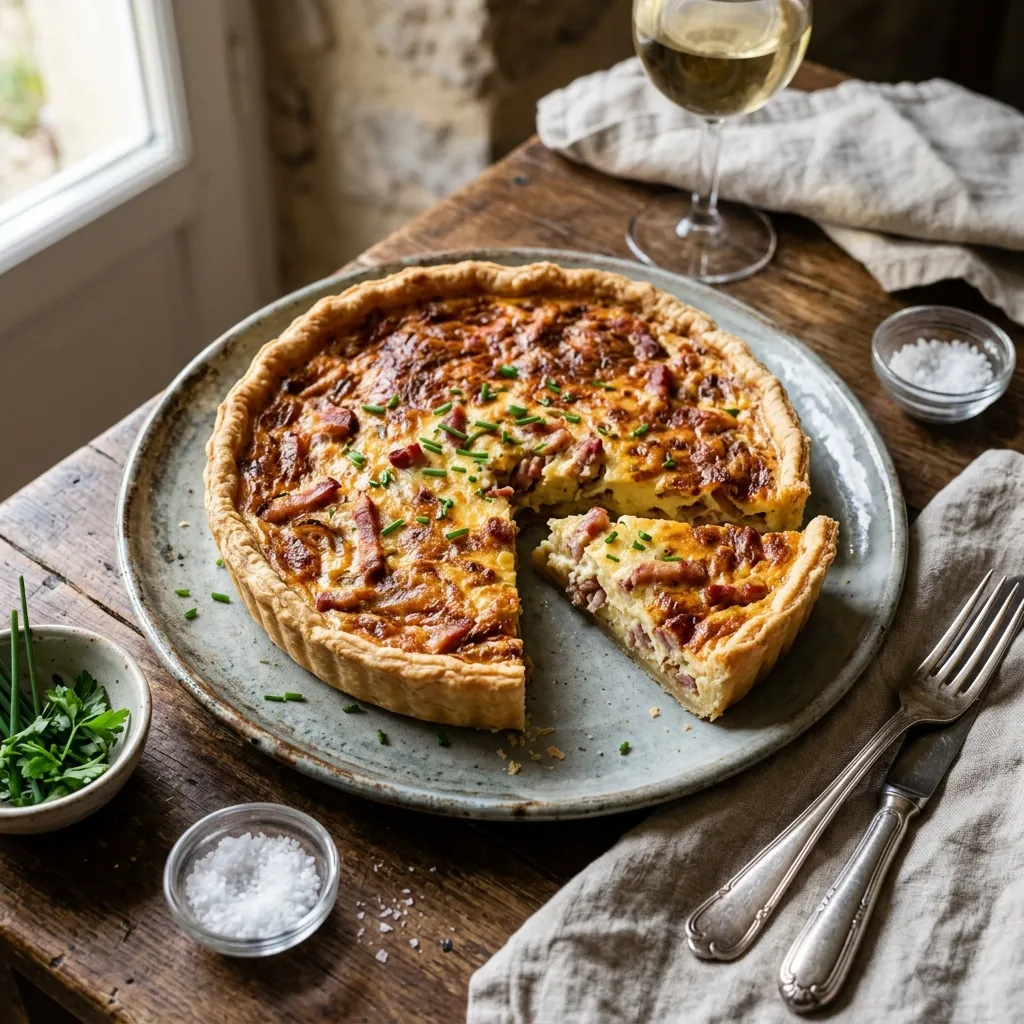
Overview
Quiche Lorraine takes its name from the Lorraine region of northeastern France, bordering Germany, where the original 'kuchen' (cake) appeared in medieval records as an open pastry filled with egg custard and smoked bacon. The word 'quiche' is itself a Francification of the German 'kuchen.' The earliest versions contained no cheese — only eggs, cream, and lardons of smoked pork belly. Gruyère was a later addition, likely introduced in the 19th century as the dish spread from Lorraine to the rest of France. The Ayurvedic profile of quiche is dominated by its richness: eggs, cream, butter, and cheese combine to create a dish that is profoundly guru (heavy), snigdha (oily), and madhura (sweet) in its post-digestive effect. This is a deeply nourishing food that strongly builds all tissue layers but demands robust digestive fire to process. The pastry crust adds additional heaviness through refined flour and butter, making this one of the more kapha-increasing preparations in French cuisine. The lardons (smoked bacon pieces) contribute a unique combination of salty, smoky, and fatty qualities that Ayurveda would classify as carrying significant tamasic energy due to the smoking and curing process. For those who include animal products, the lardons provide a grounding, satisfying quality that distinguishes Lorraine-style quiche from vegetarian variants.
Quiche Lorraine is a strongly kapha-increasing food due to its combination of dairy, eggs, wheat, and pork fat. It grounds and nourishes vata effectively through its heavy, oily, warm qualities. Pitta types should monitor portion size, as the richness and heaviness can generate excess heat when digestive fire is already strong.
The dense nutritive quality of quiche makes it useful for building depleted tissue in recovery from illness, postpartum recovery, or chronic vata conditions involving weight loss and exhaustion. The egg-cream-cheese combination provides all building blocks for rasa through shukra dhatu replenishment.
Ingredients
- 1.25 cups All-purpose flour (for the crust)
- 8 tablespoons Cold unsalted butter (1/2 cup, cut into small cubes, divided — 6 for crust, 2 for filling)
- 3 tablespoons Ice water (plus more as needed)
- 1 teaspoon Salt (divided — 1/2 tsp for crust, 1/2 tsp for filling)
- 8 ounces Thick-cut bacon (cut into 1/4-inch lardons)
- 4 whole Large eggs
- 1.5 cups Heavy cream
- 1/2 cup Whole milk
- 1 cup Gruyère cheese (grated, about 3 ounces)
- 1/4 teaspoon Nutmeg (freshly grated)
- 1/4 teaspoon White pepper
- 1 tablespoon Fresh chives (finely minced, for garnish)
Instructions
- Make the crust: Combine flour and 1/2 teaspoon salt in a large bowl. Add the 6 tablespoons of cold cubed butter and work it into the flour using a pastry cutter or your fingertips until the mixture resembles coarse meal with some pea-sized butter pieces remaining. These butter pieces create flakiness — do not over-process into a uniform mixture.
- Drizzle in ice water 1 tablespoon at a time, tossing with a fork after each addition, until the dough just comes together when squeezed. Form into a flat disk, wrap in plastic, and refrigerate for at least 30 minutes. This rest period hydrates the flour and relaxes the gluten.
- Roll out the chilled dough on a lightly floured surface to a 12-inch circle about 1/8 inch thick. Transfer to a 9-inch tart pan with a removable bottom, pressing gently into the corners. Trim excess dough, leaving a 1/2-inch overhang that you fold inward to reinforce the sides. Prick the bottom with a fork in 8-10 places. Refrigerate for 15 minutes while the oven preheats.
- Preheat oven to 375 degrees F. Line the chilled crust with parchment paper and fill with pie weights or dried beans. Blind bake for 15 minutes, then remove the weights and parchment and bake an additional 5 minutes until the bottom looks dry and lightly golden. This step prevents a soggy bottom crust.
- While the crust bakes, cook the lardons in a skillet over medium heat until the fat renders and the pieces are golden and slightly crispy, about 8 minutes. Transfer to a paper towel-lined plate. Do not let them become fully crisp — they will cook further in the oven.
- Whisk together the eggs, heavy cream, milk, remaining 1/2 teaspoon salt, nutmeg, and white pepper in a large bowl until smooth and uniform. Do not over-whisk — you want a smooth custard, not a frothy one, as air bubbles create an uneven texture.
- Scatter the cooked lardons evenly over the bottom of the par-baked crust. Distribute the grated Gruyère over the lardons. Place the tart pan on a baking sheet pulled halfway out of the oven, then carefully pour the custard mixture to within 1/4 inch of the top. This technique prevents spilling during the transfer to the oven.
- Bake at 375 degrees F for 30-35 minutes until the custard is set around the edges but still has a slight wobble in the center — about 2 inches of gentle movement. The center will continue to set as it cools. The surface should be pale golden, not browned.
- Cool the quiche in the pan on a wire rack for at least 15 minutes before removing the tart ring. The custard needs this time to firm up — cutting too early releases the liquid custard that hasn't fully gelled.
- Garnish with fresh chives. Serve warm or at room temperature. Quiche Lorraine is traditional at room temperature in France — it was designed as a portable food for workers, not a hot-from-the-oven dish.
Nutrition
These values are estimates calculated from the ingredient list and may vary based on brands, cooking methods, and serving size. Not a substitute for medical or dietary advice.
How This Recipe Affects Each Dosha
Vata
The heavy, oily, warm combination of eggs, cream, cheese, and butter is almost ideal for vata pacification. Every element of this dish provides the grounding, stabilizing, nourishing qualities that vata constitution needs. The madhura rasa dominates, which is vata's primary balancing taste. The warm custard soothes vata's cold, dry tendencies. The only concern is the wheat crust, which can produce bloating in some vata types with compromised grain digestion. Overall, this is one of the better French dishes for vata balance.
Pitta
The combination of eggs, aged cheese, and smoked pork creates a moderately heating dish that pitta types should approach with measured portions. Eggs are heating in their virya, and the smoking process adds additional fire-element quality to the bacon. The cream and butter provide some cooling counterbalance, and the overall madhura rasa is pitta-calming. The nutmeg carries mild heating properties. For pitta, quiche works best as a lunch dish when digestive fire is robust enough to handle the richness without generating excess acid.
Kapha
This is among the most kapha-aggravating dishes in the French repertoire. Every major ingredient — butter, cream, eggs, cheese, flour — increases kapha through guru (heavy), snigdha (oily), and sheeta (cool post-digestive) qualities. The wheat crust adds additional earth-element heaviness. The pork fat contributes more oiliness and density. Kapha types will likely experience increased congestion, sluggishness, and heaviness after consuming a full portion. The only kapha-balancing element is the mild pungency of nutmeg and pepper, which is insufficient to offset the overall profile.
The extreme richness of quiche Lorraine demands strong agni for complete digestion. The heavy dairy and egg combination can overwhelm weak or variable digestive fire, leading to ama (toxic residue) formation. The nutmeg and pepper provide minimal digestive support relative to the overall heaviness of the dish.
Nourishes: rasaraktamamsamedashukra
Adjustments by Constitution
For Vata Types
Quiche is already vata-friendly. To optimize, add sautéed asparagus or leeks to the filling for additional warmth and mild bitterness that aids digestion. Sprinkle cumin seeds over the top before baking to reduce any gas-forming tendency. Use ghee instead of butter in the crust for improved digestibility. A thin slice served warm with a cup of ginger tea is an ideal vata breakfast.
For Pitta Types
Replace the bacon with sautéed spinach and mushrooms to remove the smoked meat's heating quality. Use fresh paneer or mild goat cheese instead of Gruyère for a less heating dairy component. Replace half the cream with coconut cream to introduce cooling properties. Add fresh dill to the custard instead of nutmeg — dill is cooling and pitta-pacifying. Increase the milk-to-cream ratio for a lighter custard.
For Kapha Types
Make a crustless quiche to eliminate the wheat and butter of the pastry. Reduce the cream to 1/2 cup and replace the rest with unsweetened almond milk. Increase eggs to 6 for structure without the dairy heaviness. Replace bacon with sautéed kale, mustard greens, and onions — the bitter and pungent greens actively reduce kapha. Add 1/2 teaspoon of ground turmeric and 1/4 teaspoon of black pepper to the custard. Add dried ginger and cayenne for additional metabolic stimulation. Keep portions to a thin slice.
Seasonal Guidance
Quiche Lorraine is best suited to cooler months when the body's digestive fire is naturally stronger and can handle the heavy dairy and egg combination. In summer, the richness can feel oppressive and may increase pitta through stagnation. Spring is acceptable if portion sizes are moderate, though kapha-prone individuals should reduce consumption as winter transitions to the kapha-accumulating spring season.
Best time of day: Morning or midday is ideal, when digestive fire is building or at its peak. The substantial protein and fat content provides sustained energy through the morning without the blood sugar crash of lighter, carbohydrate-heavy breakfasts.
Cultural Context
Quiche Lorraine reflects the Germanic influence on Lorraine cuisine — the region changed hands between France and Germany multiple times over centuries, and its food traditions carry both influences. The original custard tart predates the addition of cheese and was a practical way to use eggs, cream, and the region's famous smoked pork in a portable, room-temperature format. In the 1970s, quiche became an international phenomenon and a symbol of French home cooking abroad, though its ubiquity led to a backlash that unfairly diminished its reputation. In Lorraine itself, the dish remains a point of regional pride with strict opinions about what constitutes an authentic version.
Deeper Context
Origins
Quiche Lorraine's recipe records appear in 16th-century Nancy, capital of Duchy of Lorraine (under Germanic influence at the time). The word 'quiche' derives from Alemannic German 'Kuchen' (cake). The original medieval version contained only egg, cream, and bacon — the gruyère cheese is a 19th-century French addition. The dish reflects the historical cultural fluidity of the Alsace-Lorraine region, which switched between French and German rule repeatedly between 1648 and 1945.
Food as Medicine
Not therapeutically designed. Egg carries classical restoration-food status across multiple medical traditions. Cream and cheese provide concentrated calcium and fat-soluble vitamins. Bacon adds historical Alpine and Germanic folk-medicine uses of cured pork as a strong-food (calorie-dense labor food for mountain farmers). The dish is functionally concentrated nourishment with limited everyday appropriateness.
Ritual & Seasonal Role
Classic French brunch food, Sunday lunch, family gathering. Year-round. Features on bistro and brasserie menus across France and globally. Associated with mid-20th-century American introduction to French cuisine — Julia Child popularized it for American home cooks in the 1960s. Not religiously ceremonial.
Classical Pairings & Cautions
A simple green salad with vinaigrette, a glass of dry white wine (Alsatian Riesling or Pinot Gris ideally). Cautions: very high saturated fat and cholesterol load; lactose sensitivity; gluten intolerance precludes the pastry base; religious pork restrictions preclude the bacon — lardons can substitute imperfectly with turkey or chicken; Kapha substantial aggravation in winter weight-gain phases.
Cross-Tradition View
How other medical and food-wisdom traditions read this dish. Each tradition names the same physiological reality in its own language — the agreements across them are where universal principles live.
Traditional Chinese Medicine
Egg builds Yin and Blood; cream is Yin-building; gruyère is Yin-and-Kidney-supporting; bacon is Yin-salty; butter is warm-moistening. A concentrated Yin-building tonic — TCM physicians would class this as restoration food for Yin-deficient thin types, though the saturated-fat load limits frequent consumption.
Greek Humoral
Hot-wet. Sanguine-building aggressively. A Galenic feast-plate preparation — the egg-cream-cheese combination is one of the richest Yin-building constructions in European cookery. Appropriate for melancholic types needing moisture; inappropriate across temperaments for frequent consumption.
Ayurveda
Heating virya, sweet vipaka. Pacifies Vata through unctuousness and warmth. Aggravates Kapha very substantially. Pitta mildly aggravated through the bacon-cheese heat combination. A classical Vata-recovery dish; inappropriate for daily household consumption.
Alsace-Lorraine Germanic
Quiche is Germanic in origin — the word 'quiche' derives from the Alemannic German 'Kuchen' (cake). Lorraine was under Germanic rule for much of its history, and the dish reflects Alsatian and Palatinate egg-custard-in-pastry traditions. The original medieval quiche Lorraine contained no cheese — gruyère is a 19th-century French addition. The egg-custard-in-pastry format is pan-Germanic, shared with Alsatian Flammkuchen and Palatinate Zwiebelkuchen.
Chef's Notes
The ratio of eggs to cream determines the custard's character: more cream produces a silkier, more delicate set; more eggs create a firmer, more sliceable quiche. This recipe uses 4 eggs to 2 cups of liquid (cream plus milk), which yields a custard that holds its shape when sliced but remains creamy inside. Freshly grated nutmeg is non-negotiable — pre-ground nutmeg loses its volatile oils within weeks and tastes flat and dusty by comparison. The white pepper is traditional in Lorraine cooking, providing heat without the visual specks of black pepper in the pale custard.
Frequently Asked Questions
Is Quiche Lorraine good for my dosha?
Quiche Lorraine is a strongly kapha-increasing food due to its combination of dairy, eggs, wheat, and pork fat. It grounds and nourishes vata effectively through its heavy, oily, warm qualities. Pitta types should monitor portion size, as the richness and heaviness can generate excess heat when digestive fire is already strong. The heavy, oily, warm combination of eggs, cream, cheese, and butter is almost ideal for vata pacification. The combination of eggs, aged cheese, and smoked pork creates a moderately heating dish that pitta types should approach with measured portions. This is among the most kapha-aggravating dishes in the French repertoire.
When is the best time to eat Quiche Lorraine?
Morning or midday is ideal, when digestive fire is building or at its peak. The substantial protein and fat content provides sustained energy through the morning without the blood sugar crash of lighter, carbohydrate-heavy breakfasts. Quiche Lorraine is best suited to cooler months when the body's digestive fire is naturally stronger and can handle the heavy dairy and egg combination. In summer, the richness can feel oppressive and
How can I adjust Quiche Lorraine for my constitution?
For Vata types: Quiche is already vata-friendly. To optimize, add sautéed asparagus or leeks to the filling for additional warmth and mild bitterness that aids digest For Pitta types: Replace the bacon with sautéed spinach and mushrooms to remove the smoked meat's heating quality. Use fresh paneer or mild goat cheese instead of Gruy
What are the Ayurvedic properties of Quiche Lorraine?
Quiche Lorraine has madhura,lavana taste (rasa), ushna energy (virya), and madhura post-digestive effect (vipaka). Its qualities (gunas) are guru,snigdha. It nourishes rasa,rakta,mamsa,meda,shukra. The extreme richness of quiche Lorraine demands strong agni for complete digestion. The heavy dairy and egg combination can overwhelm weak or variable digestive fire, leading to ama (toxic residue) formation. The nutmeg and pepper provide minimal digestive support relative to the overall heaviness of the dish.