Pulled Pork
American Recipe
Overview
Pulled pork originated in the colonial-era American South, where whole-hog barbecue was practiced by the early 1700s. The technique — slow-smoking pork shoulder (also called Boston butt) over hardwood at low temperatures for 12 to 16 hours until the collagen-rich connective tissue completely dissolves — produces meat that separates into long, tender strands when pulled apart by hand or fork. Regional sauce traditions vary sharply: eastern North Carolina uses a thin vinegar-pepper sauce, western North Carolina (Lexington style) adds tomato, South Carolina uses a mustard-based sauce, and Memphis favors a dry rub with sauce on the side. The oven-braised method presented here achieves comparable tenderness in 4-5 hours without a smoker. Ayurvedically, pork is classified as sweet in rasa with a heating virya — heavier and more kapha-producing than chicken but lighter than beef. Slow-cooked pulled pork shares many qualities with traditional Ayurvedic meat broth preparations (mamsarasa), where prolonged cooking transforms heavy animal proteins into more easily assimilated forms. The vinegar-based finishing sauce introduces sour rasa that cuts through the heaviness and stimulates agni. The spice rub contributes pungent and bitter rasas through paprika, cumin, and black pepper. The overall preparation is warming, moist, and moderately heavy — grounding for Vata, manageable for Pitta in moderation, and potentially excessive for Kapha without adjustments.
Pacifies Vata through heavy, warm, moist, and oily qualities. The pungent spice rub and sour vinegar sauce provide agni stimulation that partially offsets the heaviness. Pitta types should moderate intake due to the cumulative heat from cayenne, chili, and vinegar. Kapha is increased by the heaviness and oiliness, though the pungent spices offer some counterbalance.
The combination of slow-cooked pork with pungent spices and sour vinegar creates a preparation that simultaneously builds tissue and stimulates digestion — useful for individuals who need nourishment but have sluggish appetite. The collagen-to-gelatin conversion during cooking produces a broth component that supports gut lining repair, joint health, and skin elasticity.
Ingredients
- 5 pounds bone-in pork shoulder (Boston butt)
- 3 tablespoons brown sugar (for the rub)
- 2 tablespoons smoked paprika (for the rub)
- 1 tablespoon chili powder (for the rub)
- 1 tablespoon ground cumin
- 1 tablespoon garlic powder
- 1 tablespoon onion powder
- 1 tablespoon salt
- 2 teaspoons black pepper
- 0.5 teaspoon cayenne pepper
- 2 tablespoons yellow mustard (as binder for rub)
- 0.5 cup apple cider vinegar
- 0.5 cup chicken broth
- 0.5 cup apple juice
- 1 large yellow onion (quartered)
- 6 cloves garlic (smashed)
- 10 whole hamburger buns or slider rolls (for serving)
Instructions
- Combine the brown sugar, smoked paprika, chili powder, cumin, garlic powder, onion powder, salt, black pepper, and cayenne in a bowl and mix thoroughly. This is the dry rub — it can be made in bulk and stored in a sealed jar for months.
- Pat the pork shoulder completely dry with paper towels. Coat the entire surface with a thin layer of yellow mustard — this acts as a binder for the dry rub and adds a subtle tangy note that disappears during cooking. Apply the dry rub generously over every surface, pressing it into the meat. For the best results, wrap the rubbed pork in plastic and refrigerate overnight (8-12 hours), but a minimum of 1 hour at room temperature will work.
- Preheat the oven to 300°F (150°C). Place the quartered onion and smashed garlic in the bottom of a large Dutch oven or deep roasting pan. Set the pork shoulder on top of the aromatics, fat cap facing up.
- Pour the apple cider vinegar, chicken broth, and apple juice into the bottom of the pot around (not over) the meat. The liquid should not touch the meat itself — it creates a humid braising environment that keeps the pork moist while the top surface develops a bark from the dry rub.
- Cover the pot tightly with a lid or two layers of heavy-duty aluminum foil, crimped tightly around the edges. Transfer to the oven and cook for 4.5-5 hours. Do not open the lid during cooking — every time you open it, you lose 20-30 minutes of accumulated heat and moisture.
- The pork is done when an instant-read thermometer inserted into the thickest part reads 200-205°F (93-96°C) and a fork or probe slides in with almost no resistance. The meat should feel like it could fall apart under its own weight. If it still has resistance, cover and return for another 30 minutes.
- Remove the pork from the pot and transfer to a large cutting board or sheet pan. Let it rest for 20-30 minutes — it will still be hot enough to pull after resting. While resting, strain the braising liquid through a fine mesh strainer into a fat separator or bowl. Let the fat rise to the top and skim or separate it.
- Using two forks or your hands (with heat-resistant gloves), pull the pork into shreds, discarding any large pieces of fat, bone, and the fat cap. The meat should separate into long, irregular strands with minimal effort. If you encounter resistance, the pork needed more time in the oven.
- Transfer the pulled pork to a large bowl. Pour the defatted braising liquid over the meat — start with half and add more as needed. The meat should be moist and saucy but not swimming. Toss to combine. Taste and add salt, pepper, or a splash of additional vinegar as needed.
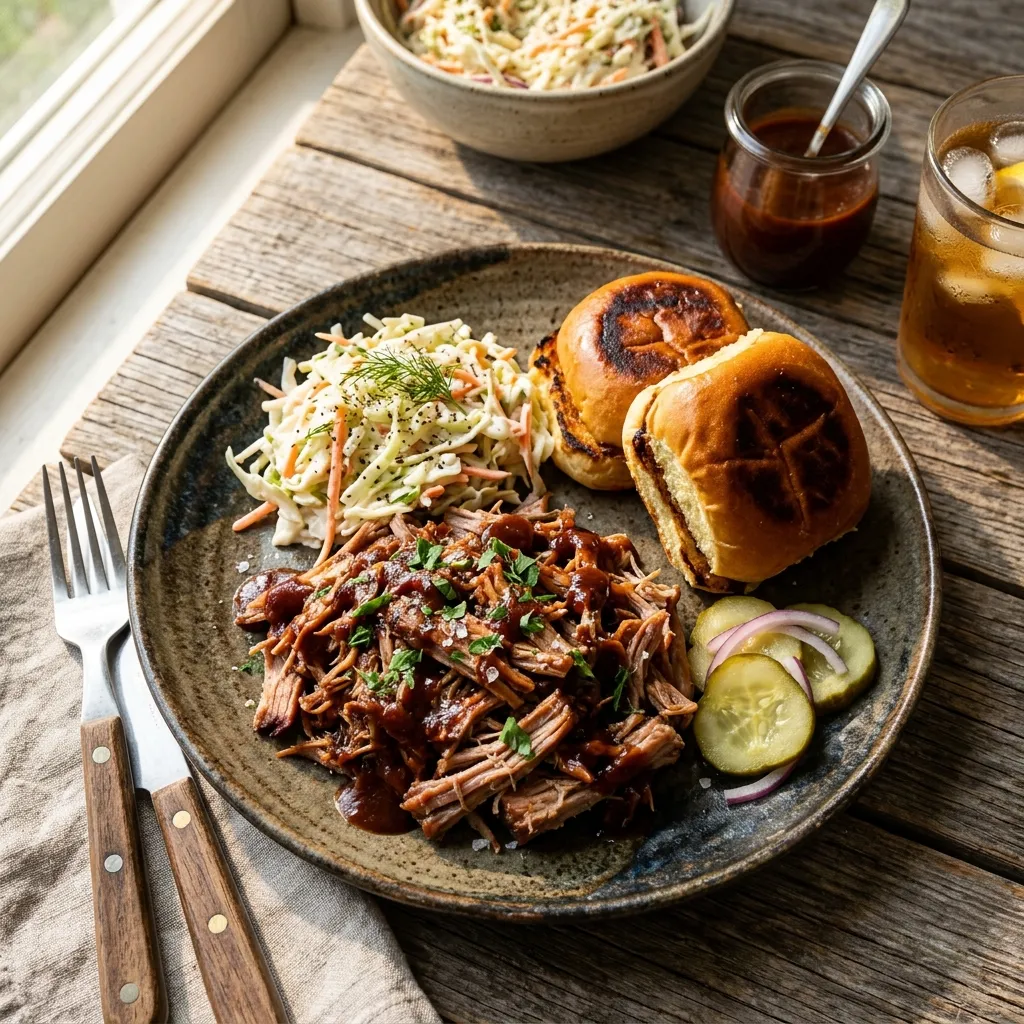
- Serve on toasted buns with coleslaw, pickles, and additional barbecue sauce or vinegar sauce on the side. The pulled pork can also be served over rice, in tacos, or alongside traditional Southern sides.
Nutrition
These values are estimates calculated from the ingredient list and may vary based on brands, cooking methods, and serving size. Not a substitute for medical or dietary advice.
How This Recipe Affects Each Dosha
Vata
Pulled pork is deeply grounding and stabilizing for Vata dosha. The slow-cooked pork delivers heavy, warm, moist, and oily qualities that directly oppose Vata's light, cold, dry, and mobile nature. The sweet rasa from the meat and brown sugar nourishes depleted tissues, while the small amount of sour rasa from the vinegar-based braising liquid stimulates absorption. The pungent rasa from the spice rub warms from within without creating the sharp, drying heat that aggravates Vata. The overall experience of eating pulled pork — deeply satisfying, filling, and warming — indicates effective Vata pacification.
Pitta
The spice rub introduces significant pungent rasa through chili powder, cayenne, cumin, and black pepper, all of which increase Pitta's fire element. Apple cider vinegar contributes sour rasa that further generates heat. Pork itself is heating in virya, adding to the cumulative thermal load. Pitta-dominant individuals may experience acid reflux, increased perspiration, or skin inflammation with regular consumption or large portions. The sweet vipaka provides some cooling post-digestive effect, and the overall preparation is less Pitta-aggravating than highly spiced or char-grilled versions. Moderate portions during cooler months are manageable.
Kapha
Pork shoulder is among the fattier cuts of meat, and the heavy, oily, and moist qualities of pulled pork substantially increase Kapha dosha. The sweet rasa and sweet vipaka promote tissue accumulation that Kapha types typically do not need. The brown sugar in the rub and the overall richness compound this effect. The bread bun adds additional heaviness. However, the pungent spice rub and sour vinegar sauce provide meaningful agni stimulation and help cut through Kapha's sluggish digestion. Kapha types should consume pulled pork infrequently and with the modifications listed below.
The pungent spice rub (chili, cumin, cayenne, black pepper) is a potent agni stimulant that prepares the digestive system for the heavy meat protein. The sour rasa from apple cider vinegar further enkindles digestive fire. This combination makes pulled pork easier to digest than its heaviness might suggest — the spices and acid do meaningful preparatory work. The long cooking process also pre-breaks collagen and connective tissue, reducing the digestive burden. Individuals with strong or moderate agni will handle this preparation well.
Nourishes: Rasa (plasma), Rakta (blood), Mamsa (muscle), Meda (fat)
Adjustments by Constitution
For Vata Types
This recipe suits Vata well as written. For additional support, serve on a warm, buttered bun with a creamy coleslaw (the cold, crisp slaw provides a textural contrast without aggravating Vata when eaten alongside the warm meat). Reduce the cayenne pepper to a pinch — Vata benefits from gentle warmth, not sharp spice heat. Add a pinch of cinnamon and a small amount of fresh ginger to the braising liquid for aromatic warmth that supports Vata's digestion. A side of warm sweet potato rounds completes the meal beautifully.
For Pitta Types
Reduce the spice rub heat significantly: omit the cayenne entirely, halve the chili powder, and replace with an equal amount of sweet paprika. Replace the apple cider vinegar in the braising liquid with apple juice (1 cup total apple juice, no vinegar). After pulling, finish the pork with a sauce made from coconut aminos, a squeeze of lime, and fresh cilantro rather than vinegar-based sauce. Serve on a bun with a cooling cucumber-yogurt slaw instead of traditional coleslaw. These changes preserve the tender pulled texture while dramatically reducing the heating quality.
For Kapha Types
Substitute pork shoulder with a boneless, skinless turkey breast — it pulls into similar shreds when slow-cooked but is dramatically lighter and leaner. Double the cayenne to 1 teaspoon and add 1 teaspoon of ground mustard seed to the rub for increased pungent rasa. Replace the apple juice in the braising liquid with water and increase the vinegar to 3/4 cup. Skip the bun entirely — serve the pulled meat over a bed of raw shredded cabbage dressed with vinegar and a pinch of celery seed. This transforms the dish from Kapha-aggravating to Kapha-manageable while preserving the essential pulled-meat format.
Seasonal Guidance
Pulled pork is appropriate across most of the year except peak summer. The warming, building qualities are ideal in fall and winter. The dish transitions well into spring — the pungent spice rub helps clear accumulated Kapha, and the lighter texture compared to stews and roasts makes it seasonally appropriate. During summer, reduce portion sizes and increase the vinegar/sour component to counteract the heating quality.
Best time of day: Ideal at lunch when digestive fire peaks. Also suitable for early dinner or casual afternoon meals. The generous spice content supports digestion at almost any hour, but completing the meal by 7:00 PM ensures the heavy proteins are processed before sleep.
Cultural Context
Whole-hog barbecue has been practiced in the American South since at least the early 1700s, when Native American smoking techniques merged with European and African culinary traditions on colonial plantations. The pork shoulder cut became the preferred home-cooking option because it offers the ideal balance of fat, connective tissue, and muscle for low-and-slow cooking without requiring a full pit setup. Regional sauce traditions reflect centuries of local ingredient preferences: eastern North Carolina's vinegar-pepper sauce predates tomato cultivation in the region, while South Carolina's mustard sauce reflects German immigrant influence. Pulled pork sandwiches became a restaurant and competition staple during the barbecue renaissance of the 1990s and 2000s, elevating the dish from backyard tradition to celebrated American cuisine.
Deeper Context
Origins
Pulled pork descends from the whole-hog barbecue tradition of the American South, itself a creolization of West African slow-cooking techniques, Indigenous Caribbean barbacoa methods, and European pork-butchery practices. Eastern North Carolina whole-hog tradition is often cited as the oldest continuous American barbecue lineage. The specific sandwich form (pulled pork on a bun with coleslaw) is mid-20th-century, though the smoked-pork-on-bread format predates it.
Food as Medicine
Slow-cooked pork extracts gelatin from connective tissue, making it gut-healing in modern functional-nutrition terms. Apple cider vinegar holds extensive Appalachian and Southern folk-medicine status as a digestive aid, blood-sugar modulator, and all-purpose tonic. Pork itself serves as a classical Chinese and Korean medicine Yin-builder for convalescents and the elderly. The sandwich as a working-laborer's complete meal is a Southern US tradition with obvious parallels to global street-food formats.
Ritual & Seasonal Role
Summer cookout, church pig-pickings, Memorial Day, Fourth of July, Labor Day. Southern community-event anchor — family reunions, political rallies, church fundraisers. The North Carolina pig-pickin' is a specific regional event format that functions socially as a community-identity marker. Competition barbecue circuits (Memphis in May, Kansas City Royal) are their own American folk rituals.
Classical Pairings & Cautions
Coleslaw, potato salad, pickles, Texas toast, cornbread, baked beans. Iced tea, beer. Cautions: religious pork restrictions (Jewish, Muslim, Hindu, some Buddhist, Adventist); sodium load substantial; sugar content in commercial sauces; fat content is significant; heart-health considerations apply for frequent consumers; allergies to paprika or smoke flavoring.
Cross-Tradition View
How other medical and food-wisdom traditions read this dish. Each tradition names the same physiological reality in its own language — the agreements across them are where universal principles live.
Traditional Chinese Medicine
Pork is cool-sweet and Yin-building — the meat of choice for Yin deficiency; paprika warms and disperses; cumin warms the middle burner; apple cider vinegar is sour-warm and moves Liver Qi; brown sugar is warming and Spleen-tonifying. A Yin-building preparation with Qi-moving accent. TCM physicians recognize slow-cooked pork shoulder as one of the most complete Yin-fluid-building meats when properly prepared.
Greek Humoral
Pork is cold-wet by Galenic classification; the smoke-and-spice treatment pulls the surface toward hot-dry while the interior stays cool-moist. Mixed temperament. Sanguine-building through the long slow cookery, melancholic-correcting through moisture retention. Hippocratic physicians specifically praised pork for consumptives (tubercular patients) and thin-underweight populations.
Ayurveda
Heating virya, pungent vipaka. Pork is not a traditional Ayurvedic meat — considered heavy, dulling, and tamasic in classical texts. Vata-pacifying through fat and warmth; aggravates Pitta through smoked-spiced heat; aggravates Kapha substantially through fat content. Used as a restoration dish for Vata-depleted labor workers, not for daily household cookery.
Southern African-American
Pulled pork descends from African-American and Caribbean pit-smoking tradition — whole-hog barbecue is the older form, and pulled pork is the deconstructed version. Word barbacoa has Caribbean Taino origin. Eastern North Carolina whole-hog tradition maintains the oldest continuous American barbecue lineage. The sauce-style distinctions (vinegar-pepper eastern NC, mustard SC, tomato-sweet western) reflect 19th-century regional ingredient availability rather than recipe preference.
Chef's Notes
The internal temperature target of 200-205°F is critical — at 165°F the pork is technically safe but still tough. The additional 35-40 degrees is what fully renders the collagen into gelatin, transforming the texture from chewy to melt-in-your-mouth. Bone-in shoulder is preferable to boneless: the bone conducts heat into the center of the roast and adds flavor and gelatin to the braising liquid. For a closer approximation of smoked flavor without a smoker, add 1-2 teaspoons of liquid smoke to the braising liquid. Leftover pulled pork freezes exceptionally well for up to 4 months — portion into zip-lock bags with some braising liquid, press flat, and freeze. Reheat from frozen in a covered pot over low heat.
Frequently Asked Questions
Is Pulled Pork good for my dosha?
Pacifies Vata through heavy, warm, moist, and oily qualities. The pungent spice rub and sour vinegar sauce provide agni stimulation that partially offsets the heaviness. Pitta types should moderate intake due to the cumulative heat from cayenne, chili, and vinegar. Kapha is increased by the heaviness and oiliness, though the pungent spices offer some counterbalance. Pulled pork is deeply grounding and stabilizing for Vata dosha. The spice rub introduces significant pungent rasa through chili powder, cayenne, cumin, and black pepper, all of which increase Pitta's fire element. Pork shoulder is among the fattier cuts of meat, and the heavy, oily, and moist qualities of pulled pork substantially increase Kapha dosha.
When is the best time to eat Pulled Pork?
Ideal at lunch when digestive fire peaks. Also suitable for early dinner or casual afternoon meals. The generous spice content supports digestion at almost any hour, but completing the meal by 7:00 PM ensures the heavy proteins are processed before sleep. Pulled pork is appropriate across most of the year except peak summer. The warming, building qualities are ideal in fall and winter. The dish transitions well into spring — the pungent spice rub helps
How can I adjust Pulled Pork for my constitution?
For Vata types: This recipe suits Vata well as written. For additional support, serve on a warm, buttered bun with a creamy coleslaw (the cold, crisp slaw provides a For Pitta types: Reduce the spice rub heat significantly: omit the cayenne entirely, halve the chili powder, and replace with an equal amount of sweet paprika. Replace
What are the Ayurvedic properties of Pulled Pork?
Pulled Pork has Sweet, Pungent, Sour taste (rasa), Heating energy (virya), and Sweet post-digestive effect (vipaka). Its qualities (gunas) are Heavy, Moist, Warm, Oily. It nourishes Rasa (plasma), Rakta (blood), Mamsa (muscle), Meda (fat). The pungent spice rub (chili, cumin, cayenne, black pepper) is a potent agni stimulant that prepares the digestive system for the heavy meat protein. The sour rasa from apple cider vinegar further enkindles digestive fire. This combination makes pulled pork easier to digest than its heaviness might suggest — the spices and acid do meaningful preparatory work. The long cooking process also pre-breaks collagen and connective tissue, reducing the digestive burden. Individuals with strong or moderate agni will handle this preparation well.