Potato Gnocchi
Italian Recipe
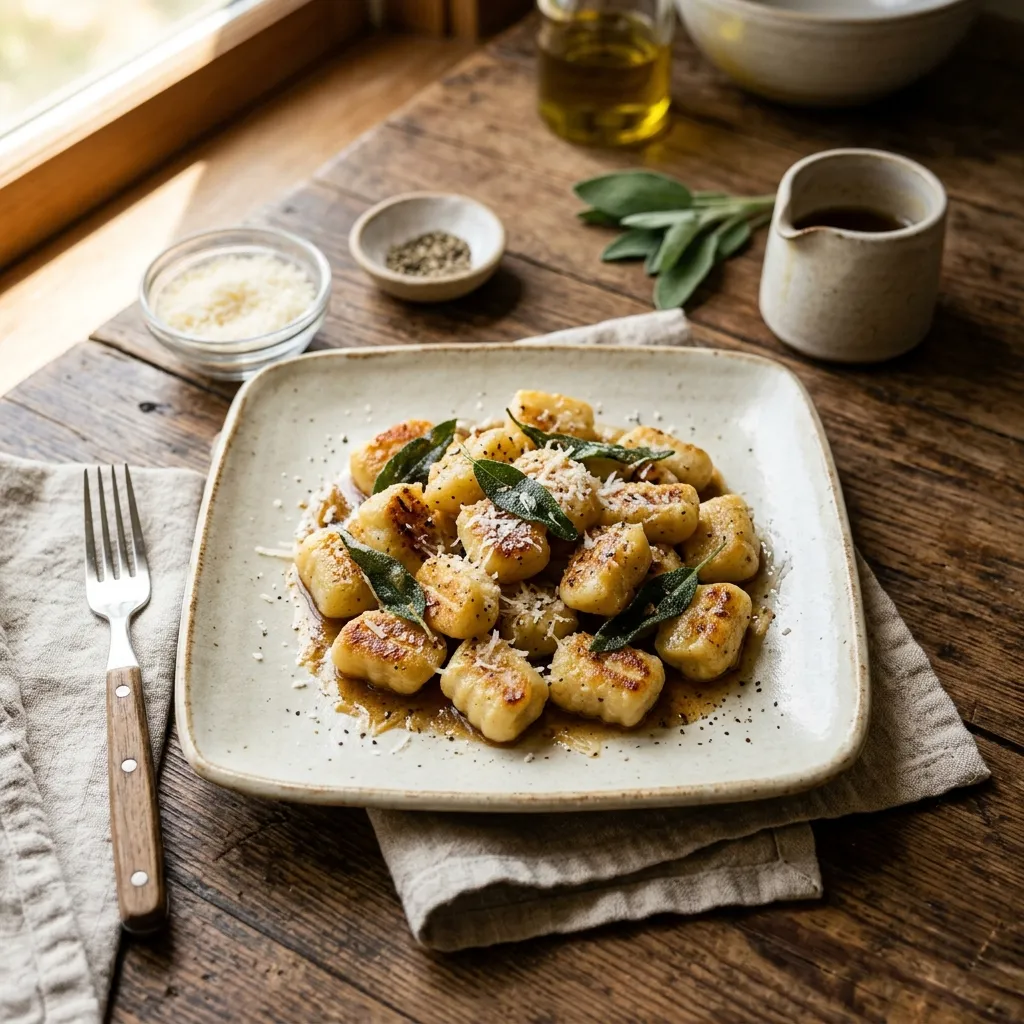
Overview
Potato gnocchi — small, pillowy dumplings made from cooked potato, flour, and egg — became a staple of Italian cooking after the potato arrived from the Americas in the 16th century. Before potatoes, Italian cooks made gnocchi from semolina, breadcrumbs, or ricotta; the potato version overtook them all by the 19th century due to its tender, melt-in-the-mouth texture. The word "gnocchi" likely derives from the Italian "nocchio" (a knot in wood) or the Germanic "knohha" (knuckle), describing the small, ridged shapes. Making gnocchi is a study in restraint. The potatoes must be cooked until completely tender, then riced while still hot to prevent lumps. The less flour added, the lighter the gnocchi — but too little and they fall apart in the water. The dough should be handled as briefly as possible, as overworking develops gluten and produces dense, gummy results. Properly made gnocchi are impossibly light, with a surface that catches sauce in its ridged grooves. The Ayurvedic profile of potato gnocchi centers on the sweet, heavy, and grounding qualities of potato combined with wheat flour. This is a Kapha-increasing preparation that strongly grounds Vata but can create heaviness and dullness when consumed in excess. The sauce choice dramatically shifts the energetic balance.
Strongly pacifies Vata through heavy, soft, grounding qualities. Increases Kapha due to density and sweet taste. Neutral to mildly increasing for Pitta depending on sauce.
Ingredients
- 1 kg Russet potatoes (about 4 large, unpeeled)
- 250 g All-purpose flour (plus extra for dusting)
- 1 large Egg (lightly beaten)
- 1 tsp Fine sea salt
- 60 g Butter (for sauce)
- 12 leaves Fresh sage
- 60 g Parmigiano-Reggiano (finely grated)
- to taste Black pepper
Instructions
- Boil the whole, unpeeled potatoes in well-salted water until completely tender when pierced with a knife, about 25-30 minutes depending on size. Do not cut the potatoes before boiling — exposed starch absorbs water and produces gluey gnocchi.
- Drain the potatoes and peel them while still hot, using a towel to hold them. Pass the hot peeled potatoes through a ricer or food mill onto a clean work surface, spreading them out to release steam. Let them cool for 5 minutes — the drier the potato, the less flour needed, and less flour means lighter gnocchi.
- Sprinkle the flour and salt over the riced potato. Make a well in the center and add the beaten egg. Using a bench scraper or fork, gradually bring the flour into the egg, then gently fold and press the mixture together until a soft dough forms. Knead very briefly — 30 seconds at most. The dough will feel slightly sticky but workable.
- Divide the dough into 6 portions. On a lightly floured surface, roll each portion into a rope about 3/4 inch thick. Cut the ropes into 1-inch pieces. To shape, press each piece against the tines of a fork and roll it off with your thumb, creating the characteristic ridged indentation that holds sauce.
- Bring a large pot of generously salted water to a boil. Working in batches to avoid crowding, drop the gnocchi into the boiling water. They will sink, then float to the surface after 1-2 minutes. Cook for 30 seconds after they float, then remove with a slotted spoon.
- While the gnocchi cook, prepare the sage brown butter: melt the butter in a large skillet over medium heat. Continue cooking until the milk solids turn golden-brown and the butter smells nutty, about 3-4 minutes. Add the sage leaves and let them crisp for 30 seconds.
- Transfer the cooked gnocchi directly into the brown butter, tossing gently to coat. Add a splash of pasta cooking water to create a silky sauce that clings to each dumpling.
- Serve immediately on warm plates, topped with freshly grated Parmigiano-Reggiano and cracked black pepper.
Nutrition
These values are estimates calculated from the ingredient list and may vary based on brands, cooking methods, and serving size. Not a substitute for medical or dietary advice.
How This Recipe Affects Each Dosha
Vata
Potato gnocchi with brown butter is a deeply satisfying combination for Vata. The soft, heavy, warm qualities of the dumplings directly counter Vata's light, dry, cold nature. The butter provides oleation, and the sage adds mild warmth. Vata types can enjoy this as a nourishing, centering meal.
Pitta
Potatoes are generally well-tolerated by Pitta, being sweet and not particularly heating. The brown butter adds moderate heat, and sage is mildly warming. This is a relatively neutral dish for Pitta — not specifically balancing but also not aggravating in moderate portions.
Kapha
The double starch of potato and flour, combined with butter and cheese, creates a very heavy meal for Kapha types. The sweet taste dominates, and there is no pungent or bitter element to counterbalance. The dense, sticky quality can slow an already sluggish Kapha digestion.
Mildly dampening to agni due to the heavy, starchy nature of the combined potato and flour. The brown butter and sage partially offset this by providing warming, digestive-stimulating qualities. Smaller portions support better assimilation.
Nourishes: Rasa (plasma), Mamsa (muscle), Meda (fat)
Adjustments by Constitution
For Vata Types
The classic sage brown butter preparation suits Vata well. Add toasted pine nuts for extra nourishment and a drizzle of truffle oil for grounding richness. Serve with a warm broth-based soup as a starter.
For Pitta Types
Serve with a light pesto of basil, pine nuts, and olive oil rather than brown butter. Add fresh arugula or wilted spinach for cooling bitter greens. Use coconut oil for the sauce base during summer months.
For Kapha Types
Serve with a light marinara spiked with chili flakes and fresh oregano instead of butter sauce. Reduce the portion size by half and pair with a large salad of bitter greens. Alternatively, make the gnocchi with sweet potato and serve with a pungent arrabbiata sauce to add fire.
Seasonal Guidance
Ideal for autumn and winter when the body craves warm, comforting, grounding foods and agni is naturally stronger. The heaviness of the dish matches the season's need for building and insulation. In spring, the damp, heavy quality can worsen Kapha accumulation. Summer is the least appropriate season for this dense preparation.
Best time of day: Lunch or early dinner, when agni can fully process the starch-heavy combination
Cultural Context
In Rome, gnocchi are traditionally eaten on Thursdays — "Giovedi gnocchi" is a saying embedded in the weekly food calendar that once governed Roman home cooking: gnocchi on Thursday, fish on Friday, tripe on Saturday. This custom persists in many Roman households and restaurants. In the Veneto, pumpkin gnocchi are a specialty. In Sardinia, gnocchi-like malloreddus use semolina. The potato version, while younger than these regional variations, became the national standard due to the potato's abundance and the technique's forgiving nature.
Deeper Context
Origins
Gnocchi's ancient ancestors (ancient Roman 'gnocco' and medieval semolina gnocchi) predate potato by centuries. Potato gnocchi is post-Columbian — stabilized in 18th-century northern Italian cuisine (particularly Piedmont and Lombardy) as potato cultivation spread through the Italian Alps. The dish migrated southward through the 19th-20th centuries to Rome, Naples, and Sicily, with each region adapting the basic technique to local ingredients. The sage-butter finish traces to Piedmontese tradition and predates the potato version.
Food as Medicine
Not therapeutically designed. Sage has extensive classical European folk-medicinal reputation for memory, digestive, and anti-inflammatory support — modern research supports cognitive benefits and antimicrobial activity. Parmigiano-Reggiano provides concentrated calcium and fermentation-related compounds. The dish is light-feeling despite being calorie-dense, which makes it an occasional-meal preparation rather than restricted diet food.
Ritual & Seasonal Role
Thursday is traditionally gnocchi day in Rome (giovedì gnocchi) — a culturally-specific weekly food tradition with unclear origins but firm Roman observance. Year-round in Italian home cookery and restaurant menus. Celebration meals in northern Italian households. Not religiously ceremonial but carries specific day-of-the-week traditional weight in Rome.
Classical Pairings & Cautions
Sage-brown-butter sauce (the Piedmontese classic), Gorgonzola cream sauce, tomato ragù. A glass of Barbera or Dolcetto. Cautions: nightshade-family sensitivity from potato; gluten intolerance precludes standard flour (rice flour versions work); dairy sensitivity; high glycemic load from potato-plus-flour combination; sage at culinary doses is safe but concentrated oils are contraindicated in pregnancy.
Cross-Tradition View
How other medical and food-wisdom traditions read this dish. Each tradition names the same physiological reality in its own language — the agreements across them are where universal principles live.
Traditional Chinese Medicine
Russet potatoes are Spleen-Qi-tonifying; flour adds additional Spleen-Qi; butter is warm-moistening; fresh sage is warm-dispersing and carries classical cognitive-supporting action; Parmigiano-Reggiano is Yin-building and Kidney-essence-supporting. A Spleen-Qi-and-Kidney-essence tonic with cognitive-supporting sage accent — TCM physicians would class this as appropriate for weak-digestion constitutions needing gentle sustained nourishment.
Greek Humoral
Hot-wet sanguine-building. A Galenic-suitable preparation — the Hippocratic and Roman culinary tradition included sage-butter-and-starch combinations specifically for sanguine temperament support. Sage was classified in Galenic medicine as one of the universal medicines (salvia from salvare, to save).
Ayurveda
Neutral virya, sweet vipaka. Pacifies Vata through unctuousness. Mildly aggravates Kapha through potato-flour-butter combination. Pitta-neutral. The sage provides classical cognitive-and-digestive-supporting accent that partly offsets the Kapha aggravation.
Northern Italy (Piedmont-Lombardy)
Gnocchi pre-date potato — ancient Roman and medieval Italian versions used semolina, wheat flour, and ricotta. Potato gnocchi is post-Columbian, stabilized in 18th-century northern Italy (Piedmont, Lombardy) as potato cultivation spread. The dish migrated southward through the 19th-20th centuries to Naples, Rome, and Sicily, each region adapting the basic technique. Sage-butter finish (burro e salvia) is classical Piedmontese — a Piedmont-Piedmontese tradition older than the potato gnocchi form itself.
Chef's Notes
Choose starchy russet or Yukon Gold potatoes over waxy varieties — high starch content means less flour is needed and the gnocchi will be lighter. The biggest mistake home cooks make is adding too much flour out of fear the dough is too sticky. Err on the side of less — the dough should feel tacky but holdable. Gnocchi can be frozen in a single layer on a sheet pan, then transferred to a bag; cook from frozen, adding 30 seconds to the boil time. Beyond brown butter and sage, these gnocchi pair beautifully with pesto, tomato sauce, or gorgonzola cream.
Frequently Asked Questions
Is Potato Gnocchi good for my dosha?
Strongly pacifies Vata through heavy, soft, grounding qualities. Increases Kapha due to density and sweet taste. Neutral to mildly increasing for Pitta depending on sauce. Potato gnocchi with brown butter is a deeply satisfying combination for Vata. Potatoes are generally well-tolerated by Pitta, being sweet and not particularly heating. The double starch of potato and flour, combined with butter and cheese, creates a very heavy meal for Kapha types.
When is the best time to eat Potato Gnocchi?
Lunch or early dinner, when agni can fully process the starch-heavy combination Ideal for autumn and winter when the body craves warm, comforting, grounding foods and agni is naturally stronger. The heaviness of the dish matches the season's need for building and insulation. In s
How can I adjust Potato Gnocchi for my constitution?
For Vata types: The classic sage brown butter preparation suits Vata well. Add toasted pine nuts for extra nourishment and a drizzle of truffle oil for grounding rich For Pitta types: Serve with a light pesto of basil, pine nuts, and olive oil rather than brown butter. Add fresh arugula or wilted spinach for cooling bitter greens. U
What are the Ayurvedic properties of Potato Gnocchi?
Potato Gnocchi has Sweet taste (rasa), Neutral energy (virya), and Sweet post-digestive effect (vipaka). Its qualities (gunas) are Heavy, Soft, Dense, Slightly Oily. It nourishes Rasa (plasma), Mamsa (muscle), Meda (fat). Mildly dampening to agni due to the heavy, starchy nature of the combined potato and flour. The brown butter and sage partially offset this by providing warming, digestive-stimulating qualities. Smaller portions support better assimilation.