Pot Roast
American Recipe
Overview
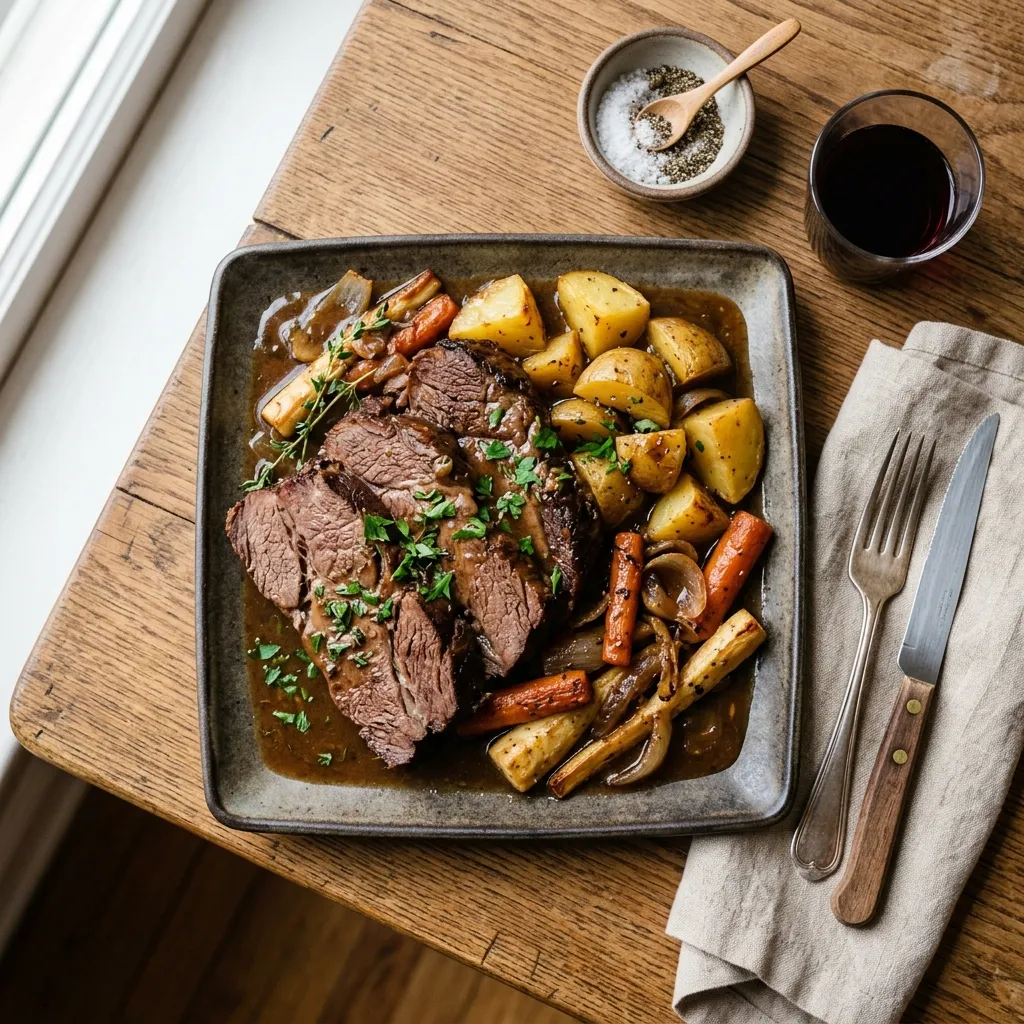
Pot roast emerged as a defining American dinner in the early 20th century, rooted in the European braising techniques that German, Dutch, and Scandinavian immigrants brought to the Great Plains and Midwest. A whole beef chuck roast — typically 3 to 4 pounds — is seared, then slow-braised with aromatic vegetables until the collagen-rich connective tissue dissolves into gelatin, turning an otherwise tough cut into fork-tender slices. The cooking liquid reduces into a concentrated, savory gravy that carries the combined essence of meat, vegetables, and herbs. Ayurvedic analysis reveals pot roast as a deeply building (brimhana) preparation. The sweet rasa of beef and root vegetables dominates, with salty and slightly pungent secondary notes from onions, garlic, and herbs. The extended braising at low temperature transforms the heavy, difficult-to-digest qualities of raw beef into a more bioavailable form, similar to how classical Ayurvedic preparations use prolonged cooking to make meat broths (mamsarasa) suitable for tissue rebuilding. The moist, warm, and heavy gunas make pot roast a powerful Vata-pacifying meal — particularly therapeutic during convalescence, cold seasons, or periods of physical depletion.
Strongly pacifies Vata dosha with its heavy, warm, moist, and grounding qualities. Pitta types should moderate portions due to the heating nature of beef and garlic. Kapha types will find this dish increases heaviness and should reserve it for cold, dry weather only.
Used in folk and clinical nutrition as a recovery food after surgery, childbirth, or prolonged illness. The collagen-derived gelatin supports tissue repair and gut healing, while the iron and B12 in beef address common post-illness deficiencies. The caloric density rebuilds depleted meda and mamsa dhatus efficiently.
Ingredients
- 3.5 pounds beef chuck roast (bone-in preferred for richer flavor)
- 2 teaspoons salt
- 1 teaspoon black pepper
- 2 tablespoons olive oil
- 2 large yellow onions (quartered)
- 6 cloves garlic (smashed)
- 3 tablespoons tomato paste
- 2 cups beef broth
- 0.5 cup red wine (optional)
- 1 tablespoon Worcestershire sauce
- 6 medium carrots (peeled and halved crosswise)
- 2 pounds Yukon Gold potatoes (halved or quartered depending on size)
- 4 stalks celery (cut into 3-inch pieces)
- 3 sprigs fresh rosemary
- 4 sprigs fresh thyme
- 2 whole bay leaves
Instructions
- Remove the chuck roast from the refrigerator 45 minutes before cooking to bring it closer to room temperature. Pat the entire surface dry with paper towels, then season all sides generously with salt and pepper. Press the seasoning into the meat.
- Preheat the oven to 300°F (150°C). Heat olive oil in a large, heavy-bottomed Dutch oven over medium-high heat until the oil just begins to smoke. Place the roast in the pot and sear without moving for 4-5 minutes until a deep brown crust forms. Flip and sear all remaining sides — this should take 12-15 minutes total. Remove the roast to a plate.
- Reduce heat to medium. Add the quartered onions to the pot, cut side down, and cook for 3-4 minutes until browned. Add the smashed garlic and cook 30 seconds. Stir in the tomato paste and cook for 2 minutes, stirring constantly to prevent burning.
- Pour in the beef broth and wine (if using), scraping the bottom of the pot vigorously to dissolve all fond. Add Worcestershire sauce and stir to combine. The liquid should come about one-third of the way up the sides of the roast — not submerging it.
- Return the roast to the pot. Tuck bay leaves, rosemary, and thyme around the meat. Bring the liquid to a simmer, then cover with a tight-fitting lid and transfer to the oven.
- Braise for 2 hours undisturbed. Open the lid, flip the roast, and add the carrots, potatoes, and celery around and on top of the meat. Re-cover and return to the oven for another 1.5-2 hours until the beef is fork-tender and beginning to fall apart.
- Carefully transfer the roast and vegetables to a serving platter and tent loosely with foil. Place the Dutch oven on the stovetop over medium-high heat. Remove the herb sprigs and bay leaves.
- Bring the braising liquid to a boil and reduce by about one-third, approximately 8-10 minutes, until it reaches a light gravy consistency. For a thicker gravy, whisk 1 tablespoon of flour into 2 tablespoons of softened butter and stir this beurre manié into the simmering liquid. Season the gravy with additional salt and pepper to taste.
- Slice the roast against the grain into thick pieces — or simply pull apart with two forks if very tender. Arrange on the platter with the vegetables and spoon the gravy generously over everything. Serve immediately.
Nutrition
These values are estimates calculated from the ingredient list and may vary based on brands, cooking methods, and serving size. Not a substitute for medical or dietary advice.
How This Recipe Affects Each Dosha
Vata
Pot roast is a near-ideal Vata-pacifying meal. The combination of slow-braised beef, starchy root vegetables, and warm, gelatinous gravy delivers exactly the heavy, warm, moist, and stable qualities that counter Vata's tendency toward dryness, coldness, and instability. The sweet rasa nourishes depleted tissues while the salty rasa grounds nervous energy. Eating this meal produces a deep sense of satisfaction and calm — physiological signs that Vata is being effectively pacified. Especially beneficial during fall and early winter when Vata naturally increases.
Pitta
The heating virya of beef, combined with garlic, tomato paste, and black pepper, creates moderate Pitta provocation. Pitta-dominant individuals may notice increased body heat, mild perspiration, or digestive intensity after a large serving. However, the sweet vipaka and the sweet rasa of the root vegetables provide significant counterbalance. The slow cooking process also tempers the rajasic quality of red meat somewhat. Pitta types can enjoy pot roast comfortably in moderate portions during cooler weather, but should avoid large servings during summer or periods of Pitta aggravation.
Kapha
Pot roast's heavy, moist, oily, and dense qualities directly increase Kapha dosha. The sweet rasa and sweet vipaka further contribute to Kapha accumulation. Regular consumption leads to increased heaviness, potential weight gain, and sluggish digestion for Kapha-dominant individuals. The heating virya provides some benefit by stimulating digestive fire, but this is insufficient to offset the overall Kapha-increasing nature. Best reserved for occasional consumption during cold, dry winter weather when some additional heaviness and insulation serve the body well.
The braising liquid, aromatic herbs, and warm serving temperature stimulate agni gently. However, the overall heaviness of the dish requires strong digestive fire for complete assimilation. Individuals with weak or variable agni should eat smaller portions and may benefit from sipping warm ginger tea alongside the meal. The gelatin in the gravy supports gut lining integrity, which indirectly supports healthy agni over time.
Nourishes: Rasa (plasma), Rakta (blood), Mamsa (muscle), Meda (fat), Asthi (bone), Majja (marrow)
Adjustments by Constitution
For Vata Types
This dish is already excellent for Vata. Enhance it by adding a tablespoon of ghee to the finished gravy for additional lubrication. Include parsnips and sweet potatoes among the vegetables for increased sweetness. A pinch of asafoetida added to the braising liquid supports digestion of the heavy proteins. Serve with a side of warm, buttered bread to further increase the grounding, satisfying quality of the meal.
For Pitta Types
Replace the tomato paste with a puree of roasted red bell pepper for body without acidity. Reduce garlic to 2 cloves and omit the black pepper, substituting a pinch of ground coriander and fennel seed. Use sunflower oil instead of olive oil. Add fennel bulb and zucchini to the vegetable mix. Garnish individual servings with fresh cilantro. These modifications reduce the heating quality while preserving the nourishing sweet rasa that benefits all doshas.
For Kapha Types
Reduce the potato quantity by half and replace with turnips and daikon radish, which are lighter and more drying. Add 1 teaspoon each of ground cumin and turmeric to the braising liquid to increase the pungent and bitter rasas. Trim all visible fat from the roast before searing. Skip the gravy reduction — instead, strain the braising liquid and serve it as a thin broth alongside the meat and vegetables. Add a generous amount of fresh cracked black pepper to each serving.
Seasonal Guidance
Ideal from late October through February when the body requires heavy, warming nourishment to counter cold, dry environmental conditions. The Vata-pacifying qualities are most therapeutic during fall. Reduce frequency in early spring as Kapha begins to accumulate, and avoid entirely during hot summer months.
Best time of day: Best served as a midday or early evening meal, between 11:00 AM and 6:00 PM, when agni is at its peak. The heavy proteins and starches require strong digestive fire, making late-night consumption inadvisable.
Cultural Context
Pot roast became a defining American Sunday dinner tradition in the early 1900s, when affordable beef chuck and the cast-iron Dutch oven converged in home kitchens across the Midwest and Great Plains. The technique draws directly from European braising traditions — German Sauerbraten, French pot-au-feu, and Scandinavian stews all contributed to the American version. During the Great Depression and World War II rationing era, pot roast became a symbol of resourcefulness — transforming the cheapest cuts into a meal that could feed a large family. The tradition of Sunday pot roast, started before church and ready by afternoon, persists in many American families today.
Deeper Context
Origins
Pot roast descends from medieval European one-pot hearth cookery, with German, French, and British regional versions all contributing to the American form. Dutch-German immigrant influence (particularly Pennsylvania Dutch) is especially strong in American pot roast tradition. The dish standardized in 19th-century Northeastern American cookbooks; the Crock-Pot (introduced 1971) made slow-braised pot roast accessible to working households that could not tend a stove all day, and the dish became a Sunday-dinner staple in suburbia through the 1970s and 1980s.
Food as Medicine
Bone broth from the braise is gut-healing — the long cookery extracts gelatin, glycine, and minerals. Modern gut-health dietary movements (GAPS, Weston Price, paleo-autoimmune) have rediscovered what peasant cookery knew for centuries. The Dutch oven and the slow cooker recreate the hearth-pot function for modern home kitchens, extending a thousand-year-old technique into urban contexts without loss of the underlying biochemistry.
Ritual & Seasonal Role
Sunday dinner fixture across American class lines, particularly in the Midwest and Northeast. Winter comfort food. Family-gathering meal. Not religiously ceremonial, but strongly associated with weekend family meals, post-church Sunday dinner, and Sabbath observance in some traditions. Appears at the family table on Christmas and Easter in many American households that do not maintain specific holiday-meat traditions.
Classical Pairings & Cautions
Mashed potatoes, horseradish, buttered egg noodles, red wine alongside. Cautions: cardiovascular concerns from saturated fat and sodium; religious restrictions (Hindu, some Buddhist) preclude beef; gout patients should moderate beef-broth purines; the starch-meat combination is Kapha-heavy; frozen slow-cooker brands often carry high sodium content that home preparation can avoid.
Cross-Tradition View
How other medical and food-wisdom traditions read this dish. Each tradition names the same physiological reality in its own language — the agreements across them are where universal principles live.
Traditional Chinese Medicine
Beef builds Blood and middle-warmer Qi; potato tonifies Spleen Qi; carrot supports Blood and moves Liver Qi; rosemary is warm-pungent and disperses cold and wind; beef broth concentrates Qi and Blood tonification. A classical Qi-and-Blood tonic — the winter food archetype by East Asian therapeutic dietetics. TCM physicians would prescribe similar slow-braised preparations for post-illness weight recovery and for cold-deficient elderly patients.
Greek Humoral
Hot-wet sanguine-building. Medieval European pot-roasting tradition. Galenic physicians prescribed slow-braised meats for convalescents and laborers, specifically citing the long cookery as a way to make hard meats digestible for those with weak digestive fire.
Ayurveda
Heating virya, sweet vipaka. Vata-pacifying through warmth and substantial protein; Kapha-aggravating through heaviness; Pitta-neutral to mildly-aggravating through beef heat. A winter restoration dish by Ayurvedic classification, appropriate for thin working constitutions, inappropriate for daily household use.
British & European Hearth Cookery
Slow-braised one-pot meat preparations are the core of European peasant cookery. British pot roast, French pot-au-feu and boeuf à la mode, German Sauerbraten, Belgian carbonnade, Hungarian pörkölt. These preparations evolved for hearth cookery where a covered pot sat over slow fire all day, and they represent a common Indo-European peasant technique adapted to regional seasonings. Pennsylvania Dutch Sauerbraten is the direct German-American ancestor of much of American pot roast tradition.
Chef's Notes
Bone-in chuck produces a noticeably richer braising liquid than boneless due to the marrow and collagen contribution. The oven temperature matters — 300°F creates a gentle, even braise that prevents the exterior from drying while the interior slowly becomes tender. Higher temperatures cause the outer layers to tighten before the center cooks through. Leftovers make exceptional sandwiches on sourdough with horseradish cream. Store refrigerated up to 4 days. The cooled gravy will solidify from gelatin — this is a sign of good braising technique, and it re-liquefies perfectly when reheated.
Frequently Asked Questions
Is Pot Roast good for my dosha?
Strongly pacifies Vata dosha with its heavy, warm, moist, and grounding qualities. Pitta types should moderate portions due to the heating nature of beef and garlic. Kapha types will find this dish increases heaviness and should reserve it for cold, dry weather only. Pot roast is a near-ideal Vata-pacifying meal. The heating virya of beef, combined with garlic, tomato paste, and black pepper, creates moderate Pitta provocation. Pot roast's heavy, moist, oily, and dense qualities directly increase Kapha dosha.
When is the best time to eat Pot Roast?
Best served as a midday or early evening meal, between 11:00 AM and 6:00 PM, when agni is at its peak. The heavy proteins and starches require strong digestive fire, making late-night consumption inadvisable. Ideal from late October through February when the body requires heavy, warming nourishment to counter cold, dry environmental conditions. The Vata-pacifying qualities are most therapeutic during fall.
How can I adjust Pot Roast for my constitution?
For Vata types: This dish is already excellent for Vata. Enhance it by adding a tablespoon of ghee to the finished gravy for additional lubrication. Include parsnips For Pitta types: Replace the tomato paste with a puree of roasted red bell pepper for body without acidity. Reduce garlic to 2 cloves and omit the black pepper, substi
What are the Ayurvedic properties of Pot Roast?
Pot Roast has Sweet, Salty taste (rasa), Heating energy (virya), and Sweet post-digestive effect (vipaka). Its qualities (gunas) are Heavy, Moist, Warm, Oily. It nourishes Rasa (plasma), Rakta (blood), Mamsa (muscle), Meda (fat), Asthi (bone), Majja (marrow). The braising liquid, aromatic herbs, and warm serving temperature stimulate agni gently. However, the overall heaviness of the dish requires strong digestive fire for complete assimilation. Individuals with weak or variable agni should eat smaller portions and may benefit from sipping warm ginger tea alongside the meal. The gelatin in the gravy supports gut lining integrity, which indirectly supports healthy agni over time.