Pide
Turkish Recipe
Overview
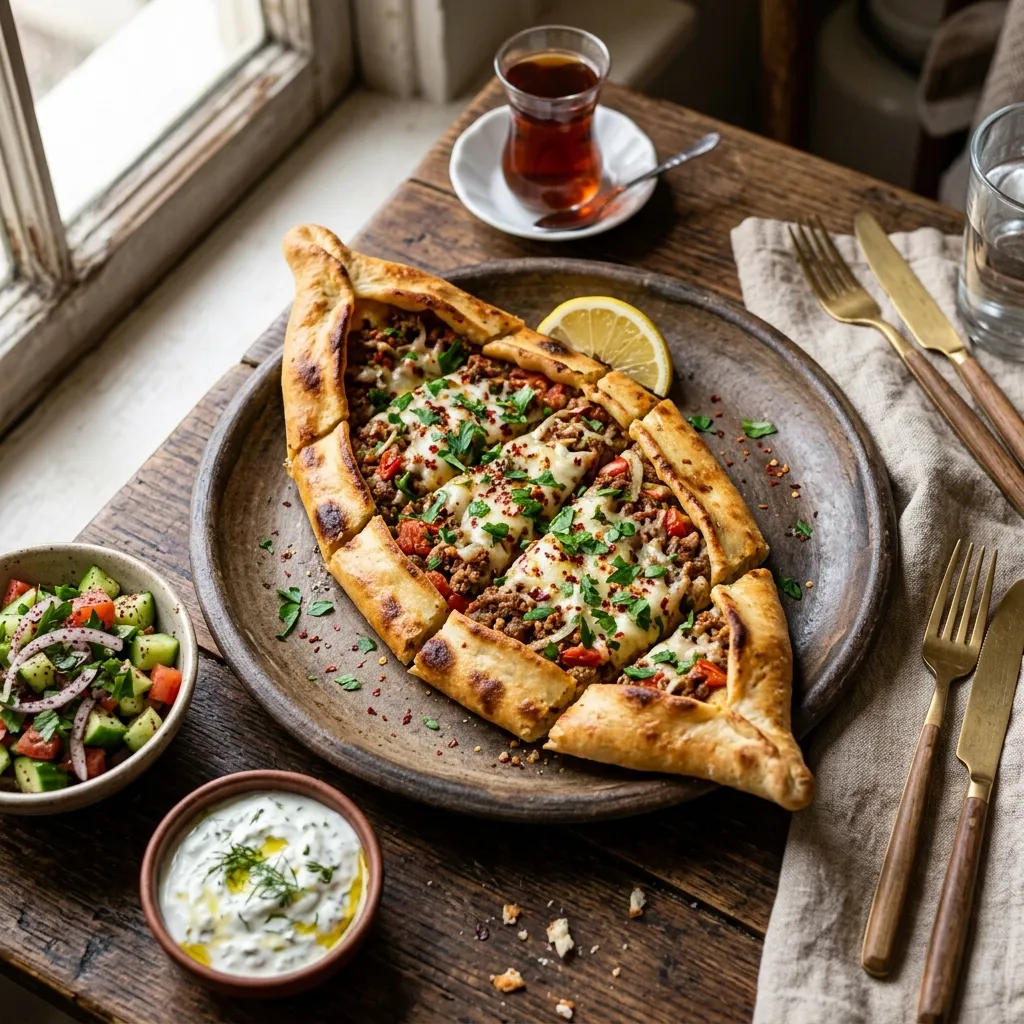
Pide is a boat-shaped Turkish flatbread filled with various toppings — the most classic being a mixture of ground meat, onion, tomato, and green pepper (kiymali pide) or cubed lamb with cheese (kusbasili kasarli pide). The dough is shaped into an elongated oval with raised edges, creating a vessel for the filling, then baked in a wood-fired or very hot oven until the crust is golden-brown and slightly charred, the filling is bubbling, and the interior is soft and pillowy. Unlike lahmacun's cracker-thin crust, pide dough is substantial — soft, chewy, and slightly puffy, brushed with egg wash or butter before baking for a glossy finish. The filling options are extensive: spiced minced meat (kiymali), cheese (peynirli), egg (yumurtali), spinach and cheese (ispanakli), or mixed meat and cheese combinations. The Black Sea coastal city of Bolu and the central Anatolian city of Konya are particularly famous for their pide traditions. Ayurvedically, pide is a heavy, building, grounding food. The combination of wheat dough, animal protein, and often cheese creates a dense nutritional package that nourishes deeply but requires robust agni. The bread itself is warming and sweet, while the spiced meat filling adds pungency and heat. This is sustenance food — the kind of meal that fuels physical labor and cold-weather survival.
Pacifies Vata through grounding warmth, oleation, and substantial nourishment. Increases Pitta due to heating meat, spices, and overall rajasic quality. Increases Kapha through the heavy combination of wheat dough, meat, and butter.
Ingredients
- 3 cups Bread flour
- 1 cup Warm water
- 2 tbsp Olive oil
- 1.5 tsp Instant yeast
- 1 tsp Sugar
- 1 tsp Salt
- 300 g Ground lamb or beef
- 1 medium Onion (finely diced)
- 1 small Green pepper (finely diced)
- 1 medium Tomato (finely diced)
- 1 tbsp Tomato paste
- 1 tsp Cumin
- 1 tsp Aleppo pepper flakes
- 1/2 tsp Black pepper
- 1 piece Egg yolk (for egg wash)
- 2 tbsp Butter (melted, for brushing)
Instructions
- Combine flour, yeast, sugar, and salt in a large bowl. Add warm water and olive oil, mixing until a shaggy dough forms. Knead for 8-10 minutes until smooth and elastic. Oil the bowl, cover, and let the dough rise for 45 minutes until doubled.
- While the dough rises, prepare the filling. Combine ground meat, onion, green pepper, tomato, tomato paste, cumin, Aleppo pepper, black pepper, and a generous pinch of salt. Mix well with your hands until evenly combined.
- Preheat oven to 230C (450F) with a baking sheet or stone on the middle rack.
- Punch down the dough and divide into 4 equal pieces. Roll each piece into an elongated oval, about 30cm (12 inches) long and 15cm (6 inches) wide.
- Spread a quarter of the meat filling evenly over each oval, leaving a 2cm (3/4 inch) border around the edges. Fold the long edges inward and pinch the pointed ends to create the characteristic boat shape with raised sides.
- Transfer to the preheated baking sheet. Beat the egg yolk with a teaspoon of water and brush the exposed dough edges.
- Bake for 12-15 minutes until the crust is deep golden brown and the meat filling is cooked through and sizzling.
- Remove from oven and immediately brush the hot crust with melted butter. Slice crosswise and serve hot.
Nutrition
These values are estimates calculated from the ingredient list and may vary based on brands, cooking methods, and serving size. Not a substitute for medical or dietary advice.
How This Recipe Affects Each Dosha
Vata
The warm, heavy, oily qualities are deeply grounding for Vata. The substantial bread provides carbohydrate fuel that Vata often lacks, while the meat filling adds protein and iron. The butter finish ensures adequate oleation. This is comfort food that directly counters Vata's cold, light, dry qualities.
Pitta
The spiced meat, heating spices, and substantial bread create a warming, rajasic combination that can aggravate Pitta. The yeast fermentation adds a subtle sour quality. Best for Pitta types in cool weather and in moderation.
Kapha
Pide represents the type of heavy, building food that Kapha constitutions should limit. Wheat dough, red meat, butter, and cheese combine to create significant heaviness and density. Kapha types who eat pide should choose vegetable fillings and eat smaller portions.
The spiced meat filling stimulates agni, but the dense wheat dough requires significant digestive capacity. The butter and egg wash add oleation that helps the dough move through the digestive tract. Best eaten when agni is strongest.
Nourishes: Rasa (plasma), Rakta (blood), Mamsa (muscle), Medas (fat), Asthi (bone)
Adjustments by Constitution
For Vata Types
This dish is well-suited for Vata as written. For extra grounding, add cubed kasar cheese to the meat filling. Serve with warm ayran (salted yogurt drink) and eat slowly.
For Pitta Types
Use chicken or turkey instead of lamb. Omit Aleppo pepper and use sweet paprika. Add spinach to the filling for cooling green quality. Replace the butter brush with a light brush of olive oil. Serve with cool cucumber slices.
For Kapha Types
Replace the meat filling with sauteed spinach and a small amount of feta. Make the dough thinner to reduce bread volume. Omit the butter brush. Add extra black pepper and dried ginger to whatever filling you choose. Eat one piece rather than two.
Seasonal Guidance
A cold-weather staple when the body craves dense, warming, filling food. The heavy dough and rich filling are too much for summer digestion. In spring, choose lighter vegetable fillings to avoid increasing Kapha during its peak season.
Best time of day: Lunch, when agni is strongest and can handle dense bread and meat. Too heavy for late dinner.
Cultural Context
Pide is sometimes called "Turkish pizza" but the comparison obscures its distinct character. The boat-shaped bread dates back centuries in Anatolian baking traditions, where communal brick ovens (firin) were central to village life. Different regions developed distinct pide traditions — the Black Sea coast favors butter-enriched dough with local cheeses, while central Anatolia emphasizes lean meat fillings. Dedicated pideci (pide shops) are a category of Turkish restaurant, often specializing in nothing else, with wood-fired ovens that reach temperatures impossible in home kitchens. Ramazan pidesi, a round, spongy variation, is baked throughout the holy month.
Deeper Context
Origins
Pide is Turkish Anatolian flatbread with roots in ancient Mediterranean flatbread tradition. The boat-shape topped version is distinctly Turkish; the round Ramadan pide is a bread variant specifically for the fasting month. Regional Turkish variants proliferate: Black Sea, Central Anatolian, Eastern Anatolian forms differ by topping tradition. Related to but distinct from Italian pizza and Central Asian naan; the shared flatbread family reflects ancient Mediterranean-and-Central-Asian grain-cookery.
Food as Medicine
Whole-wheat pide versions provide B-vitamins and fiber. Lamb contributes complete protein. Tomato lycopene. A nutritionally balanced preparation with traditional working-food role.
Ritual & Seasonal Role
Ramadan iftar tables feature round Ramadan pide universally. Year-round at Turkish pide salonları (pide restaurants). Breakfast through dinner ranges.
Classical Pairings & Cautions
Ayran, Turkish tea, pickled vegetables. Cautions: gluten intolerance precludes wheat flour; religious lamb restrictions rare; sodium from commercial versions.
Cross-Tradition View
How other medical and food-wisdom traditions read this dish. Each tradition names the same physiological reality in its own language — the agreements across them are where universal principles live.
Traditional Chinese Medicine
Bread flour is Spleen-Qi-tonifying; ground lamb is warming and builds Blood and Yang; tomato is cool-sour and moves Liver Qi; cumin warms the middle; butter is warm-moistening. A Qi-Yang-and-Blood-building preparation — TCM physicians would class pide as winter restoration food.
Greek Humoral
Hot-wet sanguine-building. Galenic-suitable flatbread preparation.
Ayurveda
Heating virya, sweet vipaka. Pacifies Vata substantially. Mild Kapha aggravation. Pitta mildly aggravated.
Ottoman Turkish Anatolian
Pide (Turkish boat-shaped flatbread with toppings) is distinctly Turkish Anatolian — the boat shape distinguishes it from similar Mediterranean flatbreads. Regional variations: Black Sea pide uses butter-and-cheese (pide with kaşar); Central Anatolian pide uses ground meat (kıymalı pide); Eastern pide may include egg. Ramadan pide (without toppings, round-bread form) is sold specifically during Ramadan month as the iftar bread.
Chef's Notes
The dough benefits from a long, slow rise in the refrigerator overnight — cold fermentation develops more flavor and a chewier texture. If using a pizza stone, preheat it for at least 30 minutes at maximum temperature. The egg wash on the edges is essential for the glossy, golden crust that distinguishes pide from ordinary flatbread. For a kusbasili (cubed meat) version, use 1cm cubes of lamb shoulder instead of ground meat, and add cubed kasar cheese between the meat pieces. The butter brush at the end is mandatory — it softens the crust and adds richness.
Frequently Asked Questions
Is Pide good for my dosha?
Pacifies Vata through grounding warmth, oleation, and substantial nourishment. Increases Pitta due to heating meat, spices, and overall rajasic quality. Increases Kapha through the heavy combination of wheat dough, meat, and butter. The warm, heavy, oily qualities are deeply grounding for Vata. The spiced meat, heating spices, and substantial bread create a warming, rajasic combination that can aggravate Pitta. Pide represents the type of heavy, building food that Kapha constitutions should limit.
When is the best time to eat Pide?
Lunch, when agni is strongest and can handle dense bread and meat. Too heavy for late dinner. A cold-weather staple when the body craves dense, warming, filling food. The heavy dough and rich filling are too much for summer digestion. In spring, choose lighter vegetable fillings to avoid incre
How can I adjust Pide for my constitution?
For Vata types: This dish is well-suited for Vata as written. For extra grounding, add cubed kasar cheese to the meat filling. Serve with warm ayran (salted yogurt dr For Pitta types: Use chicken or turkey instead of lamb. Omit Aleppo pepper and use sweet paprika. Add spinach to the filling for cooling green quality. Replace the but
What are the Ayurvedic properties of Pide?
Pide has Sweet, Pungent, Salty taste (rasa), Heating energy (virya), and Sweet post-digestive effect (vipaka). Its qualities (gunas) are Heavy, Warm, Oily. It nourishes Rasa (plasma), Rakta (blood), Mamsa (muscle), Medas (fat), Asthi (bone). The spiced meat filling stimulates agni, but the dense wheat dough requires significant digestive capacity. The butter and egg wash add oleation that helps the dough move through the digestive tract. Best eaten when agni is strongest.