Ploughman's Lunch
British Recipe
Overview
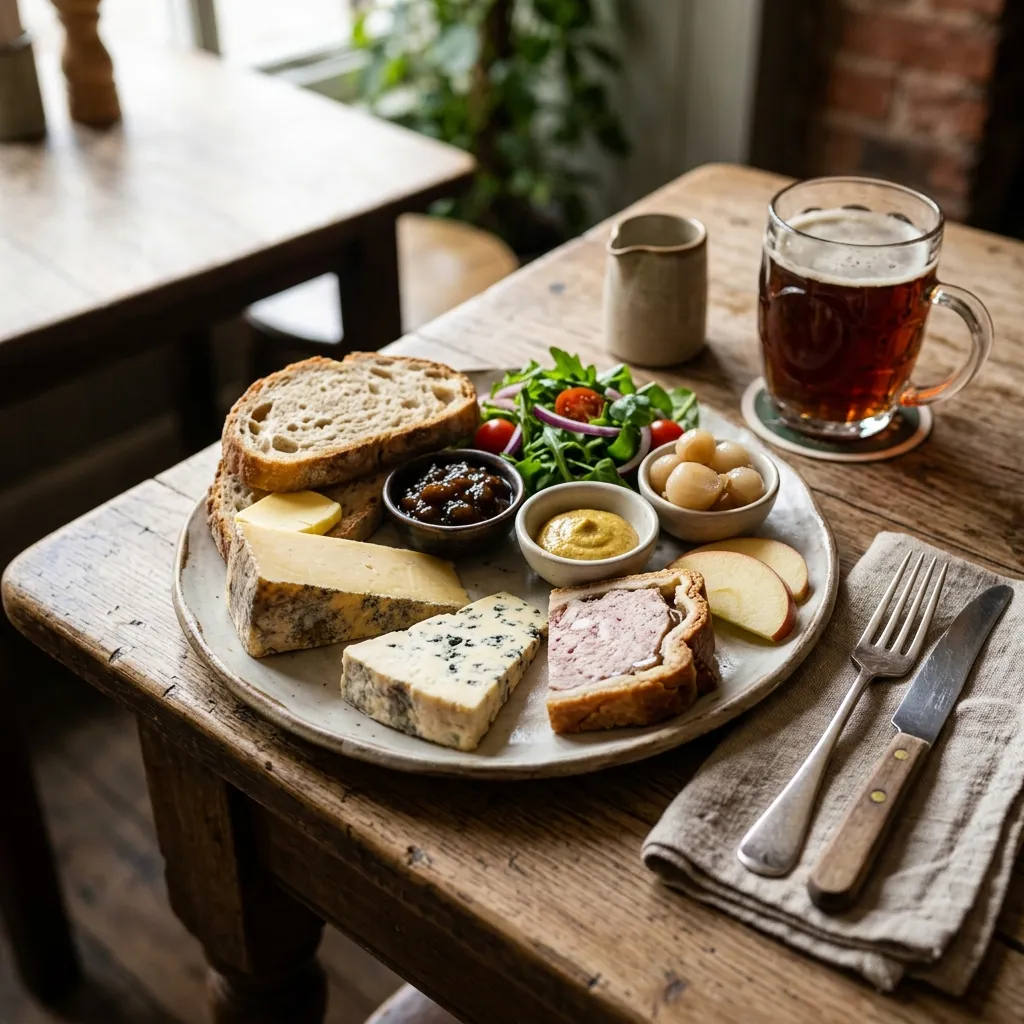
The ploughman's lunch — a cold plate of cheese, bread, pickles, and accompaniments — presents itself as an ancient farmworker's midday meal, but its history is more complicated. While labourers have eaten bread and cheese in fields for centuries, the specific term 'ploughman's lunch' was popularized in the 1960s by the English Country Cheese Council as a marketing campaign to boost cheese sales in pubs. The campaign worked so well that the name became permanent, and the dish is now a standard feature of every British pub menu. The canonical ploughman's includes a generous wedge of sharp cheddar (traditionally a West Country or territorial cheese), crusty bread, butter, Branston pickle (a sweet-tangy chutney of diced vegetables in a thick, spiced sauce), pickled onions, a few lettuce leaves, sliced tomato, and often a hard-boiled egg. Better pub versions add celery, an apple, a slice of pork pie, and Stilton alongside the cheddar. Ayurvedically, this is an unusual dish because it is served cold and combines multiple fermented elements (aged cheese, pickled vegetables, Branston pickle) in a single meal. The dominant energetic quality is heavy and cooling, with the sour, pungent pickles providing the primary digestive stimulus. The lack of cooking means the body must generate all the digestive heat internally — making this a challenging meal for constitutions with weak agni.
Mildly pacifies Pitta with cool, sweet dairy. Increases Vata due to cold temperature and dry bread. Increases Kapha due to heaviness, dairy density, and overall cold quality.
Ingredients
- 300 g Mature cheddar (cut into thick wedges)
- 100 g Stilton or blue cheese (optional)
- 1 loaf Crusty bread (thickly sliced — bloomer or sourdough)
- 60 g Butter (room temperature)
- 100 g Branston pickle
- 8 pieces Pickled onions
- 4 large Hard-boiled eggs (halved)
- 2 medium Apple (quartered and cored)
- 4 pieces Celery stalks (trimmed)
- 12 pieces Cherry tomatoes
- 200 g Ham (thick-cut, optional)
- 8 leaves Lettuce leaves (for garnish)
Instructions
- Remove the cheese from the refrigerator 30 minutes before serving to allow it to reach room temperature — cold cheese has muted flavour and a waxy texture.
- Hard-boil the eggs: place in cold water, bring to a boil, cook for 9 minutes, then transfer to an ice bath. Peel and halve when cool.
- Slice the bread thickly and arrange on a large board or individual plates alongside a generous pat of butter.
- Arrange the cheddar wedges and optional Stilton on the board, leaving space between components.
- Spoon the Branston pickle into a small dish. Place the pickled onions alongside.
- Quarter the apples, slice the celery, halve the tomatoes, and arrange around the cheese and bread. Add the halved eggs and optional ham slices.
- Garnish with lettuce leaves and serve with a pint of real ale or dry cider.
Nutrition
These values are estimates calculated from the ingredient list and may vary based on brands, cooking methods, and serving size. Not a substitute for medical or dietary advice.
How This Recipe Affects Each Dosha
Vata
A cold meal is inherently challenging for Vata digestion, and this one combines cold aged cheese, raw vegetables, and room-temperature bread without any warming spices. The heavy, dense quality of cheese provides some grounding, but the cold delivery means Vata must generate significant internal fire to process it. The pickles offer pungent stimulation but are also cold.
Pitta
Aged cheese is heating (fermented foods increase Pitta), but the overall cold temperature and sweet taste provide some balance. The pickled elements add sour taste that can aggravate Pitta digestion. Pitta types with strong agni handle this better than those prone to acid reflux. Moderate portions work well, especially in summer when a cold lunch is welcome.
Kapha
Aged cheese, bread, and butter concentrate heavy, dense, oily qualities that slow Kapha metabolism. The cold temperature further dampens digestive fire. The pickles and apple provide small amounts of pungent and astringent balance, but the overall effect is Kapha-increasing. Kapha types will feel sluggish and heavy after a full ploughman's.
Cold food requires the body to generate all digestive heat internally. The cheese and bread are heavy and slow to digest, while the pickles provide some enzymatic and pungent support. Overall, this meal slows agni rather than stimulating it. People with weak digestion should eat warm food instead.
Nourishes: Rasa (plasma), Asthi (bone via cheese calcium), Meda (fat)
Adjustments by Constitution
For Vata Types
Warm the bread in the oven before serving. Add a small pot of hot soup — leek and potato or mushroom — alongside the cold plate. Replace pickled onions with a warm chutney spiced with cumin and ginger. Include a cup of hot chai to kindle agni throughout the meal.
For Pitta Types
Choose a younger, milder cheddar rather than extra-mature. Replace Branston pickle with a sweet apple chutney. Add cucumber slices and fresh mint leaves. Omit pickled onions. Increase the apple portion — its sweet, cooling quality helps balance the cheese. Drink room-temperature water with a slice of lime.
For Kapha Types
Reduce cheese to a thin slice. Replace bread with oatcakes or rice cakes. Skip the butter entirely. Double the celery, add radishes, and include a sharp mustard instead of Branston pickle. Choose the leanest ham available. Pair with a cup of ginger or dandelion root tea to stimulate digestion.
Seasonal Guidance
Most appropriate on warm days when a cold meal is welcome and the body's internal heat compensates for the lack of cooking warmth. In autumn and winter, the cold, heavy qualities exacerbate Vata and Kapha — switch to warm cheese-based dishes like Welsh rarebit or cauliflower cheese instead.
Best time of day: Midday lunch, between 12 and 2 PM, when digestive fire peaks and the body can handle cold, heavy food most efficiently.
Cultural Context
The ploughman's lunch exemplifies how marketing can create tradition. Though bread-and-cheese meals are ancient, the specific presentation — and the romantic name suggesting centuries of rural continuity — was engineered by the dairy industry in 1960. The campaign succeeded because it tapped into a real British nostalgia for pastoral simplicity. Today, the ploughman's is inseparable from the British pub experience, and ordering one in a country pub with a pint of local bitter on a warm afternoon remains one of the great pleasures of English life. The dish also showcases Britain's cheese heritage: each region produces territorial cheeses with distinct characters — Cheddar, Stilton, Red Leicester, Wensleydale, Cheshire — and a proper ploughman's celebrates these.
Deeper Context
Origins
Cheese-bread-pickle-apple plates are documented in medieval English agricultural and monastic records — the portable farm meal par excellence for workers who needed non-perishable lunch. The ploughman's lunch name is a 1960 invention of the English Cheese Bureau, designed to boost pub cheese sales after post-war rationing had ended and dairy consumption needed rebuilding. Branston Pickle itself (the specific sweet-sharp pickle) dates to 1922 from Crosse & Blackwell's Branston factory in Staffordshire.
Food as Medicine
Cheddar provides substantial concentrated protein, calcium, and vitamin K2 content; apples carry classical folk-medicine reputation (the saying an apple a day predates scientific validation and now has modest research support for cardiovascular and GI benefit); pickled vegetables provide lactic-acid probiotic content in traditional fermentation (commercial Branston is vinegar-based, reducing probiotic value). The dish is accidentally well-nourishing for an outdoor working lunch.
Ritual & Seasonal Role
British pub lunch staple, summer country-walk food, picnic plate. Not religiously ceremonial but closely associated with British countryside and pub-culture tradition. Year-round with summer peak during walking and hiking seasons. Featured on almost every traditional British pub menu as a vegetarian option.
Classical Pairings & Cautions
Real ale, scrumpy cider, a pot of tea. Mustard or horseradish on the side. Cautions: substantial sodium in commercial pickles and cheese; dairy sensitivity precludes the cheese component; gluten intolerance precludes the bread; high sugar in commercial Branston; egg allergies.
Cross-Tradition View
How other medical and food-wisdom traditions read this dish. Each tradition names the same physiological reality in its own language — the agreements across them are where universal principles live.
Traditional Chinese Medicine
Cheddar is Yin-building and Kidney-essence-supporting; bread tonifies Spleen Qi; Branston pickle is sour and moves Liver Qi; hard-boiled egg builds Yin and Blood; apple is cool-sour and moves Liver Qi. A comprehensive Yin-building Qi-tonic with mild Liver-moving accent. Accidentally well-composed for a cold-plate lunch.
Greek Humoral
Hot-wet cheese, hot-dry bread, cold-wet apple, wet egg — the plate averages to Galenic-balanced temperament. A proper cold-plate for summer field work, appropriate for sanguine and choleric types working in hot weather. Classical Roman agricultural workers ate nearly identical food.
Ayurveda
Mixed virya (cold pickle, warm cheese), mixed vipaka. Kapha-aggravating through the cheese-bread combination. Vata-neutral with the apple present. Pitta-mixed — the pickle and cheese aggravate while the apple and egg balance. A diverse-ingredient plate without a clean constitutional alignment.
Medieval English Monastic & Agricultural
Cheese and bread and pickle and apple together form the archetypal medieval English farm meal — exactly what shepherds, plowmen, and monks ate for centuries. The specific ploughman's lunch name was coined by the English Cheese Bureau marketing campaign in 1960 to promote pub cheese sales. The underlying pub-plate tradition is ancient; the named dish is a mid-20th-century marketing construct with authentic agricultural roots.
Chef's Notes
The quality of the cheese makes or breaks a ploughman's. Choose a properly aged, sharp cheddar — Montgomery's, Keen's, or Quicke's if you can find them, or any cheddar aged 12 months or more. The pickle must be Branston (the original) or a comparable sweet-tangy chutney; it provides the essential counterpoint to the rich cheese. Bread should be crusty outside and soft inside — stale bread ruins the experience. For the best ploughman's, source everything locally: farmhouse cheese, bakery bread, orchard apples. The dish is a celebration of British produce, and each component should speak for itself.
Frequently Asked Questions
Is Ploughman's Lunch good for my dosha?
Mildly pacifies Pitta with cool, sweet dairy. Increases Vata due to cold temperature and dry bread. Increases Kapha due to heaviness, dairy density, and overall cold quality. A cold meal is inherently challenging for Vata digestion, and this one combines cold aged cheese, raw vegetables, and room-temperature bread without any warming spices. Aged cheese is heating (fermented foods increase Pitta), but the overall cold temperature and sweet taste provide some balance. Aged cheese, bread, and butter concentrate heavy, dense, oily qualities that slow Kapha metabolism.
When is the best time to eat Ploughman's Lunch?
Midday lunch, between 12 and 2 PM, when digestive fire peaks and the body can handle cold, heavy food most efficiently. Most appropriate on warm days when a cold meal is welcome and the body's internal heat compensates for the lack of cooking warmth. In autumn and winter, the cold, heavy qualities exacerbate Vata and K
How can I adjust Ploughman's Lunch for my constitution?
For Vata types: Warm the bread in the oven before serving. Add a small pot of hot soup — leek and potato or mushroom — alongside the cold plate. Replace pickled onion For Pitta types: Choose a younger, milder cheddar rather than extra-mature. Replace Branston pickle with a sweet apple chutney. Add cucumber slices and fresh mint leav
What are the Ayurvedic properties of Ploughman's Lunch?
Ploughman's Lunch has Sweet, Sour, Salty, Astringent taste (rasa), Cooling energy (virya), and Sweet post-digestive effect (vipaka). Its qualities (gunas) are Heavy, Cool, Oily, Dense. It nourishes Rasa (plasma), Asthi (bone via cheese calcium), Meda (fat). Cold food requires the body to generate all digestive heat internally. The cheese and bread are heavy and slow to digest, while the pickles provide some enzymatic and pungent support. Overall, this meal slows agni rather than stimulating it. People with weak digestion should eat warm food instead.