Palak Paneer
Indian Recipe
Overview
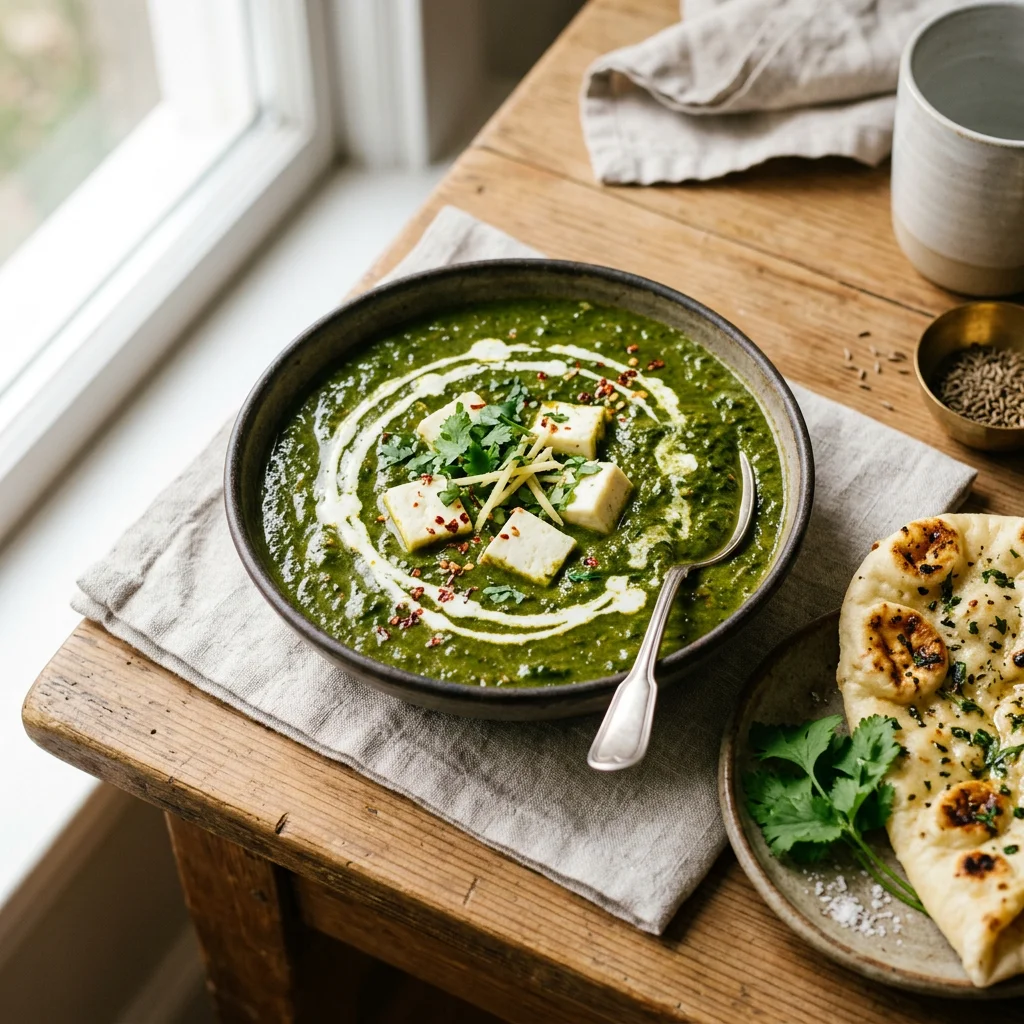
Palak paneer is one of North India's most beloved vegetarian dishes — fresh spinach pureed into a vibrant green sauce with cubes of paneer (Indian fresh cheese) folded through. It is a restaurant staple that also appears regularly on home dinner tables across Punjab, Uttar Pradesh, and beyond. The dish balances the mineral richness of spinach with the mild, satisfying protein of paneer, creating a meal that feels both wholesome and indulgent. The preparation involves blanching spinach briefly to preserve its color and nutrients, then blending it into a smooth base. A separate masala of onions, tomatoes, and spices forms the foundation, and the spinach puree is folded in to create the characteristic bright green sauce. Paneer cubes, lightly pan-fried to develop a golden crust, are added at the end so they absorb flavor without losing their shape. From an Ayurvedic perspective, this is a fascinating dish — spinach is cooling, bitter, and astringent, while the paneer adds sweet, heavy, and nourishing qualities. The spice blend bridges these energies, and the ghee makes the fat-soluble nutrients in spinach more bioavailable. It is a study in how Indian cooking intuitively balances opposing energetic qualities.
Balances Pitta well due to cooling spinach. Increases Kapha due to heaviness of paneer and cream. Generally neutral for Vata with the ghee and warming spices.
Ingredients
- 500 g Fresh spinach (washed and trimmed)
- 250 g Paneer (cut into 1-inch cubes)
- 3 tbsp Ghee
- 1 large Onion (finely chopped)
- 2 medium Tomato (chopped)
- 1 inch Fresh ginger (grated)
- 4 cloves Garlic (minced)
- 1 whole Green chili (slit)
- 1 tsp Cumin seeds
- 1 tsp Coriander powder
- 1/2 tsp Garam masala
- 1 tsp Salt
- 2 tbsp Heavy cream (optional)
Instructions
- Bring a large pot of water to a rolling boil. Add the spinach and blanch for 2 minutes. Immediately transfer to an ice bath to stop cooking and lock in the bright green color.
- Drain the spinach thoroughly, squeezing out excess water. Blend into a smooth puree and set aside.
- Heat 1 tablespoon of ghee in a pan over medium-high heat. Fry the paneer cubes until golden on all sides, about 2 minutes per side. Remove and set aside on a paper towel.
- In the same pan, add the remaining 2 tablespoons of ghee. Add cumin seeds and let them sizzle until fragrant.
- Add the chopped onion and cook until golden brown, about 5-6 minutes. Add ginger, garlic, and green chili, stirring for 1 minute.
- Add the chopped tomatoes and cook until they break down and the oil begins to separate from the masala, about 4-5 minutes.
- Add coriander powder and stir through. Pour in the spinach puree and mix well. Simmer on low heat for 5-6 minutes, stirring occasionally.
- Add the fried paneer cubes and garam masala. Stir gently and simmer for 3-4 minutes so the paneer absorbs the flavors.
- Finish with cream if using, adjust salt, and serve hot with chapati, naan, or steamed rice.
Nutrition
These values are estimates calculated from the ingredient list and may vary based on brands, cooking methods, and serving size. Not a substitute for medical or dietary advice.
How This Recipe Affects Each Dosha
Vata
The heavy, oily quality of paneer and ghee is grounding for Vata, and the warming spices help offset spinach's naturally cold, dry energy. However, spinach's astringent quality can be aggravating in excess — Vata types should eat this in moderation rather than daily.
Pitta
This is a naturally Pitta-balancing dish. Spinach is cooling and bitter — two qualities that directly reduce Pitta. The sweet, cooling nature of paneer adds nourishment without heat. Even the small amount of heating spices is well-buffered by the cooling base.
Kapha
Paneer and cream make this heavy and unctuous — qualities that increase Kapha. The spinach itself is fine for Kapha (light, dry, astringent), but the dairy components add density. Kapha types should enjoy this occasionally rather than regularly.
Moderate effect on agni. The ghee and spices support digestion, but the heavy paneer requires adequate digestive fire. Best eaten at midday when agni is strongest.
Nourishes: Rasa (plasma), Rakta (blood), Mamsa (muscle), Asthi (bone)
Adjustments by Constitution
For Vata Types
Increase ghee and add a generous pinch of black pepper, asafoetida, and fenugreek seeds to the tempering. This counteracts spinach's Vata-aggravating properties. Use full-fat paneer and include the cream.
For Pitta Types
Omit garlic and green chili. Reduce ginger by half. Add a pinch of fennel powder and increase the cilantro garnish. The dish is already well-suited to Pitta and needs only minor adjustments.
For Kapha Types
Replace paneer with tofu or reduce paneer by half. Skip the cream entirely. Use mustard oil instead of ghee for the tempering and add extra black pepper, ginger, and a pinch of cayenne. Serve with millet roti instead of naan.
Seasonal Guidance
Best in spring when fresh spinach is abundant and its bitter, astringent qualities help clear accumulated winter Kapha. Excellent through summer due to its cooling energy. In autumn, increase warming spices to offset the dish's cooling nature. In deep winter, consider switching to heartier greens like mustard greens (sarson) that carry more heat. Always serve warm, never cold or room temperature.
Best time of day: Lunch, when digestive fire is strongest and can handle the heavy paneer
Cultural Context
Palak paneer emerged from the vegetarian kitchens of North India, where paneer serves as the primary protein source for millions of vegetarians. It became a restaurant standard during the rise of Punjabi cuisine in Delhi's dhabas and spread globally through Indian restaurants worldwide. The dish represents the sophisticated vegetarian cooking tradition that has sustained India's large vegetarian population for millennia — using dairy, spices, and leafy greens to create meals that are nutritionally complete and deeply satisfying without any meat.
Deeper Context
Origins
Palak paneer in its current form dates to north Indian and Punjabi dhaba cookery of the last 150 years; its ancestor dish saag — any bitter greens slow-cooked with ghee and spices — is ancient and appears in Sanskrit culinary references. Paneer itself is an Indo-Persian fresh cheese documented from the Mughal era, where Persian cheese-making techniques met Indian whole-milk preparations. The modern restaurant form stabilized in 20th-century Delhi.
Food as Medicine
Palak is classical Ayurvedic material medica for anemia (pandu) — it builds rakta dhatu (blood tissue) directly through iron and folate content that classical texts recognized under different names. The paneer adds mamsa dhatu (muscle-tissue) support. One of the most tissue-building vegetarian preparations in the Indian repertoire and a standard prescription for underweight adolescent girls in traditional home medicine.
Ritual & Seasonal Role
Winter dish predominantly — spinach peaks in north Indian winters and the heaviness of the dish is welcome in cold weather. Not strongly ceremonial, though it appears on Punjabi wedding tables and Diwali festival spreads as a vegetarian counterweight to richer mutton or chicken preparations. Avoided in peak summer and during monsoon, when digestion weakens.
Classical Pairings & Cautions
Naan or roti for bread, jeera rice for grain, kachumber for raw contrast. Avoided with fish in classical Ayurveda (paneer plus fish is a textbook viruddha ahara incompatible combination). Cautions: cold and heavy for Vata in winter unless substantially ghee-spiced; mucus-generating for Kapha; high oxalate content in spinach means kidney-stone patients should limit frequency or substitute with lower-oxalate greens like lambsquarters or chard.
Cross-Tradition View
How other medical and food-wisdom traditions read this dish. Each tradition names the same physiological reality in its own language — the agreements across them are where universal principles live.
Traditional Chinese Medicine
Spinach is sweet-cool, moistens Yin and builds Blood — a classical TCM Blood-builder suitable for iron-deficiency anemia and blood loss recovery. Paneer is sweet-neutral and builds Yin fluids. Ghee and ginger add warm-dispersing correction. The iron content is genuinely Blood-tonifying in TCM terms, and the combination addresses Yin/Blood deficiency patterns with unusual completeness for a single vegetarian dish.
Greek Humoral
Spinach cold-wet, paneer cold-wet — fully phlegmatic by base without corrective. The cumin, ginger, and ghee shift the dish toward hot-dry, bringing it to balance for sanguine and choleric types. Melancholic types should skip or add more ginger and fenugreek than standard recipes use. The classical Galenic reading is cautious optimism.
Unani Tibb
Sardi-tar by base, brought to mutadil by the ghee and spice tempering. The hakim reading: good for bilious constitutions and for iron deficiency (qillat-e-dam); cautious for phlegmatic. Often prescribed for summer Pitta issues, for anemia in adolescent girls, and during postpartum recovery when red blood cell rebuilding is the focus.
Tibetan Sowa Rigpa
Heavy, cool, smooth. Pacifies Bile (mKhris-pa) directly. Spinach is specifically named in Tibetan materia medica as an iron-giving vegetable suitable during anemia and during postpartum; paneer complements it when adequate ghee is included. Cold-damp climates and Phlegm-dominant constitutions should limit frequency, as the heavy cheese can drive Bad-kan accumulation.
Chef's Notes
The blanch-and-shock technique is essential — it preserves the vivid green color that turns dull if spinach is overcooked. Do not skip the ice bath. For the silkiest texture, blend the spinach with 2-3 tablespoons of water. Paneer should be fried just until golden, not hard — overcooked paneer becomes rubbery. If your paneer is dry, soak the cubes in warm water for 10 minutes before frying to keep them soft. For a lighter version, skip frying the paneer and add it directly to the sauce.
Frequently Asked Questions
Is Palak Paneer good for my dosha?
Balances Pitta well due to cooling spinach. Increases Kapha due to heaviness of paneer and cream. Generally neutral for Vata with the ghee and warming spices. The heavy, oily quality of paneer and ghee is grounding for Vata, and the warming spices help offset spinach's naturally cold, dry energy. This is a naturally Pitta-balancing dish. Paneer and cream make this heavy and unctuous — qualities that increase Kapha.
When is the best time to eat Palak Paneer?
Lunch, when digestive fire is strongest and can handle the heavy paneer Best in spring when fresh spinach is abundant and its bitter, astringent qualities help clear accumulated winter Kapha. Excellent through summer due to its cooling energy. In autumn, increase warming
How can I adjust Palak Paneer for my constitution?
For Vata types: Increase ghee and add a generous pinch of black pepper, asafoetida, and fenugreek seeds to the tempering. This counteracts spinach's Vata-aggravating For Pitta types: Omit garlic and green chili. Reduce ginger by half. Add a pinch of fennel powder and increase the cilantro garnish. The dish is already well-suited to
What are the Ayurvedic properties of Palak Paneer?
Palak Paneer has Sweet, Bitter, Astringent, Pungent taste (rasa), Cooling energy (virya), and Sweet post-digestive effect (vipaka). Its qualities (gunas) are Heavy, Oily, Smooth. It nourishes Rasa (plasma), Rakta (blood), Mamsa (muscle), Asthi (bone). Moderate effect on agni. The ghee and spices support digestion, but the heavy paneer requires adequate digestive fire. Best eaten at midday when agni is strongest.