Pancakes
American Recipe
Overview
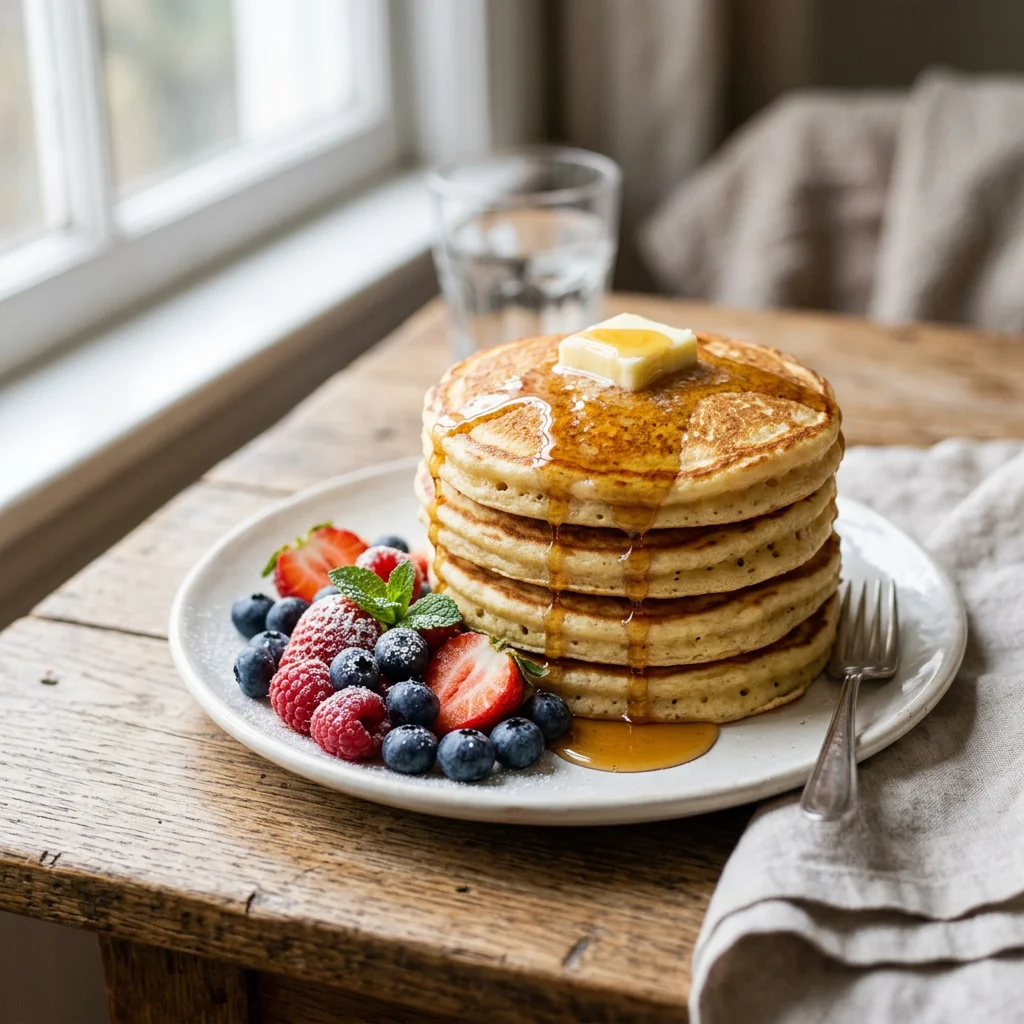
Pancakes are what America eats for breakfast when it wants to feel something. Not fueled, not optimized, not macro-balanced — comforted. A stack of warm pancakes with butter and maple syrup is one of the most emotionally loaded foods in the culture, and its Ayurvedic profile explains exactly why: it is overwhelmingly sweet in rasa, heavy and dense in guna, and so deeply Kapha-building that eating it for breakfast almost guarantees a sluggish, foggy morning. And yet, the way it makes you feel in the moment — warm, full, held — is genuine Vata pacification. This is the central paradox of American comfort food, and pancakes are its poster child. The batter itself is a study in sweet, heavy, and sticky qualities: white flour, milk, eggs, butter, and sugar. The griddle adds warmth and a slight char that introduces a whisper of bitter taste and light quality through the Maillard reaction — the browned crust is genuinely easier to digest than raw batter because the heat has begun breaking down the starch. But this is a minor counterbalance to the dominant energy. When you add butter and maple syrup to the top, you are adding sweet on sweet on sweet, and oily on oily. The body receives the message clearly: build tissue, slow down, rest. This is why pancake breakfasts belong to weekends, not workdays. The Ayurvedic tradition emphasizes that morning is Kapha time (6am-10am), when the body is naturally heavier and slower. Eating a Kapha-increasing food during Kapha time compounds the effect — you are adding heaviness to heaviness. A 7am pancake breakfast for a Kapha-dominant person is a recipe for spending the morning in a mental fog. For a Vata type who woke up anxious and ungrounded, the same breakfast might be genuinely settling. Constitution determines whether this food is medicine or burden.
Strongly pacifies Vata with sweet, heavy, warm, oily qualities. Significantly increases Kapha. Neutral to mildly increasing for Pitta.
Ingredients
- 1.5 cups All-purpose flour
- 2 tbsp Sugar
- 2 tsp Baking powder
- 1/2 tsp Baking soda
- 1/2 tsp Salt
- 1.25 cups Buttermilk
- 1 large Egg
- 3 tbsp Butter (melted, plus more for the pan)
- 1 tsp Vanilla extract
- 1/2 cup Maple syrup (for serving)
- 2 tbsp Butter (for serving)
Instructions
- Whisk together the flour, sugar, baking powder, baking soda, and salt in a large bowl. In a separate bowl, whisk the buttermilk, egg, melted butter, and vanilla until combined.
- Pour the wet ingredients into the dry ingredients and stir gently with a fork until just combined. Stop while there are still lumps — overmixing develops the gluten in the flour and turns pancakes tough and chewy instead of fluffy. The batter should look rough and slightly lumpy.
- Let the batter rest for 5 minutes. During this time, the baking powder activates and creates tiny bubbles, and the flour fully hydrates. This rest is the difference between good pancakes and great ones.
- Heat a large non-stick skillet or griddle over medium heat. Add a small pat of butter and let it melt and foam, then wipe the excess with a paper towel — you want a thin, even coat, not a puddle.
- Pour about 1/3 cup of batter for each pancake. Cook until bubbles form across the entire surface and the edges look set and slightly dry, about 2-3 minutes. This is the only flip indicator that matters — do not flip early or the center will be raw.
- Flip once and cook for another 1-2 minutes until golden brown on the bottom. Press gently with the spatula — the pancake should spring back. Transfer to a warm plate.
- Serve immediately in a stack with a pat of butter between each pancake and warm maple syrup poured over the top. If making a large batch, keep finished pancakes warm on a baking sheet in a 200 F oven.
Nutrition
These values are estimates calculated from the ingredient list and may vary based on brands, cooking methods, and serving size. Not a substitute for medical or dietary advice.
How This Recipe Affects Each Dosha
Vata
Pancakes are deeply grounding for Vata. The warm, sweet, heavy qualities provide exactly what the cold, dry, mobile Vata dosha lacks. The butter and syrup add oleation that Vata craves. A thin, anxious, cold-natured person who eats a stack of pancakes on a winter morning will feel genuinely better — more settled, warmer, more present. The risk is that Vata types may come to depend on this level of heaviness for emotional regulation, when lighter warm foods (oatmeal with ghee, warm spiced milk) would provide grounding without the crash.
Pitta
Pancakes are relatively neutral for Pitta. The sweet taste is Pitta-pacifying, and there is nothing pungent, sour, or excessively salty in the basic recipe. Maple syrup is one of the better sweeteners for Pitta — it is cooling and sweet without the sharp quality of refined sugar. The only concern is the heating virya from the griddle-cooking and the butter, which can mildly aggravate sensitive Pitta digestion. Overall, Pitta types tolerate pancakes reasonably well in moderation.
Kapha
Pancakes during Kapha time (morning) for a Kapha person is the textbook example of like-increases-like. Every quality — sweet, heavy, dense, oily, sticky — amplifies Kapha's existing tendencies. A Kapha-dominant person who eats pancakes for breakfast will spend the morning in a fog of heaviness, with sluggish thinking, increased mucus production, and the desire to go back to bed. Kapha types should eat pancakes rarely and only as a weekend treat, never as a weekday breakfast before they need to be mentally sharp.
Suppresses agni through sheer heaviness. The dense starch, fat, and sugar combination lands in the stomach like a weight, requiring considerable digestive fire to process. The maple syrup on top adds liquid sugar that requires almost no digestion itself but slows the processing of everything else. Most people feel sleepy 30-60 minutes after a large pancake breakfast — this is agni being overwhelmed and the body shunting blood to the digestive system.
Nourishes: Rasa (plasma), Meda (fat)
Adjustments by Constitution
For Vata Types
Add a teaspoon of cinnamon and a pinch of cardamom to the batter for warming spices that support digestion. Top with sliced bananas for additional grounding sweetness. Use real maple syrup — its mineral content and lower glycemic index make it easier on Vata than pancake syrup. Warm the plate before serving so the pancakes stay hot.
For Pitta Types
Replace some of the maple syrup with fresh blueberries or sliced peaches — cooling fruits that add sweetness without excess heat. Use coconut oil instead of butter in the batter and on the griddle. A drizzle of honey (at room temperature, never cooked) with fresh fruit is a lighter Pitta-friendly topping. Avoid adding chocolate chips, which are heating.
For Kapha Types
Use buckwheat flour or a 50/50 buckwheat-whole wheat blend — buckwheat is lighter, drier, and slightly astringent. Replace buttermilk with water or oat milk for less density. Skip the butter on top entirely and use a modest amount of raw honey (which is the only sweetener Ayurveda considers Kapha-reducing) drizzled over the stack. Add fresh berries for astringent, light quality. Make silver-dollar-sized pancakes instead of full-size to naturally control portions.
Seasonal Guidance
Best reserved for cold-weather weekends when the body needs building energy and there is time to digest without needing to be productive. In autumn, the sweet and grounding quality supports Vata season. In winter, the caloric density provides warmth and fuel. In spring, pancakes directly oppose what the body is trying to do — lighten and shed accumulated Kapha. In summer, they are unnecessarily heavy when the body wants lighter, cooler foods. If eating pancakes in warmer months, lighten the recipe significantly and top with fresh fruit instead of butter and syrup.
Best time of day: Weekend brunch, ideally closer to 10am when Kapha time is transitioning to Pitta time and agni is beginning to strengthen. Avoid eating pancakes at 7am — agni is at its weakest and Kapha influence is strongest. A later brunch gives digestion a fighting chance.
Cultural Context
Pancakes have been American breakfast food since before America was a country — colonists adapted European and Native American flat-cake traditions into the griddle cakes that would evolve into modern pancakes. The iconic IHOP (International House of Pancakes) opened in 1958 and turned the pancake breakfast into a cultural institution. But the deeper significance is in the Saturday morning pancake ritual: a parent standing at the stove flipping pancakes while kids set the table. This is not about nutrition — it is about time, attention, and the message that this meal conveys: today is not a regular day, today is a day for something special. The pancake breakfast is American culture's shorthand for unhurried togetherness. County fairs, church fundraisers, and fire department breakfasts all center on pancakes because the food itself signals community, generosity, and the suspension of ordinary life.
Deeper Context
Origins
Pancakes appear in Roman cookbooks from the 1st century CE and in archaeological evidence from much earlier cereal-eating cultures. Shrove Tuesday (Pancake Day) in British tradition dates to the medieval period, when pancakes cleared eggs and dairy from households before the Lenten fast. The American fluffy buttermilk pancake is a Dutch-German-Scandinavian immigrant creation, stabilized in 19th-century American cookbooks. IHOP (founded 1958) made pancakes a restaurant category.
Food as Medicine
Not particularly medicinal by design — a pleasure food across cultures. Maple syrup contributes mineral content (manganese, zinc, calcium) and polyphenols that refined sugar lacks. Buttermilk adds probiotic content that plain-milk pancakes do not have. The egg binder contributes easily-digestible protein. None of the ingredients are strongly therapeutic, but the combination is accidentally well-nourishing for children and for post-illness recovery.
Ritual & Seasonal Role
Shrove Tuesday / Pancake Day (Christian pre-Lenten observance) — the most ritualized pancake occasion globally, with communities from England to New Orleans observing the day with pancake races and Mardi Gras feasts. American Saturday-morning family breakfast ritual. Boy Scout and civic-organization pancake breakfast fundraisers. Year-round with slight autumn peaks coinciding with maple-syrup harvest.
Classical Pairings & Cautions
Butter, maple syrup, fresh fruit (strawberries, blueberries, bananas), bacon or sausage alongside, powdered sugar. Cautions: gluten intolerance requires alternative flour; dairy and egg allergies preclude the traditional form; the sugar-carbohydrate load is substantial — diabetic restriction applies; Kapha types should limit the syrup-and-butter quantities, which often dominate the actual glycemic impact.
Cross-Tradition View
How other medical and food-wisdom traditions read this dish. Each tradition names the same physiological reality in its own language — the agreements across them are where universal principles live.
Traditional Chinese Medicine
Flour is neutral-sweet and Spleen-tonifying; buttermilk is cool-sour, builds Yin and soothes the Liver; butter is warm-wet; egg builds Yin and Blood; maple syrup tonifies Spleen. A Spleen-Qi-building breakfast with mild Liver-Qi-moving buttermilk — accidentally well-composed by TCM standards. Appropriate for cold-deficient and Yin-deficient constitutions.
Greek Humoral
Hot-wet overall. Sanguine-building. Pancakes in some form appear in Hippocratic-era Greek cookery — the tēganitēs of the 5th century BCE are honey-soaked flat cakes cooked on a griddle. The format is so ancient that Galen himself wrote about its digestive effects in his dietary treatises.
Ayurveda
Heating virya, sweet vipaka. Pacifies Vata through warmth and unctuous fat; aggravates Kapha through the sugar and heaviness. A seasonal breakfast food rather than daily fare by classical Ayurvedic standards. The buttermilk partly corrects the Kapha-aggravating tendency but does not fully neutralize it.
Universal Flatbread Tradition
Pancakes are globally ancient — Roman testuacium, French crêpe, Russian blini, Ethiopian injera (the fermented cousin), Indian malpua, Korean jeon, Dutch pannekoeken. The flat-batter-on-hot-surface format is one of the oldest cooking techniques, possibly Paleolithic in origin, and appears in every grain-eating culture. The American fluffy buttermilk pancake is Dutch-German-Scandinavian immigrant innovation stabilized in the 19th century.
Chef's Notes
The buttermilk is what makes these pancakes tender and tangy — its acidity reacts with the baking soda to create lift, and it tenderizes the gluten. If you do not have buttermilk, add 1 tablespoon of lemon juice or vinegar to regular milk and let it sit for 5 minutes. Temperature control on the griddle is everything: too hot and the outside burns before the inside cooks; too cool and they spread flat and turn tough. The medium-heat sweet spot gives you that golden exterior with a fluffy, fully cooked interior. For the fluffiest pancakes you have ever made, separate the egg, beat the white to soft peaks, and fold it into the batter at the end.
Frequently Asked Questions
Is Pancakes good for my dosha?
Strongly pacifies Vata with sweet, heavy, warm, oily qualities. Significantly increases Kapha. Neutral to mildly increasing for Pitta. Pancakes are deeply grounding for Vata. Pancakes are relatively neutral for Pitta. Pancakes during Kapha time (morning) for a Kapha person is the textbook example of like-increases-like.
When is the best time to eat Pancakes?
Weekend brunch, ideally closer to 10am when Kapha time is transitioning to Pitta time and agni is beginning to strengthen. Avoid eating pancakes at 7am — agni is at its weakest and Kapha influence is strongest. A later brunch gives digestion a fighting chance. Best reserved for cold-weather weekends when the body needs building energy and there is time to digest without needing to be productive. In autumn, the sweet and grounding quality supports Vata seaso
How can I adjust Pancakes for my constitution?
For Vata types: Add a teaspoon of cinnamon and a pinch of cardamom to the batter for warming spices that support digestion. Top with sliced bananas for additional gro For Pitta types: Replace some of the maple syrup with fresh blueberries or sliced peaches — cooling fruits that add sweetness without excess heat. Use coconut oil inst
What are the Ayurvedic properties of Pancakes?
Pancakes has Sweet taste (rasa), Heating energy (virya), and Sweet post-digestive effect (vipaka). Its qualities (gunas) are Heavy, Oily, Dense, Warm, Sticky. It nourishes Rasa (plasma), Meda (fat). Suppresses agni through sheer heaviness. The dense starch, fat, and sugar combination lands in the stomach like a weight, requiring considerable digestive fire to process. The maple syrup on top adds liquid sugar that requires almost no digestion itself but slows the processing of everything else. Most people feel sleepy 30-60 minutes after a large pancake breakfast — this is agni being overwhelmed and the body shunting blood to the digestive system.