Overnight Soaked Oats
Ayurvedic Recipe
Overview
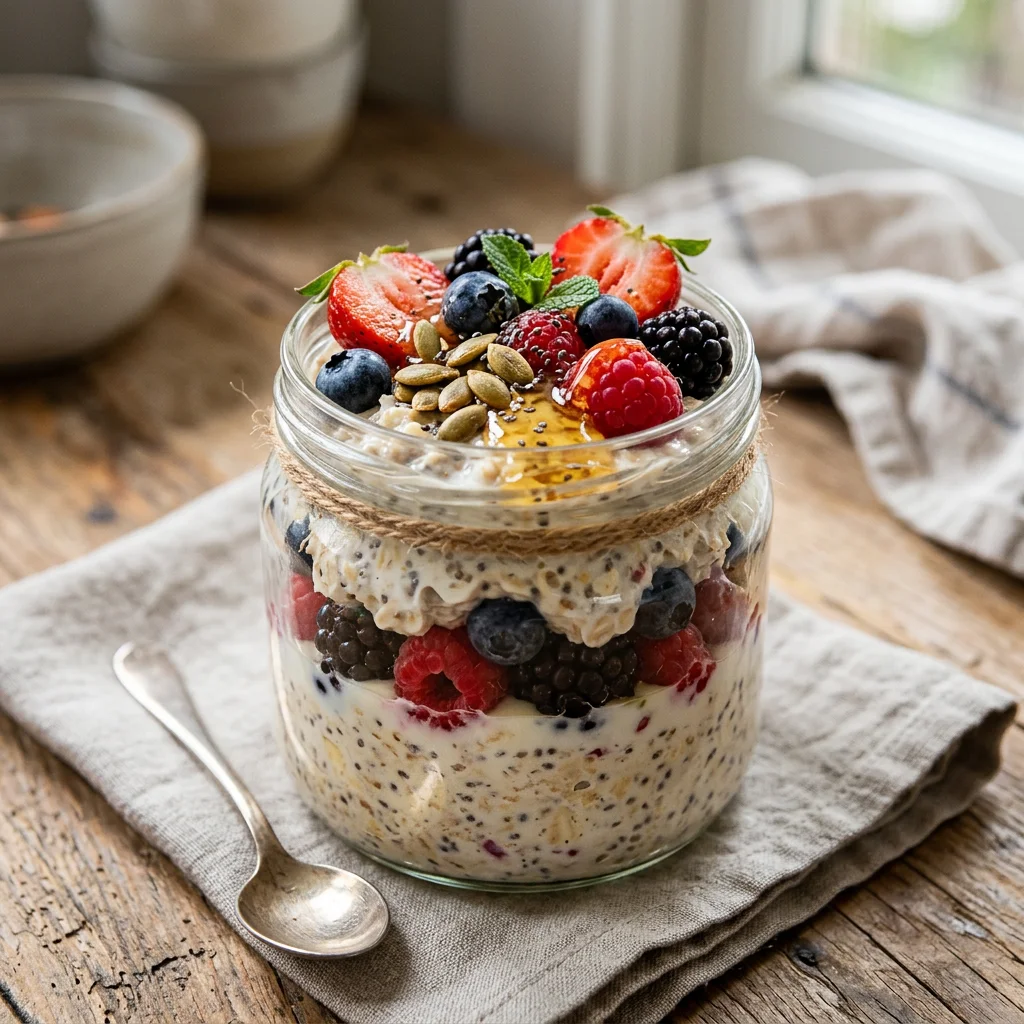
Overnight soaked oats offer an alternative morning rhythm for those who run warm — Pitta types who wake with internal heat, sharp hunger, and an agni that does not need additional kindling. Where the warm morning porridge builds heat to counter Vata's cold nature, this preparation takes a different approach: soaking the oats overnight begins the digestive process before the oats ever reach your bowl, breaking down phytic acid and softening the grain into a state of pre-digestion that Pitta's already-strong agni handles with ease. The sattvic quality of this breakfast comes from its simplicity and its alignment with natural process. The overnight soak is a form of culturing — beneficial bacteria begin their work during the night, and the oats absorb the liquid medium (milk, yogurt water, or plant milk) into a soft, pudding-like texture that requires almost no cooking and generates almost no internal heat. Honey, added at serving rather than during cooking, provides enzymatic activity and a touch of sweetness. Nuts and seeds contribute essential fatty acids and protein without the heaviness of cooked fat. This is not a lesser version of cooked porridge — it is a different medicine for a different constitution. Pitta types who force themselves to eat hot, ghee-laden porridge because they read it was "Ayurvedic" are missing the point. Ayurveda is personal. The right breakfast is the one that matches your constitution, the season, and your current state of balance.
Pacifies Pitta with its cooling, sweet, and heavy qualities. May increase Kapha due to cold, heavy nature. Can aggravate Vata if consumed cold.
Ingredients
- 1/2 cup Rolled oats
- 1/2 cup Milk or plant milk (coconut milk is most Pitta-appropriate)
- 2 tbsp Plain yogurt (optional, adds probiotic quality)
- 1 tbsp Chia seeds (thickens and adds omega-3s)
- 6 whole Almonds (soaked overnight with the oats, sliced in the morning)
- 1 tbsp Pumpkin seeds (raw)
- 1 tbsp Shredded coconut
- 1/4 tsp Cardamom (ground)
- 1 tsp Raw honey (added at serving, never heated)
- 1/4 cup Fresh fruit (sweet berries, ripe mango, or sliced banana — seasonal)
Instructions
- The night before: combine oats, milk, yogurt (if using), chia seeds, and almonds in a jar or bowl. Stir to combine. Add the cardamom now so it infuses overnight.
- Cover and refrigerate for at least 6 hours, or overnight. The oats will absorb the liquid and swell into a soft, pudding-like texture.
- In the morning, stir the soaked oats. If too thick, add a splash of milk to reach your desired consistency. If too thin, let it sit for 5 minutes — the chia seeds will continue to absorb.
- Top with sliced soaked almonds (peel the skins if desired — they slip off easily after soaking), pumpkin seeds, shredded coconut, and fresh seasonal fruit.
- Drizzle honey on top just before eating. Do not stir the honey in if the oats are warm — honey should never be heated above body temperature according to Ayurvedic principles.
- Eat at a relaxed pace. This breakfast is meant to be cooling and calming — rushing through it defeats the purpose.
Nutrition
These values are estimates calculated from the ingredient list and may vary based on brands, cooking methods, and serving size. Not a substitute for medical or dietary advice.
How This Recipe Affects Each Dosha
Vata
The cold, heavy qualities of overnight oats can aggravate Vata, especially in autumn and winter. Vata types have delicate morning agni that needs warming, not cooling. If a Vata type prefers overnight oats, it must be modified significantly — brought to room temperature or gently warmed, with ghee added and warming spices increased. Generally, warm cooked porridge is the better Vata choice.
Pitta
This is Pitta's ideal summer breakfast. The cooling virya, sweet rasa, and pre-digested format match Pitta's strong morning agni perfectly. The cardamom supports digestion without adding heat, the honey provides enzymatic sweetness, and the healthy fats from nuts and seeds nourish without overheating. Pitta types often wake hungry with sharp agni — this breakfast satisfies that hunger without generating excess heat.
Kapha
The cold, heavy, and sweet qualities directly increase Kapha. Cold food in the morning is the opposite of what Kapha digestion needs — Kapha agni is sluggish and requires warming to get started. Kapha types should strongly prefer warm, light, spiced breakfasts and avoid overnight oats as a regular practice.
The overnight soaking pre-digests the oats, reducing the burden on morning agni. The cardamom supports digestive function without generating heat. However, the cold temperature can dampen agni in constitutions where morning digestive fire is already weak (Vata, Kapha). Pitta types, whose agni is naturally strong in the morning, digest this easily.
Nourishes: Rasa (plasma), Rakta (blood), Mamsa (muscle), Shukra (reproductive tissue)
Adjustments by Constitution
For Vata Types
Let the oats come to room temperature before eating, or warm gently on the stove with a splash of milk. Add 1 teaspoon of ghee, a generous pinch of cinnamon, and a pinch of nutmeg. Include soaked walnuts and dates instead of pumpkin seeds. Better yet — make the warm morning porridge instead.
For Pitta Types
This preparation is already Pitta-ideal. For maximum cooling, use coconut milk and top with sweet seasonal fruit (ripe mango, sweet berries, figs). Add rose water or a few threads of saffron for an elevated Pitta experience. Generous shredded coconut amplifies the cooling effect.
For Kapha Types
If Kapha types insist on overnight oats, use water instead of milk, skip the yogurt, omit coconut, and add 1/2 teaspoon dry ginger powder and a generous pinch of black pepper. Top with tart berries (not sweet fruit) and only a tiny amount of honey. Reduce the oat portion to 1/3 cup. Honestly, warm millet porridge with ginger is a better Kapha breakfast.
Seasonal Guidance
Peak season for overnight oats is summer, when Pitta is at its annual high and the body welcomes cooling food. Also appropriate in late spring as temperatures rise. In autumn, switch to warm cooked porridge — the body's needs shift decisively toward warmth and grounding as Vata season begins. In winter, overnight oats are contraindicated for most constitutions. The exception: a Pitta-dominant individual in a warm climate may enjoy them year-round.
Best time of day: Breakfast, within the first hour of waking. This is not a snack or a dessert — it is a complete morning meal designed to sustain through the morning without the heaviness of a cooked meal.
Cultural Context
The practice of soaking grains overnight is ancient and global — Scottish oats were traditionally soaked in buttermilk, Swiss Bircher muesli originated in the early 1900s as a hospital food, and Indian households have soaked rice and dal overnight for millennia to improve digestibility. The modern overnight oats trend rediscovered what traditional cultures never forgot: that grains become more nutritious, more digestible, and more bioavailable when given time and liquid to break down before they reach the digestive tract. The Ayurvedic addition of cardamom and honey elevates this from a convenience food to a constitutional practice.
Deeper Context
Origins
Maximilian Bircher-Benner invented Swiss muesli (the direct ancestor of overnight oats) around 1900 at his Zurich sanitarium, influenced by Swiss mountain shepherds' raw-grain-and-yogurt breakfast traditions. The Ayurvedic adaptation with almonds, cardamom, and ghee or honey emerged in the 2000s and 2010s through Western Ayurvedic wellness publishing. Chia seeds entered the mix through the superfood-era rediscovery of Aztec traditional foods around 2008-2012.
Food as Medicine
Oats beta-glucan; almond vitamin E and monounsaturated fat; honey mineral content and traces of enzymes (never for infants under 12 months due to botulism risk); chia omega-3 alpha-linolenic acid and soluble fiber; cardamom digestive stimulant. The overnight soaking increases mineral bioavailability by reducing phytate content, and improves digestive tolerance for those with weak agni.
Ritual & Seasonal Role
Summer morning preparation, when the cool temperature matches the season. The overnight preparation format integrates well with meal-prep routines for working people and students. Year-round in warm climates; seasonal summer in temperate climates. Classic modern Ayurvedic-wellness recipe rather than ancient ritual food.
Classical Pairings & Cautions
Fresh seasonal fruit on top, a drizzle of additional honey, chopped fresh nuts. Cautions: honey is contraindicated for infants under 12 months (botulism); almond and tree-nut allergies; chia can cause digestive issues if consumed dry without soaking; oats gluten cross-contamination affects celiac patients; Kapha types should reduce the nut-and-seed-and-honey density or reduce portion size.
Cross-Tradition View
How other medical and food-wisdom traditions read this dish. Each tradition names the same physiological reality in its own language — the agreements across them are where universal principles live.
Traditional Chinese Medicine
Oats are Spleen-and-Kidney tonic; almonds build Lung Yin; honey warms Spleen and moistens; cardamom moves Qi; chia seeds are Yin-moistening. A Yin-and-Qi-building breakfast — the soaking pre-digests the grain, making it accessible to weak-digestion constitutions that cannot tolerate raw or heavily-cooked versions. TCM physicians would favor this for summer heat with Yin deficiency.
Greek Humoral
Cool-wet due to the overnight soak; sanguine-building through the almond-and-honey content. Appropriate for summer breakfasts when hot cooked oats are unwelcome. Galenic physicians praised soaked grain preparations for the sick and the convalescent — the prolonged hydration breaks down tough grain structure before digestion begins.
Unani Tibb
Soaked grain preparations are traditional Unani post-illness food. Almonds (badam), honey (shahd), and cardamom (elaichi) are all hakim-cabinet staples. The overnight soak is a naturopathic shortcut to the fermented-grain preparations of classical Unani, which took days to prepare but achieved similar pre-digestion benefits. Bircher's muesli (Swiss, 1900) drew on exactly this Unani-adjacent logic.
Tibetan Sowa Rigpa
Soaking softens the grain for weak-digestion patients. Appropriate for recovery from Bile-excess (mKhris-pa) or post-illness convalescence. The cold nature of soaked oats may need ginger adjustment for Wind-type patients in high-altitude cold-dry environments — Tibetan practitioners would warm the oats briefly or add dried ginger to compensate.
Chef's Notes
The overnight soak is doing real nutritional work, not just convenience. Raw oats contain phytic acid, which binds minerals and makes them unavailable. Soaking for 8+ hours dramatically reduces phytic acid, unlocking the iron, zinc, and magnesium in the oats. The yogurt accelerates this process through its natural acidity. For Pitta types in summer, this can be served slightly chilled — one of the few cold breakfasts Ayurveda would approve, because the overnight soak has essentially pre-cooked the grain. In cooler months, let the jar sit at room temperature for 20 minutes before eating rather than eating it cold from the fridge.
Frequently Asked Questions
Is Overnight Soaked Oats good for my dosha?
Pacifies Pitta with its cooling, sweet, and heavy qualities. May increase Kapha due to cold, heavy nature. Can aggravate Vata if consumed cold. The cold, heavy qualities of overnight oats can aggravate Vata, especially in autumn and winter. This is Pitta's ideal summer breakfast. The cold, heavy, and sweet qualities directly increase Kapha.
When is the best time to eat Overnight Soaked Oats?
Breakfast, within the first hour of waking. This is not a snack or a dessert — it is a complete morning meal designed to sustain through the morning without the heaviness of a cooked meal. Peak season for overnight oats is summer, when Pitta is at its annual high and the body welcomes cooling food. Also appropriate in late spring as temperatures rise. In autumn, switch to warm cooked po
How can I adjust Overnight Soaked Oats for my constitution?
For Vata types: Let the oats come to room temperature before eating, or warm gently on the stove with a splash of milk. Add 1 teaspoon of ghee, a generous pinch of ci For Pitta types: This preparation is already Pitta-ideal. For maximum cooling, use coconut milk and top with sweet seasonal fruit (ripe mango, sweet berries, figs). Ad
What are the Ayurvedic properties of Overnight Soaked Oats?
Overnight Soaked Oats has Sweet taste (rasa), Cooling energy (virya), and Sweet post-digestive effect (vipaka). Its qualities (gunas) are Heavy, Cool, Soft, Smooth. It nourishes Rasa (plasma), Rakta (blood), Mamsa (muscle), Shukra (reproductive tissue). The overnight soaking pre-digests the oats, reducing the burden on morning agni. The cardamom supports digestive function without generating heat. However, the cold temperature can dampen agni in constitutions where morning digestive fire is already weak (Vata, Kapha). Pitta types, whose agni is naturally strong in the morning, digest this easily.