Onigiri
Japanese Recipe
Overview
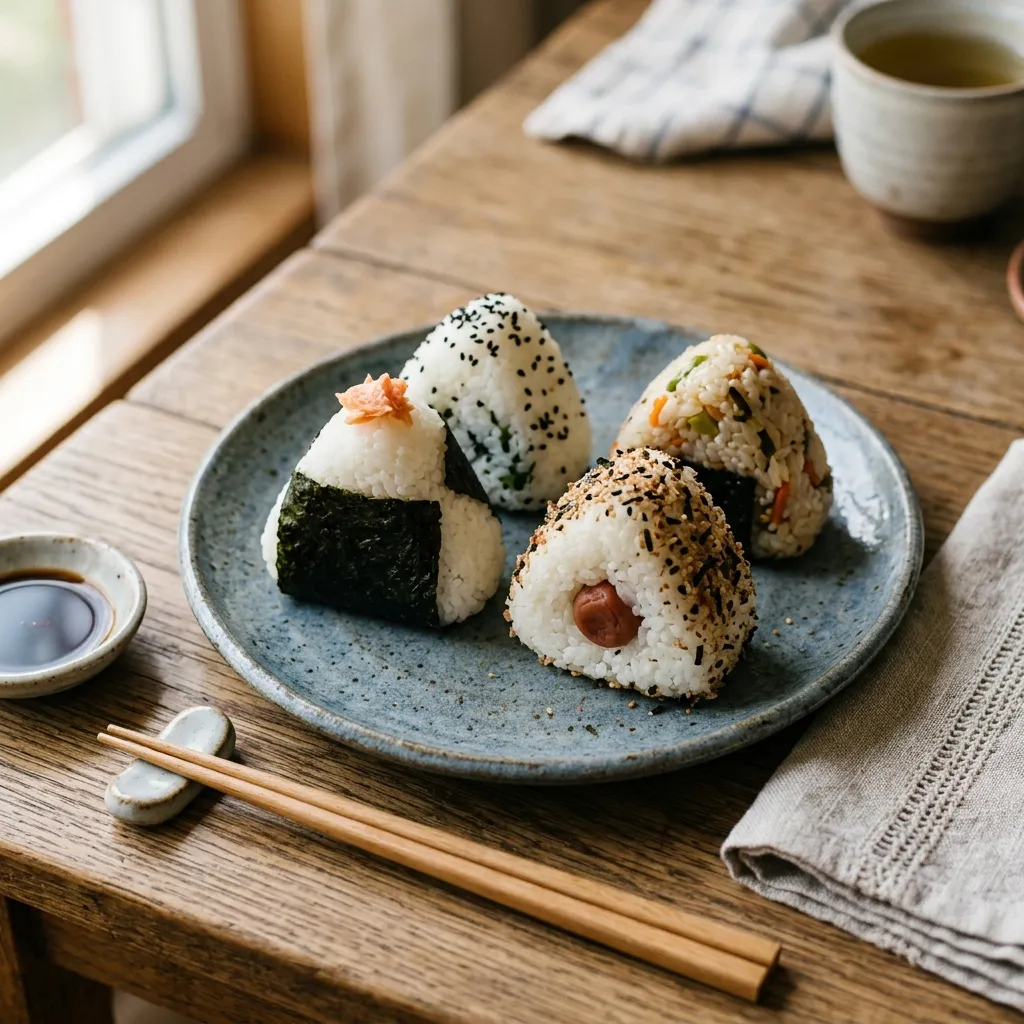
Onigiri are hand-formed rice balls — short-grain Japanese rice seasoned with salt, shaped into triangles or rounds, often stuffed with a savory filling and wrapped in a strip of nori seaweed. They are Japan's most fundamental portable food, sold in billions annually at convenience stores (konbini) and packed into lunch boxes (bento) across the country. The concept is elemental: rice, salt, filling, seaweed. The earliest written reference to onigiri appears in the 11th-century diary of Lady Murasaki, though the practice of shaping rice into portable portions predates written records by centuries. Samurai carried onigiri wrapped in bamboo leaves as battlefield rations. Today, Japanese convenience stores sell over 2.3 billion onigiri annually in hundreds of varieties — from classic umeboshi (pickled plum) and salmon to inventive flavors like mentaiko (spicy cod roe) and tuna mayo. Ayurvedically, onigiri are primarily sweet in rasa with a cooling to neutral virya — white rice is classified as deeply sattvic in Vedic dietary texts. The salt provides mineral balance, while the nori wrapper adds an iodine-rich marine element. The simplicity of onigiri makes them highly digestible, and their portable nature aligns with the Ayurvedic principle that food should be prepared fresh and eaten within hours.
Mildly pacifies Vata and Pitta through sweet, cooling, and moist qualities. May increase Kapha due to the heavy, starchy, moist nature of white rice.
Plain salted onigiri are a traditional recovery food in Japan, given to the sick, the elderly, and those with weak digestion. Umeboshi-filled onigiri are specifically used for nausea and travel sickness due to the pickled plum's ability to settle the stomach.
Ingredients
- 2 cups Short-grain Japanese rice (sushi rice or koshihikari)
- 2.25 cups Water (for cooking rice)
- 1 tsp Fine sea salt (for wetting hands)
- 3 sheets Nori seaweed (cut into strips about 3cm wide)
- 3 plums Umeboshi (pitted and torn into pieces)
- 100 g Cooked salmon (flaked, lightly salted)
- 2 tbsp Bonito flakes (mixed with 1 tsp soy sauce)
- 1 tbsp Sesame seeds (toasted, optional garnish)
Instructions
- Wash the rice in cold water, swirling and draining 4-5 times until the water runs mostly clear. This removes surface starch and prevents gummy texture.
- Cook the rice with 2.25 cups water in a rice cooker or heavy pot (bring to boil, reduce to lowest heat, cover tightly for 15 minutes, rest off-heat for 10 minutes). The rice should be fully cooked, sticky, and slightly glossy.
- While the rice is still warm (not hot — you need to handle it), prepare your fillings. Pit and tear umeboshi into pieces. Flake the salmon. Mix bonito flakes with soy sauce.
- Wet your hands thoroughly with salted water — about 1/4 teaspoon of salt dissolved in a small bowl of water. This prevents sticking and seasons the exterior of the onigiri.
- Scoop about 1/3 cup of warm rice into your palm. Make a small well in the center and place a tablespoon of filling inside. Cover the filling with more rice.
- Cup your hands into a triangular shape — one hand forms the base, the other presses the top edge and rotates. Press firmly but not crushingly — about 3-4 rotations to form a compact triangle that holds its shape but is not dense or compressed. The rice grains should remain distinct, not mashed.
- Wrap a strip of nori around the base of each onigiri. If desired, sprinkle the top with toasted sesame seeds.
- Serve within a few hours for best texture. If packing for later, wrap each onigiri in plastic wrap to prevent drying. The nori can be wrapped separately and applied just before eating to keep it crisp.
Nutrition
These values are estimates calculated from the ingredient list and may vary based on brands, cooking methods, and serving size. Not a substitute for medical or dietary advice.
How This Recipe Affects Each Dosha
Vata
White rice is considered nourishing and grounding for Vata, providing the heavy, moist, soft qualities that counter Vata's dry, light, rough nature. The salt provides mineral grounding, and the umeboshi filling aids digestion with its sour and salty tastes. Onigiri make good Vata food when eaten warm, though they become less ideal as they cool and stiffen.
Pitta
Rice is among the most Pitta-friendly grains — sweet, cooling, and easy to digest. The absence of spices or heating elements makes onigiri gentle on an inflamed Pitta system. The umeboshi filling is slightly heating due to its sour taste, but in the small quantity used as a filling, this is negligible. Salmon provides cooling omega-3 fatty acids.
Kapha
White rice's heavy, moist, sticky qualities align with Kapha's existing tendencies toward heaviness and congestion. The nori wrapper provides some lightness with its dry, mineral quality, but overall, onigiri contribute to Kapha accumulation. Kapha types should eat them in moderation and favor lighter fillings.
White rice is easy on agni and digests without demanding excessive fire. The salt and umeboshi both mildly stimulate digestion. Overall, onigiri are neutral to gently supportive of agni — they neither tax it nor strongly kindle it.
Nourishes: Rasa (plasma), Mamsa (muscle — from protein fillings), Shukra (reproductive — rice is considered shukra-building)
Adjustments by Constitution
For Vata Types
Eat onigiri warm rather than at room temperature. Choose salmon or bonito fillings which add protein and warming quality. Add a pinch of shichimi togarashi (seven-spice blend) on top for gentle digestive heat. Pair with warm miso soup for a complete, grounding meal.
For Pitta Types
Keep fillings mild — umeboshi is ideal for its digestive benefits, or use cucumber with shiso leaf for a cooling filling. Avoid spicy cod roe (mentaiko) or kimchi fillings. The plain salted version (shio musubi) is most Pitta-appropriate. Eat at room temperature rather than piping hot.
For Kapha Types
Use brown rice or a brown-white blend for lighter, less sticky onigiri. Choose pickled vegetable fillings over rich options like tuna mayo. Keep portions small — one or two onigiri rather than three. Add toasted sesame seeds for their light, dry quality. Pair with a clear broth soup rather than miso.
Seasonal Guidance
Onigiri are appropriate year-round due to the neutral, sattvic quality of plain rice. In winter, serve warm with warming fillings like salmon or pickled ginger. In summer, room-temperature onigiri with cooling fillings like cucumber or shiso make ideal portable lunches. Adjust fillings seasonally rather than avoiding the base preparation.
Best time of day: Lunch or afternoon snack — portable and digestible without requiring peak agni
Cultural Context
Onigiri are arguably the most democratic food in Japanese culture — eaten by everyone from schoolchildren to business executives, purchased at convenience stores for under 150 yen, and served at both casual picnics and formal memorial gatherings. The triangular shape most associated with onigiri today was popularized by konbini chains in the 1970s for efficient packaging. Regional variations span the archipelago: Okinawan onigiri are sometimes fried as spam musubi, while Hokkaido versions feature salmon roe. The cultural weight of onigiri transcends nutrition — they appear in Studio Ghibli films, are central to the concept of okaasan no aji (mother's taste), and represent a distinctly Japanese approach to food: simple ingredients elevated through technique and care.
Deeper Context
Origins
Onigiri references appear in Japanese written records from the 8th century CE (Heian period), though the practice of rice-ball-as-portable-food predates writing. The Genji Monogatari (Tale of Genji, early 11th century) mentions onigiri as courtier travel food. Samurai military use during the medieval period established onigiri as warrior-sustenance. The triangular shape became standard during the Edo period; the nori wrapper was added to keep the rice cleaner during handling. Modern convenience-store onigiri (7-Eleven's 1970s introduction) democratized the dish into Japan's default portable meal.
Food as Medicine
Not therapeutically designed but functionally sustaining — the rice-plus-nori-plus-umeboshi combination provides carbohydrate, iodine, minerals, and lactic-acid fermentation probiotics. Umeboshi's classical Japanese reputation as a digestive tonic and fatigue-remedy is supported by modern research on its citric-acid content and antibacterial activity. Salmon-filled variants add omega-3 fatty acids. A surprisingly complete portable meal.
Ritual & Seasonal Role
Year-round portable meal — lunchbox (obento) component, hiking food, convenience-store staple, train-travel food. Ohanami (spring cherry-blossom-viewing picnics) features onigiri prominently. Not religiously ceremonial but carries Japanese-identity weight disproportionate to its simplicity.
Classical Pairings & Cautions
Green tea, miso soup, small side of tsukemono (pickled vegetables). Cautions: rice allergies are rare; soy allergies through soy-sauce-flavored variants; shellfish/fish allergies through salmon or other seafood fillings; sodium load from umeboshi and salt substantial; gluten-free by default.
Cross-Tradition View
How other medical and food-wisdom traditions read this dish. Each tradition names the same physiological reality in its own language — the agreements across them are where universal principles live.
Traditional Chinese Medicine
Japanese short-grain rice is Spleen-Qi-tonifying; nori is salty-cool and softens hardness; umeboshi is sour-astringent and moves Liver Qi; salmon (when used) is Yin-Blood-building; salt is salty-cool. A portable Qi-building preparation with Yin and Liver-Qi-moving accents — TCM physicians would class this as appropriate traveling food across constitutional types.
Greek Humoral
Hot-wet from the rice, salty-warm from the filling. A Galenic-suitable portable meal — the Hippocratic valuation of portable sustenance for travelers, workers, and soldiers aligns with the onigiri's practical role in Japanese culture.
Ayurveda
Cooling virya, sweet vipaka. Pacifies Pitta through the rice-cooling quality. Mildly Vata-aggravating through the dry-preparation technique. Kapha-neutral. A classical traveler's food by Ayurvedic constitutional logic.
Samurai Portable Food
Onigiri is documented in Japanese military history from the Heian period (794-1185) onward — samurai warriors carried onigiri as portable provisions during military campaigns and long marches. Nobunaga Oda's troops at the 1560 Battle of Okehazama reportedly ate onigiri before their surprise attack. The triangular shape is symbolic in addition to practical — the triangle was believed to represent the mountain kami (spirit), giving the food a spiritual dimension alongside its practical portability.
Chef's Notes
The rice must be warm — not hot (you will burn yourself) and not cold (it becomes stiff and impossible to shape). The ideal window is about 10 minutes after cooking. Salt on wet hands is essential — it seasons the exterior and creates a barely perceptible crust that helps the rice hold together. Resist the urge to pack too tightly; onigiri should be firm enough to hold their shape but still have visible grain structure inside. For konbini-style crispness, keep the nori separate until eating. Onigiri rice should never be seasoned with vinegar — that makes it sushi rice, which is a different preparation entirely.
Frequently Asked Questions
Is Onigiri good for my dosha?
Mildly pacifies Vata and Pitta through sweet, cooling, and moist qualities. May increase Kapha due to the heavy, starchy, moist nature of white rice. White rice is considered nourishing and grounding for Vata, providing the heavy, moist, soft qualities that counter Vata's dry, light, rough nature. Rice is among the most Pitta-friendly grains — sweet, cooling, and easy to digest. White rice's heavy, moist, sticky qualities align with Kapha's existing tendencies toward heaviness and congestion.
When is the best time to eat Onigiri?
Lunch or afternoon snack — portable and digestible without requiring peak agni Onigiri are appropriate year-round due to the neutral, sattvic quality of plain rice. In winter, serve warm with warming fillings like salmon or pickled ginger. In summer, room-temperature onigiri wit
How can I adjust Onigiri for my constitution?
For Vata types: Eat onigiri warm rather than at room temperature. Choose salmon or bonito fillings which add protein and warming quality. Add a pinch of shichimi toga For Pitta types: Keep fillings mild — umeboshi is ideal for its digestive benefits, or use cucumber with shiso leaf for a cooling filling. Avoid spicy cod roe (mentaik
What are the Ayurvedic properties of Onigiri?
Onigiri has Sweet, Salty taste (rasa), Cooling energy (virya), and Sweet post-digestive effect (vipaka). Its qualities (gunas) are Heavy, Moist, Soft. It nourishes Rasa (plasma), Mamsa (muscle — from protein fillings), Shukra (reproductive — rice is considered shukra-building). White rice is easy on agni and digests without demanding excessive fire. The salt and umeboshi both mildly stimulate digestion. Overall, onigiri are neutral to gently supportive of agni — they neither tax it nor strongly kindle it.